PC Slower Than It Used to Be?
A free scan shows the junk files, broken settings and background clutter dragging Windows down - then fixes them in one click.Free scan · Windows 10 & 11Crashes, No Sound, or Screen Glitches?
Random freezes, missing sound and display glitches usually trace back to one bad driver. Find and replace yours safely.Free scan · under a minuteTo start an online retail business, choose a specific product and customer, test whether the numbers work, select a marketplace or standalone store, and complete the legal, tax, payment, and fulfillment setup that applies to your location and product. Then test the full order process before promoting the store. The sequence matters: taking orders before you understand costs, shipping promises, or tax obligations can turn early sales into expensive problems.
This guide is for first-time U.S. sellers of physical goods. Requirements vary by state, city, business structure, and product, so treat the compliance steps as a map for checking the rules that apply to you—not as individualized legal or tax advice.
1. Choose a product and a specific customer
Start with a clear description of what you will sell, who is likely to buy it, how you will source or make it, and what need or preference it serves. “Home goods” is a category; a defined product for a defined buyer gives you a more useful starting point for pricing, listing copy, and marketing.
Look for evidence of demand before committing substantial cash to inventory. Talk to potential buyers, study questions and reviews for comparable products, or test interest with a small, manageable assortment. A broad market trend does not establish that a particular item will sell. Also check whether your product category has additional safety, labeling, import, or other rules; those depend on the product and the jurisdictions involved.
#1 Best Overall
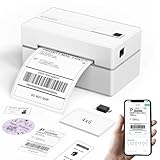
- Bluetooth Wireless Connection: KNAON Bluetooth shipping label printer enables wireless printing. For Mobile users, download the 'FlashLabel Pro' app from APP Store or Google Play for printing. Also, supports Windows and macOS, and can directly connect to the printer by downloading the 'FlashLabel Pro' App. Windows 7 or later computers can also print via Bluetooth by installing the latest advanced driver. Note: All devices CANNOT be connected directly to Bluetooth, and must be used through the 'FlashLabel Pro' app.
- USB Cable Connectivity: This printer ensures seamless USB connectivity with macOS, Windows (7 and above), ChromeOS, and Linux. KNAON printer features a built-in USB drive preloaded with drivers and tutorial videos for a fast and hassle-free setup. For ChromeOS, need to install 'FlashLabel' extension to your Google Chrome.
- Versatile DIY Labeling Options: KNAON Thermal Shipping Label Printer offers a vast selection of pre-designed templates, including 3,000+ templates, 5,000+ icons, and 100+ fonts available in the app. Designed for both professional and personal use, it supports various thermal paper sizes, ensuring effortless customization for all your labeling needs. Ideal for printing DIY shipping labels, barcode labels, thank-you labels, mailing labels, name tags, price tags, and various small thermal labels.
- Seamless Multi-Platform Compatibility: This Bluetooth shipping label printer works effortlessly with all major platforms, including Amazon, eBay, Shopify, USPS, UPS, Etsy, PayPal, Poshmark, DHL, and more, ensuring smooth and efficient label printing. (Note: Save the logistics label as a PDF file on the shipping platforms, then import it into the 'FlashLabel Pro' app for printing).
- Portable & Stylish Design: KNAON multi-function thermal label printer offers user-friendly operation in a compact design. Its perfect size (7.17 x 3.9 x 3.43 inches) makes it simple to store anywhere. With a fast printing speed of up to 180 mm/s and support for paper widths from 1.5 to 4.2 inches. The package also includes 10 test printing papers to get you started right away.
2. Check the economics before buying inventory
Estimate what it costs to acquire and sell one unit, then calculate how much cash you need to open and keep the business operating. The Small Business Administration recommends planning the business and estimating needed capital as part of its startup steps. There is no useful universal startup-cost figure: product, inventory quantity, sales channel, and fulfillment approach can change the total substantially.
Build a per-order cost estimate
Include more than the supplier’s price. For each likely order, account for:
- Product cost and inbound freight, duties, or other acquisition costs that apply.
- Packaging and postage, including the effect of package dimensions and weight.
- Marketplace, storefront, and payment-processing fees.
- Expected refunds, returns, damaged goods, and replacements.
- Advertising or other customer-acquisition costs.
- Taxes and the time or services needed to keep records and meet filing obligations.
Compare the expected selling price with these costs to estimate the contribution left to cover fixed expenses and provide profit. Separately list setup costs and cash needed to replenish stock before sales proceeds are available. Revisit the estimate when you have actual order, return, and advertising data.
3. Choose where customers will buy
A marketplace and a standalone storefront solve different problems. A marketplace can put products in an existing shopping environment, while an independent site gives you a separate branded destination and more direct responsibility for attracting visitors and operating the store. No option is best for every seller.
Free tools Windows power users keep installed
One-click scans. No signup required.
| Decision factor | Marketplace | Standalone storefront |
|---|---|---|
| Customer discovery | May provide access to shoppers already browsing the marketplace; visibility and results depend on the marketplace and its rules. | You generally need to bring visitors through your own marketing and audience-building. |
| Setup and operations | Uses the marketplace’s selling environment, but you must learn its listing, fulfillment, and account requirements. | You operate a separate branded site and arrange its design, checkout, integrations, and ongoing maintenance. |
| Brand and customer relationship | Presentation and customer interactions are governed by marketplace policies and features. | Offers a distinct brand experience; the actual customer data and communication available depend on your tools and applicable rules. |
| Costs and restrictions | Check current listing, transaction, advertising, fulfillment, and category terms with the marketplace; no universal fee schedule applies. | Check current subscription, payment, app, and fulfillment costs with the provider; the seller remains responsible for site operations and compliance. |
Before choosing, compare total recurring and per-order costs, product-category restrictions, design and technical work, integrations, data access, and how each option supports discovery. SBA startup guidance includes an online store in the launch context, and its sales-tax material notes that retailers may use shopping-cart software to calculate rates; software does not determine whether you have a tax obligation. The vendor’s current terms should be checked directly because fees and policies change.
4. Choose a business structure and name
Common structures include a sole proprietorship, partnership, limited liability company (LLC), and corporation. They differ in ownership, liability treatment, taxation, paperwork, and ongoing compliance. The SBA explains that both your structure and business location affect registration, taxes, legal requirements, and personal liability in its business-startup guidance. The right choice depends on your circumstances; get qualified legal or tax advice if you need help weighing those consequences.
Rank #2

- Bluetooth Wireless Connection: KNAON Y41BT Bluetooth shipping label printer enables wireless printing. For iOS and Android users, need to download the 'FlashLabel Pro' App from Apple Store or Google Play. Windows 7 or later computers can also print via Bluetooth by installing the latest advanced driver. Mac users with M1/M2/M3/M4 processors can connect to the printer by downloading the 'FlashLabel Pro' App from Apple Store. Note: All devices CANNOT be connected directly to Bluetooth, and must be used through the 'FlashLabel Pro' app.
- USB Cable Connectivity: This printer ensures seamless USB connectivity with macOS, Windows (7 and above), ChromeOS, and Linux. KNAON printer features a built-in USB drive preloaded with drivers and tutorial videos for a fast and hassle-free setup. For ChromeOS, need to install 'FlashLabel' extension to your Google Chrome.
- Versatile DIY Labeling Options: KNAON Thermal Shipping Label Printer offers a vast selection of pre-designed templates, including 3,000+ templates, 5,000+ icons, and 100+ fonts available in the app. Designed for both professional and personal use, it supports various thermal paper sizes, ensuring effortless customization for all your labeling needs. Ideal for printing DIY shipping labels, barcode labels, thank-you labels, mailing labels, name tags, price tags, and various small thermal labels.
- Seamless Multi-Platform Compatibility: This Bluetooth shipping label printer works effortlessly with all major platforms, including Amazon, eBay, Shopify, USPS, UPS, Etsy, PayPal, Poshmark, DHL, and more, ensuring smooth and efficient label printing. (Note: Save the logistics label as a PDF file on the shipping platforms, then import it into the 'FlashLabel Pro' app for printing).
- Portable & Stylish Design: KNAON multi-function thermal label printer offers user-friendly operation in a compact design. Its perfect size (7.2 x 3.15 x 2.65 inches) makes it simple to store anywhere. With a fast printing speed of up to 180 mm/s and supports paper widths from 1.38 to 4.41 inches. The package also includes 20 test printing papers to get you started right away.
Choose a name, then check the relevant state entity-name records and any trade-name requirements. Consider trademark availability and a suitable domain as separate checks; being able to register a business name does not by itself establish that you can use it without infringing someone else’s rights. SBA’s launch guidance outlines registration and name-related steps.
5. Register the business and check permits
Registration depends on your structure, location, and activity. Check the Secretary of State or equivalent office for the state where you operate, plus relevant city or county offices. A business that sells only online is not automatically exempt from local registration or permits. Product-specific regulators may also apply, depending on what you sell.
The Tool Desk
Outbyte PC Repair FREEClear out junk files and repair common Windows errorsFree Scan →Outbyte Driver Updater FREEScan for outdated or missing drivers - takes under a minuteDriver Scan →Use the SBA’s launch-your-business guidance as a starting point, then confirm requirements with the government offices that cover your actual location and product. The available general guidance cannot establish which permits apply without those details.
6. Get tax IDs, banking, and records in order
An Employer Identification Number (EIN) is free from the IRS. It is required in certain situations, including for many businesses with employees and corporations or partnerships; it is not accurate to assume that every sole proprietor must get one. State tax ID requirements vary as well. Check the SBA’s launch guidance and confirm the applicable steps with the IRS and your state.
Set up a business bank account and keep business transactions separate from personal spending. Maintain records that let you reconcile what happened in each period:
- Sales, refunds, chargebacks, and sales tax collected.
- Inventory purchased, sold, returned, or written off.
- Shipping, packaging, platform, payment, and advertising costs.
- Invoices, receipts, order records, and relevant tax filings.
Consistent records help you understand cash flow and prepare accurate filings. A bookkeeping tool may help, but it does not replace understanding which records and returns your business needs.
Quick wins for a faster PC:
Scan for outdated or missing drivers - takes under a minuteDriver Scan →Repair Windows errors before they cause bigger problemsFix Now →Rank #3

- Go Wireless by Bluetooth: Download the "NELKO"app to print via Bluetooth on your Nelko Bluetooth thermal label printer for iOS and Android. Printing shipping labels has never been easier. Windows 7 or later computers can also print via Bluetooth. For Mac users with M1 or M2 CPUs, install the app and connect to the printer via Bluetooth. Note: All devices cannot be directly connected to Bluetooth and need to be used through the app
- Print via USB: For Windows (7 and later), Mac OS,Chrome OS, you can connect the desktop label printer via USB cable. Note that Mac OS only works with USB connection, you can not print via Bluetooth
- Good Helper for Cost Saving: Advanced thermal direct technology is adopted to achieve the printing speed of 150 mm/s, up to 72 sheets 4x6 labels/min. High speed brings high efficiency and helps your business grow faster! 203 DPI makes printing clearer. No ink, no toner, only thermal labels needed. Both fanfold labels and roll labels could be used. Label size: labels width ranges from 1.54" to 4.1"(40-104 mm), such as 4x6, 3x2, 3x1, 2x1 thermal labels and so on
- Strong Platform Compatibility: This bluetooth shipping label printer can work with virtually all platforms, including Amazon, Ebay, Shopify, USPS, UPS, Esty, PayPal, Poshmark,etc.(Note: Please remember to save the logistics label as a PDF on the logistics platform, then upload it to the editor APP "NELKO" for printing
- Suitable for Commercial and Home Use: Printer driver, instruction videos and problem shooting videos are provided in U-Disk for better setting. Nelko PL70E label printer is much smaller than traditional printers and only requires a small piece of space to achieve printing. Very suitable for printing shipping labels, mailing labels, price labels, barcode labels, name tags and all kinds of small category labels
7. Determine where you must collect sales tax
Online sales can create sales-tax obligations in states where a seller has a physical or economic connection, often called nexus. States set different standards. Inventory, employees, business locations, and sales activity may matter, so identify where the business has connections and check each relevant state’s revenue-authority rules for nexus, registration, taxable products, rates, returns, and due dates.
SBA’s sales-tax guidance at Grow your business notes that shopping-cart software can help calculate rates. A tax calculator can assist with a transaction after setup, but it cannot decide whether nexus exists or remove your responsibility to verify the rules and register where required.
8. Prepare truthful product listings and clear policies
Use accurate descriptions and images, set inventory expectations you can meet, and disclose the total costs customers need to understand before ordering. Make delivery estimates, return terms, and contact information easy to find. Clear information reduces confusion and helps you make promises that your operation can keep.
The FTC’s Business Guide to the Mail, Internet, or Telephone Order Merchandise Rule explains that the rule applies to most goods ordered online. If you state a shipment time, you need a reasonable basis for that estimate. If you state no shipment time, the general rule is that you need a reasonable basis to ship within 30 days after receiving a properly completed order. If you cannot meet the promised time, the rule includes notice and cancellation/refund requirements; consult the FTC guidance for the details and exceptions rather than relying on a simplified checklist.
9. Plan how orders will be packed, shipped, and returned
Decide whether you will store and pack products yourself, use a fulfillment provider, or have a supplier ship orders directly. Holding stock can require more upfront cash but gives you more direct visibility into inventory and packing. Supplier-direct fulfillment can reduce the stock you handle, while making delivery and product quality more dependent on the supplier. Compare the trade-offs for your product rather than assuming either model is always cheaper or more reliable.
Set a repeatable workflow for receiving stock, picking and packing orders, choosing shipping services, creating labels, sharing tracking, and handling returns. USPS’s online shipping workflow prompts sellers to weigh the item, select a mail class, measure the package, label it correctly, and check the zone. Compare available services using the package’s dimensions and weight, delivery promise, tracking, and price; check current carrier prices when you are preparing to ship.
Rank #4

- [HIGH TECH LABEL PRINTER] Equipped with a Japanese high tech thermal print head, 203 DPI high printing quality. No ink, No toner, Clean with no mess, economical. Works with both fanfold labels and roll labels. Label size: labels width ranges from 1.57" to 4.1"
- [PRINT WIRELESSLY]The label printer support printing wirelessly. For windows 8 or later and Mac, you can print via Bluetooth. For Android& iOS, you can’t print via Bluetooth on phone, need to download the App "Jadens printer" and print on it.
- [PRINT VIA USB] USB connection works with both Windows (7 and newer) and Mac OS (10.9 and newer) devices. Please long and press the feed button to identify and calibrate label size each time you change labels.
- [WIDE USAGE] JADENS thermal label printer is widely used to print labels from various marketplaces and shipping platforms, such as Endicia, Dazzle, ShipStation, Shipping Easy, Shippo, ShipWorks, Ordoro, eBay, Amazon, Easy, and Shopify. Use JADENS thermal label maker machine to print shipping labels, warehouse labels, market labels, helping increase your productivity. Ideal for your online small business for shipping packages.
- [EASY TO SET UP & RELIABLE AFTER-SALE SERVICE] Set up in one minute. Printer driver, instruction videos and problem shooting videos are provided in U-Disk for better understanding. Offer one year warranty; customer support can be reached out to email, phone, remote control.
Choose a label-printing method that fits your volume
A dedicated thermal label printer is optional, not a prerequisite for opening an online store. USPS Click-N-Ship supports label creation and printing using a computer and standard printer; its Click-N-Ship basics recommend self-adhesive labels, while plain white paper is also an option. If you do not have a printer, USPS Label Broker provides a way to have a label printed at a participating Post Office. Choose equipment based on order volume and convenience, not as a legal requirement.
10. Test the complete order path before promotion
Place a test order or use the store platform’s test mode to inspect the customer and seller experience. Confirm that the steps below work together:
Recommended Free Tools
- Product page, options, stock status, and displayed delivery or return information.
- Checkout, payment, shipping charge, and sales-tax display.
- Order confirmation email and inventory reduction.
- Packing process, label readability, tracking, and customer notification.
- Cancellation, return, and refund steps, including how records are updated.
Correct confusing or broken steps before sending significant traffic to the store. A test checks your own workflow; it does not establish that the business is legally compliant or that every tax setting is correct.
11. Launch, then use real orders to improve
Start with a manageable assortment and an amount of inventory you can afford to replenish. After launch, track conversion, contribution margin, fulfillment time, cancellations, returns, customer questions, and repeat purchases. Use your actual store data to decide whether to adjust pricing, product selection, shipping, or advertising instead of assuming that a live website will create demand on its own.
If you sell through an online marketplace, check whether the INFORM Consumers Act applies to your account. FTC guidance describes general high-volume thresholds of at least 200 separate sales of new or unused consumer products and at least $5,000 in gross revenue during a qualifying 12-month period in the prior 24 months on an individual marketplace. Covered marketplaces have seller information collection and verification responsibilities, and certain qualifying sellers face disclosure requirements. The rule is conditional, not a requirement for every new seller or every standalone store; see the FTC’s INFORM Consumers Act business guidance for scope and exceptions.
Quick Recap
Product prices and availability are accurate as of the date/time indicated and are subject to change. Any price and availability information displayed on Amazon at the time of purchase will apply.
What’s actually slowing this PC down?
Pick the symptom - the matching free tool is one click away.




