To start an event planning business, define the events and services you will handle, validate local demand, set up the business under the rules where you operate, separate its finances, and build a repeatable system for planning and delivering each event. There is no single permit or registration checklist that applies everywhere: requirements depend on your location, services, and the events you manage.
1. Choose your niche and define what you do
Decide which clients and events you want to serve: weddings, private celebrations, corporate meetings, conferences, or public events. Then draw a clear boundary around your service. You might provide full planning, day-of coordination, consulting, venue and vendor sourcing, or a selected combination.

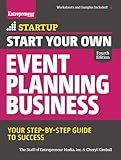
That distinction matters because clients need to know which decisions and tasks you own and which remain theirs or belong to another vendor. The U.S. Bureau of Labor Statistics describes planners’ work as including setting event scope, location and costs; soliciting bids; checking venues; coordinating services; monitoring events; reviewing bills; and negotiating supplier arrangements. See the BLS occupational profile for a broader description of the work.
Compare niches by workload, not assumed profit
There is no comparative profitability evidence here that establishes one event niche as the best choice. Instead, assess each option against practical demands:
#1 Best Overall

- 6 Widths Available Backdrop Stand: Suitable for a wider range of background sizes and party dressing as there are 6 sizes of widths to choose from, unlike traditional backdrop stands, our back drop stand has 8 crossbars with 6 different widths to choose from
- Adjustable Height and Width Background Stand: With adjustable height (2.8ft–7.5ft) and width (1.25–10ft), two empty nylon sandbags for added stability help the photography backdrop stand holds your backdrop in place
- Multifunctional Application Backdrop Frame: Adjustable height and width background stand, if used as a banner stand, fits banner size between 15-120 inches wide and 34.56-89.68 inches high, also suitable for professional photo studio shooting, product display background, DIY photo booth, wedding/party decoration
- Sturdy Tripod Back Drop Stand: The aluminum alloy backdrop stand is durable, professional heavy-duty tripod and thick tube combination, and the design of the tripod base ensures it won’t shake when fully extended to its maximum size
- This Backdrop Holder for photoshoot consists of 6 back drop clamps, 2 tripods, 8 crossbars, 2 sandbags, 1 backdrop stand carrying bag, easy to store and carry, perfect for photographers on the move to use as a photo backdrop stand
- Clients and lead sources: Identify who hires you and how you could reach them, including referrals from venues and vendors.
- Complexity and scale: Consider the number of suppliers, attendees, approvals, and moving parts involved.
- Seasonality and hours: Ask when events typically occur and whether the work clusters around evenings, weekends, or peak seasons.
- Permits and safety: Public events and events involving regulated services may require more coordination with authorities and venues.
- Cash flow: Estimate when deposits and supplier bills are due relative to client payments or ticket revenue.
- Physical goods: Check whether you will buy, rent, sell, or resell tangible items, since that can affect tax obligations.
2. Research local demand and plan the finances
Research potential clients, competitors, venues, and vendors in the area where you intend to work. Specify the services you will offer, how inquiries will reach you, and how you will set prices. The available official guidance does not establish standard planner fee rates; use local market research and your own cost estimates rather than relying on a generic industry number.
Build a cash-flow plan as well as a revenue forecast. Events can require venue or supplier payments before ticket sales or other event income arrives. NSW Government event guidance recommends preparing best-, likely-, and worst-case budgets, identifying funding sources, tracking cash flow, and explaining how bills will be paid before revenue comes in. It also recommends obtaining quotes and tracking expenditure against the budget. Read its financial management guidance.
U.S. Business Formation Statistics can provide context about new business applications, but an application is not evidence that a business became viable. The Census Bureau’s Business Formation Statistics page includes industry-detail weekly data updated through 2025 in a March 11, 2026 release and notes methodology revisions. Treat the series as formation context, not a measure of your odds of success.
3. Choose a structure and register the business
Business structure affects ownership, liability, taxes, and administration. Compare the options available where you live and consult a qualified legal or tax professional if you need help assessing the trade-offs. Check that your proposed business name is available, complete the appropriate formation or registration steps, and determine whether tax or employer registrations apply.
Recommended Free Tools
New Jersey’s event-planning starter kit illustrates one state’s sequence: business planning, NAICS classification, selecting a structure, checking and registering a name, obtaining an EIN, and registering for state tax or employer obligations. Its steps are specific to New Jersey, not a universal process. Use the relevant official business portal in your jurisdiction; the New Jersey event-planning starter kit is useful as a local example.
4. Separate finances and assess insurance
Keep business transactions distinct from personal spending. Set up a dedicated business bank account, a bookkeeping process, and a reliable way to issue invoices and track payments. New Jersey’s starter kit includes banking and insurance among the post-registration steps.
Ask an insurance professional to assess coverage for the work you actually do, your contracts, staffing, venues, and event risks. Do not assume one policy or a generic coverage limit will fit every planner. For public events in NSW, the government guidance identifies a certificate of currency for public liability insurance as a document that may be relevant; required coverage depends on the applicable rules and contract. See the NSW documentation guidance.
5. Check business and event permits, taxes, and safety rules
Make two checklists: one for operating the business and another for each event type, location, and venue. Licensing needs vary with the business, location, and services. Australian Government guidance gives examples that can affect requirements, including use of public land, food or alcohol, public music, and operating a venue. New Jersey likewise directs prospective businesses to check for industry-specific approvals. Start with the relevant official authorities; the Australian Government’s licences and permits guidance explains why requirements depend on the business and its activities.
Tax treatment can change if you sell or rent physical goods as well as provide planning services. For example, California’s tax authority says an event-planning business that expects to sell or rent tangible personal property must obtain a seller’s permit and file regular sales and use tax returns. It also says permit holders must keep tax records for at least four years unless directed otherwise. This is a California rule, not a nationwide statement about service fees or other states’ tax laws. Check the California Department of Tax and Fee Administration’s event-planning guidance and confirm obligations with the tax authority where you operate.
Rank #4

- 【COMPLETE PARTY PACKAGE】: Balloons arch kit package includes 15 folded glass fiber pole, 2 PVC Base, 2 PVC pipe, 2 water(sand) fillable bag, 1 manual pump, 50 balloon clips, 2 balloon knotter, 2 ground secure ropes, 4 ground nails. It will enough for all party decoration you need.
- 【HIGH QUALITY & STURDY】: Well-designed mesh base and water bag, stable PVC pipe.It will not shake sharply due to wind or object collision.The balloon pole is a folded integral accessory, with the single length is 17 inches high strength black glass fiber pole, bending is not easy to break,You can reuse it anywhere you want.
- 【ADJUSTABLE SIZE&EASY ASSEMBLY】: The height and width of the arch can be adjusted at will by adjusting the distance between the bases. Install this balloon arch will no more than 2 minutes.
- 【WIDE APPLICATIONS】: The bolloon arch kit is suitable for birthday party, family parties, Christmas and Halloween but also for catered presentations, wedding and baby showers and so on.Use your creativity to decorate your party with different balloons.
- 【FRIENDLY CUSTOMER SERVIES】: We created with extra care and attention-to-detail to provide the best experience for you.
For events in NSW, public and outdoor event planning may involve venue consent, permits, insurance evidence, contracts, risk and emergency plans, and crowd or security planning. Other places may impose different requirements. Confirm both the business rules and the event-specific rules with the authorities and venue responsible for each location.
Independent reader supportYour contribution helps us test, update, and keep practical guides available for everyone.6. Create a written system for delivering events
Use a consistent file for each job so that the client, venue, vendors, and planning team can work from the same approved information. NSW Government event guidance describes plans and records that can support public and outdoor events; the exact requirements depend on the event and location.
Core event documents
- A client brief and signed scope that identify responsibilities and approvals.
- A budget, payment schedule, supplier quotes, and vendor agreements.
- A run sheet and production schedule with times, owners, and dependencies.
- A contact list, venue information, and site plan.
- A tracker for approvals, permits, insurance evidence, and key decisions.
- Risk and emergency procedures, plus relevant security, cleaning, and waste arrangements.
- Backup plans for important suppliers, timing, or site constraints.
NSW guidance notes that an event plan can cover timing, venue, target audience, run sheet, production schedule, ticketing, key contacts, site plan, approvals, security, emergency procedures, cleaning, and waste. It describes the plan’s purpose this way: “The key purpose of an event plan is to provide an overview of the event, as well as to provide authorities and agencies with the necessary information for licence and permit approvals.” Consult the full NSW documentation guidance when relevant.
Best Value

- High quality wooden chalkboard, easy to erase and write clearly.the chalkboard thickness is 0.12 inch.
- Smooth surface, easily wipes clean with a cloth or eraser—eco-friendly and paper-saving.
- Double-sided blackboard, both sides can be written on,according to the writing content, it can be placed horizontally and vertically
- Application scenarios - Desktop chalkboard sign creates a stylish art display for your home, restaurant, coffee shop, wedding, menu, bar, fundraiser, to-do list, birthday, love letter, graduation party, recipes, photo shoot, etc.
- Dimensions are 5.1X7.9 inches with a wooden base
An event planning binder or organizer can hold budgets, schedules, contracts, approvals, and decisions; a well-organized digital filing system can do the same job. Choose a format that makes current documents easy to find and update.
7. Find clients, deliver well, and learn from each event
Build a portfolio from work you have permission to show. Explain your process and service boundaries to prospects, and develop referral relationships with venues and suppliers. During the event, work from the approved run sheet and production schedule, and keep the relevant contacts informed when plans change.
Afterward, reconcile invoices, settle vendor balances, and record what should change for the next event. The BLS notes that planners coordinate with clients, venues, suppliers, and attendees, and that work can involve tight deadlines, multiple events at once, travel, and additional hours near event dates. Its occupational profile describes U.S. employment, not the likely income or workload of a particular small business.
Do you need a degree or certification?
The BLS says planners typically need a bachelor’s degree and that voluntary certifications are available. Those are descriptions of the U.S. occupation, not a universal legal credential required to open an event-planning business. Check local rules for any credential or training requirement that applies to your particular services or events.
Do these 3 things before closing this tab:
1Repair Windows errors before they cause bigger problems2Scan for outdated or missing drivers - takes under a minute3Clear out junk files and repair common Windows errorsWhat U.S. occupational figures can tell you
The BLS reports 155,800 U.S. jobs in the occupation in 2024, a median annual wage of $59,440 in May 2024, projected employment growth of 5% from 2024 to 2034, and about 15,500 openings per year on average over 2024–2034. These figures describe the broad U.S. meeting, convention, and event-planner occupation; they are not a forecast of a new business’s revenue, profit, or chances of success. Details and qualifications appear in the BLS Occupational Outlook Handbook.
Quick Recap
Product prices and availability are accurate as of the date/time indicated and are subject to change. Any price and availability information displayed on Amazon at the time of purchase will apply.




