Outdated Drivers Are Slowing You Down
One free scan finds every outdated or missing driver and matches the right update for your exact hardware.Free scan · exact hardware matchPC Slower Than It Used to Be?
A free scan shows the junk files, broken settings and background clutter dragging Windows down - then fixes them in one click.Free scan · Windows 10 & 11You can start a sauce business from home only if your specific product, production method, location, and sales plan are allowed by the rules that apply to them. A general cottage-food exemption does not automatically cover bottled sauce, especially a product intended to be shelf-stable. Start by identifying the sauce and asking state and local food authorities whether you may make and sell it from your home kitchen; then choose a compliant production route and build the business around its real costs and limits.
This is a U.S.-wide starting guide, not a determination that any particular sauce is legal to produce at home. Requirements can vary by state, county, city, product, process, and sales channel.
1. Define the sauce and how it will be stored
Before investing in jars, labels, or a business name, write down exactly what you plan to sell. The word “sauce” does not determine the product’s regulatory category; ingredients, processing, packaging, and intended storage all matter.
- Record the full ingredient list and the specific recipe version you intend to produce.
- Describe the process, including whether the product is acidified, fermented, or otherwise processed.
- Specify the container and whether you intend the finished sauce to be refrigerated or shelf-stable.
- Note the sales channels and geography you want to serve, such as local direct sales, online orders, wholesale, or sales across state lines.
These details give regulators and a qualified food-processing professional something concrete to assess. Do not make a shelf-stable claim based only on the product name or a recipe you found online.
#1 Best Overall

- Stainless steel and 5 layers bottom: Kirecoo 8-Quart Stainless Steel Stockpot with Lid is an essential kitchen cookware, boasting an advanced stainless steel construction with a 5-layer thickened base. This cooking pot features high temperature and corrosion resistance, promising a long service life without easy deformation. Composed of aluminum, iron, aluminum, and a magnetic base, the 5-layer bottom of stockpot has good sturdiness and performance. It heats quickly and distributes heat evenly.
- Riveted handles and Glass lid: Kirecoo soup pot comes equipped with riveted stainless steel side handles, proving sturdy and secure grip. Smooth handles are ergonomically designed and securely fastened with rivets for easy and safe pouring or moving. Kitchen pot also includes a transparent tempered-glass lid with steam vent allowing you to check the heat and moisture levels during the cooking process. Furthermore, This tight-sealing lid retains heat and moisture enhancing the cooking quality.
- Versatility with Large Size: Kirecoo 8 qt cooking pot features classic sliver appearance and large size, while is ideal large for cooking, boiling, blanching, braising, simmering and more. You can use the large pot to process ingredients for making kinds of recipes. This large pot works well from cooking family-size batches of soups, pasta, spaghetti, sauce, stews to boiling water and canning bath. It is nice to have the extra capacity, so it doesn't boil over with a lot of liquid.
- Non-stick Interior: Kirecoo non stick pot features an nonstick interior, engineered through a specialized process to achieve exceptional longevity of performance. The superior nonstick surface ensures effortless food release, no only making cooking with soup pots a breeze, but also facilitates easy cleaning. The pasta pot interior will no reacting with food to alter natural tastes, healthy for daily cooking and soup making.
- Wide Compatibility Kitchen Cookware: This Wide Compatibility cookware is designed to make meals efficient and enjoyable. The simmer pot compatible with various cooktops, including gas, electric, ceramic, halogen, induction cooktops. The 5-layer thickened bottom(10MM in base thickness) of Kirecoo induction pot ensures best thermal absorption and transmission no matter what kind of cooktops and safe to 350 degrees F. Besides, 8qt deep pan is suitable for dishwasher use, ensuring easy cleanup.
2. Ask state and local authorities whether home production is allowed
Contact the state agriculture or health department and the county or city health department for the place where the sauce will be made. Ask about the exact product and process, rather than simply asking whether “cottage food” is allowed. FDA’s How to Start a Food Business advises home-based food businesses to learn the rules of FDA and their state and local health departments.
Confirm the requirements that apply to your situation, including:
- Whether this exact sauce qualifies for a home-food or cottage-food exemption.
- Whether you need a registration, permit, license, inspection, or other approval to produce it.
- Which sales locations and channels are allowed, and whether online, wholesale, or interstate sales are treated differently.
- What label wording, records, or other conditions apply to the product and sales route.
FDA exempts a private residence that meets the federal definition from FDA food-facility registration. That is a federal registration exemption only; it does not authorize production or sales under state or local rules, or remove other applicable federal obligations. A separate food facility generally must register with FDA unless an exemption applies. Ask the relevant authorities which requirements fit your production setup.
3. Determine whether specialized processing rules apply
Some sealed, shelf-stable sauces may fall under FDA rules for acidified foods or low-acid canned foods. FDA’s definitions rely on characteristics of the finished food, including equilibrium pH and water activity, as well as how it is packaged and processed—not on whether a product is called hot sauce, barbecue sauce, or salsa.
What’s actually slowing this PC down?
Pick the symptom - the matching free tool is one click away.
Rank #2

- 18/10 Stainless Steel: The Cook N Home Stainless Steel Stock Pot is made of mirror-polished 18/10 stainless steel, making it resistant to deformation; An aluminum disc bottom between the steel layers ensures even heating for optimal cooking results
- Large Capacity: The Stainless Steel Soup Pot can hold the right amount of ingredients and soup for family use, perfect for family meals, gatherings, or outdoor dining
- Induction Compatible: Our cooking pot is induction compatible and works with various heat sources, including gas, electric, glass, ceramic, and halogen; Oven safe up to 500°F and lids safe up to 350°F; Dishwasher safe
- Easy to Clean, Stack, and Store: The inner and outer surfaces of the cooking pot are smooth and easy to clean; Its stackable design maximizes storage space; It is recommended to dry the pot thoroughly after cleaning before storing
- Glass Lids and Comfortable Handles: The tempered glass lids a steam vent to view food while cooking; Riveted stainless steel handles are durable, comfortable, and wide/deep for a secure grip
- Acidified food: generally, a low-acid food to which acid or acid food is added, with finished equilibrium pH at or below 4.6 and water activity above 0.85.
- Low-acid canned food: generally, food with finished equilibrium pH above 4.6 and water activity above 0.85, subject to exceptions that include certain tomato products.
These definitions are not a do-it-yourself safety test. Do not infer that a sauce is eligible for home production, safe at room temperature, or compliant because of its ingredients or a single pH reading. Have the product and proposed process assessed before making a shelf-stability claim.
4. Get qualified process help when needed
For covered commercial processing of acidified or low-acid canned foods in hermetically sealed containers, FDA rules include establishment registration and applicable scheduled-process filing requirements. For acidified foods, process information is filed per product and container size. FDA’s instructions for Form FDA 2541e say scheduled processes must be established by qualified people with relevant training and experience.
Ask the state or local regulator whether your product and setup are subject to these rules, and consult a qualified process authority when the product or process calls for specialized review. A consumer pH meter, a recipe, or a single measurement is not a substitute for a qualified evaluation of the product and its process. A University of Minnesota Extension case describes one Minnesota producer’s practice; it is an example, not a universal approval method or target.
5. Choose a production route that is permitted for your product
Use the regulator’s answer to decide where production can happen. If home production is not allowed for your sauce, ask about a licensed commercial kitchen or another licensed processor. Minnesota Extension identifies a commercial kitchen rental as one route for licensed processors, but that does not establish that every kitchen—or every sauce—qualifies.
Rank #3
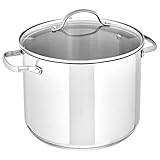
- Large capacity: holds up to 8 quarts--great for large batches of soups, stews, and more
- Sturdy and fast heating: made of heavy-gauge stainless steel for reliable strength; aluminum-encapsulated base distributes heat quickly and evenly
- Riveted handles and glass lid: stainless-steel side handles come riveted for strength; transparent tempered-glass lid with hole for releasing steam
- Versatile: suitable for any stovetop, including induction; oven-safe up to 500 degrees F (without the lid)
- Care and warranty: dishwasher-safe for easy cleaning; backed by an Amazon Basics 1-year limited warranty
| Route | What to confirm | Cost and capacity considerations |
|---|---|---|
| Home or cottage production | Whether the exact product and process are allowed at your address; applicable registration, inspection, label, and sales-channel limits. | Costs depend on local requirements and the production model; no universal startup or per-unit cost is established. Production volume and permitted channels depend on the applicable rules. |
| Licensed commercial kitchen | Whether the kitchen is licensed for the product and process, what approvals you need, and which requirements apply to your own business. | Kitchen time and other expenses depend on the facility and arrangement; no general price or capacity is established. Renting access may provide a route to licensed production where home production is not allowed. |
| Another licensed processor | Whether the processor is qualified and authorized for your product, process, package, and intended market. | Costs, minimum volumes, and production capacity are not established here. Get terms directly from a processor before relying on this route. |
Compare the routes on the exact product’s eligibility, approvals and process review, permitted sales geography and channels, fixed and per-unit costs, production volume, and how much control you retain over production. Do not assume that approval for one setup transfers to another.
6. Build a plan around actual costs and local requirements
Prepare a simple operating and financial plan before you commit to equipment, packaging, or a production agreement. Estimate costs that fit your chosen route rather than relying on a generic “start a food business” budget.
- Per-batch costs: ingredients, containers, closures, labels, and any product or process testing you are advised to obtain.
- Production costs: kitchen time, equipment, labor, storage, and delivery, if applicable.
- Business costs: permits or fees that apply locally, insurance, bookkeeping, and marketing.
- Sales assumptions: the price customers will pay, how many units you can produce and sell, and the cost of reaching each sales channel.
The U.S. Small Business Administration (SBA) recommends planning the business and checking permits and zoning. Local zoning and business-permit requirements may apply to a home-based operation, and the details vary by location. No single startup budget applies to every sauce business; your costs depend on jurisdiction, process, and production route.
Independent reader supportYour contribution helps us test, update, and keep practical guides available for everyone.7. Set up the business and its finances
Once you know the likely production route and requirements, decide how to organize and manage the business. The SBA’s launch guidance covers planning, business structure, registration, taxes, permits, banking, and other startup topics; the right choices depend on your circumstances and local rules.
Rank #4

- THIS 24QT STOCKPOT IS A NECESSARY ADDITION TO YOUR KITCHEN - This large 24QT stockpot features the timeless French kitchen elegance design; cuts a fine figure both in the kitchen and at the dining table - Made of food grade NICKEL FREE stainless steel for better health and better nutrition - 4.2MM in base thickness and 8LBS in weight - Great for boiling lobster, crab, or simmering stocks, soups for large crowds - Discover the gourmet chef in you with this beautiful and efficient stockpot.
- NICKEL FREE HEALTHY COOKWARE - Made of food grade NICKEL FREE stainless steel, non-toxic, non-allergic & more energy savings. - Japanese standard JYH21CT SS (21/0) for the pot body & the inner base; 430 (18/0) for the outer base - Nickel-bearing stainless steel (e.g., 304 SS) is commonly used for cookware, BUT nickel is high up on the ATSDR list of priority toxins and it LEACHES under regular cooking conditions! - Nickel free stainless steel is also more heat-conductive than nickel bearing SS.
- QUALITY BUILD & ELEGANT APPEARANCE - Look noble & elegant: mirror polished exterior, matte polished interior, see-through clear tempered glass lid with steam vent, and ergonomical stainless steel handles - These pots are beautifully engineered by HOMICHEF's own in house manufacturing facilities at the world top quality - Compatible with gas, electric, induction, ceramic, glass and halogen stovetops.
- ADDITIONAL FEATURES - 3-Ply construction in the 4.2MM thick base (one layer of pure aluminum core sandwiched between two stainless steel layers) eliminates warping and hotspots effectively and ensures optimal thermal absorption and transmission, thus faster cooking and more energy saving - Solid riveted stainless steel handles stay cool on stovetops - Tempered glass lid is specially designed to release excess vapors while efficiently circulating heat & moisture, preserving flavors & nutrients.
- DEVOTED CUSTOMER SERVICE - Genuine HOMICHEF healthy stainless steel cookware products, certified by ISO9001, BSCI, etc. - TRADEMARK filed in U.S.A. - In business since 1998 - This product comes with 6-Year Product Warrantv & LIFETIME Customer Service - You can always come to us for discounted parts, cooking consultations, and customer service at HOMICHEF store on Amazon.
- Choose a business structure and a name, then check the state and local registration steps that apply.
- Determine applicable tax obligations and keep business income and expenses organized. A separate business bank account can make that tracking clearer.
- Ask your city or county about zoning and business permits for the home address and activities you have in mind.
- Review insurance needs with an appropriate professional, including coverage relevant to selling a food product.
Do not treat business registration as food-production approval: each answers a different question.
8. Check the label and packaging before ordering a run
Verify labeling requirements for the exact product, production route, and sales channel with the relevant regulator. Confirm what ingredient and allergen information and other statements are required, and check any packaging conditions that apply to your product. Requirements can differ by jurisdiction and product category.
Use state guidance only for the state it covers. For example, Minnesota cottage-food label requirements are Minnesota-specific and should not be presented as nationwide rules. Have the proposed label reviewed before printing a large quantity so a correction does not leave you with unusable packaging.
9. Start with an allowed sales channel and learn from the results
After confirming the product, production route, labels, and sales channel are permitted, begin at a scale you can manage. Depending on local permission, that might mean a farmers market, direct local sales, or another allowed route. Check the rules for each channel instead of assuming that permission to sell locally also permits online, wholesale, or interstate sales.
The Tool Desk
Outbyte PC Repair FREEClear out junk files and repair common Windows errorsFree Scan →Outbyte Driver Updater FREEScan for outdated or missing drivers - takes under a minuteDriver Scan →Track each production batch, its costs, the channel where it sells, and repeat orders. Use customer feedback and actual sales—not an unsupported market-size estimate—to decide whether to adjust the recipe, price, packaging, or production plan. Expand only after checking what the next sales channel requires.
Quick Recap
Product prices and availability are accurate as of the date/time indicated and are subject to change. Any price and availability information displayed on Amazon at the time of purchase will apply.




