To start a food truck business, first test a focused food concept, then cost the operation, choose and register a business structure, verify local rules, select a truck that fits both your menu and approved plans, and prepare a controlled launch. The order matters: food-truck permits, equipment rules, and allowed vending locations depend on where and how you operate, so check with the relevant authorities before buying or building a truck.
1. Choose and test a focused concept
Decide what you will sell, whom you want to serve, how customers will order, and where you expect to operate. A useful concept is specific enough to guide decisions about equipment, service speed, suppliers, and locations—not just a broad cuisine label.
Define the offer and customer
- Set a menu that can be prepared consistently in the space and time available.
- Identify likely customers and the occasions when they might buy: for example, lunch near workplaces or meals at permitted events.
- Choose a service style, such as counter ordering or preorders, and consider the staffing and workflow it requires.
- List the locations where those customers are likely to be, then investigate demand and competing food options before committing to a vehicle or buildout.
Location is a business-planning decision as well as a sales decision. The U.S. Small Business Administration (SBA) notes that location can affect taxes, zoning, regulations, and expenses. Compare access to target customers and likely demand with local vending restrictions, recurring fees, and the costs of travel and operation.
Test the idea before making a large commitment
Use customer conversations, small-scale menu trials, or permitted short-term selling opportunities to learn which items people choose and how quickly you can serve them. Keep track of what sells, preparation time, ingredient use, and customer feedback. Treat early interest as evidence to investigate—not as proof that a permanent route or truck will be profitable.
Crashes, No Sound, or Screen Glitches?
Random freezes, missing sound and display glitches usually trace back to one bad driver. Find and replace yours safely.Free scan · under a minuteWindows Errors? Fix Them Before They Spread
Repair common Windows errors and clear accumulated junk for a smoother, more stable PC - no reinstall needed.Free scan · no reinstall#1 Best Overall
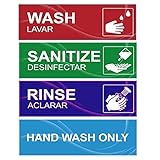
- Package includes 4 Pcs sink labels, bold contrast lettering "WASH, RINSE, SANITIZE and HAND WASH ONLY", include spanish translation. The sink stickers are ready for your needs and demands from your kitchen or restaurant.
- Long-lasting materials with strong adhesive, waterproof, wash rinse sanitize sink labels sign is made of premium vinyl, for 3 compartment sink.
- Sink stickers with different colors - Red for wash, Purple for rinse, Green for sanitize and Blue for hand wash only, conspicuous color can easy distinguish quickly, quick to assemble, so you won't get it wrong.
- The wash rinse sanitize sink labels are easy to use, just dry and clean surface from dust and grease, tear off the film and apply stickers, smooth bubbles using a card. Perfect for any wash station, 3 compartment sinks, commercial kitchens, bus stations, dish washing stations, restaurant, food trucks etc.
- Widely used - 3 compartment sink label and hand wash only label are perfect for any wash stations, fit for stainless steel, glass, aluminum, metal material etc.
2. Build a business plan and startup budget
Write down how the business will earn revenue, serve customers, and cover its costs. Estimate sales using the locations, hours, menu, and service capacity you actually expect—not an unsupported national average. The reviewed official sources do not establish a reliable food-truck-specific startup-cost benchmark, so calculate your own total from local quotes and requirements.
Separate startup costs from recurring costs
| One-time or launch costs | Recurring operating costs |
|---|---|
| Truck or other vehicle; conversion or buildout; major equipment; initial permits and fees; initial inventory and launch preparation. | Food and supplies; payroll; insurance; fuel; commissary or storage costs where applicable; utilities; maintenance; payment-processing costs. |
These categories are a planning checklist, not a claim that every business will incur each item. Local rules, the menu, whether the truck is new or used, and the operating model change the actual budget. Include likely repairs and modifications when comparing vehicles, not just the asking price.
Estimate the amount of cash the business needs
The SBA recommends estimating at least one year of monthly expenses when calculating startup capital. Build a month-by-month forecast that includes slower periods, food and labor costs, and the time it may take to establish regular locations. Use the forecast to estimate your break-even sales level and identify when cash may run short. The SBA’s funding guidance emphasizes that the funding need and choice depend on the business and the owner’s circumstances; compare options against your budget and ability to take on repayment or other obligations.
3. Choose a legal structure and register the business
Select a structure after weighing personal liability, tax treatment, ownership plans, fundraising needs, paperwork, formation and ongoing fees, and your state’s rules. The SBA explains that structure affects taxes, the ability to raise money, paperwork, and liability. No single structure is right for every owner, and the details vary by state.
Rank #2
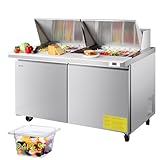
- 15.4 Cu.Ft. Capacity: Skilled in cold storage and freshness, this refrigerated prep table includes a 61 x 9.5 inch cutting board for sandwich-making. The perforated shelf has 24 pcs 1/6 pans that are durable and easy to clean
- Quick & Efficient Cooling: Featuring a Cubigle compressor and finned copper tubing, this sandwich prep table ensures reliable cooling and meets UL, CSA tested standards for tested performance
- Premium Material: Food-grade PC pans meet ANSI tested standards, providing peace of mind for food storage. The sandwich fridge with stainless steel build is durable and easy to clean, with brake casters for smooth mobility
- Electronic Temperature Control: With a digital control screen, this sandwich table maintains temperatures at 33~41℉, so vegetables, sauces, fruits, and meats stay fresh
- Auto-Closing Door: When the door opens within 90°, it automatically snaps shut—no need to push, and no cold air lost. The adjustable shelving in this sandwich prep cooler provides two-tier storage, with each shelf holding up to 90 lbs
- Compare the available structures. Consider your personal risk exposure, whether you will have co-owners, how you expect to fund the business, and the administrative work you can manage.
- Check state and local registration rules. Register the entity or trade name as applicable to your chosen structure and location.
- Obtain the tax IDs required for your business. Confirm which registrations apply to your circumstances rather than assuming every business needs the same set.
- Open a business bank account. Keep business income and spending separate so you can track cash flow and maintain clearer records.
Business registration does not replace food, vending, vehicle, or other operating approvals. Treat those as separate checks with the agencies responsible for your planned locations.
4. Map permits and food-safety requirements before buying or building
There is no single nationwide food-truck permit. The FDA explains that retail food establishments such as food trucks are generally regulated by state and local governments, and requirements depend on the product and facility. The FDA Food Code is a model offered for government adoption, not a permit that automatically applies across the country. The FDA identifies the 2026 Food Code as its newest full edition; jurisdictions determine how their own rules are adopted and implemented.
Identify the authorities for every planned operating area
Start with the health department for the city or county where you expect to operate, and ask which state agencies also have a role. If you plan to cross jurisdictional boundaries, check requirements for each operating area. A permit in one place should not be assumed to authorize vending elsewhere.
Ask what applies to your menu and operation
Use these questions to guide conversations with regulators. They are prompts for local verification, not a list of requirements that applies everywhere:
What’s actually slowing this PC down?
Pick the symptom - the matching free tool is one click away.
Rank #3

- Durable & Waterproof Material: Crafted from high-quality vinyl, these sink labels are built to last. They are completely waterproof and designed to withstand frequent use in wet environments, ensuring long-lasting durability and convenience for your 3-compartment sink
- Highly Visible, Bold Lettering: Featuring large, bold text with high-contrast colors, the 3 compartment labels clearly display “Wash,” “Rinse,” “Sanitize,” and “Hand Wash Only.” The bright, noticeable design allows for quick and easy identification
- Versatile Use in Various Settings: Ideal for commercial kitchens, restaurants, food trucks, bussing stations, dishwashing areas, and more. These sink stickers help organize wash stations and ensure compliance with sanitation standards in any busy food service environment
- Easy Application: Equipped with a strong self-adhesive backing, these stickers apply effortlessly to any clean, flat surface—such as stainless steel, glass, aluminum, metal, sinks, refrigerators, and compartments. Just peel and stick for instant use
- Package Includes: 5 sink labels, each measuring 3x9 inches. Perfect for ensuring all sink compartments are clearly marked
- Does the agency require a plan review or an inspection before opening?
- Which permits or applications apply to the vehicle, business, food preparation, and vending locations?
- Are food-manager or food-handler credentials required for your operation?
- Must you use a commissary or another approved servicing or storage arrangement?
- Are there separate fire, vehicle, parking, zoning, or vending approvals?
- What equipment, handwashing, sanitation, refrigeration, water, and waste provisions must the layout provide?
- Can approvals be used across neighboring jurisdictions, or must you apply separately?
Write down the agency’s answers, required documents, expected sequence, fees, and inspection timing. Confirm requirements before paying for a conversion: a menu and cooking process can affect the equipment and layout a regulator will approve.
Independent reader supportYour contribution helps us test, update, and keep practical guides available for everyone.5. Select a truck and equipment around the menu and approved plans
Choose the vehicle only after you understand the proposed workflow and have checked the layout with the relevant authority. The FDA’s mobile-food guidance appears in the Food Code, but local authorities decide which requirements apply to a particular business. A truck that looks suitable or has a low purchase price can still need costly changes—or fail to fit the approved plan.
Compare the full cost and operating fit
- Total cost: Add purchase price, conversion, equipment, repairs, and required modifications.
- Vehicle condition: Assess maintenance needs and whether the vehicle can reliably support the planned work.
- Menu and capacity: Check that the layout, storage, refrigeration, and cooking capacity support the menu and expected service volume.
- Sanitation and utilities: Verify space and systems for the locally required sanitation facilities, power, water, and waste handling.
- Serviceability: Consider access to maintenance and the practical effect of downtime on scheduled service.
- Approval: Confirm that the proposed layout and equipment can meet the requirements for your menu and operating area.
Ask suppliers or builders for detailed specifications and a written breakdown of what is included. If you are comparing used vehicles, account for condition and any changes required to make the layout suitable; purchase price alone is not a meaningful comparison.
6. Prepare to operate and launch
Before opening, line up the practical pieces that let you serve customers consistently and meet the rules that apply to your operation.
Quick wins for a faster PC:
Fix the driver behind crashes, sound loss and screen glitchesFind Drivers →Clear out junk files and repair common Windows errorsFree Scan →Scan for outdated or missing drivers - takes under a minuteDriver Scan →Complete the operating setup
- Secure service locations and event permissions; confirm dates, access conditions, and any recurring fees.
- Arrange suppliers and a process for ordering, receiving, storing, and tracking ingredients.
- Set staffing levels and responsibilities for preparation, service, cleaning, and recordkeeping.
- Arrange insurance suited to your state, vehicle, employees, and operations; coverage needs differ by business.
- Choose payment and order processes, and plan how you will record sales, expenses, inventory, and payroll.
- Establish food-safety procedures based on the applicable rules and your actual menu and workflow. Confirm required tools, including any temperature-measuring equipment, with the local regulator.
Use a soft opening to check the plan
Begin with a limited service period or menu where practical and permitted. Track sales, food use, labor, fuel, maintenance, and service times against your forecast. Use the results to adjust portions, purchasing, staffing, hours, or locations. Keep records by service period and location so that a busy event does not obscure a less viable regular route.
Quick Recap
Questions to settle before spending on a truck
- Which city, county, and state agencies regulate the planned service areas?
- What approvals must be in hand before construction, inspection, or vending?
- Does the proposed menu require a particular layout, equipment, or servicing arrangement?
- What are the full vehicle, conversion, launch, and monthly operating costs?
- Where will the business be allowed to sell, and what recurring location costs apply?
- How much working capital is needed to cover monthly expenses while sales develop?
Product prices and availability are accurate as of the date/time indicated and are subject to change. Any price and availability information displayed on Amazon at the time of purchase will apply.




