The Tool Desk
Outbyte Driver Updater FREEFix the driver behind crashes, sound loss and screen glitchesFind Drivers →Outbyte PC Repair FREERepair Windows errors before they cause bigger problemsFix Now →Set up a tilapia farm by confirming that you can legally raise the species, have reliable year-round water and a suitable site, and can sell the fish at a price that covers both construction and ongoing production. Then choose a system, design it around local conditions, and secure dependable fingerlings and feed before stocking. Permits, operating targets, and costs depend on your location and scale; there is no universal setup budget or stocking plan.
What should you decide before spending money?
Start with the market and the production target, not with a pond design or equipment purchase. Decide how much fish you aim to sell each year, the size buyers want, and whether you will sell live, whole, or processed fish. Identify likely buyers and ask about their volumes, delivery schedules, handling requirements, and quality expectations. Check road access, labor availability, electricity, land tenure, and access to credit.


Choose whether to buy fingerlings from a hatchery or produce your own. Buying seed may simplify the first crop, while producing it adds a separate set of facilities and management demands. Your target volume, production intensity, and sales channel help determine the land and infrastructure you need. FAO’s 2017 business manual treats scale, intensity, and production target as inputs to land planning and notes the importance of market location and access to roads and electricity.
Build a location-specific budget
Before committing to land or construction, estimate capital costs and recurring costs separately. Include land preparation, ponds or tanks, water intake and drainage, equipment, permits, and any needed buildings in the capital estimate. For each crop, estimate fingerlings, feed, labor, water, electricity, aeration, maintenance, mortality, harvest, holding, processing, packaging, and transport. Include the cost of reaching buyers and the possibility that a crop or sale is delayed.
Request local prices and model revenue using a realistic saleable harvest and prices confirmed with prospective buyers. The FAO materials describe higher-intensity systems as requiring greater feed, water-exchange, and aeration inputs, but do not establish a current setup cost or universal break-even point. Do not treat a production example as a forecast for your farm.
Which permits and rules apply?
Check with the relevant local fisheries or aquaculture authority before acquiring fish or beginning construction. Depending on the jurisdiction and operation, approvals may govern the cultured species or hybrid, water intake, discharge, land work, fish transport, animal health, and food handling or sales. Rules can differ even within a country, so a generic permit list cannot establish what your farm needs.
For U.S. readers, Texas A&M AgriLife Extension advises prospective culturists to determine first which tilapia species, if any, may legally be cultured in their state. Elsewhere, confirm the rules with the competent local authorities, including restrictions intended to prevent escapes or the spread of non-native fish.
Rank #2
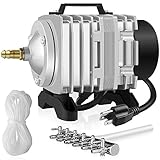
- Electromagnetic air pump: High quality ZL 102 Aluminum alloy, outstanding heat dissipation performance, surface phosphating treatment, electrostatic spraying, uniform color. No lubricant design, compressed air is purer.
- Max air pressure & air volume: The powerful 18W electromagnetic motor produces excellent air pressure (over 0. 02 mpa) and delivers a large amount of air to the six adjustable valve outlets. 100% copper outlet nozzle for long-lasting stable oxygen supply.
- With standard air tubing: 1/4" Diameter, 25 foot Tubing, flexible and durable, won't become brittle or crack. Transparent and non-toxic, so it won't hurt your fish. Ideal for use with aquarium decorations or bubblers and many filters.
- Wear-resistant and shockproof: The steel engine Cylinder Piston adopts New wear-resistant material, which is highly wear-resistant and completely energy-saving, economical. Rubber anti-vibration base can effectively prevent shock and buffer.
- Best applications: pumping 38 liters of air per minute (10 gallons per minute), low noise (less than 60 decibels) and a 1.8m power cord make it an oxygenated aquarium or pond or plant root in a hydroponic system ideal air pump.
Can the site support tilapia production?
Assess water, land, and climate across the full growing cycle, not just during a wet-season visit. The site should provide enough water of suitable quality when production needs it, with practical intake and drainage. Check temperature patterns, water availability during dry periods, flood risk, slope, groundwater, soil retention, and access for feed delivery and fish removal.
Do these 3 things before closing this tab:
1Scan for outdated or missing drivers - takes under a minute2Clear out junk files and repair common Windows errors3Fix the driver behind crashes, sound loss and screen glitchesTest water and soil before designing
FAO’s inland-farm design guidance says, “The site and general arrangement will control the economics of operation.” Its assessment checklist includes dissolved oxygen, pH, total salts, ammonia, free carbon dioxide, and pollutants such as phenols, oil, and tar. Also consider turbidity and natural productivity. Use appropriate field instruments for routine checks, but do not assume a basic water-quality kit replaces laboratory analysis where soil chemistry or contaminants need investigation.
For pond sites, FAO’s business guide identifies sandy clay or clay loam as recommended soil types and advises checking soil chemistry, drainage, and flood conditions. The inland-farm design guidance favors preferably impervious soil and gravity-fed supply and drainage where feasible. Have topography and soil conditions assessed before excavation; poor drainage or water loss can make a seemingly inexpensive site costly to operate.
Rank #3
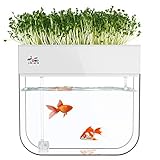
- Fish Tank & Seed Sprouter: The fish waste fertilizes the plants, and the plants clean the water for fish.
- Self Cleaning System: Plants consume fish dung as nutrients, so the tank requires 50% fewer cleanings than traditional fish tanks.
- Siphon Oxygen Supply: The water level of the tank is tidal-like fluctuation, and the roots of the plants can breathe regularly, no need watering or fertilizing. Meanwhile a natural oxygen supply is brought to the fish.
- Educational Product: Use the system at home or in a classroom. Let kids learn germination and teach concepts like food sustainability, aquatic environments, and animal care.
- Great Gift: A wonderful gift for kids, parents, teachers, foodies and gardening lovers. (Note: Search B08BR8H72X for the pump spare parts.)
Which production system fits your site and capacity?
Choose a system based on available land and water, control over water quality, power reliability, labor, capital, and the fish size and volume your buyers need. A system with more control may also require more equipment, energy, and management. No option is best for every location.
| System | Site and water needs | Management and equipment implications | Main trade-off |
|---|---|---|---|
| Earthen ponds | Suitable land, water supply, soil that retains water, and workable drainage. | Can use natural food; plan for feeding, water quality, drainage, and control of unwanted reproduction. | Often a practical production format, but depends strongly on land and water conditions. |
| Floating cages | A suitable lake, reservoir, or other waterbody with acceptable water conditions. | Require complete feed input. Equipment can include netting, floats, frames, a shore shed, and a boat. | Fish can be observed and harvested from the cage, but the farmer has relatively little control over the surrounding water. |
| Tanks or raceways | A purpose-built footprint with dependable water movement or treatment. | Design for solids removal, adequate flow, and aeration; plan for waste handling. | More control over the production space than an open waterbody, with corresponding infrastructure and operating needs. |
| Recirculating aquaculture systems | A site and building arrangement suited to a designed water-treatment loop. | A treatment train commonly includes rearing tanks, solids removal, biological filtration, aeration or oxygen generation, and degassing. | Reuses water, but depends on functioning treatment and life-support equipment; no universal design or cost is established. |
FAO describes these differences in its tilapia production overview and business and farm-design guidance. Compare water use and discharge, power dependence, labor, harvest logistics, biological risks, and exposure to weather or infrastructure failure as part of the decision, rather than comparing construction cost alone.
How should you lay out and build the farm?
Have a qualified person assess site levels, soil, water flow, and drainage before settling the layout. Where practical, make filling and draining controllable by production unit so one pond or tank can be managed or harvested without disrupting the rest. Arrange access for feed storage and delivery, equipment servicing, and moving harvested fish to holding, processing, or transport.
Rank #4
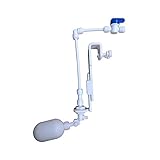
- 【WIDE APPLICATION】The aquarium water adding device can be used to replenish fresh water in fish tanks and improve fish living environment, creating a great deal of bubbles that your fish loves. The fish tank water changer features fully automatic start and stopping, no electricity is needed.
- 【VARIOUS INSTALLATION】The ATO system is easy to hang on to your aquarium sump. The unique double hanging device can be directly hung on aquariums or fish tanks. The updated water level adjustment device, which enjoys a larger rotation range, replaces the original bracket adjustment, and the aquarium water changer can be applied to water level range from 0.5 to 15 cm.
- 【FLOAT VALVE】The unique float valve: the adjustment shaft adopts engineering plastic instead of metal screw, and you don’t need to worry about corrosion. You can adjust the ideal angle by hands and no extra tool. Furthermore, the multi-purpose bracket can fix water replenisher firmly. The water level controller can work with water purifier and normal water bucket, a superior supply for both fish tanks and aquarium.
- 【EASY STORAGE】The aquarium water changer abandoned the crude benzene hose, and the aquarium water replenisher can be connected to 8 meters 20Ft white cube, weighs 200 grams, which is easier for adding water and storage. Floating ball is small in volume and will not occupy the space in the fish tank.
For ponds, plan for complete and rapid drainage where intensive production requires it, and provide separate filling and drainage where feasible. FAO’s 2017 business manual gives 1,000–2,000 m² as a general pond surface-area reference and states a minimum of 300 m² in its design context. These are not universal requirements: pond dimensions should follow the site, production plan, water control, and local engineering advice.
Independent reader supportYour contribution helps us test, update, and keep practical guides available for everyone.How do you prepare for stocking and daily operation?
Secure healthy fingerlings and an appropriate feed supply
Use a reliable hatchery and confirm the fish species or strain, fingerling health and size, sex-management approach, and transport plan. Uncontrolled spawning in mixed-sex ponds can produce too many small fish and reduce the share that grows to market size. Management approaches described by FAO include stocking all-male or predominantly male fish, growing fish out on time, and completely draining ponds between crops where suitable.
Match feed to fish size and production system. More intensive production generally depends on complete formulated diets; whether a particular feed is economical depends on local price, quality, and availability. Confirm a dependable supply before stocking rather than assuming an appropriate product will be available when the fish need it.
Quick wins for a faster PC:
Fix the driver behind crashes, sound loss and screen glitchesFind Drivers →Repair Windows errors before they cause bigger problemsFix Now →Scan for outdated or missing drivers - takes under a minuteDriver Scan →Install monitoring and life-support equipment for the chosen system
Plan for controlled inlets and outlets, screens, nets, and harvest gear. Provide suitable instruments to monitor relevant water conditions, and determine whether aeration and backup power are needed for the system’s oxygen risk. An aerator or paddle wheel is not a universal specification: sizing depends on the farm layout, fish biomass, water conditions, and operating plan. Cages also need appropriate frames, floats, feed storage, and boat access; recirculating systems need solids filtration and biofiltration designed as parts of the treatment system.
Set stocking and production targets locally
Do not transfer a density or feeding rate from one production system to another. Plan stocking, feed, water exchange, and harvest size around local temperature, oxygen supply, fish size, feed quality, and market demand. As examples rather than guaranteed targets, FAO’s tilapia overview (publication year not stated on the accessed page) reports semi-intensive pond systems stocking male tilapia at 1–3 fish/m², reaching 400–500 g in 5–8 months depending on temperature, and producing normal yields of 6–8 tonnes/ha/crop. It also reports daily exchange of 5–15% of pond volume to maintain dissolved oxygen in those production examples. Those figures should not be assumed to apply to cages, tanks, other climates, or a different level of management.
How should you manage the first crop?
Start at a scale your team can monitor and manage reliably. Before stocking, write down the planned stock count, feeding approach, water checks, mortality response, harvest size, and who is responsible for each task. Keep records of fingerlings stocked, feed used, mortalities, water observations, growth samples, labor, electricity, sales, and costs. These records help you identify whether problems arise from growth, survival, feed use, water management, or the economics of selling the harvest.
Use regular observations and growth sampling to compare actual performance with the production and cash-flow plan. If oxygen conditions deteriorate, fish stop feeding, mortality rises, or growth falls behind, investigate the cause before increasing density or feed. Your local aquaculture adviser or extension service can help adapt operating targets to local water, climate, species, and regulations.
Quick Recap
Product prices and availability are accurate as of the date/time indicated and are subject to change. Any price and availability information displayed on Amazon at the time of purchase will apply.




