Quick wins for a faster PC:
Clear out junk files and repair common Windows errorsFree Scan →Fix the driver behind crashes, sound loss and screen glitchesFind Drivers →Repair Windows errors before they cause bigger problemsFix Now →You can generally remove a late payment only if it is inaccurate, incomplete, duplicated, tied to identity theft, obsolete, or cannot be verified. If it is accurate and current, paying the account or disputing it simply because it hurts your credit usually will not make it disappear. You can dispute a genuine reporting error directly and for free.
When can a late payment be removed?
Accuracy is the dividing line. The Consumer Financial Protection Bureau (CFPB) says accurate negative information generally cannot be removed from a credit report. A late-payment entry may be corrected or deleted if the information is wrong, incomplete, duplicated, not yours, or cannot be verified after a dispute. The CFPB also recognizes identity-theft-related entries as a basis to dispute. See the CFPB’s guidance on removing accurate but negative information.


Paying an overdue account later does not, by itself, make the original late-payment notation inaccurate. A paid account can still have an accurate record of an earlier missed payment. A creditor’s reporting should reflect what happened, including any applicable payment arrangement or accommodation.
Check your reports and identify the error
Review the report from each nationwide credit reporting company—Experian, Equifax, and TransUnion—and note which one displays the entry. Record the account, payment month, status, amount, and dates shown. An error on one report does not necessarily mean the same entry appears on the others.
#1 Best Overall
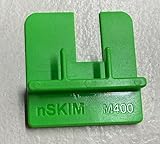
- COMPATIBILITY: Works with multiple credit card terminal models including VeriFone M400 & M440 stationary terminals
- QUICK DETECTION: Takes only seconds to verify if credit card terminals are free from unauthorized skimming devices
- SECURITY TOOL: Helps protect payment systems by identifying potential tampering or foreign objects on card readers
- EASY TO USE: Simple physical verification process requires no technical expertise or special training
- VERSATILE DESIGN: Available in different models to accommodate various terminal types including M400 for Verifone M400 / M440. The MX 900 for Verifone MX900/MX925, Ingenico Lane (3000/5000/7000), Pax PX7 and more.
Compare the entry with statements, payment confirmations, lender correspondence, and any written deferment or accommodation. The CFPB lists common report problems such as accounts belonging to someone else, identity-theft accounts, an account incorrectly shown as late, incorrect payment or delinquency dates, and duplicate debts. See its list of common credit-report errors.
- A payment is marked late even though your records show it was made on time.
- The reported late month or date is wrong.
- The account is not yours, or your file appears to contain another person’s information.
- An identity thief opened or used the account.
- The same debt or late entry appears more than once.
- The account’s status or ownership is reported incorrectly in a way that affects the late-payment entry.
Dispute the entry with the reporting company and furnisher
Send a focused dispute to every credit reporting company showing the error, and separately dispute it with the creditor or other company that supplied the information (the furnisher). The CFPB recommends contacting both. A reporting company generally forwards the dispute and relevant information to the furnisher, but a direct dispute also gives the furnisher notice and an opportunity to correct its account records.
Rank #2

- COMPATIBILITY: Works with multiple credit card terminal models including VeriFone MX 915/925, Ingenico Lane 3000/5000/7000, and PAX PX7 terminals
- QUICK DETECTION: Takes only seconds to verify if credit card terminals are free from unauthorized skimming devices
- SECURITY TOOL: Helps protect payment systems by identifying potential tampering or foreign objects on card readers
- EASY TO USE: Simple physical verification process requires no technical expertise or special training
- VERSATILE DESIGN: Available in different models to accommodate various terminal types including MX900 and M400 series
| Route | What to send | What it does |
|---|---|---|
| Credit reporting company dispute | The specific account and late-payment entry, what is wrong, the correction requested, and copies of supporting records | Requests a reinvestigation of the entry on that company’s report |
| Direct dispute with the furnisher | Account details, an explanation of the error, and copies of payment or account records | Asks the company that supplied the information to investigate and correct its data |
Use each company’s designated dispute process and keep a copy of everything you submit. The CFPB explains how to dispute an error on a credit report.
What to include in your dispute
Identify the account and the exact month or notation you dispute. State plainly why it is wrong and what correction you want—for example, removal of a late notation for a month your bank records show was paid on time. Attach copies, not originals, of relevant statements, bank confirmations, correspondence, or identity-theft documents. Keep originals and proof of delivery.
The Tool Desk
Outbyte Driver Updater FREEFix the driver behind crashes, sound loss and screen glitchesFind Drivers →Outbyte PC Repair FREERepair Windows errors before they cause bigger problemsFix Now →A narrow, evidence-based dispute is more useful than a blanket objection. A reporting company may decline to investigate a dispute it reasonably considers frivolous or irrelevant, including one that does not provide enough detail to identify the problem.
What happens after you file?
A credit reporting company generally has 30 days to conduct a reasonable reinvestigation after receiving a dispute, subject to statutory qualifications. The furnisher also generally must investigate and respond within 30 days. The deadline is an investigation period, not a promise that the entry will be removed.
- If the information is inaccurate or incomplete, it must be corrected.
- If it cannot be verified, it must be deleted or modified.
- If it is verified as accurate, it may remain on the report.
The general reinvestigation rule appears in 15 U.S.C. § 1681i. Save the investigation results and check the report again to confirm that any correction appears where the entry was reported. The CFPB says furnishers must notify reporting companies after correcting wrong information.
Independent reader supportYour contribution helps us test, update, and keep practical guides available for everyone.If the dispute does not fix the problem
Read the investigation result and gather any additional records that address the reason given. If you have new evidence or can explain a specific unresolved error, submit a renewed, detailed dispute to the relevant reporting company and furnisher. You can also ask how the information was verified and, where appropriate, request that a brief statement of dispute be included in your file.
If the reporting problem remains unresolved, you can submit a complaint to the CFPB. A complaint is a way to seek follow-up, not a guarantee that an accurate entry will be deleted. The CFPB describes how to submit a consumer complaint.
How long can a late payment stay on a report?
Most negative account payment history can generally be reported for up to seven years, but this is not a promise that every entry disappears exactly seven years after a bill was paid. The applicable date depends on the type of information and relevant reporting dates, and some types of information follow different rules. Check the entry’s dates and dispute it if it is being reported beyond the applicable period. The CFPB explains how long information can stay on a credit report.
Avoid paid promises to erase accurate late payments
You can dispute report errors yourself without paying a credit-repair company. No company can lawfully compel the removal of accurate, current, verifiable information simply because you pay it. The required consumer disclosure in 15 U.S.C. § 1679c states that neither consumers nor credit-repair organizations have the right to remove accurate, current, and verifiable information. Be wary of guarantees to erase a legitimate late payment or claims that a fee can bypass the dispute process.
Quick Recap
Product prices and availability are accurate as of the date/time indicated and are subject to change. Any price and availability information displayed on Amazon at the time of purchase will apply.
What’s actually slowing this PC down?
Pick the symptom - the matching free tool is one click away.




