What’s actually slowing this PC down?
Pick the symptom - the matching free tool is one click away.
To market tilapia, first decide how much you can sell, when it will be ready, and in what form. Then ask prospective buyers for their specifications and compare channels by net return—not just the price they offer. Farm-gate sales, farmers markets, restaurants, retailers, processors, wholesalers, brokers, distributors, and live-fish haulers can all be options, but the right fit depends on your location, production scale, labor, processing access, and delivery capacity.
Choose a channel that fits your harvest and capacity
There is no single best outlet for every tilapia farm. Direct selling gives you a relationship with the customer and may let you retain more of the retail price, but you take on more selling, handling, and delivery work. An intermediary may provide access to established buyers or larger-volume outlets, while leaving you with less of the downstream price.
| Channel | What it may offer | What to confirm |
|---|---|---|
| Farm-gate or direct consumer | Direct customer contact; can suit small volumes and local demand. | Pickup or delivery arrangements, customer service, holding capacity for live fish, and local rules if selling processed fish. |
| Farmers market | Face-to-face sales and immediate customer feedback. | Market rules, time and transport requirements, and cold-chain arrangements. |
| Restaurant or grocery sold direct | A direct buyer relationship when you can meet the buyer’s product and supply needs. | Fish size, processing, portion uniformity, quantity, packaging, delivery, and supply schedule. |
| Processor or wholesaler | May take larger lots or reduce the farm’s direct-selling workload. | Accepted size and quality, minimum volume, schedule, price, payment terms, and transport costs. |
| Broker, distributor, or live-fish hauler | May connect you with buyers or provide specialized transport. | Applicable licenses or permits, service charges, buyer demand, and who carries handling and loss risk. |
| Online or institutional buyer | May open access to a broader market or a defined customer group. | Order volume, packaging, logistics, food-safety and labeling requirements, and delivery expectations. |
These are general tradeoffs, not guaranteed outcomes. The University of Missouri Extension’s channel comparison considers factors such as volume suitability, grower time, consumer contact, and price stability in a Missouri business-planning context; it is not a forecast for every location. See Planning for an Aquaculture Business in Missouri.
Work out what you can reliably sell
Before approaching buyers, estimate your saleable harvest, expected size range, and harvest windows. Be clear about whether supply will be seasonal or regular. A buyer’s interest is useful only if your production schedule can meet the quantity and timing they need.
#1 Best Overall

- One 32 ounce bag of Farm-Raised Tilapia Boneless Skinless Fillets
- Some of your favorite Amazon Fresh products are now part of the Amazon Grocery brand! Although packaging may vary during the transition, the ingredients and product remain the same. Thank you for your continued trust in our brands.
- No added phosphates
- Responsibly sourced
- 23g protein per serving
Ask each prospective buyer for specifics before harvest. Restaurants, grocers, processors, and wholesalers may look for consistent size, uniform portions, convenient delivery, and dependable supply. Requirements vary, so confirm them directly rather than assuming that a general description of market demand applies to your operation. Purdue Extension’s guide to marketing for small-scale aquaculture producers discusses matching a product and sales approach to customer needs.
- What quantity can the buyer take, and how often?
- What size range, product form, and quality standards will they accept?
- Who handles processing, packaging, pickup, and delivery?
- What are the price, payment schedule, and any minimum-volume terms?
- What records or documentation does the buyer require?
Choose a product form you can deliver lawfully and consistently
Potential product forms include live fish, whole cleaned fish, and fresh or frozen fillets. Each can involve different handling, processing, packaging, transport, and cost requirements. Do not offer a processed product until you have a reliable, lawful arrangement for producing and delivering it.
Rank #2
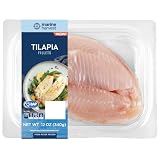
- Marine Harvest Tilapia is farm raised and fresh
- Two 6oz skinless fillets per package. The perfect meal for two.
- Only 130 calories per serving and packed with protein and vitamin D.
- Marine Harvest Tilapia Fillets have the highest 4 star rating from Best Aquaculture Practices
- Farm-raised in Costa Rica, Honduras, Mexico or Colombia
Product examples and outlets described by Mexico’s government aquaculture profile are specific to that context; they do not establish universal requirements or current prices elsewhere. See Acuacultura Tilapia.
Calculate the net return for each channel
A higher quoted price does not necessarily mean a more profitable sale. Estimate the full cost of producing and selling each product form, including feed, fingerlings, labor, energy, harvest, mortality, processing, packaging, transport, market fees, and the time spent selling. Then set a minimum acceptable price for each channel.
Windows Errors? Fix Them Before They Spread
Repair common Windows errors and clear accumulated junk for a smoother, more stable PC - no reinstall needed.Free scan · no reinstallOutdated Drivers Are Slowing You Down
One free scan finds every outdated or missing driver and matches the right update for your exact hardware.Free scan · exact hardware matchRank #3

- Product Type:Fish
- Item Package Dimension:8.636 cm L X27.559 cm W X33.655 cm H
- Item Package Weight:0.993 kg
- Country Of Origin: Peru
Track what actually happens during a small initial sale: realized price, unsold product, time, fees, transport, spoilage, and payment delays. Compare the resulting net return across channels. Direct selling can capture more of the consumer price, but the added work and costs belong in the calculation. Agricultural Marketing Resource Center’s Aquaculture Profile recommends realistic cost-of-production analysis as part of business planning.
Build a practical sales plan
- Estimate harvest and timing. Record likely saleable volume, size range, and harvest dates, and decide whether you can offer regular or seasonal supply.
- Set a price floor. Calculate full production and selling costs for each product form and channel so you know what terms are viable.
- Contact buyers before harvest. Ask restaurants, grocers, processors, wholesalers, and market managers about specifications, quantities, schedules, packaging, delivery, and documentation.
- Test one or more outlets at manageable volume. Measure realized net return and workload rather than treating a buyer’s quoted price as the whole result.
- Keep a backup outlet when practical. A direct channel might handle part of a harvest while a processor or wholesaler takes additional volume. Confirm terms in advance.
- Promote verifiable details. State the product form, local harvest availability, and delivery schedule if accurate. Do not make claims such as “organic,” “sustainable,” “chemical-free,” or health claims unless you can substantiate them and meet applicable standards.
Plan for food safety and local requirements
Safe production, harvest, handling, chilling or live transport, processing, and delivery are part of selling a food product—not separate details to leave until a buyer places an order. The World Health Organization’s Five keys to safer aquaculture products to protect public health addresses safe aquaculture production and post-harvest handling.
Rank #4

- YOU SAY YOU DON'T LIKE FISH? Have you met tilapia? We like to call it the fish hater’s fish. Mild, sweet, and flaky, tilapia is like the forgetful person in your friend group that no one can ever stay mad at because they’re just so nice. Tilapia is abundant, cost friendly, low in calories, incredibly versatile, and simple to prepare.
- WHAT'S IN THE PACKAGE. Five (5) pounds of flash frozen and vacuum sealed boneless, skinless tilapia filets. Our fish is sustainably farm-raised with no additives or preservatives.
- HOW YOUR TILAPIA ARRIVES. Here’s a house guest that won’t smell after three days… as long as you keep it in the freezer. Today Gourmet tilapia filets arrive in an insulated container with dry ice. Each filet is flash frozen and individually vacuum sealed so you can use only what you need each time. Interested in learning more about the benefits of flash freezing? We’ve got a bullet point for that (keep scrolling).
- HOW TO PREPARE. Take your pick. Bake, broil, grill, fry, air fry. Tilapia absorbs flavors exceptionally well, so be as adventurous or as restrained as you like — tilapia is happy to oblige.
- THE FLASH FREEZING DIFFERENCE. Flash freezing uses extremely cold temperatures to rapidly freeze foods. The process is much faster than traditional freezing and locks in freshness, taste, and quality by minimizing ice crystal formation. (Fast forward through the cellular-level science.) Thanks to the smaller ice crystals, the food — when thawed — maintains its structure, moisture content, and texture.
Permits and rules for processing, labeling, transport, and sales depend on where and how you sell. For example, Oklahoma State University Extension notes that selling dressed fish can require a health permit in its Oklahoma guidance; that is not a universal rule. Check with the relevant local and national authorities for your operation. See Getting Started in Aquaculture.
Independent reader supportYour contribution helps us test, update, and keep practical guides available for everyone.What U.S. tilapia sales data can—and cannot—tell you
AgMRC reports that 147 U.S. farms cultured tilapia and reported total sales of $51,247,000 in the 2023 Census of Aquaculture, published by the USDA National Agricultural Statistics Service. Those figures describe the census’s 2023 reference year; they are not a current-year market-size estimate, a local demand forecast, or a prediction of what an individual farm will earn. See AgMRC’s Tilapia profile.
Quick Recap
Best Value

- 1-pound resealable bag of pink salmon skinless fillet portions, individually vacuum sealed
- Wild Caught
- Sustainably Sourced: Certified by the Marine Stewardship Council
- Phosphate Free
- Pink Salmon has a delicate flavor and is lower in fat than most other types of salmon on average.
Product prices and availability are accurate as of the date/time indicated and are subject to change. Any price and availability information displayed on Amazon at the time of purchase will apply.




