Do these 3 things before closing this tab:
1Fix the driver behind crashes, sound loss and screen glitches2Clear out junk files and repair common Windows errors3Scan for outdated or missing drivers - takes under a minuteStart by checking your electricity rate and bill: rising demand on the local grid does not automatically mean your household pays a higher real-time price. Most consumers pay rates based on seasonal average costs, while some utilities offer time-of-day pricing. Your best savings strategy depends on which charges your rate actually includes: use less electricity, shift flexible use to cheaper hours only when your tariff rewards it, and check for local utility incentives or demand-response credits.
Why rising power demand may not change your bill immediately
Electricity demand affects the wholesale cost of supplying power, but that does not mean every household pays a price that changes hour by hour. The U.S. Energy Information Administration (EIA) says most consumers pay rates based on seasonal average costs; some utilities offer time-of-day pricing. Check your own tariff rather than assuming local grid pressure has changed your retail rate. EIA explains how electricity prices and their drivers work.
Prices also differ substantially by location. EIA’s preliminary data for 2025 put the average retail price across all customer types at 13.63 cents per kWh and the residential average at 17.30 cents per kWh. Across all customer types, the 2025 averages ranged from 8.20 cents per kWh in North Dakota to 35.72 cents per kWh in Hawaii. These national and state figures provide context, not a forecast of your rate or a measure of what you could save. They come from EIA’s Electric Power Monthly tables using February 2026 preliminary data. See EIA’s Electric Power Monthly data.
Read your bill to find out what can change
Before changing routines or choosing a new plan, identify how your utility calculates the bill. The main charge types respond differently to conservation and changes in timing.
Free tools Windows power users keep installed
One-click scans. No signup required.
#1 Best Overall

- Various Monitoring Parameters: The power meter plug can monitor the power (W), energy (kWh), volts, amps, hertz, power factor, cost, minimum and maximum power (W), cumulative days and time of your appliances. By switching 7 display modes, you can easily know the various parameters while the appliance is working. The home energy monitor can also calculate and display how much power your appliance uses and how much electricity bill it cost in cumulative time
- Upgraded LCD Display: With large screen size 2.36 inch x 1.85 inch, clearer monitor backlit, our electrical usage monitor can display the data clearer and more visible no matter day or night. 180°full wide viewing angles is great for reading and recording the data in any angles. No need to stand on the front of the display and bend over to read the numbers
- Adjustable Backlight Time: Our upgraded watt meter has 5 options of backlight time. The default backlight time duration is 10 minutes(bL-0). If you want to change the backlight time, you can press and hold "UP" and "DOWN" button at the same time to enter backlight time setting, then press "UP" and "DOWN" to select the backlight time (bL-0 =10 minutes, bL-1=1 hour, bL-2=4 hours, bL-3=8 hours, bL-4=always on), finally press the "COST" to save the backlight time settings
- Overload protection: When the power of the appliance exceeds the overload power, the LCD will display “OVERLOAD” to warn the user. All the buttons will quit working and can only be workable when you lower or remove the load power. The default overload power is 3680W and is adjustable from 0 to 3680W. In general, you need to set the overload power to 1800W before using. Just press the "function" button for more than 3 seconds to enter the setting
- Data Memory Function: The wattage meter will record your power consumption data when you remove it from socket, or remove appliances from the electricity monitor. You can directly see the last data when you use it next time. This function can also automatically save the data when there is a sudden power failure
- Energy charge: A charge based on the kWh you use. The price may vary by time of day or season, depending on your rate.
- Demand charge: A charge based on your highest electricity use, measured in kW, during a defined period. It is not the same as a charge for total kWh. If your residential rate includes one, a short period of high simultaneous use may matter even if monthly energy use is modest.
- Fixed charge: A monthly amount set by the rate schedule. Using less electricity generally does not reduce this part of the bill.
Look for the rate name, energy prices, any stated peak or off-peak windows, fixed monthly fees, and demand charges. Review several months of bills if you have them. If your utility provides interval usage data, it can help show when you consume electricity and whether that timing lines up with the tariff. The U.S. Department of Energy’s Federal Energy Management Program explains these bill components and recommends reviewing bills and interval data when evaluating rates. DOE guidance on evaluating electricity rates.
Cut electricity use where it matters most
Using fewer kWh can lower the energy portion of a bill, regardless of whether your rate changes by time of day. Start with the larger loads in your home and practical steps that fit your equipment and routines. EIA identifies efficient products, programmable thermostats, turning appliances off when they are not needed, and utility efficiency programs as ways to conserve energy. EIA’s overview of efficiency and conservation.
Rank #2

- Multi-function power monitor: Our electric usage monitor can monitor the power (W), electricity(kWh), voltage(V), frequency(Hz), current(A), power factor(PF), unit price($/kWh), total cost($) of your appliances. By switching 8 display modes, you can easily know the various parameters while the appliance is working. The “electricity” mode can calculate and display how much power your appliance uses. And the “total cost” mode will show how much electricity bill it cost in cumulative time
- Overload protection: When the loading power of the appliance is over the default overload threshold 1800W, the whole display with backlight and the word “OVERLOAD” will keep flashing to warn the users. Please turn off the appliance for safety concern
- Premium Material: The whole body of our energy meter is made of high-quality ABS material. It makes our home electricity usage monitor more long lasting, fireproof and anti-drop. The standard US socket and plug is suitable for all US standard appliances
- Backlight Display: With white backlight and black words, the LCD display of our home power monitor can display the data clearer and help you to read the data easier no matter day or night. The backlight will only lights up when the device is connected to AC power. If no button is pressed, the backlight turns off automatically after 10 minutes. You can also press the "UP" button to turn off the backlight manually, and press any button to turn on backlight again
- Easy to reset: No reset tool needed, our appliance power usage meter is easy to reset. You can press the “M” button for 5 seconds directly to reset the device. After reset, all cumulative data (electricity quantity, cost) will be cleared, and all settings will be restored to factory settings
- When replacing equipment or appliances, compare energy efficiency alongside purchase cost and features.
- Use a programmable thermostat to manage heating or cooling schedules if it is compatible with your system and suits your household. A thermostat is a control tool, not a guaranteed source of savings; results depend on the equipment, settings, and how the home is used.
- Turn off appliances when they are not needed, where doing so is practical and consistent with the manufacturer’s instructions.
- Ask your utility whether it offers rebates or other efficiency incentives, and confirm eligibility and terms before making a purchase.
Efficiency and conservation can reduce energy use, but the amount saved on your bill depends on your starting use and rate. There is no single savings percentage that applies to every home.
Shift flexible electricity use only when your rate rewards it
If your tariff charges less during off-peak hours, moving some flexible electricity use to those periods may reduce energy charges. First verify both the exact hours and the price difference: peak, shoulder, and off-peak schedules vary by utility and plan. Then compare those windows with your household’s routine.
Rank #3
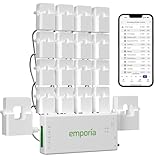
- SAFETY YOU CAN TRUST WITH UL CERTIFICATION: With Emporia Energy, your home energy monitoring is safe, reliable, and certified. The Emporia Vue is UL Listed, meaning it has met rigorous safety standards for electrical products in the U.S. and Canada. This certification ensures that every component has been thoroughly tested to prevent hazards, such as overheating, short-circuiting, or fire, offering you peace of mind as you manage your home’s energy consumption.
- INSTALLS IN CIRCUIT PANEL of most homes with clamp-on sensors. Supports Single phase, Single-split phase, and 2-wire systems. 3-wire systems; 3-phase, 4-wire Wye systems with earthed (TN or TT) neutral (no-Delta) are supported with an additional 200A sensor (sold separately).
- 24/7 ENERGY MANAGEMENT AND MONITORING: Automate, manage and control your home's real power anywhere, anytime to prevent costly repairs, conserve energy, and save costs. Monitor solar / net metering. PROTECTED BY A 1-YEAR WARRANTY.
- LOWER YOUR ELECTRIC BILL: Configure settings in the Emporia Energy App to automate energy management for time of use, peak demand, excess solar, and rewards programs. You can even see live reporting and invaluable savings opportunities instantly. Gauge real-time spending and get actionable notifications and automated energy management to help you reduce costs.
- REAL-TIME ENERGY DATA: REQUIRES 2.4 GHz WIFI WITH AN INTERNET CONNECTION to monitor energy use with iPhone / Android / Web app. Vue sensors collect energy data and are accurate from ±2%. The Vue is UL and CE Listed for your safety. 1 second data is only available in the app (when actively open) and retained 3 hours. Minute and hour data are retained in the cloud. 1 minute data is retained 7 days, 1 hour data is retained indefinitely. Export cloud data whenever you want in the app.
Laundry or dishwashing may be movable for some households, subject to appliance instructions and practical needs. Shifting use does not necessarily reduce total kWh; it changes when that electricity is consumed. If your rate does not have time-variable prices, or the cheaper window does not suit your routine, changing appliance timing may not lower the bill.
A contract that does not match a household’s usage pattern can cost more, according to the Australian Government Department of Climate Change, Energy, the Environment and Water. Its guidance is an Australian consumer example, not a substitute for checking U.S. utility terms. The page also says hot water accounts for 25% of household energy use on average in its guidance context; that figure is not a universal estimate for U.S. homes. Australian Government guidance on understanding energy bills.
Rank #4

- Various Monitoring Parameters: The power meter plug can monitor the power (W), energy (kWh), volts, amps, hertz, power factor, cost, minimum and maximum power (W), cumulative days and time of your appliances. By switching 7 display modes, you can easily know the various parameters while the appliance is working. The home energy monitor can also calculate and display how much power your appliance uses and how much electricity bill it cost in cumulative time
- Upgraded LCD display: With large screen size 2.36 inch x 1.85 inch, clearer monitor backlit, our electrical usage monitor can display the data clearer and more visible no matter day or night. 180°full wide viewing angles is great for reading and recording the data in any angles. No need to stand on the front of the display and bend over to read the numbers
- Adjustable Backlight Time: Our upgraded watt meter has 5 options of backlight time. The default backlight time duration is 10 minutes(bL-0). If you want to change the backlight time, you can press and hold "UP" and "DOWN" button at the same time to enter backlight time setting, then press "UP" and "DOWN" to select the backlight time (bL-0 =10 minutes, bL-1=1 hour, bL-2=4 hours, bL-3=8 hours, bL-4=always on), finally press the "COST" to save the backlight time settings
- Overload protection: When the power of the appliance exceeds the overload power, the LCD will display “OVERLOAD” to warn the user. All the buttons will quit working and can only be workable when you lower or remove the load power. The default overload power is 3680W and is adjustable from 0 to 3680W. In general, you need to set the overload power to 1800W before using. Just press the "function" button for more than 3 seconds to enter the setting
- Data Memory Function: The wattage meter will record your power consumption data when you remove it from socket, or remove appliances from the electricity monitor. You can directly see the last data when you use it next time. This function can also automatically save the data when there is a sudden power failure
Check for demand-response credits and utility programs
Some utilities offer demand-response programs that ask customers to reduce electricity use for a short period, often during a grid reliability concern or high wholesale prices. DOE describes demand response as a voluntary, short-term decrease in customer electricity use; depending on the local program, participation may earn a discount, bill credit, or other compensation. Neither enrollment nor payment is universal, so ask your utility for the actual terms. DOE’s demand-response overview.
Before enrolling, find out:
- Who is eligible and whether enrollment is open to your rate or meter type.
- How events are announced and how often they may occur.
- Whether the utility remotely controls cooling or heating equipment, water heaters, or other devices, and what permissions you grant.
- Whether you can opt out of an event, and what happens if you do.
- How compensation is calculated, when it is credited, and whether any conditions apply.
Demand response is separate from a time-of-use tariff: one may offer compensation for short-term reductions during selected events, while the other charges different prices according to a schedule. A utility may offer one, both, or neither.
Best Value

- ✓ Backlit LCD Display: The watt meter features an upgraded backlit LCD display with a 160° wide viewing angle, providing clear and distinct data readings from any angle, day or night. (Note: To conserve energy, the backlight will automatically turn off after 15 seconds of continuous use.)
- ✓ 9 Types of Data Display: This energy meter plug accurately monitors a wide range of electrical parameters, including power (W), apparent power (VA), energy consumption (kWh), usage time (hours), power frequency (Hz), power factor (PF), voltage (V), current (A), and electricity cost. The user-friendly interface allows you to easily read and navigate through 9 types of data with a single button.
- ✓ Save Money and Energy: By toggling through the 9 display modes, you can gain insights into various operational parameters of your devices. The home energy monitor also calculates and displays the electricity consumption and cost over time, helping you save on your electricity bills by monitoring and managing energy usage.
- ✓ Data Storage: The plug-in electricity meter stores all non-real-time data, ensuring no information is lost in the event of a sudden power outage. If data exceeds the screen’s maximum display range, the screen will flash as a reminder. Pressing and holding the reset button for 3 seconds will reset the cumulative data to zero.
- ✓ Safe to Use: Rated voltage 125VAC, 60Hz, 15A maximum 1875W resistor and tungsten wire, 1/2HP. Clean and tidy interface, very simple to use.
Compare plans using your own usage pattern
If you can choose among multiple tariffs or retail suppliers, compare estimated total bills using your household’s actual usage—not just the advertised energy rate. DOE recommends gathering bills and interval data to evaluate alternatives. Where available, a utility’s bill calculator or rate comparison tool can make the comparison easier, but check that it includes all relevant charges.
- Compare the total estimated bill for your usage, including fixed fees and any demand charges.
- Check the prices and exact hours for peak, shoulder, and off-peak periods.
- Consider whether the schedule fits when your household actually uses electricity.
- Confirm access requirements, such as a smart meter, and any program eligibility or equipment-control conditions.
A lower advertised kWh price may not result in a lower total bill if a plan’s fixed charges, peak window, or other terms do not fit your usage. There is no universally cheapest rate: the right comparison depends on your location, tariff options, and household load pattern.
Quick Recap
Product prices and availability are accurate as of the date/time indicated and are subject to change. Any price and availability information displayed on Amazon at the time of purchase will apply.




