Recommended Free Tools
The easiest place to start is a frame-rate cap: it stops your PC from rendering frames beyond a limit you choose, using built-in controls and letting you undo the change quickly. Set the cap near the frame rate you actually want, then compare power and smoothness in the same game scene before and after. A cap can reduce performance above its ceiling, so the right setting depends on your display, game, and tolerance for latency.
1. Establish a baseline before changing settings
Choose a repeatable scene in a game you play often. Record the resolution and graphics settings, then note average FPS, low-percentile FPS, frame-time consistency, GPU power if available, temperatures, and fan noise. If you want to know what the whole computer draws from the outlet, a plug-in electricity meter can measure wall power; component readings do not include every part of the system.
NVIDIA recommends checking multiple games and resolutions when evaluating efficiency. Its FrameView tool can record performance and power usage. For a useful comparison, keep the game scene, resolution, graphics settings, and measurement method the same before and after a change.
2. Try a frame-rate cap first
An uncapped game can render frames the display or player does not need. Set a ceiling near the frame rate you want rather than letting the game run without a limit. The cap does not promise a particular power reduction: the result depends on the game, hardware, scene, and chosen limit.
#1 Best Overall

- 80 PLUS GOLD CERTIFIED
- 10-year limited warranty, guaranteeing long term reliable operation
- Fully modular design
- ATX 3.1 & PCIE 5.1
NVIDIA settings
In NVIDIA Control Panel, use Manage 3D settings to find Max Frame Rate. NVIDIA’s guidance also recommends Optimal Power for saving power; this mode reduces GPU frequency. Settings and labels may change across driver versions. See NVIDIA’s Max Frame Rate guidance (updated January 18, 2022).
If you use a variable refresh rate (VRR) display, NVIDIA recommends setting the frame-rate ceiling slightly below the display’s maximum refresh rate. If minimizing input latency is more important than reducing power, different settings may be preferable; NVIDIA’s recommendations distinguish those goals.
Rank #2

- 80 PLUS GOLD CERTIFIED
- 10-year limited warranty, guaranteeing long term reliable operation
- Fully modular design
- ATX 3.1 & PCIE 5.1
Check the trade-off, not just average FPS
After applying the cap, replay the same scene and compare average and low-percentile FPS, frame-time consistency, power, temperature, and fan noise. Pay attention to latency and VRR behavior as well as the headline frame rate. If play feels less responsive or uneven, raise or remove the cap and retest.
3. Don’t confuse a GPU’s TGP rating with its gaming draw
A rated total graphics power (TGP) figure is not a promise that the GPU will draw that much continuously during gaming. NVIDIA reports 251 W average gaming power against 320 W TGP for the GeForce RTX 4080, based on NVIDIA’s own measurements across tested games. The publication year is not stated on the opened page, and this vendor-reported example is not a forecast for other cards or systems. NVIDIA’s figures vary by game and resolution, which is why a repeatable workload matters. See NVIDIA’s RTX 4080 power-consumption discussion.
Do these 3 things before closing this tab:
1Clear out junk files and repair common Windows errors2Scan for outdated or missing drivers - takes under a minute3Repair Windows errors before they cause bigger problemsRank #3
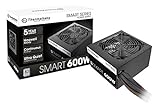
- Delivers 600W Continuous output at plus 40℃. Compliance with Intel ATX 12V 2. 31 and EPS 12V 2. 92 standards
- 80 PLUS Certified – 80% efficiency under typical load. Power good signal is 100-500 millisecond
- Supports (2) PCI-E 6 plus 2pin Connectors. Active (PFC) Power Factor Correction, MTBF: 100, 000 hours
- Industry Grade Protections: (OPP) Over Power Protection, (OVP) Over Voltage Protection, (SCP) Short Circuit Protection
- Hold up time is 16 millisecond minimum within 60 percent load. Input frequency range 50 - 60 in Hz
4. Use power modes with their trade-offs in mind
NVIDIA describes Balanced as the default balance among power, fan noise, and gaming performance. Performance and Quiet modes prioritize different outcomes. The right choice depends on whether your priority is lower power and noise, maximum performance, or a compromise. Consult NVIDIA Control Panel’s Power Mode Reference for the mode definitions.
5. Check for heat-related performance loss
High CPU temperature can cause the processor to reduce its frequency, so a hot system may already be losing performance. Intel advises checking the processor’s specified Tjunction limit and inspecting cooling if temperatures approach it. Mark Gallina, Intel System Thermal & Mechanical Architect, explains: “Intel® CPUs have very robust thermal management features that quickly adjust operating frequencies to reduce power when the system cooling solution is insufficient.”
Rank #4

- Fully Modular PSU: Reliable and efficient, low-noise power supply with fully modular cabling, so you only have to connect the cables your system build needs.
- Intel ATX 3.1 Certified: Compliant with the ATX 3.1 power standard, supporting PCIe 5.1 platform withstands 2x transient power excursions from the GPU.
- Keeps Quiet: A 120mm rifle bearing fan with a specially calculated fan curve keeps fan noise down, even when operating at full load.
- 105°C-Rated Capacitors: Delivers steady, reliable power and dependable electrical performance.
- Modern Standby Compatible: Extremely fast wake-from-sleep times and better low-load efficiency.
Start with dust, airflow, and cooler seating when investigating temperatures. Thermal paste replacement is a troubleshooting step when cooling maintenance is warranted, not a universal energy-saving upgrade. Intel’s PC cooling guide covers temperature, Tjunction, airflow, thermal paste, and cooling.
Independent reader supportYour contribution helps us test, update, and keep practical guides available for everyone.6. Treat voltage, clock, and CPU power-limit tuning as later experiments
Changing a GPU voltage/clock curve or CPU power limits can be hardware-specific and may affect stability or performance. Make small adjustments only after recording a baseline, change one setting at a time, and retest the same workload. Revert a change if it causes instability or visibly worsens play. There is no reliable general before-and-after savings figure for frame caps or undervolting, so measure your own system rather than assuming a percentage.
Best Value

- 80 PLUS GOLD CERTIFIED: Delivering gold-level performance with 92% efficiency, ensuring effective power transmission to your components.
- Fully Modular Design: Unique dragon-pattern fully modular cables cut redundant wiring to tidy your chassis, improve airflow and optimize system heat dissipation. With dimensions of 150×150×86mm (5.91×5.91×3.39in), the PSU fits most mainstream ATX cases.
- Support ATX 3.1 & PCIe 5.1: Compliant with the ATX 3.1 standard to fuel high-performance PC components with stability, efficiency, and power spike resistance. Meanwhile, supporting PCIe 5.1 platform withstands 2x transient power excursions from the GPU.
- Dual-Colour 16-Pin Cable: The Dual-color dragon-pattern 12V-2x6 PCI-E 5.1 cable for modern high-end graphics cards. With yellow connector can easily show you whether the cable has been plugged in properly.
- RGB Silent Fan & RGB Lighting Model: This 140mm low-noise fan comes with a silent mode, it outperforms standard 120mm fans in terms of quietness, heat dissipation capability and durability. What's more, the psu features ARGB lighting model, allowing you to adjust the lights style according to your needs.
Intel XTU is not for every Intel PC
Intel Extreme Tuning Utility (XTU) requires a compatible unlocked Intel processor and motherboard. Support also varies by processor generation, chipset, BIOS, OEM configuration, and XTU version. If your setup is supported, Intel recommends establishing a baseline and making incremental changes while checking results and stability. See Intel’s Intel XTU step-by-step guide.
7. Compare the results that matter to you
- Power: compare reported component power or whole-system wall draw using the same measurement method.
- Performance: compare average and low-percentile FPS, not just the highest frame rate.
- Consistency: check frame times for stutter or uneven delivery.
- Playability: assess input latency and VRR behavior on your display.
- Comfort: note temperatures and fan noise during the same scene.
Keep a setting only if its power or noise benefit is worthwhile without an unacceptable change in play. A 2016 paper, “Taming the Energy Use of Gaming Computers”, discusses approaches such as voltage reduction and underclocking, but its component ranges are historical rather than current gaming-PC norms.
Quick Recap
Product prices and availability are accurate as of the date/time indicated and are subject to change. Any price and availability information displayed on Amazon at the time of purchase will apply.




