To lease cows, first decide whether you want a fixed-rent, shared-production, or flexible cash arrangement; then find a local cattle owner, agree on costs and calf ownership, and sign a written agreement before the animals move. Leasing can reduce the upfront cost of building a cow-calf herd, but it does not remove the need to budget for feed, veterinary care, labor, losses, and recordkeeping.
This guide focuses on U.S. beef cow-calf leases. Dairy leases, custom grazing, livestock boarding, herdshares, and non-U.S. agistment arrangements can work differently. Contract, tax, insurance, and animal-health rules vary by location and situation.
Choose the lease structure that fits both parties
A cow lease generally gives an operator use of a breeding herd for a defined term in exchange for rent or a share of production. The parties should decide in advance who supplies inputs, manages the cattle, receives the calf crop, and bears financial risk. University of Missouri Extension describes three common structures:
| Structure | Payment and risk | Practical considerations |
|---|---|---|
| Cash lease | The operator pays predetermined rent for an agreed period. The operator generally manages the cattle and keeps the calf crop. | The owner has a more predictable return; the operator has more exposure to changes in costs, prices, production, and losses. Specify responsibility for death loss, culling, and replacements. |
| Share lease | The parties divide costs, income, management, and risk according to their contributions. A share may be settled in cash or in actual calves. | List the contributions used to set each share and how decisions are made. Production and market risk are shared rather than assigned entirely to one party. |
| Flexible cash lease | The operator pays a base amount plus a variable component, potentially subject to a cap. | Set the production period, variable-payment formula, calculation method, payment date, and any maximum payment. |
There is no lease split or rate in these sources that can be treated as a national standard. For one illustration only, University of Missouri Extension applied its 2025 Missouri beef cow-calf planning budget to a 50-cow herd with purchased replacements. Its example assigned $575.23 per cow in costs to the owner and $391.96 to the operator, resulting in 59% of the calf crop for the owner and 41% for the operator. That is a Missouri budget-based worked example, not a typical or transferable split. See University of Missouri Extension’s Introduction to Beef Cow Leases.
#1 Best Overall

- Rechargeable - Integrated Lithium-ion battery saves time and money without the cost of disposable alkaline batteries, One USB Charging Cable provided with each cattle livestock prod.
- Rugged - One Piece Rubber Overmolded Ergonomic Handle Construction - Provides a lightweight, impact resistant, water resistant design for a more durable product.
- Water resistant - Sealed handle and integrated buttons allows use of our cattle prod in all weather conditions.
- Battery Meter - Let's you know when the unit needs charged.
- Ez-Warranty- Limited 12 month warranty against manufacture defects
Work out whether the numbers make sense
For a cash lease, compare the owner’s minimum acceptable rent with the operator’s maximum affordable rent. The owner’s minimum should reflect the costs of supplying and owning cattle, including depreciation, interest, taxes, insurance, death loss, and replacements. The operator’s ceiling should be based on expected revenue minus operating expenses and a reasonable allowance for risk.
Use current local prices and production assumptions rather than copying someone else’s rate or share. Missouri Extension points to the Missouri Beef Cow-Calf Planning Budget and the University of Nebraska’s Cow-Calf Share Lease Cow-Q-Lator as tools for evaluating options. Compare leasing with buying cattle or keeping the herd at its current size; each choice affects cash flow, risk, and the operation’s longer-term plans.
Rank #2

- Efficient and safe assistance during animal birth with 2 OB handles and available in 30, 45, and 60 inch length chain sizes. Essential tool for safe and successful animal deliveries.
- Suitable for use with cows, goats, and other cattle on dairy farms. Designed for professional use in veterinary and animal husbandry settings.
- OB chain aids in the delivery of the fetus when assistance is required during birth. This 30 inch length provides ample space for easy maneuverability and efficient delivery.
- Made of high-quality stainless steel for maximum durability and long-lasting use. Suitable for use in both indoor and outdoor environments. Lightweight and portable, making it easy to transport and store.
- Easy to clean and sanitize for maximum hygiene and safety. Compatible with a wide range of delivery instruments and accessories. Guaranteed satisfaction and value for money
Get started in a practical sequence
- Define the operation. Set a target herd size, calving season, grazing and feed plan, available labor, intended market, and your own experience. Decide whether the lease is a temporary way to expand or a possible route to ownership. USDA recommends making a business plan to organize goals and evaluate progress; see Plan Your New Farm Operation.
- Look for a local counterparty. Ask cattle producers, extension educators, and farming networks about owners who may want an operator or operators seeking breeding stock. USDA’s beginning farmer resources point to local networks and the Farmland Information Center’s Nationwide Farm Link Finder for people looking to lease or buy land. That is land-matching help, not evidence of a cattle-lease marketplace.
- Agree on the structure and term. Choose fixed rent, shared production and costs, or base-plus-variable rent. Write exact start and end dates and payment dates. For a flexible arrangement, specify the production period and the variable formula. Missouri Extension’s example of a June 15, 2025–June 14, 2026 period for a fall-calving operation illustrates the importance of defining dates; it is not a recommended term for every lease.
- Inventory and identify the cattle. Record each animal’s identity, breeding and health history, and condition at transfer. Agree how leased animals will be distinguished if they are mixed with the operator’s herd, and keep an inventory of calves and replacements.
- Put the terms in writing before animals move. Use the checklist below to identify issues to resolve. A form can help organize a discussion, but it cannot determine whether a particular agreement complies with local law or suits the parties’ circumstances.
- Keep animal and financial records. Track breeding, treatments, deaths, relevant activity dates, calf production, lease income, and expenses. These records help verify share calculations and flexible payments. Ask a tax professional how the arrangement should be treated for your circumstances.
Put the important terms in the written agreement
Write down the responsibilities and procedures rather than relying on assumptions. Missouri Extension’s cow-lease guidance and Oklahoma State Extension’s livestock lease checklist identify issues to discuss. The following are drafting prompts, not a universal statutory checklist:
- Herd and term: Identify the animals, start and end dates, transfer and return arrangements, and any renewal or early-termination process.
- Payment and records: Specify rent or each party’s share, how it is calculated, due dates, record access, and how disputes over calculations are handled.
- Calves and retained heifers: State who owns calves and whether a division is by head, value, or another defined method. If the operator may retain heifers as replacements or as a step toward buying into the herd, define selection, valuation, and ownership transfer.
- Costs and reimbursement: Assign responsibility for feed, forage, breeding, veterinary care, vaccinations, and other agreed inputs. Set how expenses are documented and reimbursed.
- Management authority: Define who directs day-to-day care and which decisions require consultation or consent, particularly breeding, treatment, culling, sale, and movement. In a share lease, management decisions are shared according to the parties’ arrangement.
- Death loss, culling, and replacement cattle: Specify notice requirements, how losses and culls are valued, and who supplies replacements. Oklahoma State Extension notes that in a multi-year cash lease the owner may need to provide replacements to prevent the herd shrinking through death loss and culling. If the owner is exiting the business and ownership is transitioning, the operator may instead provide replacements. The agreement should fit the parties’ plan.
- Breeding and animal care: Set the breeding program, bull responsibility, health standards, and veterinary procedures. Oklahoma State describes a one-year lease in which the owner might supply a bull because the operator may not benefit from the following calf crop; in a longer lease, an operator might supply bulls to influence genetics. These are examples, not default rules.
- Return condition and other risk terms: Define expected animal condition at return, transport responsibilities, insurance and liability arrangements, and what happens after default or early termination.
Ag Lease 101 offers a livestock rental lease form that can serve as a starting point for discussion. Have a qualified local adviser review terms where legal, tax, insurance, or animal-health questions arise. Missouri Extension summarizes the purpose of documentation plainly: “A written agreement ensures clarity between the parties and prevents misunderstandings.”
Free tools Windows power users keep installed
One-click scans. No signup required.
Rank #3
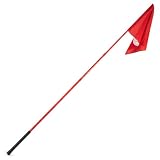
- CATTLE SORTING & LIVESTOCK HANDLING – Designed to help direct, move and separate cattle, horses, sheep and other livestock. The highly visible flag helps attract an animal’s attention while extending your reach for controlled handling.
- LIGHTWEIGHT & DURABLE CONSTRUCTION – Features a lightweight 60" 180-degree fiberglass shaft that is easy to carry and use, with a polypropylene coating for added weather resistance during outdoor work.
- EXTENDED REACH & EASY CONTROL – Use the 60 in shaft and 12" x 13" flag to guide animals from a comfortable distance. The non slip Golf Grip Standard provides a secure, comfortable hold for easy handling and maneuverability.
- FOR FARMS, RANCHES & LIVESTOCK WORK – Ideal for farmers, ranchers, livestock handlers and trainers sorting or working with animals in pens, alleys, chutes, sorting areas, training sessions and competitions.
- DURABLE JEFFERS QUALITY – Features a bright red, coated ripstop nylon flag with hemmed edges designed to help prevent fraying and support long-lasting use, while the high-visibility color makes the flag easy to spot during livestock work.
Find local planning and financing help
USDA encourages beginning farmers to plan, contact a local Service Center, and seek help from state Beginning Farmer and Rancher Coordinators. Farmers.gov says a detailed business plan is needed for an FSA loan, a commercial lender loan guarantee, or a land contract. Start with USDA’s beginning farmer resources and your local Service Center.
Eligible beginning farmers may be able to use Farm Service Agency direct or guaranteed lending, including operating loans and microloans. USDA says FSA loans may fund livestock, equipment, operating expenses, and other eligible needs. These are financing options, not cow-lease grants or subsidies; check eligibility and current terms with the local FSA office. See FSA Farm Loan Programs.
Quick Recap
Best Value

- EXTEND YOUR REACH: Extends reach by 47 inches for improved livestock control and handler safety. Ideal for moving, sorting, loading, and directing cattle, pigs, sheep, and other livestock. Helps improve livestock flow through chutes, alleys, pens, and trailers.
- LIGHTWEIGHT DURABLE CONSTRUCTION: Constructed from lightweight yet durable materials, the Kane Rattle Paddle reduces fatigue during long handling sessions. The ergonomically designed handle features a comfortable rubber grip that provides enhanced control and secure handling, even in demanding farm conditions.
- BUILT-IN STEEL BALLS: Steel balls enclosed within the paddle create a distinct rattling sound that encourages animal movement through auditory stimulation rather than physical contact.
- LOW STRESS HANDLING APPROACH: Helps improve animal welfare while making daily livestock management more effective and efficient.
- QUALITY PRODUCTS MADE IN THE USA: Mike Kane founded Kane Manufacturing in 1969 and grew it into a leading national manufacturer of farm equipment for customers in North America and around the world. Our products are energy efficient, durable and designed to improve production. And all our products are designed and manufactured in the USA.
Rank #4

- HIGH VISIBILITY - The 6.25 inch-wide paddle creates a visual barrier, reinforced by the sound of BBs inside
- COMFORTABLE GRIP - Comfortable golf-style grip.
- EASY TO CLEAN - The paddle has a vinyl covering for protection and easy cleaning
- PADDLE LENGTH - This paddle is 48 inches long including the handle.
- AVAILABLE SIZES - The sorting paddle is available in several lengths 42"or 48" lengths.
Product prices and availability are accurate as of the date/time indicated and are subject to change. Any price and availability information displayed on Amazon at the time of purchase will apply.




