When cell service disappears, technicians can still work and communicate—but no single device replaces every function of a mobile network. Prepare essential job information for offline use, choose separate tools for messages, voice, and nearby device links, and set a tested fallback and check-in procedure. Satellite messaging may reach beyond terrestrial coverage, but it is not automatically broadband or a guaranteed emergency connection.
Start with the work that must continue
Before choosing equipment, separate the job’s communication needs. A crew that needs brief check-ins has different requirements from one that needs continuous voice coordination or large file transfers. Identify which tasks require a live connection and which can wait until service returns.
- Live voice: coordination between technicians and dispatch or between crew members.
- Short messages: status updates, arrival notices, or requests for assistance.
- Work data: work orders, forms, photos, maps, procedures, and access instructions.
- Location: knowing where a technician or device is, which is distinct from sending that location to dispatch.
- Broadband: larger transfers or services that truly need internet access.
Do not buy a high-bandwidth solution if scheduled check-ins and offline job records meet the need. Conversely, a messaging device is not a substitute for a live data connection when the work depends on one.
Keep essential job information available offline
Connectivity planning includes the information a technician needs when there is no connection. Before departure, make a minimum viable work packet available on the device: job address and access notes, maps, procedures, safety documents, dispatch contacts, and forms. Confirm the files are actually stored locally rather than merely visible in an app that will need a network to open them.
#1 Best Overall
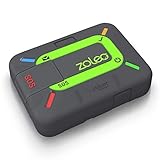
- Global satellite messaging: Stay connected beyond cell coverage, use ZOLEO with your smartphone to transmit text messages and e-mails over the Iridium satellite network, cellular or Wi-Fi using the lowest-cost network available (service plan required)
- Emergency SOS: Send an SOS alert with your GPS location to 24/7 emergency monitoring center if something goes wrong, or access Medical Assist for non-emergency help
- Optional Travel Risk Management Coverage: Feel more secure wherever you go with a Field Rescue Membership from Global Rescue. Affordably priced, this travel risk management add-on offers immediate medical coverage for safe extraction and transportation to the nearest capable medical facility.
- Dedicated SMS number: An assigned ZOLEO SMS number and email enables contacts to reach out directly when you're off the grid
- Check-in: Send unlimited check-ins via the ZOLEO device or app, included in your plan
Decide how work completed offline will be recorded and reconciled later. For example, specify where technicians enter updates, what to do if two people edit the same record, and who confirms that queued updates reached the work system after service returns. App behavior varies; test the exact application, devices, and workflow rather than assuming that an “offline” label covers every feature.
Choose a communication path for each need
| Option | Useful for | Key limits | Check before relying on it |
|---|---|---|---|
| Satellite messenger or satellite-to-device messaging | Short messages and supported check-ins beyond terrestrial coverage | Functions differ by device and service. Some offerings require a compatible handset or carrier; messaging does not imply broadband or equivalent emergency calling. | Geographic coverage, supported message types, service plan, compatibility, clear sky access, battery life, and the check-in workflow. |
| Two-way radio | Team voice coordination on an available radio system | Requires compatible equipment and channel planning; range and coverage depend on terrain and system. Operating permissions may apply. | Interoperability, coverage, repeaters or other infrastructure, battery, training, and dispatch integration. |
| Offline-capable phone or tablet app | Viewing saved job details, maps, forms, and instructions; recording work for later synchronization | Does not create a live connection. Synchronization waits until a network returns, and offline behavior depends on the specific app. | Which functions and data are available offline, how data is protected, how conflicts are handled, and which devices are supported. |
| Local Wi-Fi or Bluetooth | Connecting nearby devices or equipment | A local link does not automatically reach dispatch or the internet. | Range, network layout, security, device compatibility, and whether a gateway or backhaul provides an onward connection. |
| Portable cellular or LTE system | Providing a temporary local network at a site or for a crew | Outside connectivity still depends on infrastructure and backhaul. NIST’s SP 1191 discusses these systems in field and emergency contexts as historical technical material, not a current market comparison. | Coverage footprint, backhaul, licensing, deployment time, security, and support. |
NIST distinguishes local communication from wide-area connectivity: Wi-Fi can operate as a local network, including in device-to-device ad hoc mode; Bluetooth is short-range; and GNSS positioning does not depend on cellular service. A device may therefore know its position without being able to transmit that position or a work order. NIST’s communication mechanisms overview describes these distinctions.
Rank #2

- Small, rugged, lightweight satellite communicator enables two-way text messaging even in areas with no cell coverage (Active satellite subscription required. Some jurisdictions regulate or prohibit the use of satellite communication devices)
- Send two-way messages globally; easily text back and forth directly with friends via the Garmin Messenger app, even when you’re out of cellular coverage. (Active satellite subscription required. Some jurisdictions regulate or prohibit the use of satellite communication devices.)
- Group messaging via the Garmin Messenger smartphone app lets you share your adventures with multiple contacts simultaneously — and have group text chats with friends and family
- Check in with contacts directly by using preset messages that do not count toward your allotted text messages (Active satellite subscription required. Some jurisdictions regulate or prohibit the use of satellite communication devices)
- Share your GPS location (Active satellite subscription required. Some jurisdictions regulate or prohibit the use of satellite communication devices)
What satellite messaging can—and cannot—do
Satellite messaging is a useful option to investigate for outdoor work outside terrestrial coverage, but capability depends on the device, service, geography, and operating conditions. The FCC says consumer mobile devices increasingly support text messaging over mobile-satellite spectrum when cellular and Wi-Fi networks are unavailable. That does not mean every satellite-capable phone offers the same features or that messaging guarantees an emergency response. The FCC document says questions about 911 connectivity via satellite remain pending. Read the FCC discussion of satellite messaging and emergency communications.
In March 2024, the FCC adopted a Supplemental Coverage from Space framework that allows terrestrial wireless providers and satellite operators to collaborate to serve subscribers outside terrestrial coverage, subject to licensing prerequisites, including a spectrum lease in the relevant area. The framework is regulatory permission, not evidence that a particular carrier, device, route, or plan has service today. The FCC’s 2024 order explains the framework.
Rank #3

- SYNC WITH BLUETOOTH: Connect to SpotX to cellphone so you can communicate with family or even search and rescue; Use as a standalone communication device with it's own dedicated US mobile number to receive messages
- PEACE OF MIND: Send S.O.S. to 24/7 Search & Rescue service, message back and forth about the nature of your emergency, receive confirmation when help is on the way; Message any cell number or email address virtually anywhere
- GLOBALSTAR SATELLITE & SPOT products use GPS to determine location and transmit GPS coordinates to others; SPOT users can notify friends, family or emergency rescue their exact GPS coordinates
- WHAT'S IN THE BOX: SpotX Device, strap and carabiner, micro usb data/power cable, quick start guide, SOS mirrored sticker, warranty card and kickstand
- PURCHASE, ACTIVATE, EXPLORE: Grab a Spot X 2-way Satellite Messenger; Activate by selecting your service plan; Get out there and explore the world with peace of mind
NTIA’s 2024 request for comment describes direct-to-device services using mobile-satellite services, including traditional phones or IoT devices and devices designed primarily or exclusively for satellite operation. It frames an early use case as outdoor situations where terrestrial wireless is unavailable; it is not a confirmation of current availability from any particular provider. See NTIA’s description of direct-to-device services.
Why a phone-only plan can fail
Dead zones are only one failure mode. Battery depletion, weather-related device problems, and service disruptions can also break a communications plan. NISTIR 8314 records these kinds of operational friction in a survey of first responders—not commercial field technicians—so it is a warning about risks to plan for, not a measurement of field-service teams or a product test.
Rank #4

- Lightweight SOS satellite communicator uses the global Iridium satellite network so you can stay connected without cell coverage (active satellite subscription required; some jurisdictions regulate or prohibit the use of satellite communication devices)
- Explore with peace of mind knowing you can trigger an interactive SOS message with location coordinates to Garmin Response℠, a 24/7-staffed international coordination center, for help in an emergency (active satellite subscription required; some jurisdictions regulate or prohibit the use of satellite communication devices)
- Exchange photos, texts and voice messages without cell service; taking and sending photos requires pairing your inReach device with your compatible smartphone by using the Garmin Messenger app (active satellite subscription required; some jurisdictions regulate or prohibit the use of satellite communication devices)
- Rugged design features a high-resolution and scratch-resistant color touchscreen; can withstand impact, extreme weather and harsh temperatures (IP67 water rating)
- Internal, rechargeable lithium battery supports up to 350 hours with 10-minute inReach tracking and up to 95 hours in performance messaging mode
In that report, 73.26% of responses elaborated on coverage or dead-zone problems; the percentage applies to the report’s described response set, not to technicians generally. One anonymous participant said, “Smart phones should never be considered a reliable alternative to the 2-way radio system.” That is a participant’s testimony in the survey, not a universal NIST recommendation. NISTIR 8314 provides the survey context and testimony.
Independent reader supportYour contribution helps us test, update, and keep practical guides available for everyone.Build a check-in and fallback procedure
Write down what technicians and dispatch should do before a connection fails. A device is only part of the plan; the team needs a shared expectation about when a check-in is due, how dispatch acknowledges it, and what happens if no one can make contact.
The Tool Desk
Outbyte Driver Updater FREEFix the driver behind crashes, sound loss and screen glitchesFind Drivers →Outbyte PC Repair FREERepair Windows errors before they cause bigger problemsFix Now →Best Value
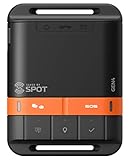
- MEANT FOR ADVENTURE: Spot Gen4 provides critical, life-saving line of communication when you travel beyond cell towers; Let family know you're ok or push the SOS button to send your GPS to emergency responders if you need help
- NO CELL PHONE OR SERVICE-NO PROBLEM: With the Tracking feature Gen4 can transmit location updates when you are moving and when you stop; Keep one in your child's backpack for the walk home
- GLOBALSTAR SATELLITE & SPOT products use GPS to determine location and transmit GPS coordinates to others; SPOT users can notify friends, family or emergency rescue their exact GPS coordinates
- WHAT'S IN THE BOX: SPOT Gen4 device, Strap and Carabiner, USB Cable, Batteries and quick start guide; Subscription required; Two service plans available
- PURCHASE, ACTIVATE, EXPLORE: Grab a Spot Gen4; Activate by selecting your service plan; Get out there and explore the world with peace of mind
- Map the problem areas. Record routes and sites where cellular service is intermittent or absent, distinguishing weak or occasional service from complete dead zones.
- Assign a primary path to each task. Decide whether voice, a short message, work data, location reporting, or broadband is essential, then match each need to a device or workflow.
- Set check-in and escalation rules. Define check-in intervals, who monitors them, how dispatch acknowledges receipt, and what action follows a missed check-in.
- Specify the all-links-fail response. Tell technicians what to do if cellular, satellite messaging, radio, and local links are all unavailable, including how to proceed safely and when to stop work.
- Test the whole workflow off coverage. Rehearse a missed check-in, a depleted battery, delayed synchronization, and the emergency procedure in representative terrain using the actual devices, service plans, and dispatch process.
- Review and update the plan. Recheck device compatibility, service coverage, battery arrangements, contacts, and procedures when equipment or routes change.
Protect devices and offline work data
Offline access means work information may remain on a device outside the protections of a live connection. Set rules for who can access work data, how devices are secured, what happens when a device is lost, and how remote access and personally owned devices are managed. NIST’s SP 800-114 Rev. 1 covers telework and BYOD security. Its IR 8235 guidance addresses secure mobile and wearable devices in the first-responder context; it is relevant security guidance, not a field-service app evaluation.
Emergency behavior needs its own verification. Do not infer that a device’s ordinary message function provides 911 access or an assured response. Confirm the actual emergency features and limitations with the device and service provider, and train technicians on the procedure they should follow.
Quick Recap
Product prices and availability are accurate as of the date/time indicated and are subject to change. Any price and availability information displayed on Amazon at the time of purchase will apply.




