The most reliable ways to improve gas mileage are to drive smoothly, keep tires at the vehicle’s recommended pressure, avoid unnecessary weight and idling, and keep up with scheduled maintenance. To spend less on gas overall, also cut avoidable trips: that reduces fuel use even when your car’s miles per gallon (MPG) stays the same. Results vary with the vehicle, its condition, driving habits, weather, load, and traffic.
Start with driving habits that use less fuel
Accelerate and brake smoothly
Rapid acceleration, speeding, and hard braking waste fuel compared with anticipating traffic and changing speed gradually. The U.S. Department of Energy (DOE) estimates aggressive driving can lower gas mileage by up to 30% at highway speeds and up to 40% in stop-and-go traffic. These are potential reductions, not a guaranteed saving for every driver or vehicle. Leave enough following distance to avoid repeated braking, accelerate steadily, and slow progressively. Smooth driving also supports safer decisions on the road. DOE driving guidance explains the estimates.
Moderate speed and use cruise control when appropriate
Fuel economy usually falls quickly once a vehicle travels above 50 mph, although the most efficient speed differs by vehicle. Driving at the speed limit and adjusting for weather and road conditions matter more than chasing a particular MPG target. DOE’s estimate that each 5 mph over 50 mph is like paying an additional $0.34 per gallon illustrates the fuel-cost effect under its assumptions; it is not a current price comparison or a universal figure. On suitable highway stretches, cruise control can help maintain a steadier speed. Do not use it where traffic, terrain, or weather makes it unsafe. DOE’s explanation of speed and fuel economy provides further context.
Reduce unnecessary idling
Idling consumes fuel without moving the vehicle. DOE estimates it can use about a quarter to a half gallon per hour, depending on engine size and air-conditioning use. If parked for an extended period, turn the engine off when it is safe and consistent with the owner’s manual and local rules. Avoid unnecessary warm-up idling; follow the vehicle maker’s instructions, especially in extreme conditions.
Recommended Free Tools
#1 Best Overall

- Compatible with most gasoline ODBII equipped vehicles from 1996 to present
- Includes 5ft. Wiring Harness with 1 wire installation which easily plugs into OBDII port
- Displays RPM, Speed, Instant MPG, and Average MPG.
- Installs in minutes!
- Ecometer's ecograph helps you improve your driving habits to increase your fuel efficiency and reduce your fuel costs.
Check tire pressure and follow the maintenance schedule
Inflate tires to the vehicle’s specified pressure
Use the pressure listed on the driver-side door placard or in the owner’s manual, not the maximum pressure printed on the tire sidewall. Check tires regularly, including when temperatures change, and use a tire pressure gauge when the tires are cold if possible. The DOE estimates properly inflated tires can improve gas mileage by an average of 0.6% and as much as 3% in some cases; it also estimates a 0.2% fuel-economy decrease for each 1 psi drop in average pressure across the tires. The result for your car depends on its starting pressure and other conditions. Correct pressure also helps limit unnecessary tire wear. See the EPA’s fuel-saving tips.
Use the recommended oil and repair actual faults
Follow the maintenance schedule and oil grade in the owner’s manual. DOE estimates using the manufacturer-recommended motor oil can improve fuel economy by roughly 1%–2%; choosing a different viscosity or an additive based on a broad fuel-saving claim is not a substitute for the specified oil. If a vehicle is noticeably out of tune or fails an emissions test, fixing the underlying problem may improve mileage. DOE reports an average improvement of about 4% for those cases, but the result depends on the fault and repair.
Rank #2

- Programmable 3-In-1 Automotive Trip Computer: Diagnostic Scan Tool, And Up To 37 Digital Gauges In One (Vehicle Dependent)
- Real-Time Monitoring Capabilities: Watch Fuel Consumption, Cost-Per-Mile, Coolant Temperature, Engine Speed, Horsepower, And Much More In Real Time. Simple 5-button operation allows you to quickly and easily access the powerful features of the ScanGauge
- Wide Vehicle Compatibility: Works On All 1996 Or Newer Obd2 Cars, Including Gas, Diesel, Propane And Hybrid Vehicles with 16pin OBD2 port
- Diagnostic Trouble Code Functions: Checks For Diagnostic Trouble Codes (Dtcs), Clears The Codes, And Can Turn Off The Check Engine Light
- Simple Power Connection: No Batteries Required - The single connection to the diagnostic connector under the dashboard is all that is needed
Replacing a clogged air filter is not a general MPG fix for modern fuel-injected, computer-controlled gasoline engines, although it may improve acceleration. Older carbureted vehicles can differ. Replace filters as required by the maintenance schedule or when inspection indicates it is needed, rather than expecting a fuel-economy gain on every car.
Reduce the weight and drag you carry
Take out unneeded heavy items instead of carrying them around. DOE estimates an extra 100 pounds could reduce fuel economy by around 1%, with a proportionally larger effect on smaller vehicles. Roof cargo creates aerodynamic drag, which matters more at highway speeds; removing a roof box or other unused cargo can help. A rear-mounted carrier generally affects fuel economy less than a roof-mounted one, but the simplest step is not carrying cargo you do not need. DOE’s 2021 Consumer Guide to Fuel Economy discusses these estimates.
What’s actually slowing this PC down?
Pick the symptom - the matching free tool is one click away.
Rank #3

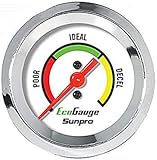
- Plug and Play: This automotive gauge is easy to install, requiring no complicated wiring or professional installation; it connects directly to the vehicle's system.
- Fuel Economy Monitoring: Designed to help track and optimize fuel consumption, allowing drivers to monitor vehicle efficiency and potentially reduce fuel costs.
- Portable Design: This compact and lightweight gauge can be easily moved between different vehicles or removed when not needed. This fuel economy monitor can easily fit into your armrest box.
- Universal Compatibility: Suitable for vehicles using gasoline, diesel, water, and lubricants, making it suitable for a wide range of automotive applications.
Spend less on gas by driving fewer miles
Improving MPG lowers the fuel needed for each mile; reducing trips lowers the number of miles driven. Combine errands, avoid peak traffic where practical, carpool, or telecommute when feasible. For suitable trips, consider walking, cycling, or public transportation. These options reduce total gasoline use, but the household savings depend on your usual trips and available alternatives. DOE outlines these approaches in its Consumer Guide and efficient-driving guidance.
Be skeptical of fuel-saving additives and devices
Do not assume a fuel-line device, magnet, miracle additive, or other aftermarket product will improve mileage because its packaging says so. EPA says registering a fuel additive does not establish that it improves fuel economy. Its voluntary evaluation program for aftermarket devices provides technical information; EPA states that it “does not approve, certify, endorse, or register any products that pass through this voluntary evaluation program.” A program listing or registration is not proof of savings. See the EPA program page for its scope.
Independent reader supportYour contribution helps us test, update, and keep practical guides available for everyone.Set realistic expectations for savings
Official percentages are estimates tied to specific conditions, not promises or a combined discount you can simply add together. A driver who already uses gentle acceleration, keeps tires properly inflated, and has a well-maintained vehicle may have less room to improve than someone correcting a problem. Start with the habits and checks that apply to your car, then judge fuel use over comparable trips and conditions; weather, traffic, cargo, and route changes can make one tank a misleading comparison.
Quick Recap
Best Value

- Plug and Play: This automotive gauge is easy to install, requiring no complicated wiring or professional installation; it connects directly to the vehicle's system.
- Fuel Economy Monitoring: Designed to help track and optimize fuel consumption, allowing drivers to monitor vehicle efficiency and potentially reduce fuel costs.
- Portable Design: This compact and lightweight gauge can be easily moved between different vehicles or removed when not needed. This fuel economy monitor can easily fit into your armrest box.
- Universal Compatibility: Suitable for vehicles using gasoline, diesel, water, and lubricants, making it suitable for a wide range of automotive applications.
Product prices and availability are accurate as of the date/time indicated and are subject to change. Any price and availability information displayed on Amazon at the time of purchase will apply.
Do these 3 things before closing this tab:
1Scan for outdated or missing drivers - takes under a minute2Clear out junk files and repair common Windows errors3Fix the driver behind crashes, sound loss and screen glitches



