In the U.S., start by using the National Diaper Bank Network’s member directory to find a nearby diaper bank or pantry. Contact the local provider before you travel: eligibility, documents, application steps, diaper sizes, quantities, schedules and available supplies vary by program. SNAP and WIC benefits do not pay for diapers, though some separate local programs use public funding to distribute them.
1. Find a diaper bank or pantry near you
Use the National Diaper Bank Network’s member information to locate a nearby diaper bank, pantry or participating food bank. Some organizations distribute diapers directly; others work through partner agencies. Contact the provider or its local partner to learn how families in your area enroll.
If the first organization cannot serve you, ask whether it can refer you to another provider, an upcoming distribution or an open registration route. One program’s denial does not mean you are ineligible elsewhere: providers set their own service areas and rules.
2. Call or email before making a trip
Ask the organization what applies to your household. These are questions to ask, not requirements shared by every program:
What’s actually slowing this PC down?
Pick the symptom - the matching free tool is one click away.
#1 Best Overall

- Huggies Size 1 Diapers: 32 Little Snugglers Baby Diapers, size 1 (8-14 lbs), packaging may vary
- All-Around Blowout Protection: The only leading national brand with front & back blowout blocker* (*Size 1 and 2 only)
- Up to 100% Leakproof: Infant diapers are up to 100% leakproof – even for blowouts
- Luxury Softness: Our infant diapers provide luxuriously soft and breathable comfort
- FastAbsorb System: Each baby diaper is made with the FastAbsorb system that is extra absorbent
- Do you serve my town, county or ZIP code?
- What child-age, income, residency or public-benefit rules apply?
- Do I need an application, referral, appointment or preregistration?
- What should I bring: photo ID, proof of the child or guardianship, income information, or proof of benefits?
- Which diaper sizes are available, how many can each child receive, and how often?
- Where and when is pickup, and are supplies currently available?
- Can someone else pick up diapers for me, and what authorization would they need?
Local requirements differ. For example, Arizona Diaper Bank lists photo ID, child documentation and benefit proof for some services; Miami Diaper Bank requires child documentation and preregistration for the services described on its site; Indiana’s project requires preregistration and does not allow walk-ins.
3. Ask about TANF or other local public assistance
SNAP and WIC are nutrition programs, not sources of diaper-purchase funds. The National Diaper Bank Network’s December 2022 overview says no federal program, including SNAP and WIC, provides funding for families to buy diapers. A local diaper program may work with a WIC office, but that does not mean WIC benefits themselves cover diapers.
Rank #2

- LEAK AND BLOWOUT PROTECTION: up to 100% leakproof protection with an All-Around LeakGuard, Blowout Barrier and absorbent core.
Some state or local programs use Temporary Assistance for Needy Families (TANF) funding or other public funds to provide diapers, vouchers or stipends. If your household receives TANF, ask your caseworker or state TANF agency whether a diaper benefit is currently active and how to access it. The National Diaper Bank Network’s May 2025 policy brief describes examples in named states; those examples do not establish that a program is currently open or that every household qualifies.
4. Check partner agencies and community organizations
Depending on where you live, a diaper bank may distribute through a community action agency, family-service organization, shelter, food bank or another local partner rather than from its own site. Miami Diaper Bank, for example, describes a network of partner agencies and directs families to a referral guide. Confirm the process with the agency that serves your location.
Windows Errors? Fix Them Before They Spread
Repair common Windows errors and clear accumulated junk for a smoother, more stable PC - no reinstall needed.Free scan · no reinstallCrashes, No Sound, or Screen Glitches?
Random freezes, missing sound and display glitches usually trace back to one bad driver. Find and replace yours safely.Free scan · under a minuteRank #3
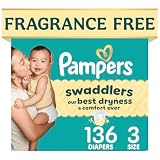
- LEAK AND BLOWOUT PROTECTION: up to 100% leakproof protection with an All-Around LeakGuard, Blowout Barrier and absorbent core.
What local programs can require and provide
The following examples show why it is important to verify details with the organization. They are not nationwide eligibility rules, and program pages can change.
| Program | Who it describes serving | Application and documents | Distribution and limits |
|---|---|---|---|
| Texas Diaper Bank Parenting Essentials | Children ages 0–36 months; household income at or below 200% of the federal poverty level; residence in specified counties. | Application; photo ID, guardianship proof and income declaration. | Quarterly distributions at no cost. Check the program page for the counties served and current details: Texas Diaper Bank. |
| Indiana Diaper Bank WIC/TANF Service Project | Households meeting the project’s listed state-benefit criteria. | Preregistration; photo ID at pickup. Walk-up appointments are not allowed. | The project page describes 200 diapers every other month for two years for a child or children. Confirm current eligibility and availability with Indiana Diaper Bank. |
| Miami Diaper Bank | Families in the South Florida area described by the organization. | For the services described, child documentation, proof of qualifying public assistance and preregistration are required. | Partner-agency requirements and quantities vary. See the organization’s FAQ and confirm the rules for your referral location. |
| Washington Diaper Program | Supports community organizations that distribute diapers, wipes and other baby supplies. | Its state page describes an application process for community organizations, not a direct guarantee of household access. | The Washington Department of Commerce says the FY 2026–27 application period has closed. Check the state program page for updates and local access routes. |
| District of Columbia FY26 grant notice | The notice described qualifying District families with children age three and under and listed several District assistance programs as eligibility routes. | Confirm the family-facing operator and current enrollment before applying; the notice is for a grant-funded program. | See the District notice and verify whether a participating provider is currently enrolling families. |
Why free-diaper help matters to a household budget
The National Diaper Bank Network’s December 2022 overview said infants may require up to 12 diapers a day and estimated diapers could cost $80 to $100 or more per month per baby. The same overview reported that one in three American families struggles with diaper need. These are figures attributed to the network in 2022, not newly measured 2026 estimates.
Rank #4

- Huggies Size 1 Diapers: 44 Snug & Dry Baby Diapers, size 1 (8-14 lbs), packaging may vary
- Ultra Soft and Ultra Dry – CloudSoft absorbent layers & waistband: Our diapers feature CloudSoft absorbent layers and waistband and a curved and stretchy fit
- Up to 100% blowout and leakproof protection: Our disposable diapers provide protection against leaks and blowouts
- The only leading brand entirely fragrance free*: Snug & Dry baby diapers are made free of fragrances and elemental chlorine. They are also made without natural rubber latex. (*among leading national diaper brands, across all offered variants)
- Blowout Blocker: The only brand with a blowout blocker across all our offerings** (**among branded open diapers. Excludes preemie size.)
In its May 2025 policy brief, the network reported that parents experiencing diaper insecurity missed an average of 5.1 workdays per month. It also attributed to its nationally representative data the findings that 76% of families receiving TANF benefits experience diaper insecurity and that lack of diapers negatively affects workforce participation for 54%. These figures are from the network’s brief and should not be treated as directly comparable to the 2022 figures.
Independent reader supportYour contribution helps us test, update, and keep practical guides available for everyone.If you cannot get diapers from the first program
- Ask the provider about another organization, a partner referral or the next distribution date.
- Check another diaper-bank member or local partner, since service areas and enrollment rules differ.
- If you receive TANF, ask your caseworker or state agency about a current diaper benefit or referral.
- Before traveling, confirm registration, appointment rules, current sizes and supply, and whether another adult may collect the diapers.
If free assistance is unavailable in time, buying diapers can be a fallback, but it is not a condition for seeking help. A local provider can tell you what free options are open in your area.
Quick Recap
Best Value

- SKIN-SAFE: Fragrance Free, Hypoallergenic, and dermatologically approved by the Skin Health Alliance. Free of parabens, elemental chlorine, and latex*.
- OVERNIGHT PROTECTION: Pampers is the #1 Brand
- . For sleep and joyful mornings.
- TRUSTED BY PARENTS: Swaddlers is #1 Choice of Parents** and is from Pampers, the Most Awarded Diaper Brand
- RECOMMENDED BY PROFESSIONALS: Trusted protection from Pampers, the #1 Pediatrician Recommended Brand*** and #1 Choice of NICU Professionals***
Product prices and availability are accurate as of the date/time indicated and are subject to change. Any price and availability information displayed on Amazon at the time of purchase will apply.




