Start with the child’s caseworker or foster-care agency. Ask which identity documents are already held, who is authorized to request each missing record, and how the documents will be delivered and kept safe. For a child born in the United States, a certified birth certificate comes from the state or territory where the birth occurred; Social Security card replacements go through the Social Security Administration (SSA); and state IDs are handled by the state motor vehicle agency. Requirements, fees, and processing times depend on the issuing jurisdiction.
Start with the caseworker and make a document inventory
Before ordering anything, ask the caseworker or agency to check the child’s file and identify which documents it already holds. This can prevent duplicate applications and clarify who is allowed to request records for a minor. The young person should be part of the planning when appropriate: a document needed for school enrollment, a first job, health care, or an upcoming move may be more urgent than one needed later.
As an Amazon Associate I earn from qualifying purchases.
The Children’s Bureau recommends planning with young people around which records they need, where those records are, how the documents will be transferred, and how they can be stored safely. Its Vital Documents and Credit Reports tip sheet calls obtaining, securing, updating, keeping current, and protecting vital-document information important life skills.
Windows Errors? Fix Them Before They Spread
Repair common Windows errors and clear accumulated junk for a smoother, more stable PC - no reinstall needed.Free scan · no reinstallOutdated Drivers Are Slowing You Down
One free scan finds every outdated or missing driver and matches the right update for your exact hardware.Free scan · exact hardware match- Ask what originals or certified copies the agency already has and where they are held.
- For each missing item, confirm who may apply, what proof is needed, and which agency issues it.
- Set priorities with the child or young person, based on immediate needs such as enrollment, employment, health coverage, or transition planning.
- Agree who will submit each request, follow up on delays, and arrange delivery of the document.
- Decide how the young person will access the records and where originals will be kept, following agency confidentiality and record-handling rules.
A useful inventory may include a U.S. birth certificate, Social Security card, state ID or driver’s license, health insurance information, medical records, a foster-care verification letter, and any immigration or state-specific documents that apply. Track the status, location, request date, person responsible, and transfer plan for each item. Do not assume that a caregiver’s possession of a document automatically means they are authorized to apply for another one.
#1 Best Overall

- 100% Fireproof & Water Resistant: This UL certified upgraded fireproof bag is constructed primarily of fire-resistant, heat-insulating functional materials that can withstand ultra-high temperatures. Meantime, the Sealed zippers are totally waterproof which can survive the spray of firefighter's hose on full blast, provides 360° security seal and maximum protection for your documents
- Upgraded Waterproof Zippers & 2-Pocket Design & Large Capacity: Two pockets, two zips for added security and convenience. Let your files be easily classified and stored with our fire proof bag. Large size of 15”x 11” allows you to better keep and classify your most standard and legal documents files, passport, birth certificate, marriage certificate, contract and any other documents, cash, letters, photos and other valuables
- High-Viz for Fast Evacuation at Night: Benefit by the night reflective strip design, you can locate your fire proof money bag for cash immediately even at night! Time is life in a fire, our goal is to quickly find your most important things and go in a critical moment
- Durable, Foldable, Portable: Our fireproof important document organizer is the perfect design to travel with and store safely and conveniently. With a hanging trap, our travel document holder is super easy to grab and carry no matter at home or on office
- A Great Gift Option: This fireproof money bag is durable and perfect for your daily and emergency use, as well as a unique and practical gifting option for your family and friends
It can help to make the inventory concrete rather than simply writing “ID missing.” For each record, note whether the agency has an original, a certified copy, a photocopy, or only information about how to request it. Record what the young person needs the document for and by when, if there is a known deadline. Keep follow-up responsibilities clear: “application submitted” is different from “record received,” and “record received by the agency” is different from “young person has access to it.”
Ask the young person how they want to participate and what would make the process manageable. They may want to help gather details, make a call with the caseworker, or simply know where the request stands. The Children’s Bureau’s checklist approach is intended to support planning with the young person, not just to create an agency file. Respect privacy and follow agency procedures when sharing sensitive information or copies.
Request a certified birth certificate
For a birth in the United States
Request the record from the vital records office for the state or territory where the child was born—not the state where the child currently lives. Check that office’s current instructions for who may order a record for a minor, what identity evidence is accepted, whether applications can be submitted online, by mail, or in person, and the fee and processing options. Have the city and county of birth ready if known. These details vary by jurisdiction, so do not rely on another state’s forms or rules.
Free tools Windows power users keep installed
One-click scans. No signup required.
Ask the caseworker to confirm who is legally or administratively able to make the request and what documentation establishes that authority. The issuing office determines the accepted evidence and may ask for information or supporting documents in addition to the child’s birth details. If a faster service is offered, check its cost and expected handling time directly with the office; an expedited option does not necessarily remove identity or eligibility requirements.
When contacting the vital records office, distinguish the official or certified record needed for a particular purpose from a plain photocopy or an informal record summary. The office’s instructions explain what it issues and what the applicant must submit. Verify the ordering route, fee, identity requirements, and expected processing before sending an application, especially if a transition date or other deadline is approaching. There is no single national fee or turnaround time to rely on.
Make sure the request is going to the jurisdiction of birth. A child may now live in a different state, but the current state’s motor vehicle agency or vital records office is not necessarily the office that can issue the birth record. If the place of birth is unclear, ask the caseworker to check available records before submitting an application. Having the city and county ready, when known, can help with the inquiry.
If no one has photo ID accepted by the issuing office
Ask the birth jurisdiction what alternatives it accepts before submitting an application. USAGov gives examples used by most states: a sworn statement of identity, or a notarized letter accompanied by a copy of photo ID from a parent listed on the birth record. These are examples, not universal substitutes. The vital records office’s current instructions control, and a caseworker can help identify the right applicant and supporting evidence.
Recommended Free Tools
A common delay is assuming that one jurisdiction’s alternative will work in another. Do not pay for notarization, send a parent’s ID, or mail original supporting records until the issuing office’s current instructions confirm what is required and how to submit it. If the first application is rejected or the requested identity proof is not available, ask the office which alternative it accepts and whether the caseworker or agency can help document the applicant’s authority.
For a U.S. citizen born abroad
If the child is a U.S. citizen born outside the United States and the birth was reported to a U.S. embassy or consulate, the Consular Report of Birth Abroad serves the same purpose as a U.S. birth certificate. Replacement instructions come from the U.S. Department of State. A child born abroad who is not a U.S. citizen may need different civil or immigration documents; the Children’s Bureau recommends seeking legal support when immigration-document challenges arise.
Rank #2
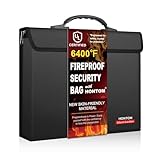
- 6400 Fireproof Safe Protection :fireproof document bag is made of high quality Silicone coated fiberglass and aluminium foil which withstands high temperature up to 6400. Its innovative 12-layer design creates a superior thermal barrier, specifically engineered to protect vital documents and valuable items from intense heat.Unlike fire bags with a nylon liner, which can melt under high heat, this bag maintains its structural integrity, ensuring your important papers are safeguarded effectively
- Skin-friendly Surface Material:Featuring a uniquely soft, skin-friendly exterior developed over years of innovation, Its sophisticated design eliminates the bulky, industrial look of traditional safes, making it perfectly suited not just for home use but also for professional settings. You can confidently carry it to the office or important business trip, knowing your vital documents are protected with the technology while you maintain a polished, professional appearance
- Large Storage Capacity: the size is 13.6x 10.7x1.85 inch It is much thicker than other fireproof bag on the market .It can hold 400pcs A4 papers .It stores our daily documents such as letter size documents ,money ,certificate ,receipt ,passports ,bank cards and so on .It is highly recommended that fireproof cash bag is combined with fireproof safe
- Velcro Cover And External Zipper Pocket:fireproof bag has the velcro cover .It can prevent flames from entering and better protect your valuable items.Additional exterior zipper pocket for fireproof bag for cash can hold keys ,business card ,plane ticket,transit cards ,small notebook and other personal items.You no longer have to worry about losing small items
- Trusted After-sales Service: Buy with confidence. If you aren’t satisfied with our waterproof money bag , send it back. You can send us a message at anytime, and you will always receive a quick, friendly response from one of our amazing team members, ready to resolve any issue. Start protecting your important documents today
Do not treat every foreign birth record as interchangeable with a U.S. birth certificate or Consular Report of Birth Abroad. First identify what record the child has and what document is needed for the next step. If the young person’s situation involves immigration documentation or an unresolved record, ask the caseworker about appropriate legal support rather than assuming a standard U.S. birth-certificate process will apply.
Replace or correct a Social Security card
Use the Social Security Administration for a replacement card or to correct vital information such as a name. USAGov states that replacement Social Security cards are free. The appropriate application route depends on the person’s situation and SSA’s current eligibility and identity-document rules; follow SSA’s instructions rather than assuming every applicant can use the same channel.
For a child under 18, coordinate with the caseworker before applying. Confirm who can submit the request on the child’s behalf and what evidence SSA requires from that applicant and the child. If a name or other information needs correction, make sure the supporting records show the updated information and ask SSA what documents it accepts. The free replacement-card service does not mean that every supporting document or related service is necessarily free.
Keep the task specific: a replacement card is for a card that is lost or unavailable, while correcting a name or other vital information requires supporting documentation for the change. SSA’s current instructions determine the correct route and whether an application can be handled online or requires another method. If the young person is in care, clarify the applicant’s authority before submitting information or documents on the child’s behalf.
Because a Social Security card contains sensitive information, plan its storage and handoff as carefully as the application. Do not put the number in an unsecured shared file or send a copy through an unapproved channel. If the card is held by the agency, establish how the young person can access it when needed and who will transfer it as part of transition planning.
Apply for or replace a state ID
The state motor vehicle agency handles state identification cards and driver’s licenses. Replacement rules and application requirements differ by state, so use the agency’s current document list and process for the child’s state of residence. If the young person needs an ID but does not intend to drive, ask for the state identification-card option.
Do these 3 things before closing this tab:
1Scan for outdated or missing drivers - takes under a minute2Clear out junk files and repair common Windows errors3Fix the driver behind crashes, sound loss and screen glitchesState IDs and driver’s licenses are related but not identical choices for planning purposes: a young person who needs identification but does not plan to drive can ask the agency about a non-driver identification card. Check the specific state’s process for the appropriate credential, including whether an appointment, application channel, or other step is required. Do not assume that a driver’s-license checklist applies unchanged to a state ID.
Check REAL ID requirements before making an appointment
For a REAL ID-compliant credential, most states request proof of identity, Social Security number, and state residency. Examples may include a birth certificate or passport for identity; a Social Security card, W-2, or pay stub for the Social Security number; and a lease or utility bill for residency. The state decides what it accepts, so examples are not a substitute for checking its current list. Confirm whether the youth wants a REAL ID-compliant credential and whether the state offers alternative residency evidence for someone who does not have a lease or utility bill.
If ordinary proof of residency is difficult to obtain because of placement arrangements or frequent moves, ask both the caseworker and the state agency what alternatives are available in that jurisdiction. Do not submit a document that seems close to the requirement without checking that the agency accepts it; a rejected application can mean another appointment or delay.
Rank #3

- FIREPROOF PROTECTION: Built with dual-layered fiberglass and a silicone coating, this document bag withstands temperatures up to 2000°F to keep your valuables safe.
- WATER-RESISTANT DESIGN: Features a water-resistant coating and a sealed zipper to shield your documents from leaks, rain, and emergency sprinkler systems.
- SPACIOUS YET COMPACT: Measuring 13.3 x 9.8 inches, this bag fits passports, cash, contracts, bank cards, and birth certificates while tucking neatly into safes or drawers.
- SECURE ZIPPER CLOSURE: A heavy-duty zipper keeps contents firmly in place, making it easy to grab everything you need quickly during an emergency.
- LIGHTWEIGHT AND PORTABLE: Slim and easy to store, this fireproof bag fits into go-bags, cabinets, or backpacks, making it ideal for home, office, or travel use.
Before an appointment or application, compare the state’s accepted-document list against what the young person actually has. A birth certificate, Social Security card, W-2, pay stub, lease, or utility bill are examples that may be relevant, not a guarantee that a particular office will accept that item in every situation. Ask the motor vehicle agency what it accepts for each category and what alternatives exist when the young person’s placement does not provide conventional residency paperwork.
Also clarify whether a REAL ID-compliant credential is the young person’s goal. The state’s process and evidence requirements matter either way, but the REAL ID list should not be confused with a universal checklist for all state identification cards. Confirm the credential type and accepted evidence directly with the state agency before arranging transport or an appointment.
Make sure qualifying youth receive transition documents before discharge
The Children’s Bureau’s 2023 tip sheet summarizes a federal document requirement for young people leaving foster care because they have reached age 18 or older. It applies when the youth has been in foster care for at least six months and is eligible to receive the particular document. The records must be provided before discharge. This is a defined transition entitlement, not a statement that the same list applies to every child at every stage of foster care.
For eligible youth within that scope, the tip sheet lists:
- An official or certified U.S. birth certificate.
- A Social Security card.
- Health insurance information.
- A copy of medical records.
- A state-issued driver’s license or identification card.
- Official documentation showing that the youth was previously in foster care.
Raise the document list during transition planning rather than waiting until the discharge date. Ask the agency to identify which items the youth is eligible to receive, which are already available, and how any missing item will be obtained in time. A foster-care verification letter can also help a young person independently seek services such as education and training vouchers or Medicaid, according to the Children’s Bureau tip sheet.
The Tool Desk
Outbyte Driver Updater FREEFix the driver behind crashes, sound loss and screen glitchesFind Drivers →Outbyte PC Repair FREERepair Windows errors before they cause bigger problemsFix Now →The limits matter. The summary is about youth leaving care because they have reached age 18 or older, who have spent at least six months in foster care and are eligible for the particular record. It should not be read as a statement that every child in foster care immediately receives every item on the list, or that a document is available when the youth is not eligible for it. Ask the agency to explain how the rule applies to the young person’s circumstances and which records must be provided before discharge.
Use a transition checklist to compare the required items with the inventory: record whether the document exists, whether the agency has it, whether a request is outstanding, and what remains to be transferred. The goal is not only to order missing documents but also to confirm receipt and make a practical handoff. If a record is not available yet, ask who is following up and what steps will be taken before discharge.
Check the related credit-report requirement
Identity preparation in care also includes checking credit records. The Children’s Bureau’s 2023 summary says youth in foster care under state responsibility are to receive a free consumer credit report each year beginning at age 14. It also says youth age 18 or older in extended foster care should receive assistance to request, understand, and correct the report. This is separate from obtaining a birth certificate, Social Security card, or state ID. Ask the caseworker how the state carries out the report process and how the young person can review or dispute information that is inaccurate.
The annual report is a separate protection step, not a substitute for the identity-document checklist. Beginning at age 14 is the threshold described in the Children’s Bureau summary; the report is free, and the guidance calls for assistance to eligible youth age 18 or older in extended care to request, understand, and correct it. A practical plan can record when the report was requested, who will help the young person review it, and how an inaccuracy will be addressed.
Rank #4

- Ultimate Fireproof & Water-Resistant Protection: Keep your valuables safe with our DocSafe Hard-Shell fireproof file organizer. It is made of thickened silicone coated fireproof heat insulated cotton material and hard-shell material which can stands up against fire and passed the UL94 -V0/5VA flame retardant test. Fireproof box is both fireproof and water-resistant, ensuring your documents stay protected during fires, floods, or wet weather. It may fit both letter and legal-size files
- Upgraded Hard-Shell Design Fireproof Box: Our fireproof document box combines hard-shell construction with fireproof materials, offering unmatched protection and durability. Unlike traditional soft case, our design withstands extreme conditions while maintaining a sleek, professional look. The Non-dusty material actively repels dust,hair and stains, keeping your box clean and tidy for years. It’s the ultimate solution for safeguarding your important documents, laptop, and valuables
- Large-capacity: Outside size: 15.5" x 11.5" x 3"(Thickness can be expanded up to 4"). Our Accordion fireproof document box adopts a multi-layer design that can meet all your storage needs. These include 13 accordion Pockets with labels,1 zipper pocket,4 pen slot,14 card slots,4 passport holder,4 small mesh bags,2 mesh bags,and 1 main pocket. It can store your important documents,money,passport,U Disk,cards,laptop,certificates in a safe and orderly way. Perfect for daily file filing and storage
- Fireproof File Organizer with Lock: Protect your valuables with the built-in high-quality combination lock (No keys required). Featuring a double metal zipper for convenient opening and closing. Design with a strong handle for carrying everything you needed easily. The fireproof file folder is suitable for business, travel, office, school, home storage, you can be 100% sure that your important documents are in a safe place. Of course, giving it as a gift to your family is also a good choice
- Trusted after sales service: Nothing is completely foolproof, but added protection is always a good idea. In an emergency, our fireproof document organizer ensures your files stay intact, giving you time to save your important documents. It is lighter, easier to carry than fireproof safes and quick to grab and go. If there any quality problem, please feel free to let us know. We are committed to solving your problem immediately, your suggestion has a great impact on the upgrade of our products
Plan how documents will be transferred and protected
A document is only useful if the young person can get it when needed. Agree in advance whether the agency will retain an original, transfer it to the youth, or provide a certified copy, and follow applicable agency rules. Keep sensitive records private; do not leave them in a shared or unsecured location or send them through an unapproved channel. If digital access is appropriate, use an agency-approved method and consider who can view or download the files.
For youth who move often or do not have a stable mailing address, settle the delivery plan before placing an order. Ask whether the issuing agency can send the record to an authorized agency address or whether another permitted delivery arrangement is available. The caseworker can help coordinate receiving and handing over documents without exposing private information. The Children’s Bureau also recommends planning for safe storage, including protection from disasters; a waterproof or fireproof container is an optional storage measure, not a government requirement or a replacement for agency procedures.
Physical storage and digital access solve different problems. A secure physical place can protect originals from loss or damage, while an approved digital copy may help the young person locate information when a document is not immediately in hand. Neither approach replaces the original or certified record where one is required, and digital access should be controlled. Consider placement moves, mailing-address changes, confidentiality, and agency policy when choosing how the young person will access copies.
Before a document is mailed, confirm where it can safely be received and who is allowed to accept it. A stable mailing address should not be assumed for a young person who moves frequently. If the agency can receive a record or coordinate another delivery option, verify that arrangement with both the caseworker and the issuing office. Keep the transfer plan explicit so that a record does not remain inaccessible in an agency file after it arrives.
Use this request-and-follow-up sequence
- Inventory records with the young person and caseworker. Note what is held, what is missing, what is needed first, and who may request each item.
- Identify the issuing agency for each missing record. Use the place of birth’s vital records office for a U.S. birth certificate, SSA for a Social Security card, and the state motor vehicle agency for a state ID.
- Verify current requirements directly with the issuer. Check applicant authority, acceptable identity and supporting evidence, application channel, fees, and processing choices. For a state ID, check residency documents and REAL ID requirements if relevant.
- Submit applications and record the follow-up plan. Track the request date, who is responsible, and when to check on progress. Keep copies or confirmation details only as permitted by agency rules.
- Confirm receipt and transfer. Make sure the correct record arrived, resolve errors with the issuing agency, and agree how the original or certified copy will reach the young person.
- Review transition items and credit reports. For qualifying youth approaching discharge, check the federal document list and the separate annual credit-report process with the agency.
When several documents are missing, use the young person’s immediate needs and any transition deadline to set the order. A state ID application may depend on documents the youth does not yet have, while a birth record or Social Security card may require a separate application and applicant-authority check. The agencies—not a general checklist—determine the precise sequence and acceptable evidence. Ask the caseworker to help coordinate requests so the youth is not sent from one office to another with an incomplete application.
For each request, keep a simple status record: the issuing office, the application date, the person responsible for follow-up, any confirmation information, and whether the document has arrived. If a request is delayed or returned, contact the issuing agency to understand what is missing and record the next step. This helps distinguish a slow process from an application that needs correction and makes handoff easier when the caseworker or placement changes.
Why local verification matters
There is no single nationwide application form or universal set of fees for these records. A birth certificate is issued by the birth jurisdiction; state IDs are administered by the youth’s state; and authority to act for a minor can depend on the circumstances and the issuing agency’s rules. Procedures and fees can change. USAGov’s relevant pages were updated November 17, 2025 for birth certificates and replacement ID cards, January 16, 2026 for Social Security cards, and April 6, 2026 for REAL ID. Use the live issuing-agency instructions when making a request, and ask the caseworker to help resolve questions about authority, records held by the agency, or a youth’s delivery and storage plan.
These are different processes, not competing services. For a U.S. birth certificate, compare jurisdictions and ordering options at the office for the place of birth; for a Social Security card, follow SSA’s replacement or correction pathway; for a state credential, use the motor vehicle agency in the relevant state. The useful comparison is practical: who is allowed to apply, what evidence is accepted, how the request can be made, what it costs, how long it may take, and how the record will reach the young person. Verify each point with the issuer because no exact forms, fees, or processing times can be stated without knowing the state, territory, and place of birth.
What’s actually slowing this PC down?
Pick the symptom - the matching free tool is one click away.
Frequently asked questions
How do I get a birth certificate for a child in foster care?
Start with the caseworker to find out whether the agency already has the record and who can request it. For a child born in the United States, apply through the vital records office for the state or territory of birth. Check that office’s current rules for authority, identity evidence, application method, fee, and processing time. Have the city and county of birth ready if known.
Best Value
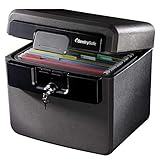
- FIRE AND FLOOD PROTECTION FOR ESSENTIAL PAPERS: UL Classified to withstand high temperatures for up to thirty minutes and ETL Verified to protect contents during water exposure, helping safeguard critical paperwork during common home emergencies
- DESIGNED FOR IMPORTANT DOCUMENT STORAGE: Spacious interior fits hanging file folders and is ideal for organizing passports, birth certificates, insurance records, and legal paperwork
- KEY LOCK SECURITY YOU CONTROL: Durable key lock helps prevent unauthorized access and keeps the lid securely closed during fire events. Two keys are included for backup access
- HOME FRIENDLY SIZE WITH PORTABLE DESIGN: Compact footprint fits easily in closets, offices, or under desks while remaining portable enough to relocate when needed
- BUILT FOR EVERYDAY PEACE OF MIND: Black exterior offers a clean, neutral look that blends into home or office spaces while providing dependable document protection year round
Who can request a Social Security card for a foster child?
SSA handles replacement or correction requests, but the person applying for a minor must follow SSA’s current rules and provide the required evidence. Coordinate with the caseworker to identify the appropriate applicant and supporting documents before submitting a request. Replacement cards are free.
What if the child has no accepted photo ID?
Ask the vital records office in the birth jurisdiction what alternatives it accepts. USAGov gives examples used by most states, including a sworn statement of identity or a notarized letter with a copy of photo ID from a parent listed on the birth record. These alternatives are not universal, so confirm the current rule with the issuing office before applying.
What documents does a young person need before leaving foster care?
The Children’s Bureau’s 2023 summary describes a requirement before discharge for qualifying youth leaving care because they reached age 18 or older, have been in care for at least six months, and are eligible for the document. The listed items are an official or certified U.S. birth certificate, Social Security card, health insurance information, a copy of medical records, a state-issued driver’s license or ID card, and official proof of prior foster-care status. Confirm how the requirement applies with the agency.
Quick wins for a faster PC:
Fix the driver behind crashes, sound loss and screen glitchesFind Drivers →Repair Windows errors before they cause bigger problemsFix Now →Scan for outdated or missing drivers - takes under a minuteDriver Scan →Does a foster youth need a REAL ID?
That depends on the young person’s needs and choice of credential. Ask the state motor vehicle agency about a state ID or driver’s license and, if the youth wants a REAL ID-compliant credential, check its current proof-of-identity, Social Security-number, and residency requirements. States decide which documents they accept and may have alternatives for residency proof.
How much does it cost and how long does it take?
There is no single fee or processing time for birth certificates or state IDs; both depend on the issuing jurisdiction and the available application and processing options. Check the current fee and timing with the birth jurisdiction or state motor vehicle agency. USAGov states that Social Security card replacement is free, though applicants must still meet SSA’s identity and application requirements.
Frequently Asked Questions
How do I get a birth certificate for a child in foster care?
Start with the caseworker to find out whether the agency already has the record and who can request it. For a U.S. birth, apply through the vital records office for the state or territory of birth and confirm its current requirements, fees, and processing options.
Who can request a Social Security card for a foster child?
SSA handles replacement and correction requests. For a minor, coordinate with the caseworker to confirm who may apply and what evidence SSA requires. Replacement cards are free.
What’s actually slowing this PC down?
Pick the symptom - the matching free tool is one click away.
What documents does a young person need before leaving foster care?
The Children’s Bureau’s 2023 summary describes a requirement for qualifying youth leaving care at age 18 or older, after at least six months in foster care, if eligible for each record. The list includes a certified U.S. birth certificate, Social Security card, health insurance information, medical records, state ID or driver’s license, and official proof of prior foster-care status.
How much does it cost to get these documents?
Social Security card replacements are free. Birth certificate and state ID fees vary by jurisdiction, so check the relevant vital records office or motor vehicle agency for current costs and processing options.
The Bottom Line
Begin with the caseworker and a shared inventory, then request each missing record from the agency that issues it: the birth jurisdiction for a U.S. birth certificate, SSA for a Social Security card, and the state motor vehicle agency for an ID. Verify authority, accepted documents, fees, and delivery plans directly with the issuer. For qualifying youth leaving care at age 18 or older after at least six months in foster care, review the required transition documents with the agency well before discharge.
Quick Recap
Product prices and availability are accurate as of the date/time indicated and are subject to change. Any price and availability information displayed on Amazon at the time of purchase will apply.




