To assess whether a proposed data center could affect your electricity bill, start with the state utility regulator’s docket for the project and its serving utility. The most revealing records are the proposed large-load tariff or electric service agreement, cost-allocation evidence, related rate-case filings, and the regulator’s final order. They can show who is expected to pay for new generation, transmission, substations, and other facilities—and what happens if the center uses less power, is delayed, or cancels. They cannot, by themselves, establish a specific increase on your household bill.
Why a data center could affect other customers’ bills
A large data center may require utility investments built around its expected electricity use. If the project does not proceed as forecast, uses less power than expected, or leaves before the utility has recovered those costs, some costs could potentially be shifted to other customers through utility rates. Whether that happens depends on the project’s contract and tariff, how costs are allocated, the utility’s rate recovery, and regulatory decisions.
That risk is not proof that a particular household will pay more. A new customer can also contribute revenue, and bill effects depend on what infrastructure is built, who is assigned its costs, the applicable rate design, and other factors affecting utility rates. The California Public Advocates Office warns that speculative or duplicate interconnection requests can affect load forecasts and transmission planning, and that underused infrastructure may leave existing customers with costs. It also says minimum demand charges and early-termination fees can help secure contributions, while some system-wide transmission costs may still appear in rates. Read the office’s analysis.
Find the regulator and the project docket
Search the state public utility commission or public service commission website using the utility’s name, the project or operator’s name, and terms such as “large load,” “very large customer,” “electric service agreement,” “special contract,” “tariff,” “rate case,” “interconnection,” or “certificate of need.” A state utility commission may review service terms and utility rates; siting and local land-use approvals may be handled by other authorities.
#1 Best Overall

- Various Monitoring Parameters: The power meter plug can monitor the power (W), energy (kWh), volts, amps, hertz, power factor, cost, minimum and maximum power (W), cumulative days and time of your appliances. By switching 7 display modes, you can easily know the various parameters while the appliance is working. The home energy monitor can also calculate and display how much power your appliance uses and how much electricity bill it cost in cumulative time
- Upgraded LCD Display: With large screen size 2.36 inch x 1.85 inch, clearer monitor backlit, our electrical usage monitor can display the data clearer and more visible no matter day or night. 180°full wide viewing angles is great for reading and recording the data in any angles. No need to stand on the front of the display and bend over to read the numbers
- Adjustable Backlight Time: Our upgraded watt meter has 5 options of backlight time. The default backlight time duration is 10 minutes(bL-0). If you want to change the backlight time, you can press and hold "UP" and "DOWN" button at the same time to enter backlight time setting, then press "UP" and "DOWN" to select the backlight time (bL-0 =10 minutes, bL-1=1 hour, bL-2=4 hours, bL-3=8 hours, bL-4=always on), finally press the "COST" to save the backlight time settings
- Overload protection: When the power of the appliance exceeds the overload power, the LCD will display “OVERLOAD” to warn the user. All the buttons will quit working and can only be workable when you lower or remove the load power. The default overload power is 3680W and is adjustable from 0 to 3680W. In general, you need to set the overload power to 1800W before using. Just press the "function" button for more than 3 seconds to enter the setting
- Data Memory Function: The wattage meter will record your power consumption data when you remove it from socket, or remove appliances from the electricity monitor. You can directly see the last data when you use it next time. This function can also automatically save the data when there is a sudden power failure
Minnesota’s Public Utilities Commission says it reviews electric service agreements and special tariffs, oversees relevant utility infrastructure permitting, and accepts public comments before deciding whether to approve, modify, or reject agreements. Its guidance also explains that certain customer and project details may be confidential. See the Minnesota PUC’s data-center information. The process and records available in another state may differ.
Read the records that determine who pays
Do not rely only on a project announcement, a utility’s summary, or arguments from supporters and opponents. Look for the underlying filings and note whether each is proposed, contested, settled, approved, or appealed. Prioritize:
Rank #2

- Multi-function power monitor: Our electric usage monitor can monitor the power (W), electricity(kWh), voltage(V), frequency(Hz), current(A), power factor(PF), unit price($/kWh), total cost($) of your appliances. By switching 8 display modes, you can easily know the various parameters while the appliance is working. The “electricity” mode can calculate and display how much power your appliance uses. And the “total cost” mode will show how much electricity bill it cost in cumulative time
- Overload protection: When the loading power of the appliance is over the default overload threshold 1800W, the whole display with backlight and the word “OVERLOAD” will keep flashing to warn the users. Please turn off the appliance for safety concern
- Premium Material: The whole body of our energy meter is made of high-quality ABS material. It makes our home electricity usage monitor more long lasting, fireproof and anti-drop. The standard US socket and plug is suitable for all US standard appliances
- Backlight Display: With white backlight and black words, the LCD display of our home power monitor can display the data clearer and help you to read the data easier no matter day or night. The backlight will only lights up when the device is connected to AC power. If no button is pressed, the backlight turns off automatically after 10 minutes. You can also press the "UP" button to turn off the backlight manually, and press any button to turn on backlight again
- Easy to reset: No reset tool needed, our appliance power usage meter is easy to reset. You can press the “M” button for 5 seconds directly to reset the device. After reset, all cumulative data (electricity quantity, cost) will be cleared, and all settings will be restored to factory settings
- The utility application and proposed tariff, electric service agreement, or special contract.
- Cost-of-service studies, cost-allocation testimony, construction estimates, load forecasts, and evidence about transmission or generation needs.
- Settlement proposals, intervenor testimony, commission staff analysis, and public comments.
- The commission’s final order and any later appeal or related rate-case decision.
For each major cost, identify who is expected to pay and how: direct interconnection facilities; substations and distribution upgrades; transmission network upgrades; new generation or storage; standby or backup service; and broader utility costs that may be recovered through general rates. Check whether the project pays directly, through a special rate, a minimum charge, or a wider system charge. Also look for who bears cost overruns and financing costs, and whether the allocation changes if the project is late, smaller than forecast, or canceled.
Check whether the agreement protects customers if plans change
A proposed project can be a weak basis for infrastructure spending if its load forecast is uncertain or its plans are not firm. Look for milestones, evidence of project readiness, and whether duplicate or speculative interconnection requests are affecting forecasts. Then examine the agreement for protections that could keep costs from falling on other customers:
Recommended Free Tools
Rank #3
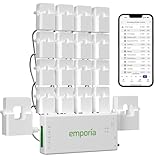
- SAFETY YOU CAN TRUST WITH UL CERTIFICATION: With Emporia Energy, your home energy monitoring is safe, reliable, and certified. The Emporia Vue is UL Listed, meaning it has met rigorous safety standards for electrical products in the U.S. and Canada. This certification ensures that every component has been thoroughly tested to prevent hazards, such as overheating, short-circuiting, or fire, offering you peace of mind as you manage your home’s energy consumption.
- INSTALLS IN CIRCUIT PANEL of most homes with clamp-on sensors. Supports Single phase, Single-split phase, and 2-wire systems. 3-wire systems; 3-phase, 4-wire Wye systems with earthed (TN or TT) neutral (no-Delta) are supported with an additional 200A sensor (sold separately).
- 24/7 ENERGY MANAGEMENT AND MONITORING: Automate, manage and control your home's real power anywhere, anytime to prevent costly repairs, conserve energy, and save costs. Monitor solar / net metering. PROTECTED BY A 1-YEAR WARRANTY.
- LOWER YOUR ELECTRIC BILL: Configure settings in the Emporia Energy App to automate energy management for time of use, peak demand, excess solar, and rewards programs. You can even see live reporting and invaluable savings opportunities instantly. Gauge real-time spending and get actionable notifications and automated energy management to help you reduce costs.
- REAL-TIME ENERGY DATA: REQUIRES 2.4 GHz WIFI WITH AN INTERNET CONNECTION to monitor energy use with iPhone / Android / Web app. Vue sensors collect energy data and are accurate from ±2%. The Vue is UL and CE Listed for your safety. 1 second data is only available in the app (when actively open) and retained 3 hours. Minute and hour data are retained in the cloud. 1 minute data is retained 7 days, 1 hour data is retained indefinitely. Export cloud data whenever you want in the app.
- Minimum billing: Is the customer charged for a minimum amount of demand or capacity even when it uses less electricity?
- Contract length and exit payments: How long does the obligation last, and what must the customer pay if it ends service early?
- Credit support and collateral: What secures the customer’s obligations, and is it sufficient to cover expected costs?
- Cost responsibility: Does the customer cover dedicated facilities only, or also specified upgrades, cost overruns, or broader system costs?
- Cancellation and delay terms: Do payment obligations survive if the project is delayed, scaled back, or canceled?
These protections can reduce the risk that other ratepayers are left with project costs, but they do not necessarily eliminate costs associated with broader system investments. Read the actual agreement and order rather than treating a headline term as a complete answer.
What two state examples show—and do not show
| Case | Reported terms and status | How to use the example |
|---|---|---|
| Michigan: DTE Electric agreements for a Google data center | The Michigan Public Service Commission announced approval on October 1, 2026. It described a 20-year contract, an 80% minimum billing demand, early-termination payments requiring at least 15 years of minimum monthly charges, and credit and collateral requirements. The release said Google would fund associated clean-energy resources and storage under the agreement. Read the commission’s announcement. | These terms describe this Michigan agreement, not a nationwide standard. They indicate protections included in this case; the announcement alone does not establish the effect on every customer’s bill. |
| Ohio: AEP Ohio large-data-center tariff | The Ohio Consumers’ Counsel reports that the Public Utilities Commission of Ohio adopted the tariff on July 9, 2025, requiring new large data centers to pay at least 85% of contracted capacity for up to 12 years, even if they use less. The counsel reports that industry groups appealed in November 2025. Read the Ohio Consumers’ Counsel’s account. | The appeal makes the current docket status important. Check the commission docket for subsequent developments; do not assume Ohio’s terms apply in another state. |
Account for missing or confidential information
Public dockets may not provide everything needed to independently estimate costs. Minnesota’s PUC says customer demand estimates, infrastructure construction costs, timelines, and detailed customer-specific rate information may be claimed as trade secrets; the commission reviews confidentiality requests under state law. If important details are redacted, distinguish what the public record establishes from what it does not.
Rank #4

- Various Monitoring Parameters: The power meter plug can monitor the power (W), energy (kWh), volts, amps, hertz, power factor, cost, minimum and maximum power (W), cumulative days and time of your appliances. By switching 7 display modes, you can easily know the various parameters while the appliance is working. The home energy monitor can also calculate and display how much power your appliance uses and how much electricity bill it cost in cumulative time
- Upgraded LCD display: With large screen size 2.36 inch x 1.85 inch, clearer monitor backlit, our electrical usage monitor can display the data clearer and more visible no matter day or night. 180°full wide viewing angles is great for reading and recording the data in any angles. No need to stand on the front of the display and bend over to read the numbers
- Adjustable Backlight Time: Our upgraded watt meter has 5 options of backlight time. The default backlight time duration is 10 minutes(bL-0). If you want to change the backlight time, you can press and hold "UP" and "DOWN" button at the same time to enter backlight time setting, then press "UP" and "DOWN" to select the backlight time (bL-0 =10 minutes, bL-1=1 hour, bL-2=4 hours, bL-3=8 hours, bL-4=always on), finally press the "COST" to save the backlight time settings
- Overload protection: When the power of the appliance exceeds the overload power, the LCD will display “OVERLOAD” to warn the user. All the buttons will quit working and can only be workable when you lower or remove the load power. The default overload power is 3680W and is adjustable from 0 to 3680W. In general, you need to set the overload power to 1800W before using. Just press the "function" button for more than 3 seconds to enter the setting
- Data Memory Function: The wattage meter will record your power consumption data when you remove it from socket, or remove appliances from the electricity monitor. You can directly see the last data when you use it next time. This function can also automatically save the data when there is a sudden power failure
If a key issue is unanswered, you can raise a focused question or comment through the commission’s published process. For example, ask where the load forecast appears, how transmission upgrades are allocated, how a minimum bill is calculated, or what collateral secures an early exit. Follow the commission’s instructions and cite the docket number; a general comment may not substitute for evidence or formal participation requirements.
Independent reader supportYour contribution helps us test, update, and keep practical guides available for everyone.Separate a plausible risk from an actual bill increase
A filing may show a route by which a data center could affect rates, but a proposed contract or opponents’ warning is not a finding that costs have shifted—or that your bill will rise. To evaluate an actual household impact, look for the regulator’s decisions on cost recovery and rate design, then compare the utility’s rates and rate-case record over time. Fuel, generation, transmission, and policy costs can also change bills, so a bill increase should not be attributed to one project without evidence that separates those causes.
The Tool Desk
Outbyte PC Repair FREERepair Windows errors before they cause bigger problemsFix Now →Outbyte Driver Updater FREEFix the driver behind crashes, sound loss and screen glitchesFind Drivers →Best Value

- ✓ Backlit LCD Display: The watt meter features an upgraded backlit LCD display with a 160° wide viewing angle, providing clear and distinct data readings from any angle, day or night. (Note: To conserve energy, the backlight will automatically turn off after 15 seconds of continuous use.)
- ✓ 9 Types of Data Display: This energy meter plug accurately monitors a wide range of electrical parameters, including power (W), apparent power (VA), energy consumption (kWh), usage time (hours), power frequency (Hz), power factor (PF), voltage (V), current (A), and electricity cost. The user-friendly interface allows you to easily read and navigate through 9 types of data with a single button.
- ✓ Save Money and Energy: By toggling through the 9 display modes, you can gain insights into various operational parameters of your devices. The home energy monitor also calculates and displays the electricity consumption and cost over time, helping you save on your electricity bills by monitoring and managing energy usage.
- ✓ Data Storage: The plug-in electricity meter stores all non-real-time data, ensuring no information is lost in the event of a sudden power outage. If data exceeds the screen’s maximum display range, the screen will flash as a reminder. Pressing and holding the reset button for 3 seconds will reset the cumulative data to zero.
- ✓ Safe to Use: Rated voltage 125VAC, 60Hz, 15A maximum 1875W resistor and tungsten wire, 1/2HP. Clean and tidy interface, very simple to use.
The scale figures in public discussion provide context, not a household forecast. In an October 28, 2025 analysis, California’s Public Advocates Office characterized data centers as using 10 to 50 times more energy per square foot than a typical commercial office building, and described planned California sites of 50 to 100 megawatts or more. The office also reported that direct interconnection costs can range from a few million dollars to more than $100 million. Those figures describe the office’s cited context; they do not establish what any particular project will cost or how much a resident’s bill will change.
Quick Recap
Product prices and availability are accurate as of the date/time indicated and are subject to change. Any price and availability information displayed on Amazon at the time of purchase will apply.




