A retroactive Social Security payment can affect how much of your benefits is taxable on your federal return, but it does not automatically make the entire payment taxable. Start by identifying what the lump sum was for: the IRS lump-sum election applies to retroactive Social Security or equivalent railroad retirement benefits for earlier years, not automatically to a pension payout, severance, inheritance, settlement, or other payment. For a qualifying back payment, compare the regular calculation for the year you received it with the IRS election calculation for the earlier years it covers. Use the worksheets for the tax year on your return; the figures below are from IRS Publication 915 for tax year 2025.
First identify what kind of lump sum you received
“Lump-sum income event” is not a special IRS tax category with one rule. The payment’s source and purpose determine how it is reported. The special lump-sum election in IRS Publication 915 is for retroactive Social Security benefits and equivalent railroad retirement benefits paid for earlier years. It lets you refigure the taxable portion of benefits for those earlier years when working out the current return.


As an Amazon Associate I earn from qualifying purchases.
That election does not mean you can spread any large payment over the years you believe it relates to. A pension distribution, severance payment, inheritance, legal settlement, or other lump sum has its own tax rules. Identify the payer and the nature of the payment, then follow the rules and forms that apply to that payment. This guide covers the federal taxable-benefit calculation for retroactive Social Security and equivalent railroad retirement benefits. It does not establish state tax treatment.
The Tool Desk
Outbyte Driver Updater FREEFix the driver behind crashes, sound loss and screen glitchesFind Drivers →Outbyte PC Repair FREEClear out junk files and repair common Windows errorsFree Scan →What the election does—and does not do
- It can change the calculation of taxable benefits. For an eligible back payment, you calculate the taxable portion for the earlier year or years using those years’ income and benefit information, then compare the result with the regular method.
- It does not move the payment to an earlier return. The payment is generally reported in the year you receive it. You do not amend prior-year returns just to report the current-year back payment.
- It does not guarantee a lower overall tax bill. The comparison is between taxable-benefit amounts under the regular calculation and the election method. The election is useful only if its calculated taxable-benefit amount is lower, and that does not by itself establish the effect on every part of your tax return.
The distinction is important: the election changes how the taxable portion of the benefits is figured; it is not an instruction to treat the check as if it arrived in each earlier year. The IRS describes the method this way: “Under the lump-sum election method, you refigure the taxable part of all your benefits for the earlier year (including the lump-sum payment) using that year’s income.” That earlier-year refigure feeds into the current-year comparison, while the payment remains reported for the year received.
What “up to 50%” or “up to 85%” means
Social Security benefits may be included in federal taxable income, depending on a calculation that considers benefits and other income. The phrases “up to 50%” and “up to 85%” describe the maximum share of benefits that may be included as taxable income under the applicable rules. They are not tax rates: an 85% inclusion does not mean the IRS taxes your benefits at 85%.
For tax year 2025, Publication 915 gives these general comparison amounts for the quick check:
| Filing status | General base amount | Amount above which up to 85% may be taxable |
|---|---|---|
| Individual | $25,000 | $34,000 |
| Married filing jointly | $32,000 | $44,000 |
These are tax-year-specific figures, not a substitute for the applicable worksheet. Crossing a comparison amount is a signal that benefits may be taxable; it does not tell you the exact taxable amount. The full Worksheet 1 calculation accounts for one-half of benefits, other relevant income, tax-exempt interest, applicable exclusions, and filing-status rules. Married filing separately can have different rules, including a zero threshold in the circumstances described by the IRS. Check Publication 915 and the Form 1040 instructions for the year you are filing rather than carrying 2025 figures into another year.
Recommended Free Tools
Use the quick check as a triage step, not as the answer to “how much of my check is taxable?” It helps indicate whether the benefits may be taxable under the general comparison, but it does not calculate the final inclusion or tell you which method produces the lower taxable-benefit amount. For that, the worksheet result matters. The relevant figures also depend on filing status: do not substitute the individual figures for a joint return, and do not assume the general amounts apply unchanged to a married-filing-separately situation.
Estimate the result in the year you received the payment
The most reliable estimate follows the IRS worksheets rather than treating the back payment as a separate tax rate or adding the whole check to wages. Gather the current-year benefit and income information first, calculate the regular result, and then work through the election only if some of the payment is for earlier years.
1. Gather the benefit statements and income records
Collect every Form SSA-1099 for the year you received the payment. If railroad retirement benefits are relevant, collect the applicable RRB-1099 as well. Check the benefit statement and form information for total benefits and any amount allocated to earlier years. You will also need the income information called for in the worksheet for the year of receipt and, if using the election, for each earlier year covered by the back payment.
For a joint return, include the relevant income and benefits of both spouses in the calculation—even if only one spouse received benefits. A calculation based only on the recipient’s income can give the wrong estimate.
Before doing arithmetic, make a year-by-year list: year of receipt, total benefits shown for that year, the portion designated for each earlier year, and benefits already reported for each of those earlier years. Keep the supporting statements with the list. This makes it easier to detect a missing year or an allocation that does not match the benefit statement. The election comparison is sensitive to the year attached to each amount, so do not treat a multi-year back payment as one undifferentiated figure.
2. Calculate the regular taxable-benefit amount
Use Worksheet 1 in Publication 915 for the year the payment arrived. The worksheet generally starts with one-half of benefits and combines it with other relevant income and tax-exempt interest, applying the relevant exclusions and filing-status rules. Its result is the regular-method amount to compare with the election method.
The publication’s quick check can help you decide whether benefits may be taxable, but it is only a screening aid. Use the full worksheet where indicated; do not estimate the taxable amount simply by multiplying your benefits by 50% or 85%. Those percentages are ceilings on the share that may be included, not formulas that replace the worksheet.
Think of Worksheet 1 as the baseline. It answers what the taxable-benefit amount would be under the regular calculation for the year of receipt. It does not, by itself, account for the separate year-by-year refigure available for qualifying retroactive benefits. Record its result before turning to the election worksheets so that the two methods can be compared directly.
Quick wins for a faster PC:
Repair Windows errors before they cause bigger problemsFix Now →Scan for outdated or missing drivers - takes under a minuteDriver Scan →3. Separate the retroactive portion by year
If the statement identifies part of the payment as benefits for earlier years, list the amount allocated to each year. The IRS election calculation needs the earlier-year income and benefits for each year covered, as well as the benefits already reported for that year. A single total for all years is not enough to refigure each year’s taxable portion.
Rank #3

- COMPACT & PORTABLE- Mini desktop size with rubberized keys for fast, comfortable input in office or on-the-go environments.
- BIG DISPLAY & EASY INPUT – 12-Digit LCD Display, large, easy-to-read screen ideal for quick and accurate business or personal calculations.
- ONE-COLOR PRINTING WITH DATE & TIME-Prints in crisp black and automatically includes the date and time—ideal for accurate recordkeeping, receipts, budgets, and accounting tasks.
- TAX & BUSINESS FUNCTIONS- Includes cost/sell/margin, tax calculation, and currency exchange functions for efficient financial decision-making.
- CHECK, CORRECT & RE-PRINT – Review and correct up to 150 steps before printing; use re-print and after-print functions for efficient documentation.
Publication 915 uses different worksheets depending on the years involved: Worksheet 2 applies to payments for years after 1993, while Worksheet 3 applies to years before 1994. Follow the publication’s instructions for each applicable earlier year and then complete Worksheet 4 to determine the election-method result.
For every earlier year, use that year’s income and the benefit information for that year rather than today’s income or a current threshold. Refigure the benefits for the earlier year with the back payment included, then subtract benefits previously reported for that year as directed by the worksheets. The prior return is useful as a record of what was already reported, but the election does not mean you file an amended return to add the payment there.
4. Compare the two taxable-benefit amounts
Compare the taxable-benefit amount from Worksheet 1 with the Worksheet 4 result, which incorporates the applicable earlier-year worksheet calculations. Choose the election only when that calculation produces a lower taxable-benefit amount. The relevant comparison is not the size of the check by itself, and it is not a direct comparison of tax rates.
Keep the inputs consistent with the correct years and filing status. The calculation depends on the payment’s allocation across years, benefits already reported for those years, income in each earlier year, and current-year information. If a year, benefit figure, or income input is wrong, the comparison can be wrong too.
A lower taxable-benefit amount is the decision point identified by the IRS worksheets, but it is not a guarantee that every part of the return or the final tax bill will move by the same amount. Do not interpret the worksheet comparison as a promise of a particular refund or tax savings. If the election does not lower the taxable-benefit amount, the method offers no advantage on that comparison. If the results are close, carefully recheck the year allocation, filing status, and both spouses’ information before deciding.
A basic calculator can help with worksheet arithmetic, but it is optional and does not determine the tax treatment. The IRS worksheets are the authoritative method. Tax preparation software or a qualified tax professional may be useful if you want help applying the return instructions; the payment type, allocation, and year-specific inputs should still be checked.
Rank #4
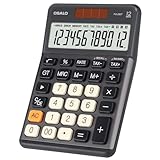
- 【Advanced Tax & Business Functions】Quickly set tax rates with dedicated TAX+/- keys and simplify budgeting via GT, MU, and memory keys (MRC/M+/M-). These tools enable seamless tax calculations and customizable rate settings for precise, tailored results—ideal for accountants, business owners, and professionals requiring accurate tax computations.
- 【Visualized Operation Symbol Display】When you would like to calculate the number, it will express the symbol (plus, subtract, multiply, or divide) on the screen. It can help you see the operation steps when you operate continuously.
- 【Efficient Dual Power System】The calculator uses high conversion rate solar panels, and solar power can be used in well-lit areas. At the same time, we provide a matching battery double safe uninterruptible power supply. The calculator will shut down automatically after 8 minutes without operation.
- 【Small Size, Large Display & Premium Build】It features a large LCD display with a 30° angled screen for clear visibility, paired with a high-grade metal panel and durable ABS buttons. The ergonomic button curvature aligns with natural finger movements, reducing errors and enhancing efficiency.
- 【Durable Construction and Portability】 Made of high-grade metal panel and durable ABS buttons, this 12-digit calculator is lightweight yet durable, capable of withstanding multiple impacts from desktop height. The large, clear LCD Display offers crisp, easy-to-read numbers, minimizing eye strain and ensuring professional-grade performance whether at home, in the office, or while traveling.
5. Report the payment on the current-year return
The payment is generally reported in the year received; the election refigures the taxable-benefit calculation for the earlier-year portion rather than shifting the payment onto amended prior returns. For a 2025 return, Publication 915 says to check the election box on Form 1040 or Form 1040-SR, line 6c, when using the election. Confirm the line and instructions for the actual tax year you are filing, since form references can change.
Free tools Windows power users keep installed
One-click scans. No signup required.
The IRS says that once you elect this method, you can revoke the election only with IRS consent. Treat the method choice as consequential: retain the statements, worksheet inputs, year-by-year calculations, and the comparison supporting your decision.
In practical terms, complete the relevant worksheets before checking the election box. The box records that you are using the method; it does not replace the calculations that establish whether it lowers the taxable-benefit amount. Keep the election calculations with your tax records so you can explain which prior years were involved, what was previously reported, and how you reached the comparison. Verify the line number and filing instructions against the current version of Form 1040 or Form 1040-SR rather than assuming the 2025 reference remains the same in a later year.
How to read the IRS example
Publication 915 illustrates the method with Terry Jackson. Terry received $6,000 in 2025, including $2,000 for 2024, and had $5,000 in other 2025 Social Security benefits. The example compares the regular Worksheet 1 calculation with the lump-sum election worksheets and reports $2,500 as taxable benefits under the election method.
The example demonstrates why the amount of the back payment alone does not determine the result: the earlier-year allocation and the other current- and prior-year figures feed into the worksheet comparison. Its $2,500 result belongs to Terry’s stated facts, not to every person receiving a $2,000 retroactive portion or a $6,000 payment. Use your own year-by-year figures and the matching tax-year publication.
Use Terry’s example as a guide to the sequence, not as a shortcut. First there is a regular calculation for the receipt year; then the prior-year amount is handled through the applicable earlier-year worksheet; finally, Worksheet 4 provides the election-method amount to compare. If your payment covers different years, your other income differs, or your filing status is different, the result can differ. The example does not establish a standard taxable percentage for retroactive checks.
Best Value

- Vibrant minimalistic accountant design featuring a rainbow outline of a calculator and spreadsheet, symbolizing creativity and precision in accounting. Colorful Calculator and Spreadsheet Accountant Design
- Perfect gift for accountants, CPAs, bookkeepers, or finance lovers who enjoy color and numbers. Great for office wear or tax season humor.
- Two-part protective case made from a premium scratch-resistant polycarbonate shell and shock absorbent TPU liner protects against drops
- Printed in the USA
- Easy installation
Common estimation mistakes to avoid
- Applying the election to the wrong kind of payment. The Publication 915 procedure concerns retroactive Social Security or equivalent railroad retirement benefits. It is not a general way to allocate unrelated lump sums to past years.
- Assuming that a large check is all taxable. The taxable-benefit worksheets determine what share of benefits is included in income; the check’s face value is not itself the taxable-benefit result.
- Using 50% or 85% as a tax rate. These percentages describe the maximum share of benefits that may be taxable under the relevant range, not the rate applied to your income.
- Using a quick check as the final calculation. The base amounts help screen for possible taxation. Worksheet 1 and, where applicable, the election worksheets produce the calculation.
- Leaving out a spouse’s figures on a joint return. The calculation includes both spouses’ relevant income and benefits, even when only one spouse received benefits.
- Putting the back payment on an earlier return. The general reporting approach is to report it in the year received and use the election worksheets to refigure the taxable-benefit amount; do not amend an earlier return just to report the current-year back payment.
- Assuming the election always wins. Compare the actual Worksheet 1 result with Worksheet 4. Use the election only when its taxable-benefit amount is lower.
- Reusing stale thresholds or form lines. The dollar figures and line references here are for the 2025 IRS materials. Verify the publication and return instructions for the tax year in question.
- Combining all prior years into one amount. Each earlier year has its own income and benefit facts, and the worksheet method calls for a refigure by year. A total without an allocation cannot substitute for those inputs.
- Assuming the comparison decides state tax. The calculations discussed here are for federal taxable benefits. They do not establish whether or how a state taxes benefits or another kind of payment.
A practical decision checklist
Before filing or estimating the effect, make sure you can answer each of these questions:
- Was the payment retroactive Social Security or equivalent railroad retirement benefits, rather than a different kind of lump sum?
- What year did you receive it, and how much was allocated to each earlier year?
- Do you have all SSA-1099 or relevant RRB-1099 information for the current year?
- Have you calculated the regular taxable-benefit amount using Worksheet 1 for the correct tax year and filing status?
- For each earlier year involved, have you used Worksheet 2 for years after 1993 or Worksheet 3 for years before 1994, as applicable, and then Worksheet 4?
- On a joint return, did you include both spouses’ relevant benefits and income?
- Is the election-method taxable-benefit amount actually lower than the regular-method amount?
- Are you reporting the payment in the year received and following that year’s form instructions?
- Have you checked the current-year Publication 915 and Form 1040 instructions for thresholds and line references rather than assuming the 2025 details still apply?
If the payment type is unclear, the year-by-year allocation is missing, or the worksheet comparison is difficult to apply, the figures may not support a reliable estimate. Use the applicable IRS publication and return instructions, or seek help from a qualified tax professional. Publication 915 provides the federal calculation; the rules discussed here do not determine any state tax result.
Frequently Asked Questions
I got a lump-sum Social Security payment for past years. Will it make my benefits taxable this year?
Not necessarily. The payment is generally reported in the year received, but the taxable-benefit amount depends on the applicable worksheet calculation. Compare the regular Worksheet 1 result for the receipt year with the result from the lump-sum election worksheets if the payment includes retroactive benefits.
Do these 3 things before closing this tab:
1Repair Windows errors before they cause bigger problems2Fix the driver behind crashes, sound loss and screen glitches3Clear out junk files and repair common Windows errorsCan I spread a retroactive Social Security payment across the years it covers?
The IRS election does not move the payment onto amended prior-year returns. It lets you refigure the taxable part of benefits for the earlier year or years using each year’s income, then compare that result with the regular calculation for the year you received the payment.
Does the lump-sum election apply to a pension distribution, severance, inheritance, or settlement?
No general rule in Publication 915 applies this Social Security election to those payments. The election is for retroactive Social Security or equivalent railroad retirement benefits. Other lump sums have their own tax rules.
Are the $25,000, $32,000, $34,000, and $44,000 amounts permanent?
These are the general comparison amounts stated in IRS Publication 915 for tax year 2025. Check the publication and Form 1040 instructions for the year you are filing, and use the worksheet rather than treating a comparison amount as the exact taxable-benefit result.
If only one spouse received benefits, can I leave the other spouse’s income out?
For a joint return, include both spouses’ relevant income and benefits in the calculation, even if only one spouse received benefits.
Can I revoke the lump-sum election later?
Publication 915 says the election can be revoked only with IRS consent. Compare the worksheet results and check your year-by-year inputs before electing.
The Bottom Line
For a qualifying retroactive Social Security or equivalent railroad retirement payment, report it generally in the year received, then compare the regular Worksheet 1 taxable-benefit amount with the Worksheet 4 election result. Use the election only if it produces a lower taxable-benefit amount, and use the IRS publication and return instructions for the tax year being filed. A different kind of lump sum requires its own tax rules.
Quick Recap
Product prices and availability are accurate as of the date/time indicated and are subject to change. Any price and availability information displayed on Amazon at the time of purchase will apply.




