Recommended Free Tools
Fear, regret, anger, shame, and anxiety can change a trading decision before you notice it. They may cause you to cut a profitable position too early, hold a losing position past its exit point, increase size after a loss, or chase a move you missed.
The practical goal is not to eliminate emotion. That is unrealistic. The goal is to prevent an emotional state from changing your exposure, entry rules, exit rules, or risk limits. A 2005 clinical study of day traders published by the National Bureau of Economic Research (NBER) found that more intense emotional reactions to gains and losses were associated with worse trading performance. The problem is therefore not simply feeling bad; it is allowing that feeling to control behavior.
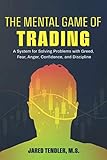
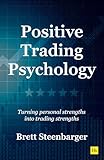
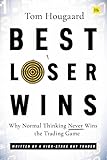
Identify the emotion and the trading mistake it creates
“I need to be more disciplined” is too vague to fix a recurring problem. Start by recording the specific emotion and the action that follows it.
| Emotion | Common trading behavior |
|---|---|
| Fear | Cutting winners early, skipping valid entries, or moving a stop farther away |
| Anxiety | Checking charts constantly, changing orders repeatedly, or adjusting position size impulsively |
| Anger | Revenge trading, immediate re-entry, or increasing leverage |
| Shame | Hiding losses, refusing to close a position, or avoiding a post-trade review |
| Regret | Chasing a move after missing the original entry |
| Euphoria | Trading larger after a winning streak or abandoning risk limits |
| Boredom | Taking weak setups merely to create activity |
Write down the trigger, emotion, action, and result. For example: “Lost trade; anger; entered a second position immediately; exceeded daily loss limit.” That record gives you an observable problem to address instead of a general instruction to “stay calm.”
What’s actually slowing this PC down?
Pick the symptom - the matching free tool is one click away.
#1 Best Overall
Use a written plan before placing the order
Emotions are hardest to manage after money is already at risk. Define the important decisions while you are still neutral. The plan should state:
- The market and instrument you are trading.
- The setup or conditions required for entry.
- The price or condition that invalidates the trade.
- The position size and maximum acceptable loss.
- How you will exit if the trade works.
- How you will exit if it does not.
- When you will stop trading for the day.
- Which information is relevant after entry—and which sources you will deliberately ignore.
“Stay calm” is not an operational rule. “Do not increase size after a loss” is. “After two consecutive losses, open no new positions for the rest of the session” is also measurable. CME’s trading-plan guidance similarly emphasizes deciding what and how much to trade and how much risk to accept.
Reduce the position size if normal price movement causes panic
Position size affects emotions as well as account mathematics. If an ordinary fluctuation makes you unable to follow your plan, the position may be too large for your actual risk tolerance—even if a spreadsheet says the size is acceptable.
Possible adjustments include:
- Buying fewer shares or trading fewer contracts.
- Removing or reducing leverage.
- Using less volatile instruments.
- Limiting the number of open positions.
- Setting a maximum daily loss.
- Taking a break after a specified number of losses or rule violations.
A smaller position does not make a losing strategy profitable. It can, however, reduce the chance that one outcome overwhelms your decision-making. Do not trade money needed for rent, food, emergency expenses, education, debt payments, or retirement. FINRA warns that day trading may be inappropriate for people with limited resources, limited experience, or low risk tolerance, and that margin can produce losses greater than the amount initially invested.
Separate a valid loss from a trading mistake
A losing trade is not automatically evidence that you made a bad decision. A sound process can produce an unfavorable outcome. After a loss, use the same review each time:
- Was the trade permitted by the written plan?
- Was the position size within the limit?
- Was the entry executed as intended?
- Did the exit follow the original invalidation rule?
- Did you change the plan after entering?
- Is the next trade independent, or is it an attempt to recover this loss?
Classify the result as one of three types:
- Valid loss: The trade followed the plan but produced an unfavorable result.
- Process error: You broke a rule, such as moving the stop or exceeding the size limit.
- System error: The plan itself shows a recurring problem that needs testing and revision.
Only the latter two require a corrective action. Treating every valid loss as a personal failure encourages revenge trading and unnecessary strategy changes. A single trade is one outcome in a larger distribution, not a verdict on your intelligence or ability.
Do not confuse a stop order with guaranteed protection
A stop can automate part of an exit, but it does not guarantee execution at the stop price. Once triggered, a conventional stop order generally becomes a market order. In a fast or illiquid market, it may execute materially above or below the expected price. A stop-limit order provides price control but may not execute if the market moves through the limit.
Rank #2

- Prentice Hall Press
- Great one for reading
- It's a great choice for a book person
Before using an order type, understand its trigger conditions, liquidity requirements, overnight-gap risk, trading-halt risk, and your broker’s rules. The important emotional control is to choose the exit structure before entering—not to widen or remove the stop because the potential loss has become uncomfortable.
FINRA’s guidance on stop orders explains why a stop price should not be treated as a guaranteed execution price.
Recognize the disposition effect
The disposition effect is the tendency to sell winning positions too soon while holding losing positions too long. It feels attractive because realizing a gain creates relief, while closing a loss forces you to acknowledge an unpleasant result. The SEC describes this pattern in its investor-behavior summary.
Use a rule-based process to make the decision less personal:
- Write the original thesis and the evidence that would disprove it before entry.
- Set the invalidation point in advance.
- Never move the stop farther away solely to avoid realizing a loss.
- Review positions at predefined times instead of watching every tick.
- Assess the position using current risk and expected return, not only the entry price.
The entry price matters psychologically, but it does not determine whether holding remains sensible. Ask: “If I did not already own this position, would I open it today under the current information and risk?”
Handle revenge trading with a stop-trading rule
A loss does not make the next trade more likely to win. Increasing risk to recover money converts one decision into another decision made under pressure. The next trade should meet the same criteria that would have applied before the previous loss.
Create a stop-trading rule before you need it. Triggers might include:
- Reaching the maximum daily loss.
- Breaking one major trading rule.
- Taking a trade specifically to recover a loss.
- Increasing size without prior authorization.
- Experiencing shaking, a racing heartbeat, or an inability to follow the checklist.
- Losing access to reliable market or order information.
Specify the response: cancel new-entry orders, close positions if required by the plan, log out, and wait through a defined cooling-off period. The break is not a strategy for winning the money back. It is a way to prevent an impaired process from creating more exposure.
Control information overload
When a position starts losing, traders often search for more headlines, social-media opinions, and price commentary. That can create the appearance of research while providing emotional reassurance rather than useful evidence.
Set an information protocol:
- Choose the sources permitted for research.
- Separate research time from execution time.
- Do not add new sources solely because a trade is losing.
- Avoid social-media feeds while managing a position unless sentiment is part of a tested strategy.
- Record the reason for every discretionary order change.
FINRA warns that online trading and social-media tips can encourage overtrading. More activity can increase costs, complicate taxes, and make it harder to evaluate whether the strategy works.
Watch for overconfidence after winning
Negative emotions are not the only danger. Euphoria, pride, and overconfidence can lead to larger positions, more frequent trades, and weaker standards. A peer-reviewed study found that overconfidence was associated with more frequent trading and a stronger disposition effect; pride encouraged early profit-taking, while shame contributed to holding losing positions (study on overconfidence and emotion regulation).
Keep risk controls in place during winning streaks:
- Do not increase size unless the change was planned before the streak began.
- Judge performance over a meaningful sample, not three or four trades.
- Separate luck from skill in the trade journal.
- Record winning trades that violated the plan and losing trades that followed it.
- Use exposure limits that cannot be changed during the session.
A winning trade proves that the trade made money. It does not prove that the analysis was correct or that you have a permanent edge.
Use reappraisal instead of trying to suppress emotion
Research on emotion regulation suggests that reappraisal—deliberately changing how you interpret an outcome—can reduce behavioral loss aversion and physiological responses to losses. This is different from pretending that a loss does not matter. See the emotion-regulation study.
Rank #4
Useful interpretations include:
- A valid losing trade is different from a rule-breaking trade.
- A missed opportunity is not a trading loss.
- An unrealized loss is not automatically proof that the thesis is wrong, but it is also not a reason to hold indefinitely.
- Recovering money is not a valid reason to increase risk.
- The quality of the decision should be reviewed separately from the financial outcome.
These statements do not turn a bad trade into a good one. They help prevent the result from dictating the next decision.
Account for real-market failure modes
Emotions can become more intense when the market behaves differently from the platform display or the trader’s assumptions. Keep these risks in the plan:
| Situation | What can happen |
|---|---|
| High volatility | A market order may fill at a price materially different from the quote. |
| Limit order | The order may not execute at all. |
| Trading halt or illiquidity | You may be unable to liquidate quickly at a reasonable price. |
| Overnight gap | The market may open beyond your stop level. |
| Margin or short selling | Losses may exceed the amount initially committed. |
| Broker restrictions | Buying power, order types, liquidation procedures, and risk controls may differ between firms. |
Understanding these possibilities in advance prevents surprise from becoming panic. Check your broker’s order, margin, and liquidation policies before trading a strategy that depends on rapid exits.
Free tools Windows power users keep installed
One-click scans. No signup required.
Paper trading is useful but limited
Simulated trading can rehearse order entry, exits, and checklist use. It does not reproduce every consequence of real-money losses, leverage, slippage, liquidity problems, or financial stress. Treat it as a limited rehearsal tool, not proof that emotional risk has been solved.
Independent reader supportYour contribution helps us test, update, and keep practical guides available for everyone.A practical protocol
Before trading
- Confirm that the money is genuine risk capital.
- Write the entry, invalidation, size, exit, and maximum-loss rules.
- Set the stop-trading conditions.
- Check the broker’s order types, margin rules, and liquidation policies.
During trading
- Use the checklist before each order.
- Keep size independent of the previous result.
- Do not widen risk limits to avoid realizing a loss.
- Separate useful new information from emotional reassurance.
- Stop when a predefined condition is triggered.
After trading
- Classify each outcome as a valid loss, process error, or system error.
- Review rule-following separately from profitability.
- Track repeated emotional triggers.
- Change the plan only after reviewing a meaningful sample.
- Stop trading and seek qualified mental-health or financial guidance if trading causes persistent distress, sleep disruption, compulsive behavior, or financial impairment.
Note for U.S. day traders: check the current broker rules
The SEC approved FINRA’s proposal on April 14, 2026, replacing the existing pattern-day-trader framework—including the four-trades-in-five-business-days definition, day-trading buying-power calculation, and $25,000 minimum-equity requirement—with intraday margin standards.
That approval did not mean every broker changed its customer interface immediately. The SEC’s approval order says FINRA must issue a Regulatory Notice announcing an effective date 45 days after publication, while firms that need additional time may phase in implementation over 18 months. Do not assume either the old $25,000 rule or the replacement applies identically to every account. Confirm the effective date and implementation terms with your broker.
FAQ
Can I stop negative emotions from affecting my trading?
You probably cannot eliminate normal reactions to uncertainty and losses. You can reduce their effect by using predetermined position sizes, exits, daily loss limits, checklists, and stop-trading rules.
The Tool Desk
Outbyte Driver Updater FREEScan for outdated or missing drivers - takes under a minuteDriver Scan →Outbyte PC Repair FREERepair Windows errors before they cause bigger problemsFix Now →Best Value

- Ideal for Gifting
- Ideal for a bookworm
- Compact for travelling
What should I do immediately after a losing trade?
Do not automatically re-enter. Check whether the trade followed the plan, whether the size was appropriate, and whether the exit followed the invalidation rule. Classify it as a valid loss, process error, or system error before considering another trade.
Should I move my stop-loss when a trade starts losing?
Do not move it farther away solely to avoid realizing a loss. Also remember that a stop order does not guarantee execution at its stop price, particularly in volatile or illiquid markets; a stop-limit order may fail to execute.
How can I avoid revenge trading?
Set a written trigger in advance, such as reaching your daily loss limit, breaking a major rule, or feeling unable to follow your checklist. Cancel new orders, log out, and observe a cooling-off period rather than trying to win the money back immediately.
Is a winning streak evidence that I should trade larger?
Not by itself. A short streak may reflect luck. Keep size unchanged unless an increase was planned and tested in advance, and evaluate results over a meaningful sample.
Crashes, No Sound, or Screen Glitches?
Random freezes, missing sound and display glitches usually trace back to one bad driver. Find and replace yours safely.Free scan · under a minuteWindows Errors? Fix Them Before They Spread
Repair common Windows errors and clear accumulated junk for a smoother, more stable PC - no reinstall needed.Free scan · no reinstallWhen should I stop trading altogether?
Stop if trading is causing persistent distress, sleep disruption, compulsive behavior, or financial impairment. Seek qualified mental-health or financial guidance, and do not use borrowed money or essential living funds to continue.
The Bottom Line
Negative emotions become dangerous in trading when they change the rules: larger exposure after a loss, a wider stop, a late entry, or a refusal to close a position. The durable response is behavioral structure—smaller or appropriate exposure, a written plan, predefined exits, a daily loss limit, an information protocol, and a stop-trading rule. Review the quality of the process separately from the outcome, and verify your broker’s current margin and trading requirements before placing orders.
Quick Recap
Product prices and availability are accurate as of the date/time indicated and are subject to change. Any price and availability information displayed on Amazon at the time of purchase will apply.




