Use a personal LinkedIn profile for a real person and a LinkedIn Company Page for an organization. Do not create a personal profile under your company’s name: LinkedIn requires personal profiles to represent real or preferred professional identities, while organizations belong on Pages. The usual business setup is both—a personal profile for the founder or employees and a Company Page managed through their personal accounts.
Freelancers and one-person businesses have another option: a personal profile with LinkedIn services. That can be the best starting point when clients hire the individual rather than a separate brand. This guide explains which asset to choose, how to build each one, how to control visibility, and how to avoid duplicate Pages and lost administrator access.
Choose the right LinkedIn presence first
LinkedIn does not have a company “profile” in the same sense as a personal profile. Its basic identity rules are simple:
- Personal profile: represents one real person.
- Company Page: represents a company, nonprofit, school, brand, or other organization.
LinkedIn says personal profiles should use a person’s real or preferred professional name and should not impersonate an organization or use an inaccurate identity. A personal profile cannot be converted into a Company Page later. See LinkedIn’s guidance on personal accounts and identity and profiles versus Pages.
Free tools Windows power users keep installed
One-click scans. No signup required.
#1 Best Overall

- SLIM & COMPACT DESIGN: Holds 15–25 business cards (depending on card thickness) or a small number of standard-sized cards. Lightweight and slim profile fits easily in your pocket, briefcase, or bag—ideal for everyday business carry.
- PREMIUM PU LEATHER & STAINLESS STEEL: Crafted with a high-quality PU leather exterior and a durable stainless steel interior, offering a professional appearance with enhanced protection and long-lasting use.
- SECURE MAGNETIC CLOSURE: Built-in magnetic flip closure keeps your cards securely stored while allowing quick and easy access during meetings, presentations, or networking events.
- RFID BLOCKING PROTECTION: Integrated RFID blocking technology helps reduce the risk of unwanted wireless scanning for RFID-enabled cards, providing added peace of mind during daily professional use.
- IDEAL GIFT FOR PROFESSIONALS: A practical and stylish choice for business owners, entrepreneurs, sales professionals, and corporate staff—perfect for work, networking, or professional gifting.
| If you want to… | Create this |
|---|---|
| Represent yourself, look for work, network, or establish individual credibility | Personal profile |
| Represent a company or organization | Company Page |
| Represent a division, brand, or initiative under an existing organization | Showcase Page |
| Promote professional services | Profile-managed or Company Page-managed Service Page |
| Promote an eligible product | Product Page attached to a Company Page |
| Promote workplace culture and recruiting | Company Page, with an optional Career Page |
| Claim an automatically generated organizational placeholder | Listing Page claim process |
LinkedIn’s broader Page taxonomy includes Company, Career, Showcase, Service, Product, University, and Listing Pages. Career, Showcase, and Product Pages generally depend on an existing Company or University Page, while a Service Page can be connected to either a personal profile or a Company Page. The available options and requirements can change by account and region; LinkedIn’s current overview is in its Page types documentation.
Which setup is right for a small business?
| Your situation | Practical starting point |
|---|---|
| You are a job seeker, student, or career changer | Build a personal profile. You do not need a Company Page. |
| You are a solo consultant, freelancer, coach, or contractor whose name drives the business | Start with a personal profile and profile-managed services. |
| You operate under a distinct business brand | Use a personal profile plus a Company Page. |
| You expect employees, hiring, company news, products, or multiple people handling inquiries | Use both a personal profile and a Company Page from the beginning. |
| You are a founder building a public reputation | Use your personal profile for your expertise and relationships, and the Page for official company information. |
A personal profile may feel more natural for a founder-led business because it represents a person. A Company Page gives the organization a permanent home for employees, jobs, products, services, company announcements, and Page analytics. That does not mean personal posts always outperform Page posts; use each asset for the audience and voice it actually represents.
Part 1: Create your personal LinkedIn profile
What you need before signing up
- Your real or preferred professional first and last name.
- A valid email address you can access.
- A password, unless you use Google or Apple sign-in.
- An email address that will remain available if you change employers.
Do not use a company name, pseudonym, role mailbox, or fake identity in the name fields. An address such as [email protected] is a poor primary account address because it may belong to a future employee or disappear when your job changes. LinkedIn recommends adding both a personal and work email address so you can retain access; see its guidance on adding or changing account email addresses.
If you already have a LinkedIn account, sign in to it rather than selecting a new-account flow. Creating duplicate personal accounts can create identity and access problems. Google and Apple sign-in are available, but they should not be used to accidentally create a second profile.
Sign up
- Go to LinkedIn’s sign-up page.
- Enter your first name, last name, and email address.
- Enter a password if prompted.
- Select Join now.
- Complete LinkedIn’s additional prompts.
- Confirm the email address sent to you.
- After signing in, add a second, durable email address in your account email settings.
Complete the introduction card
On desktop, open Me → View Profile, then select the edit icon in the introduction section. Add the information that helps the right people identify and understand you:
- Name and optional additional name.
- Pronouns, if you want to display them.
- Profile photo.
- Background photo.
- Headline.
- Current position.
- Location.
- Industry.
- Education.
- Contact information.
- Open to Work, hiring, or providing services, where appropriate.
Mobile labels may differ, but your profile photo or profile icon leads to your profile and the edit control is in the introduction section. LinkedIn’s current profile-editing instructions are available here.
Build a profile that proves what you can do
Completeness is not the same as quality. A strong profile is complete enough to be found, relevant to the work you want, supported by evidence, and clear about what a visitor should do next.
Profile photo
Use a recent image that reflects your likeness. A company logo, landscape, animal, flag, words, celebrity image, stock image, or fictional character belongs elsewhere—not in the personal profile-photo field. LinkedIn’s policy can allow an illustration or caricature when it represents the member.
Quick wins for a faster PC:
Fix the driver behind crashes, sound loss and screen glitchesFind Drivers →Clear out junk files and repair common Windows errorsFree Scan →A photo is optional, but a recognizable image can make it easier for recruiters, clients, former colleagues, and networking contacts to identify you. LinkedIn’s current upload requirements are:
- JPG or PNG format.
- Maximum file size of 8 MB.
- Between 400 × 400 and 7,680 × 4,320 pixels.
- GIF files are not supported.
See LinkedIn’s photo upload requirements and profile-photo policy.
Background image
Use the background image as restrained visual context rather than a crowded advertisement. Suitable choices include your work environment, a portfolio-related image, a visual from your field, or a simple personal-brand design. Keep important text away from the area behind your profile photo and from the edges, where mobile layouts may crop it.
LinkedIn recommends JPG or PNG, under 8 MB, at 1,584 × 396 pixels. Confirm the image on both desktop and mobile before treating the design as finished. Its current image guidance covers uploads and dimensions.
What’s actually slowing this PC down?
Pick the symptom - the matching free tool is one click away.
Headline
The headline appears below your name and in search results. It is separate from the title attached to your current position, so it should explain more than simply saying CEO, Accountant, or Student.
Rank #2
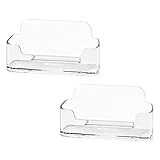
- Each business card holder can fit 40-50 cards, clear business card holder is ideal for creating an organized and professional desktop or countertop.
- For desk has extensive use. Ideal for clinic, offices, travel agencies, leasing offices, retail store, trade show booths, meeting room, hotel, reception center, and more.
- Made of sturdy plastic acrylic
- Light weight, simple and elegant design.
- Package: 2 Pack Business card holders
A useful formula is:
Role or expertise + audience served + outcome or specialty
- Product designer helping healthcare teams turn complex workflows into simple patient experiences
- Cybersecurity analyst | Cloud security, incident response, and identity access management
- Founder at [Company] | Helping independent manufacturers reduce procurement delays
Use words a recruiter, prospective client, or professional contact would actually search for. Avoid vague claims such as thought leader, unsupported superlatives, and unreadable keyword lists.
LinkedIn’s official headline help page explains the field but does not publish a permanent character limit. Current third-party references commonly report a 220-character limit. Treat that as a UI-dependent working limit and follow the counter in your editor rather than assuming LinkedIn will never change it.
About section
LinkedIn describes the About section as the place to express your mission, motivation, and skills. Write it for the person you want to attract, not as an autobiography.
- Open with a clear sentence describing what you do.
- Say who you help or what problem you solve.
- Support the claim with outcomes, experience, credentials, or examples.
- List relevant specialties, methods, and tools in natural language.
- Add a human detail when it helps people understand your motivation.
- End with a practical next step, such as contacting you about a role, project, or professional topic.
For example, a financial analyst might explain the decisions their reporting improves, the systems they use, and the type of team they want to join. A freelance bookkeeper could explain which businesses they serve, the accounting platforms they know, and how a prospective client can start a conversation.
The official About-section guidance does not state a current character limit. Third-party references commonly report 2,600 characters, but confirm the editor’s counter because LinkedIn can change field limits and interface behavior.
Experience
Add legitimate professional experience, including employment, contract work, internships, volunteer roles, board service, and other relevant positions. For each entry, use:
Do these 3 things before closing this tab:
1Fix the driver behind crashes, sound loss and screen glitches2Repair Windows errors before they cause bigger problems3Scan for outdated or missing drivers - takes under a minute- A recognizable job title.
- The correct employer or organization Page.
- Employment type.
- Accurate dates.
- Location or work arrangement.
- Two to five concise accomplishment bullets.
- Scope, tools, methods, and outcomes.
- Media or links when they demonstrate the work.
- Skills connected to that role.
Do not associate yourself with an organization simply because you are a customer, user, fan, or informal supporter. LinkedIn says an organization association should accurately reflect professional experience; see its Experience-section rules.
If the correct employer Page does not appear in the selection menu, follow the Page first, sign out and back in, and clear your browser cache and cookies. Also verify that you are selecting the correct organization rather than a similarly named company. LinkedIn says employee associations can take up to 30 days to update, and Page administrators cannot manually add employees; the association comes from members’ Experience entries. See LinkedIn’s employer-association troubleshooting.
Education and supporting sections
Use Add profile section from Me → View Profile. LinkedIn currently groups additional fields into Core, Recommended, and Additional categories. Relevant sections can include:
- Education.
- Skills.
- Featured work.
- Licenses and certifications.
- Projects and courses.
- Recommendations.
- Volunteer experience.
- Languages.
- Publications and patents.
- Honors and awards.
- Organizations and causes.
- Career breaks.
Do not add every available field merely to make the profile look longer. Choose sections that support your job, client, networking, or personal-brand objective. LinkedIn’s profile-section instructions show the current categories and controls.
Skills, endorsements, and recommendations
LinkedIn currently allows up to 100 skills on a profile. That does not mean you should list 100. Put the most relevant skills first—especially those related to the role or service you want.
These three elements are different:
- Skills: selected by you.
- Endorsements: acknowledgments of those skills from connections.
- Recommendations: written testimonials about your work.
LinkedIn says only the top three endorsed skills are displayed with endorsements in the relevant section. Prioritize the skills you want associated with your professional identity, then ask people who have actually seen your work for specific, honest recommendations. Review LinkedIn’s guidance on skills and endorsements.
Rank #3

- Package includes 3 black mesh business card holders.
- Mr. Pen business card holder is made of premium quality stainless steel with well-painted surface, which is sturdy and great for long-term use.
- Our business card holders, which are stylish and functional, make a great first impression on your clients and associates and help to promote your business by keeping your business cards organized and within reach all the time.
- Mr. Pen mesh business card holder has extensive use and is ideal for clinics, offices, travel agencies, stores, and more.
- You can use it as an everyday business card holder, smartphone holder, small size holder, or sticky note holder.
Featured work
Use Featured to show proof rather than repeat claims. It can contain posts, LinkedIn articles, external links, images, documents, presentations, and videos. Good examples include a portfolio, case study, published analysis, presentation, project result, or article that demonstrates how you think and work.
Featured content follows the visibility settings of the underlying content. It is not discoverable through LinkedIn search, and viewers must be logged in to LinkedIn to see it. The standard Featured section is for individual profiles, not Company Pages. LinkedIn explains these limits in its Featured-section FAQ.
Outdated Drivers Are Slowing You Down
One free scan finds every outdated or missing driver and matches the right update for your exact hardware.Free scan · exact hardware matchPC Slower Than It Used to Be?
A free scan shows the junk files, broken settings and background clutter dragging Windows down - then fixes them in one click.Free scan · Windows 10 & 11Profile verification
Profile verification is optional and free. Depending on your geography, employer, and available method, LinkedIn may support identity, workplace, or educational-institution verification. Workplace verification may use a work email, Microsoft Entra Verified ID, a qualifying LinkedIn Learning license, or certain LinkedIn Recruiter arrangements. Verification is not required to create a profile or a Company Page.
LinkedIn’s verification documentation may display aggregate claims such as verified members receiving more profile views or engagement. Treat those as LinkedIn-reported averages, not a promise that verification will produce a particular result for your account. Availability and methods are described in LinkedIn’s verification guidance.
Check the profile-strength meter
LinkedIn’s profile-strength meter is visible only to you. It describes levels including Beginner, Intermediate, and All-star. LinkedIn currently says the meter reaches Intermediate after four recommended sections and All-star after seven, with recommended areas such as a photo, location, industry, education, position, skills, and About/summary. The meter disappears after the recommended sections are complete. Treat this as a completion checklist, not a guarantee of job offers or client inquiries.
Adapt the profile to your goal
| Audience | What to emphasize |
|---|---|
| Job seeker | Target role in the headline, measurable accomplishments in Experience, relevant skills, work samples, recommendations, and an appropriate Open to Work setting. |
| Student or recent graduate | Education, projects, internships, coursework, volunteer work, skills, awards, and a clear statement of the entry-level roles you are pursuing. |
| Career changer | Transferable skills, relevant projects or training, a headline that names the new direction, and an About section that connects prior experience to the intended field. |
| Freelancer or consultant | Specific client problem, service, industry, evidence of results, portfolio links, service area, and a clear inquiry method. |
| Founder or executive | Company-building experience, expertise, market or customer problem, credible outcomes, and a link to the Company Page without turning the personal profile into a company brochure. |
| Recruiter or hiring manager | Hiring focus, industry knowledge, location, role expertise, and a clear way for candidates or colleagues to contact you. |
| Creator or portfolio professional | Distinctive specialty, selected Featured work, publications or projects, and a short explanation of the value or craft behind the work. |
Control personal-profile visibility and privacy
A signed-in LinkedIn member can generally see your profile, while contact information is more restricted. Depending on your settings, some version of your profile may also appear in Google, Bing, DuckDuckGo, mail and calendar tools, aggregators, and other permitted services.
Review Settings & Privacy → Visibility and decide separately:
- Whether your public profile is visible to people outside LinkedIn.
- Which sections can appear in search engines.
- Who can see your profile photo.
- How much of your last name is displayed.
- Whether your connections are visible.
- Who can see your contact information.
Public visibility can help recruiters, prospective clients, and professional contacts find you, but it exposes more information to non-members and search engines. A restricted profile offers more privacy but may make you harder to discover. Choose based on your intended audience rather than assuming public visibility is always best.
When you change public-profile settings, Google and other search engines may continue showing the old version for weeks or months because LinkedIn does not control when external services recrawl your profile. LinkedIn explains this delay in its public-profile visibility guidance and profile-visibility documentation.
Open to Work
LinkedIn currently offers three visibility choices for Open to Work:
The Tool Desk
Outbyte PC Repair FREEClear out junk files and repair common Windows errorsFree Scan →Outbyte Driver Updater FREEFix the driver behind crashes, sound loss and screen glitchesFind Drivers →- All LinkedIn members: adds an
#OpenToWorkphoto frame. - Recruiters only: is designed to reduce exposure to recruiters at your current company.
- Visible only to you: saves the preferences without sharing the signal.
The Recruiters-only setting reduces exposure but does not guarantee complete privacy. Select the setting that fits your employment situation; do not turn it on simply because LinkedIn suggests it. See LinkedIn’s Open to Work controls and its privacy limitations.
Customize the personal profile URL
A clean URL is useful on a résumé, business card, email signature, or personal website. On desktop:
- Open Me → View Profile.
- Select the edit control beside Public profile & URL.
- Edit the customizable portion of the URL.
- Save.
LinkedIn’s current URL guidance says the customizable portion may be 3–100 characters, cannot contain spaces or special characters, cannot use the word LinkedIn, and is not case-sensitive. URLs are first-come, first-served. You can change one up to five times within six months; after the fifth change, another change may require a six-month wait. A previous URL can remain associated with you for six months unless you unlink it, and an unlinked URL is unavailable for seven days before another member can claim it. After account closure, a URL may become available after 180 days. These rules can change, so check LinkedIn’s current public-URL help page before making repeated changes.
Rank #4

- 💳 QUICK ACCESS & LARGE CAPACITY HOLD UP 1-12 CARDS: This mens wallet designed with enhanced enjection mechanism button to pop up cards quickly. The aluminum card holder holds 4-6, depends on the number of embossed cards, and the expandable metal backplate holds 5-6 additional cards. The actual capacity depends on the card thickness.
- 💳 ULTRA THIN PROFILE (SLIM WALLET FOR MEN): The minimalist tactical wallet is very thin and can be carried comfortably in a pocket. The aluminum cardholder size is 3.9*2.5*0.5in,weight only 2.6oz. And expandable backplate designed for additional storage. Ditch the bulk, less is more.
- 🔒 RFID & NFC BLOCKING: This smart wallet use advanced aluminium technology to protect your cards from unauthorized and contactless scanning. Stop thieves from cloning your bank cards and prevent data theft.
- 💳 KEEP CARD TIGHTLY: Our pop up wallet with inside silicone strip that keeps your cards to be held tightly compared with normal felt. No worry cards will fall out.
- 🎁 PERFECT PRESENT IDEA: Our minimalist wallets packed with a pretty box. Aluminum wallet for men is a great present for boyfriend, brother, son, husband, dad, or your male friends on christmas, birthdays, anniversaries, and father's Day.
Part 2: Create a LinkedIn Company Page
Check for an existing Page before creating one
Search LinkedIn for the company’s exact name, abbreviations, former names, website domain, and common spellings. Inspect employee profiles and logos. A Page may already exist, including an automatically generated Listing Page.
Recommended Free Tools
If the existing Page is your organization, do not create a duplicate:
- For a normal Page, request admin access.
- For a Listing Page, use LinkedIn’s claim process if you are eligible.
- If it is a different organization with the same name, create a Page using a different available public URL.
- If it is inaccurate or duplicated, investigate LinkedIn’s support, merge, or removal options rather than fragmenting the company’s employees and followers.
To request admin access, LinkedIn recommends listing the company as your current employer, following the Page, and verifying your work email where available. Its instructions are in Become an admin of a LinkedIn Page. Listing Pages and their claim process are covered here.
Prepare the Page information
Have these ready:
- Exact public-facing or legal company name.
- Desired Page URL.
- Website.
- Industry.
- Company size.
- Company type.
- Tagline.
- Logo and cover image.
- Overview or description.
- Business locations.
- A person authorized to represent the organization.
- A backup-admin plan.
Use the current creation path
On desktop:
- Sign in to your personal LinkedIn account.
- Select For Business in the upper-right corner.
- Select Create a Company Page.
- Choose the Page type, normally Company.
- Enter the company name, LinkedIn public URL, website, industry, company size, company type, and optional tagline.
- Confirm that you are authorized to act for the organization.
- Select Create page.
- Select Start building your page! and complete the Page from the admin view.
LinkedIn currently supports Page creation on desktop and in its iOS app. Page creation is not supported in the LinkedIn Android app according to LinkedIn’s current creation instructions. If the control is missing on Android, use desktop LinkedIn rather than assuming your account is broken.
The personal account used to create the Page becomes its initial super admin. The Page is not a separate login account, so never share one person’s LinkedIn password with the marketing team.
Recommended Free Tools
Choose a durable Page URL
Company Page URLs use the linkedin.com/company/[name] structure. LinkedIn’s current best-practice guidance says the customizable portion must contain at least one nonnumeric character and may use lowercase letters, numbers, hyphens, and CJK Unicode characters. It cannot begin or end with a hyphen, contain consecutive hyphens, or use uppercase alphabetic characters.
The Page name and URL are separate. If a preferred URL is taken, choose another available URL; the company name may still be available. A Page URL can be changed no more than once every 30 days. Changing the Page name does not automatically change the URL. LinkedIn may allow old and new URLs to work temporarily, but an old URL can eventually be reassigned. See Page best practices and Page URL rules.
Complete and brand the Company Page
At minimum, complete the information a visitor needs to identify, evaluate, and contact the organization:
| Page field | What to do |
|---|---|
| Name and URL | Use the organization’s accurate public identity and a durable, recognizable URL. |
| Logo | Use a legible logo that remains recognizable at small sizes. |
| Cover image | Show the organization, product, workplace, or value proposition without crowding the image. |
| Overview or description | Explain what the organization does, whom it serves, and why it exists. Use specific business terms naturally. |
| Website | Link to the organization’s current official site. |
| Industry, size, and type | Enter accurate classifications; these also support Page discovery and follower invitations. |
| Locations | Add actual offices or operating locations, not places with no business presence. |
| Tagline | Use a short, understandable value statement if it adds information beyond the Page name. |
| Specialties and commitments | Add relevant terms and commitments only when the organization can substantiate them. |
| Services and products | Add them when eligible and when they represent real, current offerings. |
| Career information | Add employer-brand and workplace information when recruiting is a meaningful goal. |
| Languages | Use Page languages where the organization serves audiences in more than one language. |
LinkedIn recommends completing fields including Industry, Company size, Overview, Description, Logo, Commitments, Website URL, and Location. LinkedIn reports that Pages with complete information can receive 30% more weekly views, but that is a LinkedIn-reported association, not a guaranteed result. See Page completeness guidance.
Use current image specifications
LinkedIn’s current Page image guidance lists:
- File type: PNG or JPEG.
- Maximum file size: 3 MB.
- Logo minimum: 268 × 268 pixels.
- Logo recommendation: 400 × 400 pixels.
- Cover image: 4,200 × 700 pixels.
- Page post containing a URL: 1.91:1 ratio, commonly 1,200 × 627 pixels.
Cover images can be cropped differently across screen sizes. Keep important text centered and away from the edges, especially the lower-right corner. Some older guides still recommend a 1,128 × 191 cover image; LinkedIn’s newer specification lists 4,200 × 700. Use the current LinkedIn image-specification page rather than relying on an undated third-party template.
Consider other LinkedIn Page types
- Showcase Page: a separate presence for a brand, division, initiative, or audience under an existing organization.
- Service Page: a place to promote professional services, connected either to an individual profile or a Company Page.
- Product Page: a Page for an eligible product attached to a Company Page.
- Career Page: an optional employer-branding and workplace-culture presence.
- Listing Page: an automatically generated organizational placeholder that may be claimed rather than duplicated.
- University Page: an education-related organizational Page.
For freelancers, LinkedIn says profile-managed services suit situations where the individual’s name is central and one person handles requests. Company Page-managed services suit a business brand that may need multiple administrators. Company Page services are currently limited to companies with 500 or fewer employees, and LinkedIn says the management choice cannot currently be changed after setup. Decide carefully before selecting the service-management model; see LinkedIn’s service-page guidance.
Independent reader supportYour contribution helps us test, update, and keep practical guides available for everyone.Add administrators and protect access
LinkedIn’s principal Page-admin roles are:
- Super admin: full Page control, including editing the Page and managing administrators.
- Content admin: creates and manages Page content, posts, events, and related content actions.
- Analyst: views and exports Page analytics.
Give each person access through their own LinkedIn account. Add at least two trusted super admins so the Page does not become inaccessible if its creator leaves, loses access, or closes an account. Enable two-factor authentication for every admin, keep email access current, review the admin list periodically, and remove former administrators promptly.
LinkedIn may limit the number of Page admins based on factors such as existing admins, pending requests, and verified admins. LinkedIn also says it cannot simply disclose Page-admin information to ordinary members or replace and remove admins on request, so prevention matters. Review its admin-role documentation and Page security guidance.
Best Value

- EXCELLENT QUALITY - The business card holder is made of a combination of cherry and high-quality brass, the wood has the most unique texture, hand-polished by craftsmen, and uses the healthiest paint to give you the longest and safest companionship. The natural flavor of the original wood, the beautiful luster of brass, low-key luxury, every detail shows the taste of luxury and elegance.
- LARGE CAPACITY - Holds up to 75 business cards depending on their thickness. The cherry business card holder quickly organizes your desk and keeps your business cards organized and protected from loss.
- APPLICABLE PLACES - Ideal for offices, business parties, trade shows, business meetings and places where business cards or other cards with business cards need to be displayed.
- UNIQUE DESIGN - Designed with brass frame and high-grade cherry base, it becomes the highlight of the desktop, which can further display business cards generously and elegantly with less obstruction, and at the same time, it can store a large number of business cards quickly and conveniently.
- FRIENDLY CUSTOMER SERVICE - If you have any questions, please feel free to contact us. Our service team will be happy to serve you. Your satisfaction is our motivation to move forward.
Launch the Page and build its first audience
- Complete the Page before inviting people.
- Add the Page as the employer on current employees’ profiles where accurate.
- Invite relevant first-degree connections.
- Link to the Page from the company website, email signatures, newsletters, and other appropriate channels.
- Publish useful content before sending large numbers of invitations.
- Ask employees to engage with and share selected posts when appropriate, without pressuring them to make inaccurate claims.
- Review follower, visitor, search, content, and lead analytics.
For standard Page invitations, LinkedIn says the Page must contain information in Overview, Industry, and Company size, and the admin must have enough connections. Invitation credits are shared across Page admins, and the standard invitation feature is unavailable to Pages with more than 100,000 followers. LinkedIn recommends aiming for at least 150 followers as a growth benchmark; that is not a Page-creation requirement.
Premium Company Pages may have additional invitation and automatic-invitation features, but LinkedIn is rolling some features out gradually. Availability can depend on subscription, geography, account, and rollout status. See LinkedIn’s Page invitation requirements, follower guidance, and Premium invitation information.
Understand Page verification
Company Page verification is different from personal identity, workplace, and educational verification. It is not automatic and is not available to every Page.
LinkedIn’s current eligibility factors may include regular engagement such as posting or responding to members, an established commercial relationship with LinkedIn through products such as Ads, Jobs, or Premium Company Page, accurate Page data, an active admin presence, a claimed rather than merely listed Page, and policy compliance.
The Tool Desk
Outbyte PC Repair FREEClear out junk files and repair common Windows errorsFree Scan →Outbyte Driver Updater FREEFix the driver behind crashes, sound loss and screen glitchesFind Drivers →An eligible super admin requests verification on desktop through Settings → Verification controls and must prove ownership of the company’s website. Timing varies and may extend to several days; some domain-confirmation cases can take up to 48 hours, while LinkedIn’s general FAQ says some requests may take up to ten days. Verification indicates that LinkedIn has confirmed the Page represents the official organization. It does not guarantee that every statement on the Page is accurate and is not LinkedIn’s endorsement of the organization. See Page-verification eligibility and verification limitations.
Free LinkedIn setup versus Premium
You do not need Premium to create a personal profile or a basic Company Page. Free functionality includes personal profiles, Company Pages, basic Page administration, profile and Page editing, and standard follower invitations subject to LinkedIn’s limits.
Depending on your subscription, geography, account, and LinkedIn’s rollout, Premium features may include profile AI-writing assistance, custom profile buttons, Premium Company Page features, additional Page invitations or automatic invitations, certain Service Page enhancements, and some custom Page calls to action. Treat these as optional enhancements, not prerequisites. Check the features displayed in your own account before paying for a subscription; LinkedIn’s current feature information includes Premium profile tools and Premium Service Page features.
LinkedIn setup troubleshooting
| Problem | Likely cause | What to do |
|---|---|---|
| Create Page is missing | Android app, new account, too few connections, workplace not verified, browser issue, or creation limits. | Use desktop LinkedIn or iOS, confirm the account has more than one connection, verify the workplace where possible, clear cache and cookies, and try again later. |
| LinkedIn says the Page already exists | An existing Company Page or Listing Page was overlooked. | Search alternate names and domains, inspect employee profiles, request admin access, or claim the Listing Page instead of creating a duplicate. |
| The account is too new | LinkedIn may restrict recently created accounts temporarily. | LinkedIn’s current troubleshooting guidance says a new account may need to wait at least one day. Do not treat the often-repeated seven-day rule as a universal requirement. |
| The Page URL is unavailable | Another Page already uses it or the format is invalid. | Choose another unique URL using the current lowercase, hyphen, and character rules. A taken URL does not necessarily mean the Page name is unavailable. |
| The wrong employer logo appears on a profile | The wrong organization was selected in Experience. | Edit the position, remove the incorrect association, follow the correct Page if necessary, and select the correct employer. Allow up to 30 days for Page-associated employee counts to update. |
| An image is rejected | Wrong format, file size, or dimensions. | Convert the image to PNG or JPEG and follow the current personal-profile or Page specifications. Remember that personal-profile images and Page images have different limits. |
| Public-profile changes do not appear in Google | Search engines have not recrawled the profile. | Check public-profile settings and wait weeks or months for external search results to update. |
| Page access is lost | The only super admin left, lost access, or closed the account. | Contact LinkedIn through the appropriate support process, but prevent the problem by maintaining at least one additional trusted super admin and using two-factor authentication. |
LinkedIn’s current Page-creation troubleshooting lists duplicate names, connection count, recent account creation, URL availability, workplace verification, excessive Page creation, and browser cache or cookie issues. It does not establish seven days as a universal account-age requirement.
Quick wins for a faster PC:
Scan for outdated or missing drivers - takes under a minuteDriver Scan →Clear out junk files and repair common Windows errorsFree Scan →Fix the driver behind crashes, sound loss and screen glitchesFind Drivers →Personal profile and Company Page launch checklists
Personal profile
- Use your real or preferred professional name.
- Use a durable personal email address and add a backup email.
- Upload a professional, recognizable photo if you want one.
- Write a specific headline for your target audience.
- Write an About section with evidence and a practical next step.
- Add accurate Experience, Education, Skills, and relevant supporting sections.
- Use Featured for proof of work.
- Associate each position with the correct employer Page.
- Customize the public URL.
- Choose visibility and Open to Work settings deliberately.
- Avoid exaggerated or unverifiable claims.
Company Page
- Confirm that no Company or Listing Page already exists.
- Use the correct Page type.
- Use an accurate name and durable URL.
- Upload the current logo and cover image specifications.
- Add the website, industry, company size, company type, description, and locations.
- Add tagline, specialties, commitments, products, services, languages, or career information only where relevant.
- Assign at least two trusted super admins.
- Enable two-factor authentication for every admin.
- Publish initial useful content before aggressively inviting followers.
- Check employee associations and allow for update delays.
- View the Page as a non-admin before launch.
- Consider verification only if the Page and organization appear eligible.
Maintain both assets after launch
A LinkedIn presence becomes inaccurate quickly when nobody owns updates. Review it whenever you change jobs, services, locations, products, or business priorities.
- Update your current role and employer Page when your position changes.
- Revisit your headline and About section when your target audience changes.
- Refresh Featured work and remove outdated links.
- Remove obsolete skills and add genuinely relevant ones.
- Review public visibility and contact-information settings.
- Remove former Page administrators during employee offboarding.
- Audit Page branding, website links, locations, products, and services.
- Review Page visitor, follower, content, search, and lead analytics.
- Check verification and workplace-verification settings when circumstances change.
- Keep at least two trusted super admins and confirm their two-factor authentication remains active.
Frequently Asked Questions
Can I create a LinkedIn personal profile using my company name?
No. A personal profile is for a real person and should use that person’s real or preferred professional name. Create a Company Page for the organization, then manage it through one or more personal profiles.
Can I create a Company Page without a personal LinkedIn account?
No. A personal LinkedIn account is required to create and administer a Company Page. The creator becomes the initial super admin, so add another trusted super admin after creating the Page.
Does a freelancer need a Company Page?
Not necessarily. If clients hire your individual expertise and you handle all inquiries, a personal profile with profile-managed services may be enough. A Company Page is more useful when a separate business brand, employees, company content, or multiple service administrators matter. For Company Page-managed services, LinkedIn currently limits eligibility to companies with 500 or fewer employees, and the management choice cannot currently be changed after setup.
What’s actually slowing this PC down?
Pick the symptom - the matching free tool is one click away.
Can I create a LinkedIn Company Page from an Android phone?
LinkedIn’s current help page supports Page creation on desktop and iOS, not Android. Use desktop LinkedIn if the creation control does not appear in the Android app.
Is LinkedIn Premium required to create a profile or Company Page?
No. Personal profiles and basic Company Pages can be created without Premium. Some advanced profile, service, invitation, and Premium Company Page features may require an eligible subscription and may vary by account, geography, and rollout.
The Bottom Line
Start with the identity that matches your goal: your name for a personal profile, your organization’s name for a Company Page, and a profile-managed Service Page when your individual expertise is the product. Most businesses should use both. Complete the high-value fields with accurate proof, search for an existing Page before creating another, use current image specifications, and add backup super admins with two-factor authentication before anyone leaves the business.
Quick Recap
Product prices and availability are accurate as of the date/time indicated and are subject to change. Any price and availability information displayed on Amazon at the time of purchase will apply.




