To create a business budget, gather your financial records and assumptions, forecast revenue, estimate expenses, organize the figures into a spreadsheet or template, then compare actual results with your plan and revise it. A useful budget tracks both expected profit or loss and when cash is likely to arrive or leave. You can start with a free spreadsheet; paid software is optional.
What a business budget should include
A business budget is a forward-looking estimate of revenue, expenses and the resulting profit or loss. It should also help you see cash timing: a business can appear profitable on paper and still face a shortfall if payments are due before customer money arrives.
Include the categories that fit your business, such as sales, cost of sales, payroll, rent, utilities, insurance, permits, professional services, equipment and marketing. Distinguish one-time startup costs from recurring operating expenses, and use categories that match the records you will use to track actual performance.
Step 1: Gather records and assumptions
If the business is already operating
Start with recent income and expense records and relevant financial statements. Use actual business history as the basis for estimates where possible, and note unusual or one-time items so they do not distort the forecast. The U.S. Small Business Administration’s business-planning guidance recommends using historical financial statements alongside prospective projections for an established business.
The Tool Desk
Outbyte PC Repair FREERepair Windows errors before they cause bigger problemsFix Now →Outbyte Driver Updater FREEFix the driver behind crashes, sound loss and screen glitchesFind Drivers →#1 Best Overall
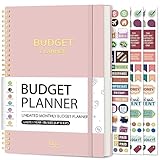
- Effective Budget Planning - Take control of your finances with the budget account book. This comprehensive planner allows you to plan and track your income, expenses, savings, and financial goals in one convenient place. With its intuitive layout and easy-to-use sections, you can stay organized and make informed decisions to achieve financial success.
- User-Friendly Layout - The budget planner features a user-friendly layout designed for easy navigation and organization. Each month, you'll find dedicated budget pages where you can set financial goals, track your income, and plan your expenses. Additional sections include debt trackers, savings goals, bill payment trackers, and more, making it simple to stay on top of your finances.
- Undated Monthly Calendar & Bonus Stickers - Featuring undated calendar each month, you'll have ample space to mark paydays, bills due, appointments, and important dates. Say goodbye to difficult writing spaces. Plus, we've included 3 cute sticker sheets that allow you to personalize your financial organizer and make budgeting more fun. Dates are not pre-printed and are completed by the user.
- Reliable and Convenient Design - Our monthly budget planner is designed for your convenience and built to last. The elastic band keeps everything securely in place, and the dual-sided pocket provides extra storage. Experience a budget planner that combines practicality and durability.
- Master Budgeting with Ease - Our financial planner includes a complete guidebook that provides valuable insights and instructions for optimal usage. From setting financial goals to tracking expenses, this guidebook offers step-by-step guidance and practical tips. Whether you're new to budgeting or an experienced user, this resource will help you make the most of your budget planner, empowering you to achieve financial success.
If you are planning a new business
Collect startup-cost estimates, vendor or service-provider quotes, expected sales inputs and the cash you may need to cover early operating deficits. There may be no past sales to rely on, so write down the assumptions behind each estimate rather than presenting a guess as a fact. SCORE advises new businesses to pay particular attention to cash flow; its guidance for established businesses also draws on income-statement and balance-sheet information.
- Gather invoices, receipts, bank and payment records, payroll information and existing financial statements, as applicable.
- List startup purchases and setup fees separately from monthly operating costs.
- Ask vendors, service providers or experienced mentors for business-specific cost estimates rather than relying on generic averages.
Step 2: Forecast revenue by period
Estimate sales for each month, quarter or other period that makes sense for your business. For an established operation, use past performance and account for known changes. For a new business, state the assumptions that drive the forecast, such as expected sales volume or timing, and identify where those assumptions are uncertain.
Sales can be harder to forecast than expenses. Build in contingencies instead of treating an optimistic estimate as certain. A forecast becomes more useful when you can later compare it with actual sales and see which assumptions were off.
Rank #2

- Effective Budget Planning - Take control of your finances with the budget account book. This comprehensive planner allows you to plan and track your income, expenses, savings, and financial goals in one convenient place. With its intuitive layout and easy-to-use sections, you can stay organized and make informed decisions to achieve financial success.
- User-Friendly Layout - The budget planner features a user-friendly layout designed for easy navigation and organization. Each month, you'll find dedicated budget pages where you can set financial goals, track your income, and plan your expenses. Additional sections include debt trackers, savings goals, bill payment trackers, and more, making it simple to stay on top of your finances.
- Undated Monthly Calendar & Bonus Stickers - Featuring undated calendar each month, you'll have ample space to mark paydays, bills due, appointments, and important dates. Say goodbye to difficult writing spaces. Plus, we've included 3 cute sticker sheets that allow you to personalize your financial organizer and make budgeting more fun. Dates are not pre-printed and are completed by the user.
- Reliable and Convenient Design - Our monthly budget planner is designed for your convenience and built to last. The elastic band keeps everything securely in place, and the dual-sided pocket provides extra storage. Experience a budget planner that combines practicality and durability.
- Master Budgeting with Ease - Our financial planner includes a complete guidebook that provides valuable insights and instructions for optimal usage. From setting financial goals to tracking expenses, this guidebook offers step-by-step guidance and practical tips. Whether you're new to budgeting or an experienced user, this resource will help you make the most of your budget planner, empowering you to achieve financial success.
Step 3: List and estimate expenses
Work through the costs needed to start and operate the business. Include cost of sales, such as inventory or materials, as well as relevant operating expenses. The SBA’s business-planning guidance recommends estimating costs for the particular business and checking uncertain figures with people such as mentors, vendors and service providers.
PC Slower Than It Used to Be?
A free scan shows the junk files, broken settings and background clutter dragging Windows down - then fixes them in one click.Free scan · Windows 10 & 11Outdated Drivers Are Slowing You Down
One free scan finds every outdated or missing driver and matches the right update for your exact hardware.Free scan · exact hardware matchSeparate costs by timing and behavior
- One-time: startup or setup expenses that are not expected to recur on a regular schedule.
- Recurring: regular expenses such as rent, insurance, payroll or subscriptions.
- Fixed: costs that generally do not change with sales volume over the period being budgeted.
- Variable: costs that move with production or sales, such as materials or inventory.
- Mixed: costs with both fixed and variable components. Separate the parts when you have enough information to do so.
Classifying costs helps clarify how spending may change as sales rise or fall. Do not force a category if the available information does not support a reliable split.
Step 4: Organize the budget and check cash needs
A spreadsheet is enough to begin. Set up columns for the periods you want to plan, with rows for revenue and expense categories. Keep those categories aligned with your bookkeeping or financial reports so you can compare the plan with actual results later.
Rank #3

- 【Take Control Of Your Money】Easily plan your monthly budget, track income & expenses, and stay on top of your finances. This budget planner helps you clearly see where your money goes and avoid overspending.
- 【Designed For Real Life Use】Perfect for young professionals, families, students, and anyone working toward financial goals. Whether managing daily expenses or planning long-term savings, this budget book keeps everything organized.
- 【All-In-One Budget System:】Our monthly budget planner features a well-thought-out layout that simplifies your budgeting process. Includes monthly budget pages, expense trackers, bill organizers, savings goals, and debt trackers. Everything you need to manage money in one convenient planner.
- 【12-Month Duration】Our budget planner covers a total of 12 months, giving you an extended period of financial organization. Now you can make income and expense records at any time, ensuring every financial decision aligns with your long-term goals.
- 【Premium Quality and Convenience】Crafted with attention to detail, this budget planner boasts superior quality. The sturdy pink and gold coil binding allows for effortless flipping, while the metal corner protectors effectively prevent damage to the cover, ensuring long-lasting durability.
Choose the view that answers your question
| Format | Question it answers | Best use |
|---|---|---|
| Income-statement budget | What revenue and expenses do I expect, and what profit or loss may result? | Planning profitability and organizing income and expense categories. |
| Cash-flow budget | When do I expect money to come in and go out? | Planning cash timing, especially when a new business may run operating deficits before receipts arrive. |
These views complement each other: the income-statement view organizes expected financial performance, while the cash-flow view makes the timing of receipts and payments visible. SCORE’s small-business budget guidance discusses both formats and the importance of matching budget detail to actual reports.
Estimate break-even when it is useful
For one product or service, the SBA gives this unit-based formula:
What’s actually slowing this PC down?
Pick the symptom - the matching free tool is one click away.
Break-even units = fixed costs ÷ (selling price per unit − variable cost per unit)
Rank #4

- PERFECT LEDGER BOOK FOR SMALL BUSINESSES: This accounting ledger book for small businesses will help you organize finances, sort and summarize transactions, create balance summaries and set you up for financial success.
- SWITCH TO EFFICIENT & STRESS-FREE ACCOUNTING: This accounting book is undated and lasts a whole year and has 113 pages, including 53 weekly views, an annual summary, empty note pages, and, at the back, a spacious pocket for receipts.
- TAKE CONTROL OF YOUR FINANCES & SUCCEED: With this detailed record of all transactions and totals, you will be able to easily analyze your finances and quickly prepare accurate financial statements.
- COMPACT A5 FORMAT & DURABLE DESIGN: This bookkeeping record book comes in A5 format (5.8 by 8.3 inches) and has an eco-leather hardcover, 120gsm no-bleed paper, elastic, pen loop, bookmark, pocket for notes, and a user guide.
- 60-DAY MONEY-BACK GUARANTEE: We will exchange or refund your receipt book for small business if you aren’t satisfied with your expense tracker notebook for any reason. Reach out to us via message to refund your small business supplies.
For example, if fixed costs for the period are $1,000, the selling price is $50 per unit and variable cost is $30 per unit, the calculation is $1,000 ÷ ($50 − $30) = 50 units. This estimate depends on the stated costs and price holding for the period. A business with multiple products or services may need to adapt the calculation to its sales mix rather than apply one unit formula as if every sale were identical.
Use a free template or a spreadsheet
SCORE’s Business Planning & Financial Statements Template Gallery lists a financial-projections template covering expenses, sales, cash flow, income statements and break-even analysis for up to three years. The gallery also lists startup-expenses and balance-sheet resources. It is a free starting point; adapt its categories and periods to the way your business operates, and check the gallery for current download access.
If you want ongoing bookkeeping, budget-versus-actual reporting or forecasting connected to financial records, accounting software may be useful. QuickBooks describes budgeting and forecasting features on its product and affiliates page. Such tools are optional; they are not required to use a free template or build a budget in a spreadsheet.
Best Value

- Income And Expense Log Book: This Income and Expense Record Book(8.5" x 10.5") is a necessary item for any small business owner or entrepreneur. It is an essential part of any business - helping you understand your overall earnings to determine if you are profitable.
- Daily Tracking and Weekly Overview: let our log tell you if you are profitable today! There are two pages per week to help you you track your income and expenses. At the end of each day or week, you can note whether you made a profit or a loss for the day.
- Clear P&L Statement For Your Business: This income and expense book makes it easy to see your expenses and how they fluctuate from time to time. This makes it easy for you to decide where you can cut back on expenses and assess your total annual net profit.
- Main Features: Expense Review + Income Review + Weekly Pages + Summary of The Year + Twin-Wire Binding + Waterproof Cover + Rounded corner design + Thicker paper
- Effective Organization: This budget book has a twin-wire binding and you can easily lay it flat at 180°. This effective design can help you work better and bring you great convenience in the process of using.
Step 5: Compare actual results and revise
At regular intervals, compare actual revenue and expenses with the budget for the same categories and time periods. Investigate meaningful differences: a gap may reflect an incorrect assumption, a change in sales, a cost increase or a timing mismatch. Use what you learn to update the forecast.
- Record actual results in the same categories and periods used in the budget.
- Identify differences that matter to cash needs or business decisions.
- Look for the cause rather than simply changing the forecast to match the result.
- Revise assumptions and future estimates as new information becomes available.
SCORE recommends aligning budget detail with monthly actual reports. The SBA’s 2019 article on common budget and forecast failures discusses plan-versus-actual review. Treat your first budget as a working forecast, not a guarantee.
Common questions about business budgets
Can I make a business budget without paid software?
Yes. A spreadsheet or free template can organize revenue, expenses and cash timing. Paid software is an option if you want bookkeeping and budget-tracking features in one place.
Should a new business use the same approach as an established one?
The steps are similar, but the available evidence differs. An established business can use its transaction history and financial statements; a new business must rely more on documented estimates and assumptions, with particular attention to cash needed during early deficits.
Quick wins for a faster PC:
Fix the driver behind crashes, sound loss and screen glitchesFind Drivers →Clear out junk files and repair common Windows errorsFree Scan →Scan for outdated or missing drivers - takes under a minuteDriver Scan →Is a budget a guarantee of future results?
No. It is an estimate based on current information and assumptions. Comparing it with actual results helps you improve the forecast as conditions change.
Quick Recap
Product prices and availability are accurate as of the date/time indicated and are subject to change. Any price and availability information displayed on Amazon at the time of purchase will apply.




