Recommended Free Tools
Credit card debt consolidation can reduce interest and simplify repayment, but it does not erase what you owe. Consolidation replaces several card balances with one new debt or one organized payment arrangement. It is worthwhile only when the new option lowers your total cost or makes repayment realistically sustainable without creating a second layer of debt.
For most U.S. consumers, a balance-transfer card is worth investigating when good credit and a fixed payoff plan make it possible to repay the balance during the promotional period. An unsecured personal loan may be better when its APR and fees are materially lower than the cards and a fixed payment is useful. A nonprofit debt-management plan or a direct hardship arrangement with the card issuer may be more realistic when credit is damaged or payments are becoming difficult. Debt settlement and bankruptcy are different remedies for debt that may not be fully repayable, not ordinary consolidation products.

As an Amazon Associate I earn from qualifying purchases.
What credit card debt consolidation means
Debt consolidation combines multiple debts into one new debt or one payment arrangement. You generally still repay the full principal. The main potential benefits are a lower interest rate, fewer due dates, a fixed payoff schedule, or creditor concessions that make the payment affordable. The Consumer Financial Protection Bureau cautions that taking on new debt without changing the spending problem can merely postpone the debt.
The phrase one payment also needs qualification. With a personal loan, there is usually one new creditor. With a debt-management plan, a counseling organization may collect one payment and distribute it to several creditors; the underlying accounts usually remain separate and continue to be governed by their own agreements.
#1 Best Overall

- What You Will Receive: Sold in packs of 100 pack. 100 sheets per pack, three packs (300 sheets total). Made of reliable paper for high reliability. Credit card sales receipts are designed to withstand the rigors of daily use.
- Long Credit Card Sales Slips: 7.9*3.3inch. They are the ideal size for sales credit card operations and records. Our credit card sales receipt books are portable and easy to operate; this compact size ensures that they are not heavy to carry while having enough space to record detailed information about your sales credit cards.
- With tear lines: You can easily tear off merchant copies and carbonless copy paper. With tear lines for your convenience. Our credit card sales receipt books are designed to meet your usage needs, ensuring that you have enough supply to meet your needs.
- Horizontal format: The paper has lines printed on it, which can be neatly written with the information you need to record. The horizontal format can effectively use space and make the organization of the content clearer. Convenient for you to record and read. With incremental numbering for your convenience.
- Carbonless Copy Paper: This paper is a carbonless copy paper, when pressure is applied, the ink is transferred between the layers, allowing information to be copied without the use of carbon paper.
| Term | What happens | Is the debt usually forgiven? |
|---|---|---|
| Debt consolidation | Several debts are replaced by one new debt or one payment arrangement. | No. The borrower generally repays the full principal. |
| Balance transfer | Card balances are moved to another credit card, often at a temporary low or 0% APR. | No. |
| Debt-consolidation loan | An installment loan pays off several cards; the borrower repays the loan in scheduled payments. | No. |
| Debt-management plan | A nonprofit counselor helps arrange one payment that is distributed to participating creditors, often with reduced interest or fees. | Usually no. Balances are generally repaid. |
| Credit counseling | A counselor reviews the budget, provides education, and may recommend or administer a DMP. | No. Counseling itself is not debt relief. |
| Debt settlement | A company or consumer negotiates to pay less than the full balance, often after missed payments. | Potentially, but with significant credit, legal, fee, and tax consequences. |
| Bankruptcy | A court-supervised legal process may discharge eligible debts or establish a repayment plan. | Sometimes, depending on the case and applicable law. |
That distinction matters because advertisements may use consolidation, relief, negotiation, and settlement as if they mean the same thing. They do not. The CFPB explains the differences among credit counseling, debt management, debt settlement, debt consolidation, and credit repair.
Start with a debt inventory before applying
Do not begin with a loan advertisement or a balance-transfer application. Begin by finding out exactly what you owe and what repayment payment you can sustain.
| Card | Balance | APR | Minimum | Due date | Credit limit | Past due? | New charges stopped? |
|---|---|---|---|---|---|---|---|
| Card A | $ | % | $ | $ | Yes / No | Yes / No | |
| Card B | $ | % | $ | $ | Yes / No | Yes / No | |
| Card C | $ | % | $ | $ | Yes / No | Yes / No |
Record each account’s:
- Current balance and payoff amount
- Purchase APR
- Balance-transfer APR, if different
- Cash-advance APR, if applicable
- Minimum payment and due date
- Credit limit and current utilization
- Past-due amount, late fees, and any penalty APR
- Pending transactions, disputed charges, or suspected fraud
- Whether the account is open, restricted, in collections, or subject to a hardship plan
Stop adding discretionary charges while you evaluate the options. If cards are being used for groceries, utilities, or other necessities every month, the central problem may be insufficient income or an unaffordable budget rather than interest alone.
Calculate your total balance and weighted-average APR
First add the balances:
Total debt = sum of all card balances
Then calculate the weighted-average APR:
Weighted-average APR = sum of (each balance × its APR) ÷ total balance
For example, an APR of 28% on a $500 balance matters less than an APR of 19% on a $10,000 balance. A simple average of the card APRs would hide that difference. Use decimal or percentage values consistently when doing the calculation.
As market context, the Federal Reserve’s G.19 release dated August 7, 2026 reported June 2026 commercial-bank credit-card APRs of 20.94% for all accounts and 22.15% for accounts assessed interest. It also reported an 11.86% 24-month personal-loan rate. These are broad historical averages using different measures, not guaranteed consolidation offers or an apples-to-apples quote for your application.
Check whether consolidation is actually worthwhile
Consolidation is not automatically better than paying the cards directly. Ask these questions before opening a new account:
Quick wins for a faster PC:
Clear out junk files and repair common Windows errorsFree Scan →Fix the driver behind crashes, sound loss and screen glitchesFind Drivers →- Could you repay the balances within about 12 months by cutting spending or increasing income?
- Is one existing card already at a substantially lower APR than the proposed loan?
- Would an avalanche strategy solve the problem without a transfer fee or new inquiry?
- Are all accounts current, or are missed payments and collections already the larger problem?
- Is the main obstacle high interest, too many due dates, insufficient income, or continued overspending?
- Would the proposed payment leave enough for housing, food, utilities, insurance, taxes, transportation, minimum payments on other debts, and emergencies?
- Are you likely to reuse the available credit after paying the cards off?
A lower monthly payment is not proof of savings. It may simply result from stretching the debt over a longer term. Compare the full cost:
Total cost of new option < total cost of continuing current repayment
Then separately test whether the new payment is sustainable. A mathematically cheap option that you cannot pay on time is not a safe option.
Use the right calculation for each option
For a promotional balance transfer, estimate:
Required monthly payment = (transferred balance + transfer fee) ÷ months remaining in the promotion
What’s actually slowing this PC down?
Pick the symptom - the matching free tool is one click away.
Add a safety margin and aim to finish before the promotional rate expires. If the transfer is $10,000, the fee is 3%, and the promotion lasts 18 months, the fee is $300, the amount to repay is $10,300, and the average payment required is about $572.22 per month. This is an illustration, not a market offer.
For a personal loan, compare the APR, monthly payment, number of payments, origination fee, net proceeds, total repayment, late fees, prepayment terms, and whether the lender pays creditors directly. The APR is generally more useful than the nominal interest rate because it incorporates certain loan fees.
Rank #2
| Option | Payment to compare | Costs to include | Main risk |
|---|---|---|---|
| Keep cards and pay aggressively | Minimums plus your planned extra payment | Interest and late fees | High APRs and multiple due dates |
| Balance transfer | Balance plus fee divided by promotional months | Transfer fee, annual fee, and post-promotion interest | Deadline, high regular APR, and new purchases |
| Personal loan | Fixed installment plus any remaining card payments | Interest, origination fee, and late fees | Longer term, high APR, or reused cards |
| Debt-management plan | Required plan payment plus program fees | Counselor fees and creditor terms | Program failure or account restrictions |
| Home-equity loan or HELOC | Required payment under the actual term and rate scenario | Interest, closing costs, and variable-rate costs | The home may be at risk |
Illustrative personal-loan comparison
A $10,000 loan over 36 months would cost approximately:
- 24% APR: $392.33 per month and about $4,123.83 in interest.
- 12% APR: $332.14 per month and about $1,957.15 in interest.
A 5% origination fee would add $500 to the cost or reduce the proceeds if deducted from the loan. The lower-payment 12% example saves substantially on interest before that fee, but actual offers depend on credit, income, existing debts, loan amount, term, state law, and lender underwriting.
Which consolidation option fits your situation?
| Your situation | Usually investigate first | Why | Important qualification |
|---|---|---|---|
| Good credit, stable income, and repayment possible within the promotion | Balance-transfer card | May minimize interest | Only if the payoff schedule fits and new spending stops |
| Good credit and a preference for a fixed two-to-five-year payment | Unsecured personal loan | Defined term and payment | Compare total repayment and origination fees |
| Poor or damaged credit but stable income | Issuer hardship plan or nonprofit DMP | May offer concessions without prime-credit qualification | Be cautious with high-rate bad-credit loans |
| Already missing payments | Call issuers immediately, then consider counseling or legal advice | May prevent additional fees and escalation | Do not silently stop paying for a settlement company |
| Lower payment is needed because income does not cover expenses | Budget intervention, hardship plan, DMP, or legal advice | New credit may not solve a cash-flow deficit | Do not use home equity reflexively |
| Substantial home equity | Compare unsecured alternatives first | Home-equity rates may be lower | The home becomes collateral |
| Debt appears unaffordable even after cuts | Bankruptcy consultation | May be more realistic than years of failed repayment | Get jurisdiction-specific legal advice |
| Small balance payable within a year | Avalanche, snowball, or direct payoff | Avoids new fees and complexity | Do not pay a third party for a problem you can quickly eliminate |
Option 1: Ask the card issuer for a hardship plan first
Directly contacting the card issuer is often overlooked because it does not involve a new financial product. If you are current but expect trouble, or if you have recently missed a payment, call the number on the card or statement and ask what the issuer can offer. The CFPB says creditors may be willing to reduce minimum payments, waive fees, lower interest, or change a due date. The Federal Trade Commission also recommends contacting creditors and negotiating before an account reaches a debt collector.
“I’m trying to avoid falling behind. My current balance is approximately $____, and I can afford about $____ per month. Are there hardship options, a reduced APR, waived fees, a temporary payment plan, or a different due date? Will the account be closed or restricted? Please send any agreement in writing.”
Ask these questions:
- Is the reduced APR temporary or permanent?
- Will the account be closed, frozen, or restricted?
- Will the issuer report the account as current?
- What payment is required and on what date?
- What happens if one payment is missed?
- Are late fees or penalty interest waived?
- Will the issuer provide the agreement in writing?
- Will it accept a lump-sum payoff or settlement directly?
Do not stop making payments simply because you requested assistance. Continue paying as agreed until a new arrangement is confirmed and you understand its reporting and default terms.
Option 2: Use a balance-transfer card safely
A balance transfer moves card debt to another credit card, usually with a temporary low or 0% APR. It can be one of the least expensive choices when the credit limit is large enough and you can repay the transferred amount before the promotion ends. Issuers generally charge a percentage-based transfer fee, and the regular APR after the promotion may be much higher. The CFPB’s credit-card guidance explains that transfer fees and promotional terms vary.
The Tool Desk
Outbyte PC Repair FREEClear out junk files and repair common Windows errorsFree Scan →Outbyte Driver Updater FREEScan for outdated or missing drivers - takes under a minuteDriver Scan →Follow this process
- Check your credit reports for errors before applying.
- Read the actual offer and card agreement. Confirm the promotional APR, expiration date, transfer fee, minimum fee, annual fee, regular APR, transfer deadline, and late-payment terms.
- Check whether the promotion applies to balance transfers, purchases, or both.
- After approval, confirm the credit limit. Do not assume it will cover every balance.
- Submit the transfer using the new issuer’s instructions and the correct old-account numbers.
- Keep paying at least the minimum on every old card until the transfer has posted and the old issuer confirms receipt.
- Reconcile the new balance, transfer fee, remaining old-card balance, and any pending interest or purchases.
- Set autopay for at least the new card’s minimum payment.
- Pay the transferred balance plus fee divided by the months available, preferably with a cushion.
- Do not use the transfer card for ordinary spending while it carries the transferred balance.
- Recheck the balance at least three months before the promotion ends. If money will remain, compare a fixed-rate loan, hardship plan, DMP, or direct payoff before the regular APR applies.
Balance-transfer traps
A 0% balance-transfer promotion is not necessarily free. The transfer fee, annual fee, residual balance, and post-promotion APR all matter. A new card may also receive a limit too small to move the entire debt, leaving you with both old balances and the new balance.
New purchases are especially risky. When you carry a transferred balance, purchases may accrue interest immediately or lose the normal purchase grace period. The CFPB explains this balance-transfer and purchase-interest problem in detail. Keep spending off the card unless you have read the agreement and understand how payments are allocated.
Read the late-payment language carefully. Under applicable law and the card agreement, a payment more than 60 days late can allow an issuer to increase the APR on balances, including a transferred balance in some circumstances. See the CFPB Regulation Z rule and your specific agreement. One missed payment can undermine the value of the promotion.
Option 3: Use an unsecured personal loan
A personal installment loan provides a fixed amount, usually repaid in fixed installments over a defined term. It can be useful when the offered APR is materially below your weighted-average card APR and the payment fits your budget without unnecessarily extending repayment. Terms vary with credit score, income, debts, loan amount, term, state law, and lender policy. The CFPB overview of personal installment loans explains these variables.
Free tools Windows power users keep installed
One-click scans. No signup required.
Apply and fund it carefully
- Add the current payoff amounts, including pending interest and fees.
- Prequalify with lenders that offer a soft credit inquiry, when available.
- Compare offers by APR and total repayment, not just the advertised interest rate.
- Find out whether an origination fee is deducted from the proceeds.
- Verify the net amount you will actually receive. A $10,000 approval with a 5% fee may provide only $9,500 if the fee is withheld.
- Confirm whether the lender pays creditors directly.
- Submit a formal application only after selecting the offer; a formal application may create a hard inquiry.
- Read the agreement for a fixed or variable APR, term, origination fee, late fee, prepayment penalty, automatic-payment discount, default provisions, and optional insurance or add-on products.
- Use the funds only to pay the listed card balances.
- Keep payoff confirmations and verify that each card reports the expected zero or reduced balance.
- Set automatic payments on the loan and continue paying extra when affordable if there is no prepayment penalty.
Do not accept a partial loan automatically. If the lender approves only part of the debt, compare the new loan payment plus the remaining card payments with your existing plan. Consolidating only the cards for which the loan improves the economics may be sensible; borrowing at a higher APR merely for convenience is not necessarily a savings strategy.
Option 4: Use nonprofit credit counseling or a debt-management plan
Credit counseling is advice and budget assistance. A debt-management plan, or DMP, is a specific program that a counselor may recommend. Under a DMP, you generally send one payment to the counseling organization, which distributes it to participating creditors. The underlying balances are usually repaid rather than forgiven. Creditors may agree to reduced interest rates, waived fees, or different payment terms, but concessions are not guaranteed.
Consider a DMP when you have enough income for one sustainable payment but cannot qualify for a useful balance-transfer card or personal loan, or when you need both creditor concessions and budgeting support. The FTC says a successful DMP can take 48 months or more and may require you not to apply for or use additional credit during the plan.
Rank #3

- PAYMENT OPTIONS: Stickers state Accepts all major credit cards including American Express, Mastercard, Visa, and Discover for customer convenience
- SURCHARGE NOTICE: Clear 3% surcharge disclosure for all credit card transactions, helping maintain payment transparency
- PROFESSIONAL DESIGN: Clean, easy-to-read text layout with recognizable credit card logos for instant recognition
- BUSINESS DISPLAY: Ideal for retail windows, payment windows, and point-of-sale areas to inform customers about payment policies
Before enrolling
- Contact a nonprofit credit-counseling organization and provide complete income, expense, balance, APR, and creditor information.
- Request a written budget and written plan proposal.
- Ask which creditors participate and which concessions have actually been confirmed.
- Get every setup fee, monthly fee, voluntary contribution, and cancellation term in writing.
- Ask whether accounts will be closed or restricted and whether new credit is prohibited.
- Confirm how and when electronic payments are sent to creditors.
- Do not stop paying creditors until the plan is accepted and payment instructions are clear. The CFPB says legitimate counselors do not tell consumers to stop paying debt and recommends confirming creditor acceptance.
- Keep enough money in the payment account to prevent failed transfers.
- Review each creditor statement and the counselor’s distribution record every month.
- Report a missed or misapplied payment immediately and obtain written confirmation when each account is paid in full.
Nonprofit does not mean free, government-run, or automatically high quality. You can use the Department of Justice directory to find agencies approved for bankruptcy-related counseling, then independently review the organization’s fees, services, and complaint history.
Other ways to deal with card debt
Home-equity loan or HELOC
A home-equity loan or home-equity line of credit may have a lower rate than unsecured credit. A home-equity loan generally has a fixed amount and may have a fixed payment; a HELOC can have a variable rate and changing payments. Both require close review of closing costs, term, rate adjustments, and payment rules.
The crucial risk is collateral: credit-card debt is generally unsecured, while home-equity borrowing is secured by the home. If you cannot repay, the lender may pursue foreclosure. Borrowing against home equity can also reduce flexibility to sell or refinance if property values fall. The CFPB explains the collateral and foreclosure risk. Do not compare only monthly payments; a many-year home-equity term can make the debt look affordable while increasing the total interest and putting the home at risk.
401(k) loan
A 401(k) loan is not a conventional consolidation loan and should not be treated as a preferred option simply because the interest rate looks low. If the employer plan permits loans, federal rules generally allow borrowing up to the lesser of 50% of the vested account balance or $50,000, subject to plan-specific rules. The loan generally must be repaid within five years with substantially level payments made at least quarterly. The IRS explains the general limits and repayment rules.
A plan loan can reduce retirement savings growth and create a repayment crisis after job loss. If employment ends and the loan is not repaid under the plan’s rules, it may be treated as a taxable distribution, with possible additional tax consequences. Check the plan document and the IRS guidance on unpaid plan loans before considering this route.
Do these 3 things before closing this tab:
1Scan for outdated or missing drivers - takes under a minute2Clear out junk files and repair common Windows errors3Fix the driver behind crashes, sound loss and screen glitchesDebt avalanche or snowball without consolidation
You do not need a new product to repay several cards.
- Avalanche: Make the minimum payment on every card and direct all extra money to the highest APR first. This generally minimizes interest.
- Snowball: Make minimum payments on every card and direct extra money to the smallest balance first. This can produce faster psychological wins but may cost more interest when the smallest balance is not the highest-rate balance.
The CFPB debt-reduction worksheet covers both methods. If you can eliminate the balances in roughly a year, a new transfer fee or loan may not be worth the complexity.
Debt settlement is not consolidation
Debt settlement seeks to resolve debts for less than the full balance. Programs often instruct consumers to stop paying creditors while money accumulates for negotiations. That can result in late fees, penalty interest, collection activity, lawsuits, damaged credit, and no settlement if negotiations fail.
Be suspicious of any company that:
- Guarantees a percentage reduction or promises that all debt will disappear
- Calls unexpectedly and requests personal or financial information
- Demands an upfront fee for debt relief
- Orders you to stop communicating with creditors
- Tells you to stop paying without clearly explaining the consequences
- Claims a new government program will erase credit-card debt
- Refuses to provide a written agreement
Under the FTC’s Telemarketing Sales Rule, covered for-profit debt-relief providers generally cannot collect fees before a debt has been renegotiated, the consumer agrees to the result, and the consumer has made a payment under the new terms. Coverage depends on the provider, service, and marketing channel, so do not assume every debt-relief arrangement is governed identically.
Windows Errors? Fix Them Before They Spread
Repair common Windows errors and clear accumulated junk for a smoother, more stable PC - no reinstall needed.Free scan · no reinstallCrashes, No Sound, or Screen Glitches?
Random freezes, missing sound and display glitches usually trace back to one bad driver. Find and replace yours safely.Free scan · under a minuteForgiven debt may also be taxable income. The IRS says canceled debt is generally taxable unless an exception or exclusion applies, including potential exclusions for bankruptcy or insolvency. Form 1099-C and Form 982 rules can be complicated; obtain tax advice before agreeing to a settlement.
When bankruptcy may be more realistic
Bankruptcy is a legal process, not a consolidation product. It may be appropriate when you cannot realistically repay unsecured debt even after cutting expenses and pursuing hardship arrangements. Consider a consultation with a bankruptcy attorney or qualified legal-aid provider if minimum payments consume money needed for essentials, you face collection lawsuits or garnishment, settlement payments would still be unaffordable, or you are considering using home equity or retirement assets simply to stay current.
Individuals generally must complete approved credit counseling before filing, subject to limited exceptions, and must complete debtor education after filing to receive a discharge. The Department of Justice explains these requirements. Bankruptcy eligibility, exemptions, means testing, and procedures depend on current federal law and your jurisdiction, so avoid relying on generic online thresholds.
How consolidation can affect your credit
No one can promise that consolidation will raise or lower your score by a specific number. The result depends on the scoring model and your credit profile.
Rank #4
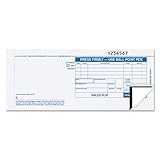
- Sold as 100/Pack.
- Universal format fits in standard credit card imprinters. Perforated to tear off merchant's copy and carbonless copies.
- Size: 3.25"L x 7.88"W. Notched corner to ensure proper loading.
- Features a carbonless 3-part format and comes in white. Ruled format.
- 100 sets per pack. Made in the USA.
Possible short-term negative factors include:
- Hard inquiries from formal applications
- A new account and a lower average account age
- High utilization on a balance-transfer card carrying the transferred balance
- Closing cards and reducing total available revolving credit
Possible positive factors include lower revolving utilization after card balances are paid, fewer missed payments, and consistent on-time payments on an installment loan. The CFPB discusses payment history and utilization, while FICO explains possible effects of balance transfers, personal-loan consolidation, and closing credit cards.
Do not close every paid-off card automatically. Keeping an account open may preserve available credit and account age, but it can be a poor choice if you are likely to reuse the limit. You can freeze cards in the issuer app, remove them from digital wallets, lower limits where appropriate, or close selected accounts after weighing credit effects against spending risk.
When consolidation is a bad idea
Pause before applying if:
- The new APR is not lower than the card APRs it would replace.
- Fees erase most or all of the interest savings.
- The lower payment comes only from a much longer term.
- You cannot make the new payment while covering essential expenses and maintaining a modest emergency buffer.
- You expect to continue using the cards for ordinary expenses.
- The option puts your home or retirement assets at risk.
- The debt is already in litigation and the proposed product does not address the legal problem.
- You would need to miss payments to qualify for a settlement program.
- You are applying repeatedly without understanding why prior applications were denied.
Consolidation changes the payment structure. It does not repair a monthly budget that is still negative.
Independent reader supportYour contribution helps us test, update, and keep practical guides available for everyone.Complete the process without creating new debt
Before funding or enrollment
- List every balance, APR, fee, due date, and payoff amount.
- Stop discretionary card spending.
- Calculate the required payment and total cost of each option.
- Confirm the actual terms in the agreement, not only an advertisement.
- Keep enough cash for essentials and a small emergency reserve.
- Ask the original creditors about hardship assistance.
During the transfer, loan funding, or DMP setup
- Keep paying old cards until the transfer or payoff is confirmed.
- Save application records, confirmation numbers, agreements, and statements.
- Verify that the payment was credited to the correct account.
- Set autopay for the new payment, but monitor the first several withdrawals.
- Do not assume a pending transaction has completed.
After consolidation
- Confirm old accounts show the expected zero or reduced balances.
- Check the new account statement for fees and incorrect amounts.
- Remove paid-off cards from shopping sites and digital wallets.
- Freeze, restrict, lower, or close accounts based on both credit and behavior considerations.
- Build a cash reserve for irregular expenses.
- Review the debt balance and budget monthly.
- Pay extra toward principal when possible and permitted.
- Recalculate the payoff plan at least three months before any promotional rate ends.
What to do when something goes wrong
The balance transfer has not posted
- Keep making the old card’s minimum payment.
- Check whether the transfer is pending, rejected, or limited.
- Call the new issuer using the official number and ask for the status.
- Ask the old issuer how the payment was credited.
- Do not make a duplicate large payment until the status is clear.
- Save confirmation numbers and statements.
The old card still shows a balance
Possible explanations include a separately posted transfer fee, new or pending purchases, interest accrued before the transfer, a partial transfer, an incorrect account number, or a delay by the old issuer. Reconcile the old and new statements line by line before concluding that money is missing.
Free tools Windows power users keep installed
One-click scans. No signup required.
The loan proceeds are smaller than expected
Confirm the net amount received. An origination fee may have been withheld from the advertised loan amount. If the remaining proceeds cannot pay the cards in full, compare the loan-plus-card payments with your existing strategy before accepting it.
The new payment is unaffordable
Do not wait for a missed payment. Contact the lender immediately and ask about hardship options, deferment, forbearance, or a payment plan. Availability is lender-specific, but the CFPB identifies these as possible options.
The promotional period is ending
- Calculate the remaining balance.
- Divide it by the months remaining.
- Compare the required payment with disposable income.
- Ask the issuer about hardship terms or evaluate a fixed-rate loan or DMP before the regular APR applies.
- Do not assume another balance transfer will be approved.
You reused the paid-off cards
Treat the new balances as a separate problem. Freeze the cards, remove them from payment accounts, lower limits if appropriate, and build a small cash reserve so ordinary emergencies do not return to the cards. If you cannot stop borrowing for necessities, seek a budget, counseling, or legal solution rather than another consolidation product.
A creditor has sent the debt to collections
Verify the debt and the collector, request required information in writing, and do not ignore a lawsuit. Check the applicable state statute of limitations before making a payment or written acknowledgment because, in some states, either action can affect the limitations period. The rules are state-specific; the FTC debt-collection FAQ provides general information, not legal advice.
You are an active-duty servicemember
Before refinancing or consolidating a qualifying pre-service loan, check whether the original obligation has protections under the Servicemembers Civil Relief Act. The CFPB warns that refinancing or consolidating can cause a new loan to lose protections that applied to the original pre-service obligation. Obtain individualized military-legal or financial counseling before changing the debt.
Common consolidation scams and misleading claims
Use the original issuer’s website or the number on your statement when contacting a creditor. Be cautious with an unsolicited caller, a company demanding payment before explaining its service, a guaranteed approval or savings claim, or a provider that will not disclose fees and written terms.
Commercial debt-relief marketing may sell settlement rather than consolidation. An offer to make one payment is not enough information. Ask:
- Will a new lender pay the debts, or will money accumulate for negotiations?
- Will the accounts remain current?
- What fees are charged and when?
- What happens if creditors reject the proposal?
- Could the process result in collections, lawsuits, or taxable canceled debt?
- Which creditors participate?
- What is the cancellation and refund policy?
The FTC warns about advance-fee loan schemes and provides additional debt-relief scam information. A legitimate provider should not need your immediate decision or promise an outcome it cannot control.
A practical order of operations
- Inventory: List balances, APRs, minimums, due dates, limits, delinquency, and fees.
- Protect the budget: Stop new discretionary borrowing and reserve money for essentials.
- Call issuers: Ask directly about a lower APR, hardship plan, fee waiver, or revised due date.
- Compare total cost: Calculate the transfer fee, loan fees, DMP fees, total interest, term, and post-promotion balance.
- Choose the least risky workable option: A balance transfer, loan, DMP, hardship plan, direct payoff, or legal consultation may be appropriate depending on the facts.
- Pay old accounts until confirmation: Never assume a transfer or loan payoff has posted.
- Automate and monitor: Set payments, verify statements, and keep documentation.
- Prevent reborrowing: Freeze or restrict cards and address the spending or income problem.
- Reassess early: Act before a promotional rate ends or a payment becomes unaffordable.
Frequently Asked Questions
Does debt consolidation hurt your credit?
It can cause a temporary decline from hard inquiries, a new account, high utilization on a balance-transfer card, reduced average account age, or closed cards. It can also help over time through lower revolving utilization and on-time payments. The result varies by profile and scoring model; no specific score increase or decrease is guaranteed.
Best Value
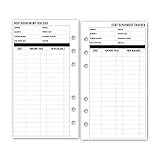
- [WHAT’S INCLUDED] Price shown is the starting price for a set of 30 double-sided sheets in Personal size (3.74 x 6.73 inches / 95mm x 171mm). You can increase the quantity by clicking the customization button and selecting the number of sets you would like. Price will increase based on the sets you choose.
- [PUNCHED FOR 6-RINGS] 2 sets of 3 holes spaced 3/4" (19mm) with 2" (51mm) between the two sets to fit popular Personal size planner binders by Filofax, LV MM, kikki K, Carpe Diem, Webster's Pages and more. Check manufacturers insert refill sizing for compatibility if your binder wasn't mentioned here.
- [PREMIUM MATERIALS] Bright white 80# text weight paper. Write, draw, color, and more with your favorite pen, pencil, and watercolors without shadowing or bleeding through. Suitable for most writing instruments but alcohol-based markers. Sticker and washi tape friendly.
- [HIGH QUALITY PRINTING] Crisp, clean lines of print for ease of use. Please read and understand each product’s descriptions, sizes, and formats carefully before ordering. Email with any questions.
Can you consolidate credit card debt with bad credit?
Possibly, but a balance-transfer card or low-rate personal loan may be unavailable or expensive. Start with the card issuers’ hardship programs and a nonprofit credit counselor. Compare any bad-credit loan by APR, fees, net proceeds, and total repayment, and do not accept a high-rate loan merely to obtain one payment.
Is a balance transfer better than a personal loan?
Neither is universally better. A balance transfer may cost less when you can repay the balance during its promotional period. A personal loan may be preferable when you need a fixed payment over a defined term and its APR plus fees is lower than the cards. Compare total cost and payment sustainability rather than the introductory rate or monthly minimum alone.
What credit score do you need to consolidate credit card debt?
There is no universal minimum score. Issuers and lenders set their own requirements, and approval, credit limit, APR, and fees also depend on income, existing debts, payment history, and other factors. Prequalification with a soft inquiry may let you compare some offers without immediately creating a hard inquiry.
What’s actually slowing this PC down?
Pick the symptom - the matching free tool is one click away.
Can you consolidate without taking out a loan?
Yes. You can ask issuers for hardship arrangements, enroll in a nonprofit debt-management plan, or repay directly using the avalanche or snowball method. A DMP may centralize the payment process while the underlying creditor accounts remain separate; it usually does not forgive the balances.
Is credit counseling the same as debt settlement?
No. Credit counseling provides advice, budgeting help, and sometimes a debt-management plan in which debts are generally repaid. Debt settlement seeks to negotiate lower payoffs and may involve missed payments, collection activity, lawsuits, credit damage, fees, and potentially taxable canceled debt.
Should you close credit cards after paying them off?
Not automatically. Keeping an account open may preserve available credit and account age, but an open limit can be risky if you are likely to reuse it. Freeze cards, remove them from digital wallets, lower limits, or close selected accounts based on your spending behavior and credit needs.
Can you consolidate cards from the same issuer?
Sometimes, but many balance-transfer offers exclude transfers from the same issuer or affiliated institutions. Check the actual offer and card agreement. A personal loan or hardship arrangement may be an alternative if an internal transfer is prohibited.
Quick wins for a faster PC:
Repair Windows errors before they cause bigger problemsFix Now →Scan for outdated or missing drivers - takes under a minuteDriver Scan →What happens if a balance transfer is rejected or delayed?
Continue making at least the old cards’ minimum payments. Contact the new issuer through an official number to determine whether the request is pending, rejected, or limited, and check the old account for how the payment was credited. Recalculate the plan before applying elsewhere or accepting another product.
Can you consolidate credit card debt already in collections?
Possibly, but many balance-transfer cards and lenders will not pay collection accounts, and a new loan may not solve a disputed or time-barred debt. Verify the debt and collector, understand your state’s statute of limitations, avoid ignoring a lawsuit, and consider legal advice before acknowledging or paying an old debt.
Is a home-equity loan safe for credit card debt?
It may have a lower rate, but it turns unsecured card debt into debt secured by your home. A missed payment can create foreclosure risk, and a HELOC may have a variable rate. Compare unsecured alternatives, closing costs, rate changes, term, and total repayment before considering it.
Is a 401(k) loan a good way to consolidate credit card debt?
Usually it should be considered only after careful analysis. Plan rules control, retirement growth may be reduced, and job separation can require repayment or cause the unpaid amount to be treated as a taxable distribution. A low apparent interest rate does not eliminate those risks.
Outdated Drivers Are Slowing You Down
One free scan finds every outdated or missing driver and matches the right update for your exact hardware.Free scan · exact hardware matchWindows Errors? Fix Them Before They Spread
Repair common Windows errors and clear accumulated junk for a smoother, more stable PC - no reinstall needed.Free scan · no reinstallIs forgiven credit card debt taxable?
It may be. The IRS generally treats canceled debt as taxable income unless an exception or exclusion applies, such as certain bankruptcy or insolvency situations. A settlement can also produce Form 1099-C reporting. Get tax advice before relying on a projected settlement amount.
When should you consider bankruptcy instead of consolidation?
Consider a consultation when you cannot repay the principal after reasonable expense cuts, minimum payments consume essential-income money, you face lawsuits or garnishment, settlement payments remain unaffordable, or you are considering risking your home or retirement assets to stay current. Bankruptcy is jurisdiction-specific legal advice, not a standard consolidation option.
The Bottom Line
The best consolidation method is the least expensive option that you can complete without missing payments or borrowing again. Calculate your weighted APR and total cost, ask the card issuers about hardship assistance, and compare the actual terms of a balance transfer, personal loan, and nonprofit DMP. Keep paying old accounts until transfers or payoffs are confirmed, avoid new charges, and act before a promotional rate ends. If the payment is still unaffordable, seek nonprofit counseling or legal advice rather than securing the debt with your home, draining retirement assets, or trusting a company that promises to make the debt disappear.
Quick Recap
Product prices and availability are accurate as of the date/time indicated and are subject to change. Any price and availability information displayed on Amazon at the time of purchase will apply.




