Free tools Windows power users keep installed
One-click scans. No signup required.
To compare unit prices, divide the price you will actually pay by the product’s net quantity, then compare options expressed in the same unit. For example, a 12-ounce package priced at $3 costs $0.25 per ounce. That figure helps identify the lower cost for a given amount—but the best practical deal also depends on what you will use, the total you must spend, offer conditions, and whether the products are genuinely comparable.
What a unit price tells you
A shelf price tells you the total cost of one package. A unit price tells you how much that package costs per standard measure, such as an ounce, pound, or item. That makes it easier to compare differently sized packages and see when a familiar package has become smaller even if its shelf price has not changed.
As an Amazon Associate I earn from qualifying purchases.
The Federal Trade Commission’s consumer guidance, “The case of the shrinking packaging” (October 2024), puts the distinction this way: “All packaging has to tell you how much you’re getting for your money, but it’s the unit price — usually posted on the shelf — that tells you what you’re paying per ounce, pound, or count.” The unit price is a comparison aid, not a complete measure of value: it does not tell you whether you will use the product or whether two products are equivalent.
Think of the total shelf price and the unit price as answering different questions. The total price tells you what one package costs at checkout. The unit price normalizes that cost so packages of different sizes can be compared. A smaller package can be the less expensive purchase overall while costing more per ounce; a larger package can cost less per ounce while requiring more money up front. Neither number replaces the other.
#1 Best Overall

- ULTRA-COMPACT DESIGN- Measuring just 4" x 2.25" x 0.3" and weighing in at only 1.23 oz, the HS-8VA is one of our smallest calculators, perfect for pockets, bags, desks and math on-the-go.
- BIG DISPLAY & EASY INPUT- 8-Digit LCD Display. Clear and easy-to-read screen ideal for everyday calculations at home, school, or office.
- GENERAL PURPOSE CALCULATOR – Ideal for a wide range of applications, from basic math to business and personal use, with memory keys for quick storage and recall.percentage, and square root.
- MEMORY KEYS- Features M+, M-, Memory Clear, and +/- key for efficient multi-step calculations.
- SOLAR WITH BATTERY BACK-UP – Reliable power with energy-efficient Solar Plus technology and battery back-up to keep you working without interruption.
How to compare unit prices step by step
- Choose comparable products. First check product type, form, quality, ingredients, and what is included. A price per ounce does not make two different products interchangeable. A unit-price comparison is useful only when the options are similar enough for the measured quantity to mean something. For instance, products may share a broad category but differ in form, ingredients, quality, or pack contents. Those differences can make a simple per-ounce comparison misleading for your decision.
- Read the shelf label. Many grocery shelf labels show both the total price and a unit price. Check the unit printed beside the figure: for example, dollars per ounce, per pound, per 100 milliliters, or per item. Do not assume every retailer displays it or that every label uses the same measure. Read the number and the unit together; a figure without its basis is not enough to compare prices.
- Put both prices on the same basis. If one price is per pound and another is per ounce, convert before comparing. There are 16 ounces in a pound, so divide a dollars-per-pound figure by 16 to express it in dollars per ounce. Keep weight and volume distinct: an ounce by weight is not a fluid ounce. A conversion is appropriate only when both figures measure the same kind of quantity.
- Calculate any missing unit price. Divide the total price by the net quantity: unit price = total price ÷ net quantity. A 12-ounce package costing $3 works out to $0.25 per ounce ($3 ÷ 12). Use the package’s net contents, not the package weight including wrapping or an assumed serving size. Keep enough precision during the calculation to compare the options fairly; rounding too early can make close figures look the same.
- For a multipack, count all the contents. Divide the package price by the combined net quantity across its packs. If the packs contain different amounts, add their contents first. Compare the result with another option stated in the same unit. Do not divide by the number of individual packs unless the other price is also being compared per pack; the quantity in each pack matters.
- For a promotion, use the price you will actually pay. Apply the offer’s terms before dividing. If a discount requires buying multiple packages, account for the full required purchase and the total quantity you receive. If a promotion has conditions you will not meet, its advertised price is not your comparable price. For a qualifying offer, calculate the unit cost from the qualifying total price and total quantity, rather than treating the advertised per-item amount as available for any purchase.
- Check the package and offer when the label is unclear. Verify the net contents and the promotion’s terms on the package or shelf tag. If the shelf unit price appears inconsistent with the contents or price, recalculate it yourself. A label is useful, but the arithmetic depends on the correct total price and net quantity.
The National Institute of Standards and Technology (NIST) describes simple consumer arithmetic as a way to calculate unit pricing. A phone calculator is enough for most comparisons; a basic pocket calculator is optional if you prefer one for conversions or arithmetic. The calculation is short: identify the price and net quantity, check their units, divide, and compare like with like.
Compare more than the per-unit figure
The lowest unit price is the lowest cost for the measured quantity, not automatically the best choice for every shopper. Before choosing, compare these factors:
- Cost per comparable unit: Which option costs less for the same measure?
- Total outlay: How much money must you spend at checkout? A lower unit price can require a larger initial purchase.
- Offer conditions: Is the displayed price available without a membership, coupon, minimum quantity, or other condition? Include only discounts you can actually use.
- Likely use: Will you use the full amount before it spoils, expires, loses quality, or becomes unwanted? Unused product can erase the apparent savings.
- Product differences: Are the ingredients, form, quality, and included contents similar enough to make the comparison fair?
For example, a smaller package may cost less at checkout but more per ounce. If buying the larger package means paying more now, check whether the added amount is useful to you. If you will not use it, the lower unit price alone does not settle the decision.
Quick wins for a faster PC:
Repair Windows errors before they cause bigger problemsFix Now →Scan for outdated or missing drivers - takes under a minuteDriver Scan →It can help to separate the decision into two questions. First, among products you consider comparable, which has the lower cost per unit? Second, is that package and offer a sensible purchase for your budget and likely use? The first question is arithmetic. The second depends on the total checkout cost, how much you need to buy to qualify for a deal, and how much product you expect to use. Keeping those questions separate prevents a low unit price from disguising a purchase that does not fit your needs.
How to compare grocery promotions and multipacks
“Buy more” offers
For a promotion that requires purchasing a set number of items, work out both the qualifying total price and the total quantity you will take home. Divide the qualifying price by that combined quantity. Then compare the result with the regular unit price of the alternative. Read the offer carefully: if the discount applies only when you buy a specified quantity, do not use the discounted figure for a purchase that does not meet the requirement.
Check whether the offer changes the amount you must buy, not just the price. The useful comparison is between the total qualifying cost and the total contents you receive. If you need more packages than you intended to buy to access the offer, include every required package in the outlay. Then consider whether you can use the full quantity. A discount on a required larger purchase is not automatically a saving if some of what you buy goes unused.
Different pack sizes
For two packages of the same product, divide each package price by its net contents. If the amounts are in different units, convert them first. A shelf label can make this comparison quick, but recalculating is useful when one label uses price per pound and another uses price per ounce, or when you want to check whether package contents have changed.
Rank #2

- COMPACT & PORTABLE DESIGN – Space-saving design that fits easily on any desk or in a briefcase, making it ideal for both home and office use.
- LARGE EIGHT-DIGIT DISPLAY – Clear and easy-to-read 8-digit display, perfect for everyday calculations, ensuring accurate results in home or office settings.
- GENERAL PURPOSE CALCULATOR – Ideal for a wide range of applications, from basic math to business and personal use.
- DUAL POWER SOURCE: Operates on solar power with battery backup to ensure reliable use in any lighting condition.
- DURABLE HARD COVER: Built-in protective case shields the calculator from scratches, drops, and everyday wear.
For a multipack, use the combined amount rather than the count of containers alone. If every container has the same net quantity, multiply that quantity by the number of containers. If the pack includes different quantities, add the stated contents. Then divide the price for the full multipack by that combined quantity. This gives a per-unit figure that can be compared with a single package or another multipack on the same basis.
Sale stickers
A sale sticker shows a change in the total package price; it does not by itself show that the item has the lowest unit price. Compare the sale’s unit price with other available options, after accounting for any qualifying terms. A familiar package may also contain less than before, so check its stated net contents rather than relying on memory of its former size.
Use the sale price only if it is the price available to you under the stated conditions. If the offer has a required quantity or another condition, follow it in your calculation. Then compare the resulting unit price with the regular-price alternative and the unit price of other package sizes. A sale can improve a product’s comparison, but the shelf sticker alone does not establish that it is the best deal.
Units that are easy to confuse
Keep the kind of quantity consistent. Weight measures describe how heavy a product is; volume measures describe how much space a liquid or other product occupies. An ounce by weight and a fluid ounce are not interchangeable. Likewise, compare prices per item with prices per item, and do not compare a count-based unit price with a weight-based one unless you have a reliable way to express both on the same basis.
The Tool Desk
Outbyte Driver Updater FREEScan for outdated or missing drivers - takes under a minuteDriver Scan →Outbyte PC Repair FREEClear out junk files and repair common Windows errorsFree Scan →NIST recommends consistency within a product category, including across package sizes. When shelf labels use unlike units, convert one price to the other unit where the conversion is appropriate. For example, converting dollars per pound to dollars per ounce is straightforward because both are weight measures. Do not use that conversion to turn a weight price into a volume price.
Some labels use a different standard quantity from the one you first expect. A price may be shown per pound, per ounce, per item, or per 100 milliliters, for example. This does not necessarily mean the label is wrong; it means you need to understand the denominator. If both options use the same basis, compare the figures directly. If they do not, convert one only when the units measure the same kind of quantity and the conversion is clear. If the product forms or measures are not meaningfully comparable, do not force a conversion that suggests they are equivalent.
The UK Department for Business and Trade’s consumer guidance illustrates unit pricing per 100 milliliters across different package sizes. That is a useful example of a consistent volume basis within a comparison. It is not a reason to treat milliliters and ounces as interchangeable, or to apply UK guidance as a statement of U.S. rules.
Rank #3
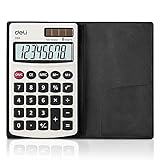
- Pocket calculator, mini size is suitable for you bussiness travel use
- 8 digits large LCD display and metal panel ensure long-lasting life
- Dual power, solar and battery (cell battery included), solar function works even in the dim light
- The soft rubber button design in line with the use of human habits, comfortable for touch
- Comes with PVC cover to protect keyboard and screen from scratching
Why the biggest package is not always the best deal
A larger package may have a lower price per unit and still be a poor buy if you cannot use it all. Consider the amount you are likely to consume, storage space, spoilage, and the total price you must pay. The practical comparison is not just “Which is cheapest per ounce?” but also “How much will I pay, and how much of that purchase will I actually use?”
Unit pricing can also expose package-size changes. If a familiar item costs about the same but now contains less, its price per unit rises. Compare the current net contents and current unit prices rather than assuming the package is unchanged or that a bulk size is automatically cheaper. This is one reason to pay attention to both the package’s stated net contents and the unit price, rather than relying only on a familiar total shelf price.
A larger size is a better value only in the limited per-unit sense when its cost for the measured amount is lower. That does not answer whether it is the right purchase for you. If the larger size has a lower unit price but exceeds what you can use, your actual value depends on the portion you use and the portion that goes to waste. Conversely, a smaller package can cost more per unit yet still be the practical choice if it better matches the amount you need and the amount you can afford to spend at once.
Are stores required to show unit prices?
Do not assume there is one universal posting rule for every grocery shelf. In the United States, NIST’s 2025 Unit Pricing Guide (NIST SP 1181) is a best-practice guide; it considered states with current unit-pricing regulations, but the guide itself is not a nationwide mandate. The FTC’s Fair Packaging and Labeling Act overview addresses net-content labeling and related comparison authority, but it does not establish a single nationwide grocery unit-price posting requirement. Requirements can vary by jurisdiction, so check the applicable state or local rules for a legal question.
As a separate example, UK Department for Business and Trade consumer guidance presents unit pricing as a grocery-comparison aid and illustrates prices per 100 milliliters across different package sizes. That example should not be treated as a statement of U.S. rules. In any location, check the shelf label and applicable local requirements rather than assuming every product or shop must show a unit price in the same way.
If no unit price is displayed, you can still compare packages by using the calculation: price divided by net quantity. Make sure the prices you use reflect the offer terms that apply to your purchase, and express both results in the same unit. The absence of a displayed figure does not change the arithmetic. Whether a retailer is required to display it is a separate, location-specific legal question.
A quick aisle checklist
- Are these products similar in type, quality, ingredients, and contents?
- Does each unit price use the same measure?
- Are the figures based on net contents?
- Have I included the promotion’s conditions and any required quantity?
- What is the total amount I must spend?
- Will I use the amount I am buying before it spoils or goes to waste?
If the shelf figures answer those questions, compare the unit prices and choose the option that fits your budget and likely use. If they do not, calculate the price per net unit yourself and use the other factors to decide whether the lower figure is a real saving for you.
Rank #4

- 【Multifunctional Calculator】This calculator desktop integrates a calculator and notebook with a stylus pen. No paper is needed, pursuing paperless. You can take notes while calculating, calling, and meetings to improve your study and work efficiency.
- 【Lightweight and Portable】This is a lightweight calculator with a writing pad and foldable design, and it weighs only 3.73 ounces. It is portable that you can carry it anywhere and it can be removed and used immediately when needed.
- 【Healthy and Eco-friendly】This calculator features a blue light-free LCD screen to protect your eyes, and you can use it as a notepad on your desk when you're not using the calculator. It is re-writable and can be rewritten over 100,000 times. Reduce paper consumption.
- 【Mute Design】The calculator is made of comfortable silicone, and soft touch keys, easier to rebound, quiet, and no noise. Bring you a more comfortable touch and quiet using experience. The Mute button does not disturb others, suitable for office, learning, and a variety of use scenarios.
- 【Multi-scenario use】This high-quality calculator is strong enough to handle calculations in a variety of environments such as business accounting, school, home, office, etc., and would also suitable for various occasions. Whether you are a student, a teacher, or a business person, it offers a fast, efficient experience!
Frequently asked questions
What is the formula for unit price?
Divide the total price by the product’s net quantity: unit price = price ÷ net quantity. For example, a 12-ounce package priced at $3 costs $0.25 per ounce. For a multipack, use the total net quantity of all the contents.
Should I compare the shelf price or the unit price?
Use both. The shelf price tells you the total amount you will pay for a package. The unit price helps compare the cost of the same quantity across package sizes. A lower unit price may come with a higher checkout total, so the better practical option depends on your budget and how much you will use.
Windows Errors? Fix Them Before They Spread
Repair common Windows errors and clear accumulated junk for a smoother, more stable PC - no reinstall needed.Free scan · no reinstallCrashes, No Sound, or Screen Glitches?
Random freezes, missing sound and display glitches usually trace back to one bad driver. Find and replace yours safely.Free scan · under a minuteHow do I compare a sale or multi-buy deal?
Use the amount you will actually pay after applying the offer’s terms, then divide by the total net quantity you receive. If a deal requires a specified number of items, include the full required purchase and quantity. Compare that result with alternatives on the same unit basis; do not use a conditional discount if you will not meet its conditions.
Is a bigger package always cheaper per unit?
No. Compare the displayed or calculated unit prices instead of assuming the larger package is cheaper. Even when it does have the lower unit price, consider the larger total outlay and whether you will use the product before it spoils, loses quality, or becomes unwanted.
Can I compare ounces with fluid ounces?
Not as though they were the same measure. Ounces by weight and fluid ounces by volume are different. Compare weight with weight and volume with volume; convert only between units measuring the same kind of quantity.
What should I do if there is no unit-price label?
Calculate it yourself by dividing the price by the net quantity. Check the package contents and any promotion conditions, and make sure both options end up expressed in the same unit. Posting requirements vary, so do not assume a single rule applies everywhere.
What’s actually slowing this PC down?
Pick the symptom - the matching free tool is one click away.
Does a lower unit price mean the product is better value?
It means the measured quantity costs less, assuming the products are comparable and the calculation uses the correct price and net contents. It does not tell you whether the products are equivalent, whether the deal’s terms apply to you, or whether you will use all the amount. Consider those factors along with the total price.
Best Value

- Easy to read: portable small calculator with large 8-digit LCD display, clear and high visibility, allowing you to see the numbers at a glance
- Easy to carry: the size of the pocket calculator is only 4.7 x 2.7 inches, which is small and lightweight, easy to store in drawer or put it in the school bag, briefcase for carrying; Suitable for home, school, office use
- Quality and appearance: basic standard calculator is made of durable ABS to ensure normal daily use; The candy-colored design and reasonable button layout make it beautiful and practical
- Dual power supply: electric digital kids calculator has dual electric drive, light energy and button battery; It can switch the power mode according to the environment, which is more durable and more convenient
- Clear and large keys: portable calculator has high sensitivity and quick response to the keys, which improves your work efficiency; The numbers on the keys are not easy to wear and can be applied for a long time
Frequently Asked Questions
What is the formula for unit price?
Divide the total price by the product’s net quantity: unit price = price ÷ net quantity. For example, a 12-ounce package priced at $3 costs $0.25 per ounce.
Should I compare the shelf price or the unit price?
Use both. The shelf price is the total you pay for a package; the unit price helps compare the cost of the same quantity across package sizes. Also consider your budget and how much you will use.
How do I compare a multi-buy deal?
Apply the offer terms, then divide the qualifying total price by the total net quantity you receive. Include every required item and compare the result with alternatives stated on the same unit basis.
Can I compare ounces with fluid ounces?
No. Ounces by weight and fluid ounces by volume are different measures. Compare weight with weight and volume with volume, converting only between units that measure the same kind of quantity.
Is a larger package always the better deal?
No. Check the unit price, total outlay, and whether you will use the full amount. A lower cost per unit may not be worthwhile if the product goes unused or spoils.
Are stores required to display unit prices?
Requirements vary by jurisdiction. NIST’s 2025 Unit Pricing Guide is a best-practice guide, not a nationwide U.S. posting mandate; check local rules for a legal question.
The Bottom Line
Compare similar products using price divided by net quantity, and make sure both figures use the same kind of unit. For promotions, use the price and quantity that apply to the required purchase. Then weigh unit cost against checkout total, product differences, and how much you will actually use.
Do these 3 things before closing this tab:
1Clear out junk files and repair common Windows errors2Scan for outdated or missing drivers - takes under a minute3Repair Windows errors before they cause bigger problems



