Recommended Free Tools
To compare cement brands, first match the cement type and grade to the same application and local standard; then compare like-for-like test results, certification and batch traceability, and the bag’s condition and packing details. A brand name or higher grade alone does not prove that one bag—or one manufacturer—is better. Cement standards set product requirements; they do not independently test the competing brands or guarantee the strength of finished concrete.
Start with the intended use and local standard
Cement categories depend on the jurisdiction and the standard being used, so labels from different systems are not interchangeable. Choose a product that fits the project design, exposure conditions and local specification before comparing manufacturers.
- India: The Bureau of Indian Standards’ 2025 compendium covers 16 cement types under Indian Standards. It includes ordinary Portland cement (OPC), Portland pozzolana cement (PPC), Portland slag cement and specialized types. For example, it identifies IS 269:2015 for OPC, IS 1489 Parts 1 and 2 for PPC, and IS 455:2015 for Portland slag cement. See the BIS cement standards compendium.
- United States: ASTM C150/C150M-24 specifies Portland cement types using intended properties. The American Cement Association describes Type I as general use, Type III as used where high early strength is desired, and Type V as intended for high sulfate resistance. Availability varies by location. See the American Cement Association’s cement-type overview.
- Elsewhere: Check the applicable national or regional standard and certification body. BIS certification applies to relevant Indian products and requirements; it should not be treated as a worldwide certification.
ASTM C150/C150M-24 covers Portland cement and includes chemical and physical tests such as strength, setting time, soundness-related tests, fineness and sulfate resistance. Its scope and requirements are not the same as the Indian OPC grade system. Consult the ASTM C150/C150M-24 standard page for its scope.
Compare grades and strength results on equal terms
A grade number is meaningful only in the context of its standard, cement type, test method and test age. Compare products against the same specification and test conditions rather than treating different labels as a universal ranking.
The Tool Desk
Outbyte PC Repair FREEClear out junk files and repair common Windows errorsFree Scan →Outbyte Driver Updater FREEFix the driver behind crashes, sound loss and screen glitchesFind Drivers →#1 Best Overall

- QUICK SETTING: Sets in 20 minutes
- VERSATILE: Indoor, and outdoor use
- EASY TO USE: Ready to use! Just add water, mix, and use!
- MULTIPLE SURFACES: Handrails, bolts, poles, fixtures, and more
- PRACTICAL SIZE: 10 pound bag saves your back while providing plenty of cover
What India’s OPC grade numbers mean
The BIS 2025 compendium lists OPC 33, OPC 43, OPC 53, OPC 43S and OPC 53S. Under the compendium’s OPC table, minimum compressive strength at 672 ± 4 hours, tested by IS 4031 Part 6, is:
| OPC grade | Minimum compressive strength at 672 ± 4 hours |
|---|---|
| OPC 33 | 33 MPa |
| OPC 43 and OPC 43S | 43 MPa |
| OPC 53 and OPC 53S | 53 MPa |
These are BIS product specification minima, not measured results for any named brand or current bag. The same compendium also gives requirements at 72 ± 1 hours and 168 ± 2 hours. If comparing test certificates, check the stated test age and method as well as the result; a value at one age is not directly comparable with a value at another. The figures above come from the BIS 2025 compendium.
Rank #2

- FOR EASY REPAIRS — It's the ideal concrete patch repair mix, neatly fixing cracks and spalls so your property looks like new. It's even textured for a more seamless blend with the existing structure
- TOUGH AND DURABLE — Formulated to avoid shrinking or cracking, the ready-to-use premixed cement patch offers good adhesion and high strength so your slabs, walls & walkways/sidewalks perform as good as ever
- EASY CLEANUP — Sika concrete patch is acrylic-based, so once application is done, it cleans up using only water. No need for special cleaners and chemicals
- GREEN — It follows regulations concerning the use of volatile organic compounds (VOC), helping to keep the air we breathe cleaner and fresher
- A BREEZE TO USE — Minimal prep is required, since it comes premixed. Just use a putty or trowel to spread where repairs are needed. It takes only a few hours to set and about a day for a full cure
Do not confuse cement tests with concrete strength
Cement strength specifications and finished concrete strength are different measurements. The American Cement Association says standard practice measures concrete compressive strength at 28 days; some specifications use 56- or 90-day strength where slower-reacting supplementary cementitious materials are present. Those ages refer to concrete strength testing, not the BIS cement-mortar strength values above. See the American Cement Association FAQ.
Concrete performance also depends on the mixture design, water content, curing and construction practice. A cement grade is not a guarantee of finished concrete strength.
Rank #3
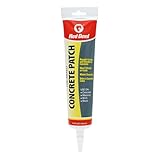
- REPAIRS CRACKS AND BREAKS IN CONCRETE: Premixed formula makes repairs easy
- DRIES A LIGHT TO MEDIUM GRAY COLOR: Ideal for lighter shades of concrete
- WON'T SHRINK OR CRACK: Provides maximum flexibility for a permanent repair
- INTERIOR OR EXTERIOR USE: Can be used inside or outside
- WATER CLEAN UP: Cleans up easily with soap and water. Made in the USA
Verify certification and traceability
Read the bag for its cement type, standard designation, manufacturer and batch or packing information. In India, check the applicable IS designation and certification information, then verify current requirements with BIS. BIS’s Scheme-I page lists cement varieties and associated Indian Standards, including OPC under IS 269, PPC under IS 1489 Parts 1 and 2, and Portland slag cement under IS 455.
Certification indicates that a product is covered by the relevant certification scheme; it does not establish that a particular brand is universally superior or confirm that an individual bag is fresh. If performance is critical, request current, comparable manufacturer test certificates for the relevant product and batch, or arrange testing through an appropriately qualified laboratory. Compare certificates only when the test method, age and cement type align.
Rank #4

- This item Rockite expansion cement 15 min 1 lb
- Used for hardware, glue
- The product is manufactured in United States
- Model number: 10001
Check freshness, packaging and storage
Before buying, inspect the manufacture or packing details and the packaging. Prefer recent, dry stock in intact bags; avoid bags with visible moisture damage or signs of damp storage. The ASTM page advises storing cement in a weather-tight building to protect it from dampness and minimize warehouse set.
- Check that manufacture or packing details are present and legible.
- Look for sealed, intact packaging rather than tears or damp patches.
- Ask how the stock has been stored if it appears exposed to moisture.
- Follow current manufacturer instructions and local requirements for storage and use.
Age alone does not establish whether a bag is suitable, and the sources cited here do not set a universal cement shelf-life or expiry interval. Cement hardens and gains strength through hydration—the chemical reaction between cement and water, as described by the Bureau of Indian Standards in its 2025 compendium. Moisture exposure before intended use is therefore a reason for caution, not a basis for guessing a fixed expiry date.
Use a like-for-like brand comparison
When you have two or more genuine options, compare them in this order:
- Match type and application: Confirm that each option is the same relevant cement type and is suitable for the design, exposure and local specification.
- Match grade and test basis: Compare the same grade under the same standard, using results at the same test age and the stated test method.
- Check certification and identity: Verify the standard marking, applicable certification, manufacturer and batch or packing details.
- Inspect condition: Prefer recent, dry, intact stock and avoid evidence of moisture exposure.
- Assess evidence quality: For a performance-sensitive project, compare current test certificates or seek appropriately qualified batch testing rather than relying on advertising claims.
If one label uses a different national standard, type system or test basis, the comparison is not like-for-like until those differences are resolved against the project specification. Without comparable, current, batch-level evidence, a brand ranking would not be justified.
Quick Recap
Product prices and availability are accurate as of the date/time indicated and are subject to change. Any price and availability information displayed on Amazon at the time of purchase will apply.




