TradingView has two different places to set risk for a long trade: the Long Position chart drawing, which estimates risk and reward on a chart, and an order ticket, which configures a paper or broker order. Changing the drawing does not send an order. Choose the workflow you mean before changing any values.
Change risk settings in the Long Position chart drawing
Use the Long Position drawing when you want to model a trade visually. Select the drawing on the chart and open its properties. The values there determine the drawing’s estimates; they are not order instructions.


- Select the Long Position drawing on the chart and open its properties.
- Enter account size and risk per trade. The drawing lets you express risk as a cash amount or as a percentage of account size.
- Review the trade inputs. Adjust lot size, entry price, leverage, profit level, stop level, and quantity precision as needed. Profit and stop distances can be set in price units or ticks; tick distances are converted using the instrument’s tick size.
- Apply the settings and inspect the estimate. The drawing shows a calculated position size and projected outcomes at the selected profit or stop level. You can also drag the green profit zone or red risk zone on the chart to change the risk/reward ratio.
The drawing calculates position size as the smaller of its risk-based quantity and leverage-based quantity. Its displayed P&L and account balance are calculations from the inputs you supplied, not proof that TradingView placed an order. See TradingView’s Long and Short Position drawing-tool documentation and calculation explanation.
Set risk for a paper or broker order
To configure an order rather than a chart estimate, connect Paper Trading or a supported broker, then open the order ticket. The ticket’s available inputs and order features depend on the connection.
What’s actually slowing this PC down?
Pick the symptom - the matching free tool is one click away.
#1 Best Overall

- My Trading Journal for Stock Market, Forex, and Crypto: Precisely track and analyze every trade. This log book is essential for improving your trading performance and decision-making skills.
- Comprehensive Day Trading Planner: Record and review 80 guided trades with 8 review sections, perfect for traders aiming to refine their strategies and maximize profits.
- Customizable Trading Setup: Tailor your trading approach by documenting your setups, analyzing results, and adjusting strategies based on market conditions.
- For All Types of Traders: Whether you're trading stocks, forex, or crypto, My Trading Journal supports your unique trading style and helps you achieve consistent success.
- Premium Quality and Durability: Made with high-quality materials, this A5-sized journal is perfect for daily use and designed to withstand the rigors of active trading.
Choose how to size the order
TradingView’s Paper Trading order-ticket documentation lists quantity modes for units, cash amount, percent of balance, cash risk, and percent-of-balance risk. Select the mode that matches how you intend to size the position, then enter the requested value. The modes describe different ways to specify order quantity; they do not make the Long Position drawing into an order ticket.
Choose which value the risk fields should calculate
TradingView’s dollar/percentage risk fields can calculate either the order quantity or the stop level, but not both at the same time. Decide which value you want TradingView to derive, and enter the other value yourself. For example, if you want the platform to calculate quantity from a chosen stop, provide the stop level; if you want it to calculate the stop level, provide the quantity.
Rank #2
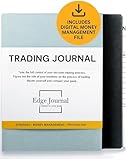
- FOR SERIOUS TRADERS: Track every entry, exit, position size, P&L, and setup with a structured layout designed for forex, stocks, options, futures, and crypto traders who want to identify what actually works in their strategy. NEUROSCIENCE-BASED DESIGN that encourages Growth Mindset and accountability
- TRADER PSYCHOLOGY FOCUS: Built on proven cognitive science principles, each page guides you through emotion tagging, bias recognition, and post-trade reflection to rewire reactive decision-making and build the disciplined mindset top-performing traders rely on
- COMPLETE 2026 TRADING LOG BOOK: Undated 12-month layout with performance summaries and goal tracking for day traders, swing traders, and long-term investors building consistent and serious results
- PERFORMANCE METRICS THAT DRIVE GROWTH: Dedicated sections for win rate, risk-reward ratio and strategy backtesting help you turn raw data into actionable insights, so every losing trade becomes a lesson and every winning trade becomes a repeatable system
- DIGITAL MONEY MANAGEMENT FILE INCLUDED : calculate your risk/reward ratio and win rate to find out whether you have a mathematical edge on the market, or not.
Set take-profit and stop-loss values
Depending on the ticket and connected broker, TP/SL inputs may be expressed as a price, ticks, a percentage of entry price, cash reward or risk, or a percentage of balance. TradingView’s general order-placement guidance says take-profit and stop-loss can be attached when placing market or limit orders. Its documentation says stop and stop-limit orders do not support attaching them at entry. A position can have one TP and one SL working as a pair under that workflow. Consult the order-placement help and dollar and percentage risk guidance; broker availability can differ.
Use multiple exits only where supported
Paper Trading has a separate multiple-exits workflow that allows up to four TP/SL pairs, with quantities assigned to each level. This is not a universal capability of every connected broker or order type. See TradingView’s multiple TP/SL levels instructions and verify the options shown in your own ticket.
Rank #3
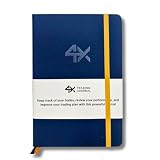
- BUILT FOR YOUR MARKET, FUTURES, STOCKS, FOREX, OPTIONS & CRYPTO: 4X is a mindset and process journal, not a strategy tool tied to one instrument. The plan, the trade log, the deep dive and the weekly review work the same whether you trade ES, EURUSD, SPY or BTC. Traders use it across all five markets every day.
- THE 2026 EDITION, REBUILT FROM TRADER FEEDBACK: Same trusted system, better in every way. An extra daily page for more room to log the session. Weekly reviews now grouped with each week's trades, so no more flipping back and forth. Crisp, darker print that's easy on the eyes after hours on a screen. A Quick-Start QR that scans straight to step-by-step instructions.
- NOT A NOTEBOOK, A COMPLETE 12-WEEK SYSTEM: Start with a one-time 9-part Trading Plan (your market, setups, risk rules and discipline checklist). Then twelve identical weeks: five Daily Logs, five Deep Dive trade pages, and a two-page Weekly Review. 189 guided pages, roughly 80 trades. Guided prompts walk you through every step. You never stare at a blank page.
- RATE YOUR EXECUTION, NOT YOUR RESULT: Your platform tracks the P&L. Nothing tracks the why. Log energy, sleep and mindset before the open; grade every trade A to F on whether you followed your plan, not on whether it won; then face the pattern every weekend with START / STOP / IMPROVE / CONTINUE. That review habit is the edge. You're 42% more likely to hit a goal you've written down.
- BUILT TO LAST, ARRIVES GIFT-READY: Vegan-leather hardcover, 100gsm bleed-resistant paper, two ribbon markers and an elastic closure band. Bound to lay flat so you're not fighting the spine while you write. 189 pages, 5.75" x 8.5", carries in a bag. Ships in a premium gift box: the gift every trader in your life actually wants.
Practice the order workflow with Paper Trading
Paper Trading uses simulated funds and can be opened from Supercharts. TradingView supports order-ticket, Depth of Market, and chart-trading workflows for simulated orders, making it a way to practice the controls without sending a live order. Its leverage documentation explicitly states that “TradingView doesn’t provide real margin trading services.” Read the Paper Trading functionality guide and Paper Trading leverage explanation.
Independent reader supportYour contribution helps us test, update, and keep practical guides available for everyone.What risk settings do—and do not—guarantee
A stop level and position size describe a plan based on specified inputs; they do not guarantee a maximum loss. A stop-market order triggers a market order when its stop price is reached, and fast-moving markets can fill at a different price because of slippage. Gaps, commissions, actual fills, and broker behavior can also affect the realized result. TradingView explains the trigger behavior and slippage risk in its stop-market order guidance.
Quick Recap
Which TradingView setting should you change?
| Question | Long Position drawing | Order ticket |
|---|---|---|
| What does it affect? | A chart estimate of position size, risk/reward, P&L, and account balance. | A paper or broker order, subject to the connected service’s supported features. |
| How is size set? | Estimated from the drawing’s risk and leverage inputs. | Can be specified through supported modes such as units, cash, balance percentage, or risk. |
| How can exits be expressed? | Profit and stop levels can use price or tick distances. | Depending on the ticket and broker, exits may use price, ticks, entry-price percentage, cash, or balance percentage. |
| Does changing it place an order? | No. It changes the chart drawing’s estimate. | It configures an order workflow; check the ticket and connection before submitting. |
Product prices and availability are accurate as of the date/time indicated and are subject to change. Any price and availability information displayed on Amazon at the time of purchase will apply.




