Do these 3 things before closing this tab:
1Clear out junk files and repair common Windows errors2Fix the driver behind crashes, sound loss and screen glitches3Repair Windows errors before they cause bigger problemsAn emergency fund is a dedicated pool of cash set aside solely to cover unexpected, unavoidable expenses that would otherwise disrupt household finances. These events typically include job loss, medical costs, urgent home or vehicle repairs, or essential travel tied to family emergencies. The defining features are liquidity, safety, and availability, not growth or return. Because emergencies are unpredictable in timing and magnitude, this fund exists to absorb financial shock without forcing harmful trade-offs.
Financial stability depends on the ability to withstand volatility without resorting to high-cost debt or the liquidation of long-term assets. Without an emergency fund, even a modest expense can cascade into credit card balances, loan defaults, or early withdrawals from retirement accounts, which are tax-inefficient and often penalized. The emergency fund functions as a financial buffer that preserves the rest of the financial plan. It is foundational because it protects every other goal from being derailed.

Purpose and Scope of an Emergency Fund
An emergency fund is not a general savings account and not a substitute for insurance. Insurance transfers large, low-probability risks to an insurer, while the emergency fund covers smaller but more frequent disruptions and insurance deductibles. It should not be used for discretionary spending, planned purchases, or investment opportunities. Clear boundaries around its use are essential to maintaining its effectiveness.
Determining an Appropriate Fund Size
The appropriate size of an emergency fund is based on essential monthly living expenses rather than income. Essential expenses include housing, utilities, food, transportation, insurance premiums, and minimum debt payments. A common benchmark is three to six months of these expenses, but this range is not universal. Households with variable income, single earners, limited job security, or dependents often require larger reserves, while those with stable employment and dual incomes may require less.
#1 Best Overall
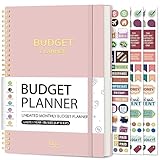
- Effective Budget Planning - Take control of your finances with the budget account book. This comprehensive planner allows you to plan and track your income, expenses, savings, and financial goals in one convenient place. With its intuitive layout and easy-to-use sections, you can stay organized and make informed decisions to achieve financial success.
- User-Friendly Layout - The budget planner features a user-friendly layout designed for easy navigation and organization. Each month, you'll find dedicated budget pages where you can set financial goals, track your income, and plan your expenses. Additional sections include debt trackers, savings goals, bill payment trackers, and more, making it simple to stay on top of your finances.
- Undated Monthly Calendar & Bonus Stickers - Featuring undated calendar each month, you'll have ample space to mark paydays, bills due, appointments, and important dates. Say goodbye to difficult writing spaces. Plus, we've included 3 cute sticker sheets that allow you to personalize your financial organizer and make budgeting more fun. Dates are not pre-printed and are completed by the user.
- Reliable and Convenient Design - Our monthly budget planner is designed for your convenience and built to last. The elastic band keeps everything securely in place, and the dual-sided pocket provides extra storage. Experience a budget planner that combines practicality and durability.
- Master Budgeting with Ease - Our financial planner includes a complete guidebook that provides valuable insights and instructions for optimal usage. From setting financial goals to tracking expenses, this guidebook offers step-by-step guidance and practical tips. Whether you're new to budgeting or an experienced user, this resource will help you make the most of your budget planner, empowering you to achieve financial success.
Risk exposure should drive sizing decisions. Factors such as health conditions, local job markets, access to family support, and the availability of credit all influence how much liquidity is necessary. The goal is not precision but sufficiency: enough cash to maintain normal operations during disruption without financial distress.
Where Emergency Funds Should Be Stored
Emergency funds should be held in accounts that prioritize capital preservation and immediate access. Suitable options include high-yield savings accounts, money market deposit accounts, or government-insured money market funds. These vehicles offer liquidity and minimal risk, even though returns are modest. Exposure to market volatility undermines the core purpose of the fund and is therefore inappropriate.
Funds intended for emergencies should not be invested in stocks, bonds, or other assets that fluctuate in value or require time to liquidate. The opportunity cost of lower returns is the price paid for certainty and access. In this context, stability is the return.
Building the Fund Systematically
Building an emergency fund is a process, not a single decision. It typically begins with establishing a smaller initial reserve, such as one month of essential expenses, to reduce immediate vulnerability. Contributions are then made consistently through automated transfers or budgeted savings. Regular, predictable contributions are more effective than irregular lump sums.
The Tool Desk
Outbyte Driver Updater FREEScan for outdated or missing drivers - takes under a minuteDriver Scan →Outbyte PC Repair FREERepair Windows errors before they cause bigger problemsFix Now →Balancing emergency savings with other priorities requires sequencing. High-interest consumer debt increases financial fragility and often warrants parallel attention, while long-term investing generally becomes more effective once a basic emergency reserve is in place. The emergency fund supports these priorities by reducing the likelihood that progress will be reversed.
What Counts as a True Emergency (and What Doesn’t)
Once an emergency fund exists and is stored appropriately, its effectiveness depends on disciplined use. Misclassifying routine expenses or discretionary purchases as emergencies erodes the fund and undermines its stabilizing role. Clear boundaries preserve liquidity for situations that genuinely threaten financial continuity.
Defining a Financial Emergency
A true financial emergency has three defining characteristics: it is unexpected, necessary, and urgent. Unexpected means the event could not be reasonably scheduled or predicted. Necessary means the expense is required to maintain health, safety, housing, or income. Urgent means delay would materially worsen financial or personal outcomes.
Events meeting all three criteria justify the use of emergency savings. Expenses that lack any one of these elements typically do not. This framework creates consistency and prevents reactive decision-making under stress.
Windows Errors? Fix Them Before They Spread
Repair common Windows errors and clear accumulated junk for a smoother, more stable PC - no reinstall needed.Free scan · no reinstallCrashes, No Sound, or Screen Glitches?
Random freezes, missing sound and display glitches usually trace back to one bad driver. Find and replace yours safely.Free scan · under a minuteExamples of Legitimate Emergencies
Common true emergencies include sudden job loss, significant medical expenses not covered by insurance, urgent home repairs that affect habitability, and essential vehicle repairs required to maintain employment. These events directly threaten income or basic living conditions and usually require immediate cash access.
Temporary income disruption, such as delayed paychecks or reduced hours, can also qualify when no alternative liquidity exists. In these cases, the emergency fund functions as income replacement rather than expense coverage. This role is central to financial stability.
Expenses Commonly Mistaken for Emergencies
Planned or predictable expenses do not qualify, even when they are large or inconvenient. Examples include routine car maintenance, property taxes, insurance premiums, tuition payments, and holiday spending. These costs should be anticipated and managed through sinking funds, which are savings set aside gradually for known future expenses.
Discretionary spending also falls outside the definition. Vacations, lifestyle upgrades, elective purchases, and investment opportunities do not constitute emergencies, regardless of perceived urgency. Using emergency funds for these purposes converts a protective tool into a revolving spending account.
Free tools Windows power users keep installed
One-click scans. No signup required.
Gray Areas and Decision Discipline
Some situations occupy a gray area, such as replacing a broken appliance or covering a short-term cash shortfall. In these cases, the deciding factor is whether the expense is essential to daily functioning and whether delay would cause disproportionate harm. When alternatives exist, such as temporary adjustments or budget reallocation, emergency funds should remain untouched.
Maintaining this discipline reinforces why the emergency fund is foundational. It acts as a financial circuit breaker, absorbing shocks so that long-term plans, debt repayment progress, and investment strategies remain intact. Consistent classification preserves the fund’s capacity to perform that role when it is most needed.
How Much You Really Need: Calculating Your Ideal Emergency Fund Size
Once emergencies are clearly defined and misuse is controlled, the next question becomes quantitative. The purpose of sizing an emergency fund is not to maximize savings, but to create a buffer that reliably absorbs financial shocks without forcing debt, asset liquidation, or plan disruption. The correct size depends on risk exposure, not generalized rules of thumb.
The Baseline Framework: Months of Essential Expenses
Emergency funds are typically measured in months of essential living expenses rather than income. Essential expenses are costs required to maintain basic living standards and income continuity, including housing, utilities, food, insurance, transportation, and minimum debt obligations. Discretionary spending is intentionally excluded because it can be reduced or eliminated during financial stress.
A commonly cited baseline is three to six months of essential expenses. This range reflects the time it often takes to resolve income disruptions or large unavoidable expenses without external financing. However, the range is a starting framework, not a universal prescription.
Why Expense-Based Calculations Are More Accurate Than Income Multiples
Income-based targets ignore household spending structure and flexibility. Two households with identical incomes may have vastly different fixed obligations, debt loads, and risk profiles. Emergency resilience is determined by how much cash is required to sustain essential functions, not by how much is earned.
Focusing on expenses also reinforces the emergency fund’s role as a stabilizer. During disruptions, households rarely need to replace full income; they need to maintain core operations while nonessential spending contracts. Expense-based calculations align the fund size with this reality.
Rank #2

- Effective Budget Plan Book – Take control of your finances with the SUNEE budget account book. This all-in-one budget planner allows you to plan and track your income, expenses, savings, and financial goals. Its intuitive layout and easy-to-use sections help you stay organized and make smart decisions to reach financial success. Our financial planner also included a comprehensive guidebook with valuable tips and instructions to help you get the most out of your budgeting planner.
- Full-Page Calendars – Each month’s full-page calendar provides plenty of space to track paydays, bills due dates, appointments, and important events. No more cramped boxes or tight writing areas, you can easily plan and organize your schedule at a glance.
- Colorful Pages Layout and Tabs – This vibrant budget planner features a user-friendly design for easy navigation and organization. Each month includes dedicated budget pages to set financial goals, track income, and plan expenses. Additional sections like debt trackers, savings goals, and bill payment trackers make managing your finances a breeze. The colorful backgrounds on each page offer clear, instant visibility.
- Bonus 4 Stickers and Convenient Design – This monthly budget planner is built for convenience and durability. Water-resistant cover protects against spills, while the elastic band keeps everything secure, and the dual-sided pocket offers extra storage. Plus, we’ve included 4 adorable sticker sheets to personalize your planner and make budgeting more enjoyable. Experience a budget planner that combines practicality with lasting quality.
- UNDATED DESIGN & 1 YEAR USE - Undated finance books start with 1 page-financial goals, 1 page-Mind Map, 1 page-Financial Strategy, 1 page-Tactics, 2 pages-Important Dates, 4 pages-Bill Tracker, 4 pages-Saving Tracker, 8 pages-Debt Tracker, followed by 12 Months(10 pages per month, 1 unique color for each month). 2 pages-Christmas Budgeting, 2 pages-Yearly Summary, 2 pages-Check Register and 12 pages-Notes(dotted). It is UNDATED, so you could start at any time, suitable for 1 year use.
Risk Factors That Push the Target Higher or Lower
Employment stability is a primary determinant. Households with variable income, commission-based work, self-employment, or cyclical industries face higher income volatility and generally require larger reserves. In contrast, dual-income households with stable, salaried positions and low correlation between earners face reduced risk.
Health status and insurance coverage also matter. High-deductible health plans, chronic conditions, or limited disability coverage increase the probability and cost of emergencies. Similarly, homeowners typically require larger funds than renters due to exposure to repair and maintenance risks that cannot be deferred.
Household Structure and Financial Commitments
Single-income households bear concentrated risk, as any disruption affects the entire cash flow. Dependents further increase required reserves by raising essential spending and limiting flexibility. Ongoing legal obligations such as child support or alimony also elevate the minimum fund size because they remain due regardless of circumstances.
Debt structure plays a secondary but meaningful role. High fixed debt payments reduce adaptability during stress, increasing the cash buffer needed to avoid delinquency. Conversely, low fixed obligations allow expenses to be compressed more easily, supporting a smaller reserve.
Interpreting the Three-to-Six-Month Range in Practice
Three months of essential expenses generally represents a minimum threshold for households with stable income, strong insurance coverage, and high expense flexibility. It provides short-term shock absorption but limited endurance. Any prolonged disruption may still require rapid adjustment or external support.
Quick wins for a faster PC:
Scan for outdated or missing drivers - takes under a minuteDriver Scan →Repair Windows errors before they cause bigger problemsFix Now →Six months or more is more appropriate when multiple risk factors are present. This level provides time to replace income, negotiate expenses, or address major disruptions without compounding stress. The goal is not excess caution, but sufficient time to make rational decisions rather than reactive ones.
Periodic Recalculation as Circumstances Change
Emergency fund sizing is not a one-time decision. Changes in income structure, family size, housing status, debt levels, or insurance coverage all alter the risk profile. As essential expenses rise or fall, the target dollar amount should adjust accordingly.
This recalibration preserves the fund’s function as a stabilizing mechanism. An undersized fund creates false security, while an oversized one may unnecessarily constrain other financial priorities. Precision, rather than permanence, defines an effective emergency reserve.
Choosing the Right Place to Keep Your Emergency Fund Safe and Accessible
Once the appropriate emergency fund size is defined, the next decision concerns placement. The objective is not to maximize return, but to preserve liquidity and reliability under stress. Liquidity refers to how quickly and predictably funds can be accessed without loss of value. A well-placed emergency fund supports the stabilizing role established in the prior sizing analysis.
Core Criteria: Safety, Liquidity, and Value Stability
An emergency fund must be protected from market volatility, credit risk, and access restrictions. Market volatility is the risk that asset values fluctuate due to economic conditions, which can force losses if funds are needed during a downturn. Value stability ensures that one dollar set aside remains one dollar available when required.
Immediate or near-immediate access is essential. Delays of weeks, penalties for withdrawal, or conditions tied to market pricing undermine the fund’s purpose. Any vehicle that introduces uncertainty about timing or amount compromises the buffer the fund is designed to provide.
High-Yield Savings Accounts and Money Market Deposit Accounts
High-yield savings accounts and money market deposit accounts are commonly used because they balance safety and accessibility. These accounts are typically held at banks or credit unions and offer interest rates higher than traditional savings accounts while maintaining daily liquidity. Funds can usually be transferred electronically within one to two business days.
These accounts are generally covered by federal deposit insurance, which protects deposits up to a statutory limit if the institution fails. Deposit insurance eliminates credit risk for covered balances, making these accounts suitable for funds that must remain dependable. Interest earned is secondary, but it helps offset inflation over time.
Money Market Mutual Funds: Distinct but Often Confused
Money market mutual funds differ from money market deposit accounts despite similar names. A mutual fund is an investment product that pools assets to purchase short-term debt instruments, such as Treasury bills or commercial paper. While designed for stability, these funds are not bank deposits and are not insured.
Access is typically fast, but values can fluctuate slightly, and rare disruptions have occurred during systemic stress. For households with higher balances or brokerage relationships, these funds may play a limited role. However, they introduce an additional layer of complexity that may be unnecessary for a core emergency reserve.
Why Checking Accounts and Cash Are Generally Suboptimal
Keeping emergency funds in a checking account maximizes access but often sacrifices separation and discipline. Checking accounts are designed for transactions, increasing the likelihood that emergency funds are spent unintentionally. Low or nonexistent interest further erodes purchasing power over time.
Physical cash presents additional drawbacks. It provides immediate access but carries risks of loss, theft, and lack of traceability. Cash also offers no interest and limited protection, making it suitable only for very small contingency amounts rather than a primary reserve.
Recommended Free Tools
Assets to Avoid for Emergency Fund Storage
Investments such as stocks, bonds, or balanced funds are ill-suited for emergency reserves. These assets are subject to market risk, meaning their value can decline precisely when economic stress increases the likelihood of needing the funds. Selling during downturns can lock in losses and amplify financial strain.
Retirement accounts also present structural barriers. Withdrawals may trigger taxes, penalties, or long-term opportunity costs that far exceed the short-term benefit of access. Using these accounts as emergency reserves blurs the boundary between short-term protection and long-term planning.
Rank #3

- Effective Budget Planning - Take control of your finances with the budget account book. This comprehensive planner allows you to plan and track your income, expenses, savings, and financial goals in one convenient place. With its intuitive layout and easy-to-use sections, you can stay organized and make informed decisions to achieve financial success.
- User-Friendly Layout - The budget planner features a user-friendly layout designed for easy navigation and organization. Each month, you'll find dedicated budget pages where you can set financial goals, track your income, and plan your expenses. Additional sections include debt trackers, savings goals, bill payment trackers, and more, making it simple to stay on top of your finances.
- Undated Monthly Calendar & Bonus Stickers - Featuring undated calendar each month, you'll have ample space to mark paydays, bills due, appointments, and important dates. Say goodbye to difficult writing spaces. Plus, we've included 3 cute sticker sheets that allow you to personalize your financial organizer and make budgeting more fun. Dates are not pre-printed and are completed by the user.
- Reliable and Convenient Design - Our monthly budget planner is designed for your convenience and built to last. The elastic band keeps everything securely in place, and the dual-sided pocket provides extra storage. Experience a budget planner that combines practicality and durability.
- Master Budgeting with Ease - Our financial planner includes a complete guidebook that provides valuable insights and instructions for optimal usage. From setting financial goals to tracking expenses, this guidebook offers step-by-step guidance and practical tips. Whether you're new to budgeting or an experienced user, this resource will help you make the most of your budget planner, empowering you to achieve financial success.
Segmentation and Psychological Accessibility
Separating emergency funds from everyday spending accounts improves clarity and reduces misuse. This structural separation reinforces the fund’s specific purpose and supports disciplined behavior during routine budgeting. Clear labeling and limited access points further strengthen this boundary.
Psychological accessibility matters alongside technical access. Funds should be easy enough to reach during genuine emergencies but not so visible that they invite routine use. This balance preserves the fund’s availability while maintaining its role as a last line of defense.
What’s actually slowing this PC down?
Pick the symptom - the matching free tool is one click away.
Aligning Storage Choice With the Fund’s Function
The emergency fund is a risk-management tool, not a growth vehicle. Its placement should reflect the same precision used in determining its size. Safety and accessibility are not preferences, but functional requirements derived from the fund’s purpose.
By selecting storage vehicles that minimize uncertainty and friction, the emergency fund remains ready to perform under pressure. This alignment ensures that when disruptions occur, financial decisions can be made deliberately rather than under constraint.
Step-by-Step: How to Build an Emergency Fund From Scratch
With appropriate storage established, the next task is execution. Building an emergency fund is a sequential process that prioritizes stability over speed and integrates with the broader household financial structure. Each step serves a distinct function in reducing financial fragility while preserving flexibility.
Step 1: Establish the Fund’s Purpose and Boundaries
An emergency fund exists to absorb unexpected, unavoidable financial shocks such as job loss, medical expenses, or essential home repairs. It is not intended for discretionary spending, planned purchases, or investment opportunities. Defining this boundary at the outset prevents dilution of the fund’s protective role.
Clear criteria for what qualifies as an emergency reduce ambiguity during periods of stress. This clarity supports disciplined use and ensures the fund remains available when genuinely needed. Without a defined purpose, even well-funded reserves can erode quickly.
Step 2: Calculate a Target Size Based on Risk Exposure
The appropriate size of an emergency fund depends on fixed monthly obligations and income stability. Fixed obligations include non-negotiable expenses such as housing, utilities, insurance, food, and minimum debt payments. Variable or discretionary spending is excluded from this calculation.
Households with stable income, dual earners, or strong job security may require three months of essential expenses. Single-income households, self-employed individuals, or those in cyclical industries often require six months or more. The goal is to cover the duration of likely income disruption, not to maximize the account balance.
Step 3: Set an Initial Minimum Threshold
For those starting from zero, the full target amount should not be the first objective. An initial threshold, often one month of essential expenses, provides immediate risk reduction. This smaller buffer addresses common short-term disruptions such as car repairs or minor medical bills.
Free tools Windows power users keep installed
One-click scans. No signup required.
Reaching this first milestone reduces reliance on high-cost debt and creates momentum. The fund then transitions from a fragile starting point to a functional safety net. Incremental progress is structurally more sustainable than attempting to fund the entire reserve at once.
Step 4: Integrate Contributions Into the Monthly Budget
Emergency fund contributions should be treated as a fixed budget item rather than a residual after spending. This approach prioritizes consistency over contribution size. Even modest, regular transfers compound into meaningful reserves over time.
Automation reinforces discipline by removing reliance on willpower. Scheduled transfers aligned with income deposits reduce the likelihood of funds being diverted to discretionary uses. Predictability is more important than flexibility during the accumulation phase.
Step 5: Balance Emergency Saving With High-Interest Debt
Emergency fund building must be coordinated with debt repayment, particularly high-interest consumer debt such as credit cards. High-interest debt increases financial vulnerability by compounding obligations during income disruptions. However, allocating all excess cash to debt while holding no emergency reserve increases the likelihood of further borrowing.
A commonly effective structure is to establish the initial emergency threshold first, then divide surplus cash flow between debt reduction and continued fund growth. This parallel approach reduces risk on both sides of the balance sheet. The objective is to prevent emergencies from becoming debt accelerators.
Step 6: Sequence Emergency Funding Ahead of Long-Term Investing
Long-term investing, such as retirement contributions, is designed for growth over extended time horizons and assumes funds remain untouched. Without an emergency fund, market-based assets may be liquidated prematurely to cover short-term needs. This disrupts compounding and exposes the household to market timing risk.
Establishing a functional emergency reserve before increasing investment contributions protects long-term capital. Once the fund reaches its target size, surplus cash flow can be redirected toward investing with greater confidence. The emergency fund acts as insulation between daily life and long-term strategy.
Step 7: Adjust the Target as Circumstances Change
Emergency fund adequacy is not static. Changes in income, household size, health status, or fixed obligations alter the appropriate reserve level. Periodic reassessment ensures the fund remains aligned with current risk exposure.
Life events such as job changes, relocation, or new dependents warrant recalculation. Adjustments may involve increasing contributions, temporarily pausing them, or redefining the target size. Ongoing alignment preserves the fund’s effectiveness as conditions evolve.
Rank #4

- Unlock Your Financial Potential: Harness the power of financial mastery with our budget planner Undated . It's the ultimate tool for reaching your financial aspirations while gaining a comprehensive overview of your monthly income, savings, debts, and daily expenses. Seize control of your finances and elevate your financial game.
- User-Friendly Design: Our monthly budget planner features an intuitive layout, making it easy to navigate and understand. Each month includes dedicated budget pages to help you set financial goals, track income, and plan expenses. Additional sections such as debt tracker, savings tracker, bill tracker, and more ensure that managing your financial is a breeze.
- Start Whenever, Wherever: Our budget notebook is undated, allowing you to begin your financial planner journey whenever you're ready. Compact and conveniently sized at 5.5" x 8.5", it easily fits into any bag, ensuring it's always by your side, ready to guide your financial decisions.
- Functionality with Style: Our account book not only looks elegant but is also highly functional. With features like an elastic band and double-side pocket, it enhances practicality for effective budget planning. The twin-wire binding allows for 180° layflat, keeping your financial bill calendar plan safe and organized.
- Personalize Your Path to Financial Success: Our monthly bill planner includes three sticker sheets to unleash your creativity. Planning instructions provide guidance, while inspirational quotes on each monthly calendar page serve as constant reminders to stay focused on your financial goals.
Balancing Emergency Savings With Debt Repayment and Investing
Balancing emergency savings with debt repayment and investing requires recognizing that each goal serves a different financial function. Emergency savings protect short-term stability, debt repayment reduces guaranteed financial drag, and investing targets long-term growth. Effective coordination depends on sequencing these priorities to reduce risk before optimizing returns.
Why Emergency Savings Come First in the Financial Hierarchy
An emergency fund is a liquidity reserve, meaning it provides immediate access to cash without market risk or borrowing. Liquidity reduces the probability that unexpected expenses will force asset sales or new debt. Without this buffer, even well-structured financial plans remain fragile.
From a risk management perspective, emergency savings function as self-insurance. They address events that are unpredictable in timing but inevitable in occurrence. This foundational role explains why emergency savings are positioned ahead of aggressive debt repayment and investing.
The Tool Desk
Outbyte Driver Updater FREEFix the driver behind crashes, sound loss and screen glitchesFind Drivers →Outbyte PC Repair FREERepair Windows errors before they cause bigger problemsFix Now →Integrating Emergency Savings With Debt Repayment
Debt repayment and emergency saving compete for the same cash flow, but they address different risks. High-interest debt, typically defined as obligations with interest rates significantly above inflation, erodes financial capacity through compounding costs. Emergency savings, by contrast, reduce exposure to future borrowing.
A partial emergency reserve can be established before full debt elimination to reduce vulnerability. Once a baseline reserve exists, additional cash flow can be allocated simultaneously to debt reduction and further savings. This approach limits interest costs while maintaining protection against new financial shocks.
Distinguishing Between Productive and Non-Productive Debt
Not all debt carries the same financial implications. Non-productive debt finances consumption and offers no future economic benefit, making it more destabilizing during income disruptions. Productive debt, such as certain education or business-related loans, may support long-term earning capacity but still imposes fixed obligations.
Emergency savings are particularly critical when non-productive debt is present. In these situations, the fund acts as a barrier preventing short-term expenses from escalating into chronic debt dependence. This distinction informs how aggressively emergency savings should be prioritized.
Coordinating Emergency Funds With Investing
Investing involves exposure to market volatility, meaning asset values can fluctuate significantly in the short term. Emergency expenses rarely align with favorable market conditions, creating the risk of selling investments at a loss. An emergency fund isolates long-term investments from short-term financial demands.
By separating emergency capital from investment assets, households preserve the intended time horizon of their portfolios. This separation supports disciplined investing and reduces behavioral risk, such as panic-driven liquidation. Emergency savings therefore enable, rather than delay, effective long-term investing.
Determining an Appropriate Balance Point
The balance between saving, debt repayment, and investing depends on income stability, expense structure, and access to credit. Variable income, high fixed expenses, or limited borrowing options increase the relative importance of emergency savings. More predictable circumstances allow for gradual reallocation toward debt reduction and investing.
This balance is not static and should be revisited as financial conditions change. Adjustments reflect shifts in risk exposure rather than performance optimization. Maintaining alignment ensures that emergency savings continue to support overall financial stability without unnecessarily constraining progress in other areas.
Do these 3 things before closing this tab:
1Scan for outdated or missing drivers - takes under a minute2Repair Windows errors before they cause bigger problems3Fix the driver behind crashes, sound loss and screen glitchesCommon Mistakes That Undermine Emergency Funds (and How to Avoid Them)
Even when households recognize the importance of emergency savings, implementation errors often reduce their effectiveness. These mistakes typically stem from misunderstanding the fund’s purpose, misjudging risk exposure, or allowing behavioral habits to erode boundaries. Identifying and correcting these weaknesses is essential to preserving the stabilizing role emergency savings are intended to play.
Blurring the Definition of a “True Emergency”
A common failure occurs when emergency funds are used for predictable or discretionary expenses, such as routine car maintenance, holidays, or planned home improvements. Predictable expenses should be incorporated into a sinking fund, which is a separate savings category for known future costs. When emergency funds are used for non-emergencies, the buffer is depleted before genuine disruptions occur.
Avoidance requires a clear operational definition. True emergencies are unexpected, necessary, and urgent, typically involving income loss, medical costs, or essential repairs. Maintaining this boundary preserves the fund’s integrity and reliability.
Setting the Target Size Without Reference to Risk
Many households default to generic rules of thumb, such as saving three months of expenses, without evaluating income volatility or fixed cost obligations. This can result in underfunding for those with unstable earnings or overconfidence in the presence of high mandatory expenses. An undersized fund increases reliance on credit during disruptions.
What’s actually slowing this PC down?
Pick the symptom - the matching free tool is one click away.
The fund size should instead reflect downside risk. Variable income, limited job security, high debt payments, or single-income households justify larger reserves. Stable employment and flexible expenses reduce, but do not eliminate, the required buffer.
Keeping Emergency Funds in Inappropriate Accounts
Storing emergency savings in investment accounts exposes the funds to market risk, meaning the value can decline precisely when access is needed. Conversely, holding excessive balances in non-interest-bearing accounts increases inflation risk, which erodes purchasing power over time. Inflation is the general increase in prices that reduces the real value of money.
Appropriate storage prioritizes capital preservation and liquidity. High-yield savings accounts, money market deposit accounts, or Treasury-backed money market funds balance accessibility with modest interest. The goal is stability, not return maximization.
Failing to Replenish After Use
Emergency funds are often treated as one-time achievements rather than dynamic tools. After a withdrawal, households may redirect cash flow elsewhere without restoring the balance. This leaves the financial system exposed to subsequent shocks.
Recommended Free Tools
Best Value
Replenishment should be treated as a temporary priority until the target level is restored. This process mirrors risk management rather than savings accumulation. Without replenishment, the protective function deteriorates over time.
Making Access Too Easy or Too Difficult
Immediate access can encourage impulsive use, while excessive restrictions may delay response during genuine emergencies. Both extremes undermine effectiveness. Friction, when poorly calibrated, either erodes discipline or creates operational risk.
A balanced approach involves separating the emergency fund from daily transaction accounts while maintaining same-day or next-day liquidity. This structure introduces a deliberate pause without compromising responsiveness when timing matters.
Allowing Emergency Savings to Crowd Out Other Priorities Indefinitely
Overaccumulating emergency cash beyond reasonable risk-based needs can slow progress in debt reduction or long-term investing. This opportunity cost is often overlooked, particularly in low-interest environments. Excess liquidity does not improve safety once core risks are already covered.
Windows Errors? Fix Them Before They Spread
Repair common Windows errors and clear accumulated junk for a smoother, more stable PC - no reinstall needed.Free scan · no reinstallCrashes, No Sound, or Screen Glitches?
Random freezes, missing sound and display glitches usually trace back to one bad driver. Find and replace yours safely.Free scan · under a minutePeriodic reassessment prevents this imbalance. As income stability improves or liabilities decline, marginal dollars may be more effective when allocated toward productive uses. Emergency savings support financial progress, but they are not intended to replace it.
When and How to Use Your Emergency Fund — and How to Rebuild It Afterward
Once an emergency fund is established and properly stored, its effectiveness depends on disciplined use. Misuse erodes its protective role, while hesitation during legitimate crises can force households into higher-cost alternatives. Clear usage rules and a structured recovery plan preserve its function as a financial stabilizer rather than a discretionary reserve.
What Qualifies as a True Financial Emergency
A financial emergency is an unexpected, necessary, and time-sensitive expense that cannot be covered by normal cash flow. Common examples include involuntary job loss, urgent medical costs, essential home or vehicle repairs, or unavoidable travel tied to family crises. The defining feature is that deferral would cause material harm.
Predictable or optional expenses do not qualify, even if inconvenient. Planned home upgrades, routine maintenance, holidays, or discretionary purchases should be funded separately. Treating foreseeable costs as emergencies weakens the boundary that protects the fund’s purpose.
Quick wins for a faster PC:
Repair Windows errors before they cause bigger problemsFix Now →Fix the driver behind crashes, sound loss and screen glitchesFind Drivers →A Decision Framework Before Withdrawing Funds
Before using emergency savings, the expense should be evaluated against three criteria: necessity, urgency, and lack of alternatives. Necessity means the expense supports basic living or income continuity. Urgency means delay meaningfully increases risk or cost.
Lack of alternatives means no reasonable option exists to cover the expense through current income, sinking funds (targeted savings for known future costs), or temporary expense reductions. This framework limits emotional decision-making and reinforces consistency over time.
How to Use the Fund Operationally
Withdrawals should be limited to the minimum amount required to resolve the emergency. Partial draws preserve remaining protection if the situation evolves or secondary issues arise. Documenting the reason and amount creates accountability and aids future planning.
Using the fund should replace high-cost borrowing, not supplement it. Emergency savings are designed to prevent reliance on credit cards, payday loans, or early retirement account withdrawals, which often carry interest, penalties, or long-term opportunity costs.
Psychological Discipline After Use
Using an emergency fund often triggers discomfort or guilt, particularly if it took significant effort to build. This reaction is common but misplaced. The fund is fulfilling its intended role when it absorbs financial shock without destabilizing the broader household system.
However, normalization of withdrawals is a warning sign. Repeated “emergencies” often indicate inadequate budgeting, insufficient insurance, or underestimation of recurring risks. These patterns require structural adjustments rather than larger cash buffers alone.
Rebuilding the Emergency Fund Methodically
Replenishment should begin as soon as cash flow stabilizes. Contributions do not need to match the original pace, but they should be intentional and consistent. Treating replenishment as a temporary priority restores protection before reallocating funds elsewhere.
During rebuilding, other goals may be temporarily slowed but not abandoned. Minimum debt payments and retirement contributions typically continue, while discretionary spending is adjusted. This preserves long-term momentum while addressing short-term risk exposure.
What’s actually slowing this PC down?
Pick the symptom - the matching free tool is one click away.
Adjusting the Target After a Real-World Stress Test
An actual emergency provides valuable data. If the fund was depleted too quickly or proved excessive, the target size may require revision. Changes in income stability, household dependents, insurance coverage, or fixed obligations all influence appropriate levels.
This reassessment reinforces that emergency funds are dynamic risk-management tools. They evolve with circumstances rather than remaining static milestones. Periodic recalibration improves efficiency without compromising safety.
Integrating Emergency Planning Into Long-Term Financial Stability
Emergency funds form the foundation upon which debt reduction and investing rest. Without liquidity for disruption, long-term strategies are vulnerable to forced liquidation or costly borrowing. Stability enables consistency, which is the primary driver of financial progress.
Used correctly and rebuilt promptly, emergency savings absorb volatility so other goals remain intact. This function, rather than the balance itself, defines success. A well-managed emergency fund supports resilience, discipline, and continuity across all phases of household finance.
Quick Recap
Product prices and availability are accurate as of the date/time indicated and are subject to change. Any price and availability information displayed on Amazon at the time of purchase will apply.




