Quick wins for a faster PC:
Fix the driver behind crashes, sound loss and screen glitchesFind Drivers →Repair Windows errors before they cause bigger problemsFix Now →Scan for outdated or missing drivers - takes under a minuteDriver Scan →If a required loan payment rises, rebuild your budget around the new amount, then save what you can without risking essential bills or missed payments. Start with a manageable emergency-fund goal, contribute on a schedule your cash flow can support, and keep the money somewhere safe and accessible. There is no universal savings target or savings-versus-debt formula that fits every household.
What an emergency fund is—and why a higher payment changes the plan
The Consumer Financial Protection Bureau (CFPB) defines an emergency fund as “a cash reserve that’s specifically set aside for unplanned expenses or financial emergencies.” Common uses include an unexpected repair, medical bill, or loss of income—not routine purchases that belong in the monthly budget. A reserve can help you meet a surprise cost without relying on credit that may add interest and fees. CFPB: An essential guide to building an emergency fund
As an Amazon Associate I earn from qualifying purchases.
When a required loan payment increases, the amount available for saving may shrink. Treat the new payment as an essential bill in your updated budget, rather than setting a savings contribution first and hoping the rest works out. The right pace depends on your income, essential costs, prior unexpected expenses, and how reliably money comes in.
The basic task is to account for the higher amount before deciding what to do with the rest of your money. A contribution that was affordable under the old payment might now leave too little in checking for groceries, utilities, or another bill. Conversely, the change may not require abandoning savings entirely: a smaller or less frequent contribution, a different transfer date, or a one-time contribution may fit better. The goal is a plan that remains workable when the bills actually come due.
#1 Best Overall
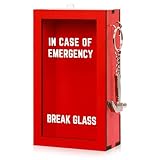
- Personalized Your Gifts: Are you looking for a unique or funny gift that will be a hit at the next party? Our In Case of Emergency DIY boxes are a perfect fun gift that will do the trick. Unleash your imagination to create a one-of-kind personalized gift by filling it with something meaningful to the gift recipient / that special someone!
- Fun to Personalized: The box is coated in red color and the front glass reads "IN CASE OF EMERGENCY" | "BREAK GLASS", humorously emphasizing the urgency of the situation. It comes with a novelty metal hammer chain. Pull the small acrylic tab to slide open the box and insert items.
- Dimension and Structure: The item dimension is 3.85" W *6.69" T *2.04" D. Inside workable dimensions are 3.46" W *6.30" T *1.57" D inches. Front protection is made from acrylic which looks like glass but is safer and makes the frame lightweight. The box Comes ready to hang on the wall or simply set it on a countertop, table, desk, shelf or mantle.
- For All Occasions: This Present Emergency Box & Hammer is an ideal novelty gift for a Birthday, Christmas, Father's Day, Mother's Day, Wedding or New Parent to name just a few. It allows you to put a person's favorite, must have, 'just in case' or can't live without items inside. Funny White Elephant Gifts.
- Funny Desk Decor: Our emergency box is more than just a gag gift. It will also be a fun & unique home and office decor. It's a conversation starter and a hilarious addition to spice up your desk, wall or shelf decor.
How do I build an emergency fund when my loan payment goes up?
1. Recalculate monthly cash flow using the new payment
Write down take-home income, essential expenses, debt minimums, bill due dates, and the higher loan payment. What remains is the starting point for deciding whether you can save monthly, make occasional contributions, or first need to adjust timing and spending.
If your income varies, use a realistic estimate rather than assuming your best month will repeat. Revisit the numbers each month as income and bills change. Consumer.gov’s budget guidance recommends listing income and expenses, subtracting expenses from income, and checking whether spending needs to change. Consumer.gov: Making a Budget
Include the amount and timing of bills, not just a single monthly total. A budget can look balanced on paper and still leave a shortfall if several payments are due before income arrives. Note when you receive pay, when the larger loan payment is due, and when other essential bills clear. Then compare the calendar with the account balance you expect to have on those dates.
For variable income, a conservative estimate helps avoid committing money that may not arrive. You can use recent income and expenses to make a realistic monthly plan, then revise it when actual earnings are known. If a particular month is stronger, decide what portion can go to savings after accounting for bills rather than assuming that month’s income level will continue.
2. Set a first goal, then expand it
Choose an initial amount by considering the surprises your household is most likely to face and how quickly you could recover from an income interruption. If available cash is tight, begin with an amount you can reach without falling behind on required bills; even a small reserve may provide some protection. Build toward a larger cushion as your budget allows.
CFPB guidance does not prescribe a fixed number of months of expenses or a one-size-fits-all contribution. Your required loan payment belongs among the essential bills you would need to cover when setting a goal. Reassess the target if your income, expenses, or loan payment changes.
It can help to distinguish a first milestone from a longer-term goal. The first milestone is an amount you can build with current cash flow; it is not a declaration that you are fully protected against every possible shock. A later goal can reflect the types of costs you have faced before and the essential expenses you would need to keep paying if income were interrupted. CFPB guidance does not establish one fixed dollar amount or a universal number of months, so use your own likely needs rather than treating a popular rule of thumb as an official requirement.
PC Slower Than It Used to Be?
A free scan shows the junk files, broken settings and background clutter dragging Windows down - then fixes them in one click.Free scan · Windows 10 & 11Crashes, No Sound, or Screen Glitches?
Random freezes, missing sound and display glitches usually trace back to one bad driver. Find and replace yours safely.Free scan · under a minutePrior surprise costs offer practical clues. If your household has faced a repair or medical bill, consider how you handled it and whether a reserve could have reduced the need to borrow. Also consider how steady income is and which essential bills—including the higher payment—would remain due during a disruption. These questions help make the target relevant without pretending that every household faces the same risks.
Rank #2

- 𝐆𝐚𝐠 𝐚𝐧𝐝 𝐅𝐮𝐧𝐧𝐲 𝐆𝐢𝐟𝐭𝐬 - Each Funny in Case of Emergency box features a playful design that mimics a break glass box. The cover includes a funny message such as "In Case of Emergency" adding a relaxed touch to your sense organ. This humorous element makes the box a conversation starter and a delightful addition to any room.
- 𝐕𝐞𝐫𝐬𝐚𝐭𝐢𝐥𝐞 𝐟𝐨𝐫 𝐃𝐈𝐘 𝐏𝐫𝐨𝐣𝐞𝐜𝐭𝐬 - These boxes are perfect for showcasing various DIY products and filling gifts. Whether you've crafted a beautiful piece of items, created a miniature artwork, or assembled a quirky handmade gadget, the emergency box provides the ideal showcase. Unleash your imagination, to create a one-of-kind personalized gift by filling it with something meaningful or practical things.
- 𝐅𝐨𝐫 𝐀𝐥𝐥 𝐎𝐜𝐜𝐚𝐬𝐢𝐨𝐧𝐬 - This Present Emergency Box & Hammer is an ideal novelty gift for a Birthday, Christmas, Father's Day, Mother's Day, Wedding or colleagues. It allows you to put a person's favorite, must-have, 'just in case' or can't live without items inside. You can turn it into a gift money box, everyone loves it.
- 𝐔𝐧𝐢𝐪𝐮𝐞 & 𝐈𝐧𝐭𝐞𝐫𝐞𝐬𝐭𝐢𝐧𝐠 𝐃𝐞𝐜𝐨𝐫 - In addition to its humorous appeal, the funny in case of emergency box is also a stylish and functional piece of desk decor. The sleek design and high-quality materials ensure that it complements any decor style. It's a great way to add a touch of whimsy and creativity to living space.
- 𝐃𝐢𝐦𝐞𝐧𝐬𝐢𝐨𝐧 𝐚𝐧𝐝 𝐒𝐭𝐫𝐮𝐜𝐭𝐮𝐫𝐞 - The item dimension is 3.86" W *6.69" T *1.81" D. Inside workable dimensions are 3.35" W *6.14" T *1.38" D inches. Front protection is made from acrylic which looks like glass but is safer and makes the frame lightweight. You can store money, lottery tickets, candies etc.
3. Pick a contribution method your account balance can support
Set an amount and cadence that do not trigger missed bills or overdrafts. With predictable income and a reliable checking balance, a recurring transfer can make saving consistent. If balances are tight or pay varies, consider a manual transfer on payday or setting aside part of occasional income, such as a tax refund or gift.
Before automating, check the dates when income arrives and bills clear. A transfer scheduled too early can leave too little for the higher payment or other essentials and lead to an overdraft fee. The CFPB also suggests tracking cash flow, adjusting bill due dates where possible, and saving part of one-time income. CFPB emergency-fund guide
Think of automation as a convenience, not a requirement. It can work well when income is regular and the checking balance can absorb the transfer after bills. If the amount or timing of income is uncertain, a manual transfer after payday gives you a chance to check the balance first. You can also choose a smaller recurring amount and add more when the month permits. The useful method is the one you can repeat without forcing you to move money back, miss a payment, or pay an overdraft fee.
Free tools Windows power users keep installed
One-click scans. No signup required.
One-time deposits can supplement regular saving, especially when a monthly contribution is modest. If you receive a tax refund or gift, you might direct part of it to the reserve while keeping enough for planned needs. Do not count an occasional windfall as money available every month; treat it as an additional contribution rather than a substitute for a budget you can sustain.
4. Find room through timing and spending adjustments
Compare the dates money arrives with the dates bills are due. Ask creditors whether a due date can be changed if the current schedule creates a cash shortfall before payday. Review discretionary spending for reductions you can sustain and direct the amount you actually free up toward savings. A budget adjustment is useful only if it does not cause another essential bill to go unpaid.
Tracking cash flow can show whether the problem is the total amount available or the timing of payments. If income arrives after several bills are due, ask the relevant creditors whether a due-date change is possible. A changed due date may make the calendar easier to manage, but it does not remove the obligation or guarantee that a creditor will agree. Keep the loan payment and other required bills in view as you consider any change.
Likewise, review spending for adjustments you can maintain rather than relying on cuts that are unrealistic for your household. If an adjustment frees a specific amount, decide whether that amount can go to savings without creating a new shortfall elsewhere. Recheck the result against actual account balances and bills. If the budget still has no room after essentials, an automatic savings transfer is not the answer; continue tracking and reassess as circumstances change.
Recommended Free Tools
5. Review the plan after a change or setback
Check the budget and savings pace when the payment changes again, income shifts, or an unexpected expense uses some of the reserve. If you use savings for a genuine emergency, plan to replenish them over time rather than treating the withdrawal as a failure. When a loan is eventually paid off, you can consider redirecting its former monthly payment to savings. The Financial Consumer Agency of Canada includes that approach in its emergency-fund guidance; it is Canadian agency guidance, not a statement of lender rules elsewhere. Financial Consumer Agency of Canada: Setting up an emergency fund
Rank #3

- Epic White Elephant Gifts: Stop giving boring presents and dominate your next gift exchange with the best white elephant gifts of 2026! Our classic in case of emergency break glass boxes design is the ultimate way to deliver a hilarious punchline. Complete with a realistic metal hammer and a bold red frame, this unique prank box is guaranteed to be the center of attention at any holiday party.
- Ultimate Gag Gifts: Looking for the perfect prank? As one of the most popular gag gift box ideas on the market, this customizable case always steals the show. Create your own personalized annoying gift box or an inside-joke survival kit—it’s a versatile funny gift that works perfectly for adults, teens, friends, and family all year round.
- Creative Money Gift Box: Wondering how to give cash creatively? This is one of the absolute best money gift ideas! Use it as a unique birthday money box, a graduation gift card holder funny, or for lottery tickets. Just open the back panel, secure your cash inside, and watch their priceless reaction when they receive this unforgettable present.
- Eye-Catching Funny Office Decor: Want to be the legendary office prankster? Beyond gifting, this display piece adds a hilarious touch to any desk or cubicle. It’s the ideal choice for funny gifts for coworkers, a highly memorable coworker leaving gifts, or a quick addition to your office pranks arsenal to help everyone relieve workplace stress.
- Premium Break In Case Of Emergency Box: Features a 100% premium acrylic front—giving the look of glass but completely shatterproof for safety. Note: Simple assembly is required! We include a step-by-step instruction manual so you can easily put it together in minutes. Overall size: 3.86"W × 6.69"H × 2.05"D. The safest, most durable funny office supplie display piece and a top-tier secret santa gifts winner!
A withdrawal for an unplanned cost is one reason to have a reserve. Once the immediate expense is handled, return to the budget and choose a replenishment pace that does not put required bills at risk. You can resume the previous contribution if it still fits, or adjust the amount and timing if the higher payment or other expenses have changed. Rebuilding over time is more realistic than assuming you must replace the full amount in one month.
Review the plan when the loan payment, income, or essential expenses change—not only at a fixed point in the year. A new payment amount can change both what you can save and what you would need to cover in an emergency. If the loan is paid off, the monthly amount that had gone toward it may become available for savings, but the timing and destination are your choice.
How much should I save for emergencies if I have a loan payment?
There is no official CFPB amount that applies to everyone. A useful goal reflects the costs you might realistically face, the stability of your income, and the essential bills you must continue paying—including the increased loan payment. If you have little room in the budget, a smaller first milestone is more practical than adopting a large target you cannot fund without borrowing or missing bills.
Consider the goal and the contribution separately. The goal describes what you would like the reserve to cover; the contribution is what your current budget can actually support. If those do not match, that is a reason to build gradually and review the plan, not to use a savings target that leaves you unable to pay necessities. Even a small amount may offer some security, while future contributions can increase the reserve as capacity allows.
A CFPB report published in March 2022 found that among respondents whose debt was at least 60 days past due, 40% reported no emergency savings, 19% reported some savings below one month of income, and 5% reported savings of at least one month of income. In the same groups, 16%, 7%, and 3%, respectively, reported a payday or auto-title loan in the prior 12 months. The report describes associations, not proof that savings alone caused the differences; its findings combine survey responses from February–April 2021 with credit records through March 2021. They should not be treated as current population estimates or a recommended target. CFPB: Emergency Savings and Financial Security
A separate CFPB research review published in July 2020 described a “Borrow and Save” pilot in which participants saved an average of $550 while taking loans averaging about $1,380. The report says the program was not rigorously evaluated. Those figures describe that pilot, not a recommended emergency-fund goal or proof that adding required savings to a loan is suitable when payments have already become harder to manage. The savings requirement could increase the monthly payment or extend repayment. CFPB: Evidence-Based Strategies to Build Emergency Savings
The two CFPB reports answer different questions from “How much should I save?” The 2022 figures describe reported savings and borrowing among groups with seriously past-due debt; they do not show that any one savings amount caused a better outcome. The 2020 pilot describes one program, and the CFPB review explicitly says it was not rigorously evaluated. Neither provides a household-specific target or establishes that taking on a loan with a savings component is appropriate when payments are rising.
Where should I keep my emergency fund?
Choose a place that balances quick access, safety, and low cost. A dedicated bank or credit union savings account is one option. Compare account access, fees, withdrawal restrictions, and interest before deciding; the sources do not endorse a particular provider or rate. The CFPB also mentions prepaid cards and cash as possible ways to hold emergency money, but each has trade-offs.
Rank #4

- Lockable Cash Box -- This money storage box is equipped with a key which can protect the item in the box from unauthorized access, keep your money safe and secure.Size: 6.9"Lx3.3"W x2.9"H
- High Quality Material -- Made of aluminium alloy, sturdy and perfect for cash storage, come with black soft interior, no harm to banknotes or currency, keeping your money clean, tidy and organized
- Unique Design -- Black wall with metal corners and trim, the money box creates an elegant and high-end appearance, which also can match various decorative styles, making it a unique scenery on the desktop or display cabinet
- Multiple Uses -- This cash box with lock is perfect for saving and collecting paper money, banknotes, currency, bills. Also can hold tickets, invoices, cards, coins, jewelry, keys and other collectibles makes it a practical multi-functional storage tool
- Ideal for Cash Storage --The lockable cash holder is able to accommodate cash or coins without taking up too much space. It can be placed in drawers, or placed on the desktop for easy sort. Ideal for personal households or commercial places
| Option | What to consider |
|---|---|
| Bank or credit union savings account | Compare access, fees, withdrawal restrictions, and interest. A separate account may help distinguish emergency savings from spending money. |
| Prepaid card | Check the fees and how quickly you can access funds when an emergency occurs. |
| Cash | It is immediately on hand, but can be lost, stolen, or destroyed. |
These are comparison criteria, not a recommendation for a specific account or card. CFPB and Canadian agency guidance both emphasize access and suitability when choosing where to keep the reserve. CFPB emergency-fund guide · Financial Consumer Agency of Canada: Setting up an emergency fund
Before choosing, ask how quickly you could get the money in the circumstances you expect to face. Compare costs and restrictions alongside access: a fee or a withdrawal limitation may make an option less useful for a reserve intended for unexpected bills. Interest is also a comparison point, but no particular rate or provider is recommended by the sources. A separate account can make the purpose of the money clearer; it should still be accessible when a genuine emergency occurs.
Cash avoids the need to access an account, but it brings a direct risk of loss, theft, or destruction. A prepaid card may provide another way to hold funds, but check its fees and access terms. For any option, consider whether you can use the money when needed and whether the costs or restrictions undermine that purpose. The best choice depends on the trade-offs that matter to you, not on a product endorsement.
Do these 3 things before closing this tab:
1Repair Windows errors before they cause bigger problems2Fix the driver behind crashes, sound loss and screen glitches3Clear out junk files and repair common Windows errorsShould I save money or pay extra on my loan?
First account for required payments and essential expenses. For money left after those obligations, there is no universally correct split between building emergency savings and paying extra on debt. Keeping some accessible savings can help you handle an unexpected bill without turning to additional credit; paying extra may reduce debt, but leaves less cash on hand.
For extra debt payments, the CFPB describes two approaches: direct them to the highest-interest balance to focus on costly interest, or to the smallest balance to see a balance disappear sooner. The smallest-balance approach can cost more overall than prioritizing the highest rate. Keep required payments current as applicable, then weigh the trade-off based on your circumstances rather than treating either method as a universal rule. CFPB: How to reduce your debt
These strategies address where to direct extra debt payments; they do not determine the right amount to save before making extra payments. Paying minimums on all debts and applying extra money to one selected balance is the framework described by the CFPB. The highest-interest-first approach focuses on the balance with the costliest interest. The smallest-balance approach may produce the visible progress of clearing a balance sooner, but it can cost more overall. Neither source sets a universal emergency-savings amount or says every borrower should prioritize the same choice.
When comparing the options, consider the trade-off in practical terms: extra loan payments reduce cash available for an unexpected expense, while keeping money in savings means less is being directed to extra repayment. Required payments and essential bills still need to be accounted for. If your income, payment amount, or reserve changes, revisit the decision rather than treating an earlier choice as permanent.
What to check with your lender
The reason a payment increased and the options available depend on the loan and its terms. Check your loan documents and contact the servicer to ask what explains the change, when it takes effect, and whether any payment assistance or other options apply to your specific loan. No general savings plan can establish your eligibility for a hardship option or refinancing, and the sources here do not set payment-change rules for a particular loan type or jurisdiction.
Best Value
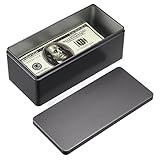
- Package Infos: Package includes 1 pcs metal cash box (Other accessories are not included), measuring 7.3"L x 3.3"W x 2.8"H. Enough space allows you to store money, convenient for budgeting, keeping the cash neatly organized
- Fine Workmanship: Made of tinplate material, which is sturdy and good quality. The cash storage holder is full of good texture of metal, comfortable to touch, with good sealing design, exquisite and practical, great for home or office
- Rectangular Black Money Organizer: Colored in the classic yet modern black, this money organizer for cash saving adds a touch of style and sophistication to your space. Its elegance also make a visually pleasing addition to your office or home decoration
- Keep Your Collection Well: It is a good choice to preserve your previous collections well with our cash box. Equipped with a metal lid, this cash box provides excellent protection for your cash and other valuables while prevent contact with dust
- Wide Range of Use: This cash organizer box has a variety of uses, in addition to being used as a cash storage box, it is also suitable for storing jewelry, stationery, stamp, button, tickets, coins, credit cards, checks, receipts, tea leaf and valuables
Keep lender questions separate from the emergency-fund plan. The budget helps you understand what you can afford after the new payment; the loan documents and servicer are the relevant places to check the terms and any options that apply to your particular account. Do not assume that a particular hardship program, refinance, or payment arrangement is available based on general guidance. The cited CFPB and agency materials do not identify a loan type, payment-change trigger, jurisdiction, or eligibility criteria.
As you get clarification, update the budget with the payment amount and timing that apply to you. If the servicer provides information about an option, consider it in light of the loan terms and your whole cash flow. Meanwhile, avoid setting a savings transfer that would cause an essential bill or required loan payment to be missed.
Frequently Asked Questions
How do I build an emergency fund when my loan payment goes up?
Recalculate your budget with the new required payment, take-home income, essential bills, and due dates. Set an initial goal based on likely unexpected costs and income stability, then contribute an amount and schedule that will not cause missed bills or overdrafts. Use recurring transfers only if your account balance can support them; otherwise consider a manual payday contribution or part of occasional income.
The Tool Desk
Outbyte PC Repair FREEClear out junk files and repair common Windows errorsFree Scan →Outbyte Driver Updater FREEScan for outdated or missing drivers - takes under a minuteDriver Scan →How much should I save for emergencies if I have a loan payment?
There is no one-size-fits-all CFPB target. Consider your household’s likely unexpected expenses, income consistency, and the essential bills—including the higher payment—that must still be covered. Start with a reachable milestone and increase it as cash flow allows.
Should I save money or pay extra on my loan?
First account for required payments and essential expenses. There is no universal savings-versus-extra-payment formula. For extra debt payments, CFPB describes paying the highest-interest balance first or the smallest balance first; the latter may cost more overall. Weigh the benefit of accessible emergency savings against the benefit of reducing debt based on your circumstances.
Where should I keep my emergency fund?
Compare a bank or credit union savings account, prepaid card, or cash for access, fees, withdrawal restrictions, safety, and interest where applicable. Cash can be lost, stolen, or destroyed. The guidance does not endorse a particular provider or rate.
Should I automate emergency-fund contributions if money is tight?
Only if the timing and amount leave enough in checking for the higher loan payment and other bills. A transfer scheduled before income arrives or bills clear can cause an overdraft fee. If balances or pay vary, consider a manual payday transfer and check the balance first.
What’s actually slowing this PC down?
Pick the symptom - the matching free tool is one click away.
What should I do after I use my emergency savings?
Rebuild the reserve over time at a pace that fits your current budget. Revisit the contribution amount if the loan payment, income, or other expenses have changed; using savings for an unplanned expense is a reason the reserve exists.
The Bottom Line
Build the plan around the new required payment: track income and bill timing, choose a realistic first savings goal, and contribute only what your cash flow can support. Keep the reserve accessible, review it when circumstances change, and contact your servicer for loan-specific terms or options. There is no single savings target or debt-versus-savings formula that applies to everyone.
Quick Recap
Product prices and availability are accurate as of the date/time indicated and are subject to change. Any price and availability information displayed on Amazon at the time of purchase will apply.




