Quick wins for a faster PC:
Clear out junk files and repair common Windows errorsFree Scan →Scan for outdated or missing drivers - takes under a minuteDriver Scan →Repair Windows errors before they cause bigger problemsFix Now →A diversified portfolio starts with your goals and a target mix of investments—not a list of whatever has risen most recently. Recent gains can change your portfolio’s weights, but they do not, by themselves, show that an investment belongs at a larger share of your plan. Diversification can reduce the risk of being too concentrated, but it cannot prevent losses.
Start with your goal, timeline, and capacity for risk
Before choosing investments, define what the money is for and when you expect to need it. A long-term retirement goal and a near-term home purchase may call for different approaches because the time available to ride out market declines differs. Also consider how much loss you could tolerate emotionally and financially, alongside your broader financial situation.


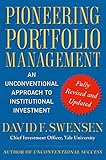

Asset allocation is the division of a portfolio among categories such as stocks, bonds, and cash, and sometimes other assets. There is no single allocation that fits every investor. Your target should reflect your goal, time horizon, risk tolerance, and circumstances; it may need to change if those inputs change. The SEC explains these considerations in its asset allocation and diversification guide.
Set a target allocation before selecting investments
Choose a target mix that you can maintain through both rising and falling markets. The target is the plan; current market excitement is not a substitute for one. Asset categories have not historically moved in lockstep, but that observation is not a promise that they will behave differently in the future or that a mix will avoid losses.
Do these 3 things before closing this tab:
1Scan for outdated or missing drivers - takes under a minute2Clear out junk files and repair common Windows errors3Fix the driver behind crashes, sound loss and screen glitches#1 Best Overall
For example, the SEC describes a hypothetical portfolio in which stocks grow from 60% to 80% of the portfolio after market gains. Those figures illustrate how an allocation can drift; they are not a recommended stock allocation. A rising category can become a larger part of the portfolio without any deliberate decision to increase its target weight.
Diversify across categories and within each one
Owning multiple asset categories can help avoid relying on a single type of investment. Diversification also matters inside each category: a stock allocation concentrated in one company, industry, or region is still exposed to that concentration, even if the portfolio also holds bonds or cash.
Rank #2
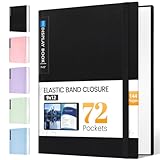
- 72-Pocket Large Capacity Portfolio: The art binder includes 72 bound (non-refillable) top-loading clear sheet protectors, displaying up to144 pages. Fits 9”x12" letter size or smaller. Measures 12 7/8" (L) x 9 11/16" (W) x 1 1/2" (G).
- Elastic Band for Secure Protection:For total peace of mind, a sturdy elastic band keeps your portfolio securely fastened. Your important papers stay put, organized, and protected from damage.
- High Transparency & Tailor-Made Spine Title: Our presentation book with crystal clear PP sheet protectors offers complete transparency for checking through and organizing. You can label and identify your watercolors, sketches, scrapbook, art pieces, sheet music, certificates, and other projects by customizing the reversible spine insert.
- Archival Grade & Heavy Duty Cover: Made from robust yet light weight, polypropylene which is archival quality, acid-free and non-glare, and water-proof. Thickened and sturdy cover won’t easy to crack and keeps your clear sleeves from being damaged.
- Multi-Function: Not only suitable for long-term storage but also for displaying your paintings, photos, artwork, drawing, stencils. Great gift for students, teachers, office workers, secretaries, musicians, painters, etc.
Mutual funds and exchange-traded funds (ETFs) can make it easier to hold many investments, but the fund label alone does not establish broad diversification. A fund focused on a narrow sector may need to be combined with other exposures to form a diversified portfolio. Likewise, several funds can own many of the same large companies, leaving you more concentrated than the fund count suggests. Review each fund’s top holdings and its sector, geographic, and asset-class exposures. The SEC’s guide discusses fund focus and overlapping holdings.
Check whether a recent winner belongs in the plan
Past performance cannot predict future results. Before acting on a claim that an investment has done especially well, look at the periods shown and whether the figures reflect actual results or hypothetical back-testing. A cherry-picked record may omit unfavorable periods or highlight only profitable investments. The SEC’s Investor Bulletin: Performance Claims (September 15, 2022) explains these limits.
Crashes, No Sound, or Screen Glitches?
Random freezes, missing sound and display glitches usually trace back to one bad driver. Find and replace yours safely.Free scan · under a minutePC Slower Than It Used to Be?
A free scan shows the junk files, broken settings and background clutter dragging Windows down - then fixes them in one click.Free scan · Windows 10 & 11A hot asset can be part of a suitable portfolio if it fits the target and your circumstances, but its recent rise alone is not a reason to raise its target weight. The SEC’s 2014 behavioral-pattern bulletin identifies focus on past performance, momentum investing, active trading, and inadequate diversification among behaviors that can undermine investment performance. That bulletin summarizes a 2010 Library of Congress report; it is not current market data.
Compare the investments you could use
There is no universally best fund or allocation. Compare potential holdings by what they own and how they fit together, not simply by recent returns or the number of funds in the account.
Rank #4
- Breadth: Does the investment cover a broad market or a narrow segment?
- Overlap: Do its largest positions duplicate holdings elsewhere in your portfolio?
- Exposure: What industries, regions, and asset categories drive its risks?
- Costs: What fees and expenses apply, and how do they compare with alternatives serving a similar role?
- Maintenance: Can you keep the allocation near your target without unnecessary complexity?
- Trading and tax effects: Would buying, selling, or rebalancing create transaction costs or tax consequences for your situation?
Fees and expenses reduce the amount left in a portfolio to earn returns. The SEC’s How Fees and Expenses Affect Your Investment Portfolio, dated July 23, 2025, explains why costs belong in the comparison alongside performance.
Independent reader supportYour contribution helps us test, update, and keep practical guides available for everyone.Choose a rebalancing method and schedule
Rebalancing brings a portfolio back toward its chosen target after market movements push weights out of line. You can use a calendar schedule or set allocation thresholds that trigger a review. The SEC describes six- or twelve-month intervals as examples some experts use, not a universal rule; rebalancing relatively infrequently may help avoid needless trading. Choose a method you can follow consistently rather than reacting to every market move.
Best Value
Common ways to rebalance include:
- Sell some of an overweight holding and use the proceeds to buy underweight holdings.
- Direct new money toward underweight holdings instead of selling.
- Redirect regular contributions toward underweight holdings until the portfolio is closer to target.
Before selling, consider transaction costs and the tax consequences that may apply to your account and circumstances. Tax effects depend on your situation and current law; the general reminder is not a substitute for current tax guidance. The SEC and FINRA describe these rebalancing approaches in their year-end investment considerations bulletin (December 6, 2012).
Use a simple portfolio check-in
- Compare your current allocation with your written target and note any meaningful drift.
- Review fund top holdings and exposures to identify narrow concentration or overlap.
- Check fees and expenses for the investments you hold and the alternatives you are considering.
- If your plan’s schedule or thresholds call for rebalancing, choose an approach and account for trading costs and possible tax effects before making transactions.
- Revisit the target if your goal, time horizon, risk tolerance, or financial situation has materially changed—not just because a market category is currently popular.
This is general investor education, not individualized investment, tax, or legal advice.
Quick Recap
Product prices and availability are accurate as of the date/time indicated and are subject to change. Any price and availability information displayed on Amazon at the time of purchase will apply.




