Free tools Windows power users keep installed
One-click scans. No signup required.
Assess a construction stock by looking past the sector label: identify what the company sells, who pays for it, how projects or products earn a profit, and whether reported earnings turn into cash. Then test how demand, costs, execution, debt, valuation and your portfolio could fare under less favorable conditions. Construction companies can have very different risks, so compare like with like and base company-specific conclusions on its latest filings.
Start with the company’s business and customers
“Construction stock” can describe a general contractor, a specialty contractor, an infrastructure builder, a building-materials manufacturer or a distributor. Those businesses do not face the same risks. A contractor may depend on winning and delivering projects at an adequate margin; a manufacturer may be more exposed to material costs, inventory and factory utilization.

Read the issuer’s business description and segment disclosures to identify its products or services, geographic markets, customer types and end markets. Work out how much demand comes from housing, commercial construction, industrial work, repair and remodeling, or public infrastructure. Then ask who ultimately funds the work: homeowners and mortgage lenders, corporate customers, or government budgets. A company’s actual mix matters more than its sector label.
For a U.S. issuer, begin with its latest Form 10-K and subsequent Form 10-Q filings. For a company listed elsewhere, use the relevant official filings and accounting disclosures; filing formats and accounting conventions may differ.
#1 Best Overall
Read the filings for risks, changes and financial evidence
- Form 10-K, Item 1 (Business): establish what the company does, where it operates and how it describes its segments and markets.
- Item 1A (Risk Factors): identify disclosed exposures such as economic cycles, financing conditions, input costs, labor, customers, projects or suppliers. Treat these as risks the issuer identifies, not as a prediction that each will occur.
- Item 7 (Management’s Discussion and Analysis): compare the company’s explanation of results, liquidity, trends, uncertainties and significant estimates with the financial statements.
- Item 7A (Quantitative and Qualitative Disclosures About Market Risk): review applicable market exposures, such as sensitivity to interest rates or other financial risks.
- Item 8 (Financial Statements and Notes): check the audited statements and accounting details. Also review legal proceedings and subsequent events when relevant.
- Later Form 10-Qs: check what has changed since the annual report, and compare recent results with the same period a year earlier as well as with the preceding quarter.
Investor.gov explains that 10-Ks and 10-Qs include business, risk and operating or financial information. A filing is a primary disclosure, not an assurance: the SEC does not vouch for its accuracy. Check whether later filings have changed the company’s outlook or described new developments.
Test how demand could weaken
Construction activity can move with economic and financing conditions, but different end markets may weaken or strengthen at different times. Consider how a slowdown, higher financing costs, tighter credit or weaker customer confidence could affect the particular company’s orders, project starts, cancellations, volumes and pricing. A business exposed to mortgage-sensitive housing or commercial development may respond differently from one with more public-infrastructure work. Public projects are not risk-free: budgets, contract awards and schedules can change.
Use management’s market outlook as one scenario rather than a certainty. Read the issuer’s own risk disclosures for the forces it considers material, which may include interest rates, credit availability, inflation, employment and consumer confidence. Ask what would happen to sales and margins if demand fell, or if expected projects were delayed, reduced or cancelled.
Rank #2

- Keep track of everything from attendance to test scores
- Spiral bound
- Measures 8-1/2" x 11"
For contractors, examine the economics of winning and completing work
A contractor can have plenty of work and still earn poor returns if it bids too aggressively or misjudges labor, materials, timing or project scope. Review how the issuer describes contract types and who bears cost risk. A contract that allows recovery of some input-cost increases differs from one that leaves more inflation risk with the contractor.
PC Slower Than It Used to Be?
A free scan shows the junk files, broken settings and background clutter dragging Windows down - then fixes them in one click.Free scan · Windows 10 & 11Crashes, No Sound, or Screen Glitches?
Random freezes, missing sound and display glitches usually trace back to one bad driver. Find and replace yours safely.Free scan · under a minute- Bidding and margins: look for changes in project margins and explanations of estimates, cost overruns or losses. Consider whether the company’s pricing appears disciplined across changing cost conditions.
- Project execution: examine disclosures about schedules, claims, change orders and project concentration. Delays or disputes can affect both profit and cash collection.
- Cost estimates: read how management estimates costs to complete work and whether revisions have materially affected results. Estimates that prove inaccurate can reduce expected profit or create losses.
- Subcontractors and supplies: assess disclosed reliance on subcontractors and material availability. Shortages, higher costs or subcontractor problems can disrupt delivery.
Do not treat backlog as guaranteed revenue. Read the company’s definition and find out whether reported work is funded, cancellable or subject to other conditions. Compare backlog changes with revenue conversion, project margins and cash generation on completed work. A large backlog by itself does not establish that projects will be completed profitably or produce cash.
For manufacturers and distributors, follow costs, stock and volume
Do not apply a contractor’s backlog analysis automatically to a company that makes or distributes construction products. For these businesses, use segment disclosures and risk factors to establish which exposures actually matter. Depending on the issuer, useful questions include:
- How do raw-material and finished-goods costs affect margins, and how quickly can the company adjust prices?
- Are inventories rising or falling relative to sales, and does the company discuss obsolescence or inventory-related charges?
- How sensitive are sales and profits to construction volumes and capacity utilization?
- Does the company depend heavily on a small number of customers, suppliers, products or markets?
Check whether profits are supported by cash and liquidity
Review several years of annual results alongside recent quarterly figures. Follow revenue, gross and operating margins, earnings, operating cash flow, capital spending, debt maturities and available liquidity. Look for patterns rather than relying on one unusually strong or weak period.
Reported profit does not answer whether the company collected cash. Where applicable, read the notes on contract assets, receivables, retainage, claims and estimates, then compare those balances and operating cash flow with reported earnings. Rising receivables or contract assets, weak cash conversion, volatile margins or increasing borrowing needs can signal pressure—particularly if a downturn would make debt harder to service.
Consider what debt payments come due and what resources the company has to meet them. FINRA’s investor guidance recommends understanding a company’s debt and finances. No single balance-sheet figure tells the whole story; relate obligations to cash generation, liquidity and the company’s operating risks.
Rank #4
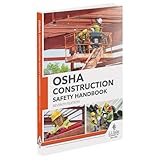
- 2024 OSHA Construction Safety Book is the seventh edition with the new OSHA HazCom final rule on 5/20/24. While the rule takes effect 7/19/24, the compliance dates don’t begin until 1/19/26 per 29 CFR 1910.1200(j).
- Construction Site Book offers quick access to essential OSHA regulations, jobsite hazards, and practical safety tips. It also helps employees identify hazards and prevent injuries and illnesses.
- Features easy-to-read format, full-color images, chapter quizzes with answer key, and comes in a compact size making it a convenient reference for employees.
- Critical topics include Confined Space Entry; Cranes & Derricks; Electrical Safety; Emergency Response; Ergonomics & Back Safety; Excavations; Fall Protection; First Aid & Bloodborne Pathogens; HazCom; Health & Wellness; Jobsite Exposures; Lockout/Tagout; Ladders & Stairways; Materials Handling/Storage; Motor Vehicles; PPE; Scaffolds; Site Safety & Security; Slips, Trips & Falls; Tool Safety; Welding, Cutting & Brazing; and Work Zone Safety.
- Specifications: 5 1/4” x 7 1/4", English, Soft bound. 7th Edition. Copyright 2024.
Compare valuation with appropriate peers
Use valuation ratios as context, not as a forecast. P/E can help assess a profitable company; P/S may offer another lens when earnings are weak or volatile; debt-to-equity is one way to examine leverage. Also compare margins and cash flow, and use peers with similar business models and end-market exposure. FINRA notes that ratios vary by industry, so a meaningful comparison should include both appropriate companies and relevant periods.
A low multiple is not proof that a stock is cheap: it may reflect real business or financial risks. Ratios do not predict construction demand or guarantee future results. Compare valuation only after understanding the company’s operations, earnings quality, balance sheet and risks.
Compare two construction stocks on matching exposures
When weighing issuers, use the same questions for each and mark a factor “not applicable” if the business model does not make it relevant. Do not turn the checklist into a universal score: the significance of each factor depends on the company’s disclosures.
What’s actually slowing this PC down?
Pick the symptom - the matching free tool is one click away.
| Comparison area | What to compare |
|---|---|
| Demand | End-market mix, cyclicality, geography and customer concentration |
| Funding | Reliance on private customers and financing versus public budgets, awards and timing |
| Business model | Contractor versus manufacturer or distributor; for contractors, disclosed fixed-price versus cost-reimbursable exposure |
| Work visibility | Backlog definitions, funding or cancellation conditions, and evidence of conversion to revenue, margins and cash |
| Financial resilience | Margin stability, cash conversion, debt, liquidity and maturities |
| Price and portfolio role | Valuation against suitable peers and the effect of the position on your overall portfolio |
Decide whether the stock’s risks fit your portfolio
Even a financially resilient business can be a poor fit if its share price is excessive or the position is too large for your circumstances. Consider your time horizon, ability to absorb losses, other holdings and combined exposure to economic cycles. Diversification across stocks and asset classes can offset some risks, but it cannot ensure a gain or prevent losses. Common shareholders rank behind creditors and preferred shareholders in liquidation, so an individual stock retains equity risk even when the business appears operationally resilient.
This process is a way to assess risks, not an individualized recommendation or a forecast. Do not conclude that a construction stock is safe, undervalued or likely to rise simply because of its sector or a single favorable metric.
Quick Recap
Product prices and availability are accurate as of the date/time indicated and are subject to change. Any price and availability information displayed on Amazon at the time of purchase will apply.




