The Tool Desk
Outbyte Driver Updater FREEScan for outdated or missing drivers - takes under a minuteDriver Scan →Outbyte PC Repair FREEClear out junk files and repair common Windows errorsFree Scan →In India, delayed salary arrears can increase the tax liability calculated for the year they are received, even when the pay relates to earlier years. If you meet the conditions for relief under Section 89 of the Income-tax Act, 1961, you must submit Form 10E before filing your income-tax return to claim it. The exact tax effect depends on the years and amounts involved, your income and applicable tax rules; arrears do not automatically qualify for relief, and relief does not necessarily eliminate tax.
This guide focuses on India and distinguishes assessment-year guidance under the 1961 Act from the newer Act’s tax-year process. Tax timing differs by country: for example, UK guidance generally allocates arrears to the year the employee first became entitled to the pay.
As an Amazon Associate I earn from qualifying purchases.
Why a delayed salary payment can change your tax bill
A lump sum can combine salary that relates to more than one earlier period. In India, the Income Tax Department’s salary guide says salary is generally taxable on a due-or-receipt basis, whichever occurs first. That means salary may already have been taxable when it fell due; if it was not taxed then and is received later, the arrears can increase the income and tax liability considered in the year of receipt.
The cash arriving in one year and the period the salary relates to are therefore different facts. The payment date matters, but so does the year-by-year allocation. Keep both clear when checking your tax position or preparing a relief claim.
#1 Best Overall

- LARGE EIGHT-DIGIT DISPLAY – Clear and easy-to-read 8-digit display, perfect for everyday calculations and ensuring accurate results in home or office settings.
- TAX & CURRENCY EXCHANGE FUNCTIONS – Effortlessly handle tax calculations and convert home currency to other currencies for easy financial management.
- GENERAL PURPOSE CALCULATOR – Ideal for a wide range of applications, from basic math to business and personal use, with memory keys for quick storage and recall.
- USER-FRIENDLY KEYBOARD – Easy-to-use layout, featuring square root, percent calculation, and simple functions that make it perfect for everyday tasks.
- COMPACT & PORTABLE DESIGN – Space-saving design that fits easily on any desk or in a briefcase, making it ideal for both home and office use.
Section 89 of the Income-tax Act, 1961 addresses certain cases where salary is paid in arrears or in advance and the resulting total income is assessed at a higher rate. The provision allows relief as prescribed, on application, where its conditions are met. The department describes the purpose as addressing the increased burden that can arise when earlier-year salary is received together. It is not an automatic deduction from the arrears, and the available information does not establish that every delayed payment is eligible.
In practical terms, the question is not simply whether the lump sum is large. You need to know when the salary was due, when it was paid, which earlier years it covers, and how your income and tax position compare across the relevant years. Section 89 relief is intended to address an increased burden associated with receiving salary in a different period from the one it relates to; it does not change the underlying facts or guarantee that your total tax will be lower than it otherwise would have been.
First establish which country and tax-year rules apply
Do not assume that the tax year is always the year the money reaches your account. The applicable rule depends on the country. India’s general salary rule and the UK’s treatment of backdated pay illustrate the difference:
Free tools Windows power users keep installed
One-click scans. No signup required.
| Jurisdiction | How timing is described | Practical implication |
|---|---|---|
| India | The Income Tax Department’s salary guide describes salary as taxable when due or received, whichever is earlier. Eligible taxpayers may be able to seek Section 89 relief for qualifying arrears, subject to the applicable Act, year and filing requirements. | Identify the receipt year and the earlier periods to which the payment relates. Check whether relief is available and which form applies to your filing year. |
| United Kingdom | HM Revenue & Customs says arrears are taxable when the employee was first entitled to receive the earnings, even if payment is made later. Its example treats March 2024 salary paid in April 2024 after an administrative delay as taxable in 2023/24. | Do not apply India’s receipt-year analysis or Section 89 process to a UK tax return. HMRC’s employer PAYE guidance also notes that PAYE may be due when a lump sum is paid and reconciled later. |
The UK example is a contrast, not an alternative tax treatment an Indian taxpayer can elect. HMRC’s Employment Income Manual entry EIM42265 and PAYE manual entry PAYE70023 were updated on 2 October 2026. India’s treatment and forms must likewise be checked against the Act and year that govern the particular return.
HMRC’s example helps show why the entitlement date and the payment date should not be treated as interchangeable. An employee whose March 2024 salary was delayed by an administrative error until April did not, under that guidance, move the earnings into the next UK tax year merely because the bank deposit arrived later. Its employer PAYE guidance separately notes that PAYE on a lump-sum payment may arise when it is paid and be reconciled later. That is a UK distinction, not a procedure to copy into an Indian return.
For India, match the form and law to the return year
Form names can be confusing during the transition between India’s Income-tax Act, 1961 and the newer Act. The Income Tax Department’s forms guidance, accessed on 9 October 2026, distinguishes the two processes. It says an assessment-year 2026–27 return due in July 2026 remains under the 1961 Act, with Form 10E for a Section 89 claim. For Tax Year 2026–27 under the new Act, the guidance identifies Form 39 for relief under that Act.
| Return context in the department’s guidance | Act identified | Relief form identified |
|---|---|---|
| Assessment Year 2026–27 return due in July 2026 | Income-tax Act, 1961 | Form 10E for Section 89 relief |
| Tax Year 2026–27 under the new Act | New Act | Form 39 for relief under the new Act |
These are two distinct year labels and legal frameworks, not interchangeable names for the same filing. Confirm the relevant year and current official filing guidance before submitting a form. The July 2026 due date above is the one stated in the department’s guidance; it is not a statement that this date remains in the future.
Quick wins for a faster PC:
Scan for outdated or missing drivers - takes under a minuteDriver Scan →Clear out junk files and repair common Windows errorsFree Scan →Fix the driver behind crashes, sound loss and screen glitchesFind Drivers →Rank #2

- Profit margin calculation
- Quick and easy tax calculation
- Square root, sign change, and memory keys
- Attractive metallic design
- 12 digits
When checking which process applies, do not rely on the date the employer transferred the money by itself. Establish the relevant return context and consult the official forms guidance for that year. A familiar form name may belong to a different Act or year framework, and filing the wrong form is not a substitute for completing the applicable process.
The department’s stated distinction is specific: its guidance identifies Form 10E for Section 89 relief in an AY 2026–27 return under the 1961 Act, and Form 39 for relief under the new Act for Tax Year 2026–27. These labels should be read as separate filing contexts. If your payment or return falls under a different year, verify the form rather than assuming that either example covers it.
Build a reliable arrears record before estimating tax
Do not calculate relief from the lump-sum deposit alone. First find out what the employer paid, when it was due, and which earlier period each part covers. The Form 10E workflow asks for arrears of salary or family pension relating to different previous years, so an accurate allocation is central to the process.
- Request a written arrears statement from payroll. Ask the employer to show the total paid and divide it by the period or year to which each amount relates. If the payment combines different types of salary adjustment, ask for those components to be identified rather than treating the whole deposit as one undifferentiated figure.
- Check the statement against your own records. Compare the allocation and amounts with payslips, employer tax statements such as Form 16 where applicable, and records of tax withheld. Note any difference between the amount declared as payable, the amount actually paid and the withholding recorded.
- Keep the due date and payment date distinct. Write down when each amount became due and when it was received. This helps you understand the applicable timing rule and gives you a clear record if the payment spans more than one year.
- Resolve missing or inconsistent details with the employer. If the breakdown does not identify the relevant years or does not reconcile with your records, ask payroll to correct or explain it before relying on the figures for a claim. Do not invent an allocation simply to complete a form.
- Preserve the supporting documents. Keep the employer’s explanation, relevant payslips and tax statements, withholding records, your computation and the acknowledgement for any form you file. These records let you explain how the lump sum was divided and how the return was prepared.
It can help to make one row for each period the employer identifies, rather than recording a single total. For each row, note the relevant year, the gross arrears attributed to it, the date it was due, the date it was paid, and any related withholding information you can verify. This makes it easier to see whether an amount has been assigned to the wrong year, omitted, or counted twice in your working records.
Recommended Free Tools
Reconcile the gross amount with the net deposit rather than assuming they should match. The payment may have tax withheld or another adjustment reflected in the employer’s statement. Use the payroll explanation and tax records to identify the components; do not treat the difference between the gross and deposited amount as an arrears allocation without support.
If the employer’s breakdown is unclear, the useful next step is to ask a specific question: which period does each component represent, and how does the stated gross figure reconcile with the deposit and withholding records? A clear written explanation is more reliable than reconstructing a multi-year allocation from bank entries alone.
How to claim eligible Section 89 relief
For an eligible claim governed by the 1961 Act, Form 10E is a required filing step, not an optional attachment. The Income Tax Department’s Form 10E FAQ and user manual say that the form must be furnished and that it should be filed before the income-tax return. If you claim Section 89 relief in the return but omit Form 10E, the department says the relief will not be allowed when the return is processed.
Rank #3

- A basic calculator with an ultra-thin design. Thin edge design, insert the calculator slot in the portfolio and it will not bulge
- If you purchase a portfolio without a calculator, If you still prefer to use a keypad calculator, we have an option for you. The buttons are made larger than the average small calculator, Can be used for all kinds of 3-ring or 6-ring binders, you can refer to the calculator on the picture for the distance of the small holes.
- Whether you buy a large portfolio - padfolio, a 3-ring binder, an A5 binder, an A6 binder; you will find the right calculator for you here, a slim calculator in various sizes, and a Calculator with 6 holes for the ring binder.
- It perfectly matches the flipcharts and portfolios we sell. You can measure your calculator slot and choose the right size or consult us.
- Note: Before purchasing, please measure your calculator slot and compare the product description to determine if it is suitable before purchasing. If you have any quality problems, please contact us.
- Confirm that the 1961 Act and Form 10E apply. Check the assessment year and official forms guidance for your return rather than choosing by the year the money was received alone.
- Collect the year-by-year figures. Use the employer’s arrears statement and reconcile it with salary and tax records. The form requires particulars relating to the relevant previous years.
- Complete the relevant parts of Form 10E online. The official manual describes seven parts covering different circumstances, including arrears of salary or family pension, advance salary, gratuity, compensation on termination and commuted pension. Not every part applies to every taxpayer; complete the portions relevant to your situation.
- Submit Form 10E before filing the return. Keep the submission acknowledgement with your records. Filing the form after claiming relief in the return does not satisfy the department’s stated requirement to furnish it before the return.
- Prepare the return using the applicable rules. Ensure that the salary, arrears and relief information in the return is consistent with your records and form filing. Do not assume that filing Form 10E guarantees a particular amount of relief.
The seven-part structure is relevant because Form 10E covers more than one kind of income event. The manual includes portions for arrears of salary or family pension, advance salary, gratuity, compensation on termination and commuted pension, among other circumstances. A person receiving salary arrears should not assume that every part needs to be completed, nor should someone with a different payment type assume the arrears section alone covers their case.
The order matters: establish the figures and applicable form, furnish Form 10E online, retain the acknowledgement, and then file the return. The department’s FAQ makes the consequence of reversing or skipping that step clear: a relief claim in the return without Form 10E will not be allowed on processing. Keep the form acknowledgement alongside the calculation and employer records so you can trace the claim later.
The official materials cited here describe the filing requirement and form structure but do not establish a personal relief amount or a typical tax saving. Your computation depends on the correct allocation and your income and tax facts for the relevant years. If the arrears span several years, the allocation is disputed, or the amount is substantial, a qualified Indian tax professional can review the records and computation.
Plan the lump sum without treating it as spendable surplus
Separate the tax question from the household cash-flow decision. The gross payment is not necessarily the amount you can safely spend: tax may already have been withheld, and a later calculation may still show a liability or a potential relief claim. Until you reconcile the payment and estimate the tax under the rules applicable to you, avoid committing the full amount to a purchase, loan repayment or recurring expense.
Use a three-part holding plan
- Reconcile first. Match the employer’s gross arrears statement to the amount deposited and the tax withheld. If the figures do not match, establish whether the difference reflects withholding, a separate adjustment or an error.
- Set aside a provisional tax reserve. Base this on your own year-specific tax computation, not a generic percentage or an assumed Section 89 saving. The available official guidance does not support a universal tax rate, average saving or sample amount. Revise the reserve when the arrears allocation and applicable treatment are confirmed.
- Decide how to use the remainder only after the tax picture is clearer. Once the records, withholding and any eligible relief claim have been reviewed, decide what portion can be assigned to goals or expenses. Do not budget around an unconfirmed relief claim as though it were cash already received.
Keep a simple working ledger
A compact record can prevent the lump sum from becoming difficult to trace later. Include the employer’s stated amount by relevant period, due and receipt dates, the tax withheld, the document supporting each figure, and the status of your tax computation and filing. This is a record-keeping tool, not a substitute for the official form or a tax calculation.
PC Slower Than It Used to Be?
A free scan shows the junk files, broken settings and background clutter dragging Windows down - then fixes them in one click.Free scan · Windows 10 & 11Outdated Drivers Are Slowing You Down
One free scan finds every outdated or missing driver and matches the right update for your exact hardware.Free scan · exact hardware match| Record | What to note |
|---|---|
| Payment | Gross arrears amount, actual deposit and date received |
| Allocation | Amount attributed by the employer to each relevant period or year |
| Tax records | Withholding and the salary or tax statement used to verify it |
| Claim status | Applicable Act and year, relevant form, submission date and acknowledgement |
A practical sequence is to keep the amount in a holding category while you confirm the employer’s breakdown, reconcile withholding, and check the correct return process. This is a cash-management precaution, not a tax strategy or a recommendation to make a particular investment. The central point is to avoid treating the whole gross amount as free cash before you know what the records and year-specific calculation show.
If you are deciding whether to use part of the payment immediately, distinguish money already withheld from money that may still be payable. Also distinguish a possible relief claim from relief that has actually been calculated under the applicable rules. Those are separate pieces of the cash picture and should not be collapsed into a single estimate based only on the amount deposited.
Rank #4
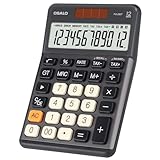
- 【Advanced Tax & Business Functions】Quickly set tax rates with dedicated TAX+/- keys and simplify budgeting via GT, MU, and memory keys (MRC/M+/M-). These tools enable seamless tax calculations and customizable rate settings for precise, tailored results—ideal for accountants, business owners, and professionals requiring accurate tax computations.
- 【Visualized Operation Symbol Display】When you would like to calculate the number, it will express the symbol (plus, subtract, multiply, or divide) on the screen. It can help you see the operation steps when you operate continuously.
- 【Efficient Dual Power System】The calculator uses high conversion rate solar panels, and solar power can be used in well-lit areas. At the same time, we provide a matching battery double safe uninterruptible power supply. The calculator will shut down automatically after 8 minutes without operation.
- 【Small Size, Large Display & Premium Build】It features a large LCD display with a 30° angled screen for clear visibility, paired with a high-grade metal panel and durable ABS buttons. The ergonomic button curvature aligns with natural finger movements, reducing errors and enhancing efficiency.
- 【Durable Construction and Portability】 Made of high-grade metal panel and durable ABS buttons, this 12-digit calculator is lightweight yet durable, capable of withstanding multiple impacts from desktop height. The large, clear LCD Display offers crisp, easy-to-read numbers, minimizing eye strain and ensuring professional-grade performance whether at home, in the office, or while traveling.
Common mistakes that can undermine the claim or budget
- Assuming all countries tax arrears on receipt. The UK example shows why jurisdiction must be settled first; HMRC’s rule allocates earnings to when the employee first became entitled to them.
- Assuming the receipt year tells the whole story in India. The salary due date and the periods covered by the payment matter as well as the date it arrives.
- Claiming relief without Form 10E under the 1961 Act. The department says the relief will not be allowed on processing if Form 10E is omitted, even when relief is claimed in the return.
- Using a form based on a familiar year label rather than the governing Act. The department’s guidance distinguishes AY 2026–27 under the 1961 Act and Form 10E from Tax Year 2026–27 under the new Act and Form 39.
- Applying every part of Form 10E to a salary-arrears case. Its seven parts cover several types of payment and circumstances; use the parts relevant to your case.
- Counting a hoped-for relief amount as guaranteed cash. Eligibility and the computation depend on your facts. The form filing requirement alone does not establish the amount of relief.
- Discarding the supporting breakdown after filing. Preserve the employer’s allocation, tax records, computation and filing acknowledgement so the figures can be traced and explained.
- Using a lump-sum calculator as a substitute for the records. A generic estimate cannot supply the missing year-by-year allocation or determine which Act and form govern your return. First establish those facts and then calculate under the rules that apply to you.
- Assuming all of Form 10E is about salary arrears. The manual’s seven parts cover distinct situations, including advance salary, gratuity, termination compensation and commuted pension. Identify the relevant circumstances rather than completing unrelated parts by default.
- Confusing the net deposit with the gross amount used in the employer’s statement. Reconcile withholding and other stated adjustments before drawing conclusions about the amount paid or the tax already accounted for.
Frequently asked questions
What is Form 10E?
Form 10E is the Income Tax Department’s online form for furnishing particulars when seeking relief under Section 89 of the Income-tax Act, 1961. Its manual covers several circumstances, including arrears of salary or family pension, advance salary, gratuity, termination compensation and commuted pension. Which parts are relevant depends on the payment and the applicable filing year.
Do I have to file Form 10E for salary arrears?
If you are claiming eligible Section 89 relief under the 1961 Act, the department says Form 10E must be furnished before filing the income-tax return. Check that this Act and form apply to your filing context; the department’s guidance identifies Form 39 for relief under the new Act for Tax Year 2026–27.
What’s actually slowing this PC down?
Pick the symptom - the matching free tool is one click away.
What happens if I claim Section 89 relief in my return but do not file Form 10E?
The Income Tax Department’s FAQ says the relief will not be allowed when the return is processed if you claim it in the return but fail to file Form 10E. Submit the form before the return and keep its acknowledgement.
How do I claim Section 89 relief on arrears salary?
First confirm that Section 89 under the 1961 Act applies to your return. Obtain an employer breakdown showing which previous years the arrears relate to, reconcile it with salary and withholding records, complete the relevant portions of Form 10E online, and submit it before filing the return. The amount of relief depends on your individual facts; filing the form does not guarantee a particular saving.
Does Section 89 relief mean I will pay no tax on the arrears?
No. The provision addresses certain cases where arrears or advance salary result in total income being assessed at a higher rate, subject to prescribed relief and the applicable conditions. It is not a blanket exemption from tax, and no individual result can be determined without the relevant year-by-year amounts and tax information.
Can I use the UK rule if my arrears were paid late?
No. The UK example is included only to show that timing rules differ by jurisdiction. HMRC says UK arrears are taxable when the employee was first entitled to the earnings, even if paid later. Indian taxpayers should use the rules and filing process applicable to their own return.
Frequently Asked Questions
What is Form 10E?
Form 10E is the Income Tax Department’s online form for furnishing particulars when seeking relief under Section 89 of the Income-tax Act, 1961. Its manual covers several circumstances, including arrears of salary or family pension, advance salary, gratuity, termination compensation and commuted pension. Which parts are relevant depends on the payment and the applicable filing year.
Best Value

- Check your calculations thanks to the calculator's inbuilt serial impact roller printer that enables you to monitor your inputs and retains ongoing records. This two-color printer with a four-key memory prints red and black ink at up to 2.3 lines per second onto the included roll of paper.
- Printing calculator offers 12-digit LCD display for convenient viewing. 4-key memory keeps often-used figures accessible for faster calculations. Clock and calendar functions help maintain schedules.
- Easy-to-use solution for all of your basic math needs. Streamline financial calculations with currency conversion, tax calculation, and item counter functions. 1-year manufacturer limited warranty.
- Dimensions: 2.2"H x 6.4"W x 9.1"D. Package content: AC adapter, paper roll, user manual.
- Powered by any standard AC outlet, eliminating the need for expensive batteries. Decimal switch, rounding switch, percent, sign change, backspace, double zero, and grand total functions help you solve a variety of mathematical problems.
Do I have to file Form 10E for salary arrears?
If you are claiming eligible Section 89 relief under the 1961 Act, the department says Form 10E must be furnished before filing the income-tax return. Check that this Act and form apply to your filing context; the department’s guidance identifies Form 39 for relief under the new Act for Tax Year 2026–27.
What happens if I claim Section 89 relief in my return but do not file Form 10E?
The Income Tax Department’s FAQ says the relief will not be allowed when the return is processed if you claim it in the return but fail to file Form 10E. Submit the form before the return and keep its acknowledgement.
How do I claim Section 89 relief on arrears salary?
First confirm that Section 89 under the 1961 Act applies to your return. Obtain an employer breakdown showing which previous years the arrears relate to, reconcile it with salary and withholding records, complete the relevant portions of Form 10E online, and submit it before filing the return. The amount of relief depends on your individual facts; filing the form does not guarantee a particular saving.
Does Section 89 relief mean I will pay no tax on the arrears?
No. The provision addresses certain cases where arrears or advance salary result in total income being assessed at a higher rate, subject to prescribed relief and the applicable conditions. It is not a blanket exemption from tax, and no individual result can be determined without the relevant year-by-year amounts and tax information.
Can I use the UK rule if my arrears were paid late?
No. The UK example is included only to show that timing rules differ by jurisdiction. HMRC says UK arrears are taxable when the employee was first entitled to the earnings, even if paid later. Indian taxpayers should use the rules and filing process applicable to their own return.
The Bottom Line
In India, first establish the year and Act that govern your return, then get a written year-by-year arrears breakdown and reconcile it with your salary and tax records. If you qualify for Section 89 relief under the 1961 Act, file Form 10E before the return; the department says a claim without it will not be allowed on processing. Keep the gross payment, withholding and any possible relief separate in your cash plan until your figures are verified. Neither eligibility nor a particular tax saving is automatic.
Quick Recap
Product prices and availability are accurate as of the date/time indicated and are subject to change. Any price and availability information displayed on Amazon at the time of purchase will apply.
Do these 3 things before closing this tab:
1Clear out junk files and repair common Windows errors2Scan for outdated or missing drivers - takes under a minute3Repair Windows errors before they cause bigger problems



