Recommended Free Tools
Prediction markets let participants trade contracts whose value depends on whether a defined future event happens. In a common binary contract, a Yes share bought for 70¢ pays $1 if its condition is met: that is 30¢ in gross profit per share before fees and taxes. If the condition is not met, the share pays nothing and the buyer loses the 70¢ paid. The price can change before the event is decided, so a contract’s current market value and its eventual outcome are two different things.
How prediction markets work
A prediction market lists contracts tied to an event or outcome. Each contract needs to specify what qualifies as the outcome, how it will be determined, and when it expires or resolves. Participants submit buy and sell orders; trades between them establish market prices. At settlement, the contract follows its stated payout rule.
As an Amazon Associate I earn from qualifying purchases.
Many event contracts offer Yes or No exposure with a fixed payout, often $1, but that structure is not universal. The Commodity Futures Trading Commission (CFTC) also describes contracts based on multiple defined outcomes, ranges with partial payouts, or combinations of Yes and No positions. The contract rules—not the general label “prediction market”—determine what a position pays.
How much can you win on a $1 contract?
Consider a teaching example from the CFTC: a Yes contract costs 70¢ and pays $1 if its stated condition is true. If it resolves Yes, the holder receives $1, for 30¢ gross profit per contract. If it resolves No, the holder receives nothing and loses the 70¢ purchase price. These figures exclude fees and taxes; they are an illustration, not a live market quote. See the CFTC’s guide to prediction markets and event contracts.
#1 Best Overall
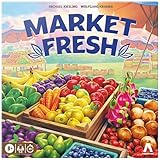
- FARMERS MARKET TILE LAYING STRATEGY GAME: In the Market Fresh game, go up against fellow farmers to run the most successful stand! Stack a stall with produce and shut competitors out of the market
- BEAUTIFUL TACTILE TILES: Draft colorful tiles shaped like crates of fruit and veggies. Strategically place them on a shopfront board to earn points. The more produce players stack, the more they’ll earn
- EASY TO LEARN, CHALLENGING TO MASTER: This immersive spatial puzzle game is easy enough for players of all skill levels to quickly learn, while the strategy brings them to the table again and again
- AWARD-WINNING DESIGNERS: By Azul creator Michael Kiesling and Wolfgang Kramer, the renowned team behind many bestselling strategy board games
- SOLO PLAY & EXTRA CHALLENGES: Enjoy as a 1 player game to master the market! For more challenges, flip the boards for smaller grids, or try a variation that rewards more points for higher stacks
For a simple fixed-payout binary contract, the gross result at settlement can be expressed as:
- Condition met: payout minus purchase price.
- Condition not met: the payout is zero, so the loss is the purchase price.
That arithmetic is not the same as net return. Commissions, transaction charges, taxes, or other costs can reduce a gain or increase the effective cost of a losing trade. A contract with partial payouts or a different settlement value needs its own calculation.
Rank #2
- NOW STEM.org Certified!!! Now being played in over 22+ countries and every state in the USA!!!!
- No Stock Knowledge needed to have a Great Time!!!!! Based on real stock market principles.
- 3 Levels of Play - Family Friendly, Strategy level, and Teams Play
- No financial, economics, or heavy math required. A fun way to learn about finance and money management.
- Ages 10+ to adult / 2-6 Players
What does a 63¢ Yes price mean?
A 63¢ quote is a $0.63 contract price before fees. For a simple binary contract that pays $1 if Yes and nothing if No, traders commonly read that price as an implied probability of about 63%. It is a convention for interpreting the market price—not an objective probability, a guarantee, or a promise the event will happen.
First check what the displayed number represents. It may be the best bid, best ask, midpoint, or last trade, and those are not interchangeable. Prices also reflect participants’ willingness to trade and the available orders, not just a forecast. A current quote can move as new information or orders arrive.
Rank #3

- Fun & Simple Financial Education: Easily grasp stocks, bonds, commodities, and Bitcoin investing through engaging, interactive gameplay. Perfect for teens and adults!
- Ideal Group Size: Designed for 2-6 players, ages 12 and up. Great for family game nights, classroom activities, or friend gatherings.
- STEM-Authenticated & Engaging: Approved by STEM educators, this game offers an addictive learning experience that's both intellectually stimulating and incredibly fun.
- Develop Real-World Skills: Face exciting market scenarios and cryptocurrency challenges to sharpen your decision-making skills in a highly engaging format.
- Play with Purpose: Enjoy an easy-to-learn, captivating game that gives back - a portion of our profits supports Feeding America, adding meaning to your gameplay.
How quotes, orders, and liquidity affect the price you get
An order book shows buy and sell interest at different prices. The best bid is the highest price currently offered by a buyer; the best ask is the lowest price currently offered by a seller. The difference between them is the spread. A displayed price is not necessarily the price at which every contract in a larger order can be traded.
- Limit order: sets the price you are willing to accept, or a better one. It may not execute if no counterparty is willing to trade at that price.
- Market order: seeks execution against available orders. If the order is larger than the quantity offered at the best price, it can consume multiple price levels, producing an average execution price different from the first quote shown.
Liquidity is about how readily a position can be traded at prices close to the current quote. A narrow spread and substantial order-book depth can help, but conditions vary by contract and moment. Volume counts contracts traded over a period; open interest counts contracts that remain open. Neither measure alone tells you how easily your order will execute. For definitions of these trading terms, see Kalshi Pro’s trading glossary, updated September 4, 2026.
Rank #4

- Murphy's Magic Supplies, Inc.
- Magic Shop
- Magic
- Magic Trick
- Wizard
Can you sell a contract before it resolves?
Some prediction markets allow a holder to trade out before settlement. To exit, the holder sells at a price available then, subject to execution and trading costs. If that price is higher than the purchase price, the trade may produce a gross gain; if it is lower, it may produce a gross loss. The exit price is not fixed by the event’s eventual result.
Selling early changes the holder’s position, not the contract’s final settlement rule. If there is no willing buyer at a suitable price, an order may remain unfilled or execute at a worse price than expected. Whether early exit is available, and on what terms, depends on the venue and contract.
Best Value

- VIBRANT COLOR GAME: Challenge friends and family to connect words with colors in the engaging Hues and Cues, featuring 480 colorful hues for limitless fun!
- FUN FOR ALL AGES: Perfect for family game nights, parties, or casual play, this game brings players of all ages together with simple rules and exciting gameplay.
- UNIQUE EXPERIENCE: No two rounds are the same! Hues and Cues provides a new and unique experience with each playthrough, keeping the fun fresh and engaging.
- CREATIVE AND INNOVATIVE: Use just one or two word clues to guide others to the right hue, sparking creative thinking and fostering fun team interaction.
- QUICK TO LEARN: Hues and Cues offers fast-paced action with easy rules, making it enjoyable for both casual players, and gaming enthusiasts.
What to check in the contract and venue rules
Before trading or interpreting a quote, read the individual contract rules. The CFTC says customers in the regulated-market framework should receive transparent terms, including payout, prices, and how and by whom settlement determinations are made. That guidance does not guarantee that every platform or market follows the same framework or protections.
- Event and threshold: What exact condition makes the contract Yes, No, or eligible for a partial payout?
- Resolution source and process: Which source determines the outcome, who makes the determination, and what do the rules say if information is unclear or the source changes?
- Payout and timing: What does each outcome pay, and when does the contract expire or settle?
- Trading conditions: What are the current bid, ask, spread, and order-book depth? Consider volume and open interest separately rather than treating either as a promise of liquidity.
- Costs: Check commissions, fees, taxes, and other charges that affect the net result.
- Exit and access: Confirm whether early trading is permitted and review the venue’s rules, registration, eligibility, customer protections, and jurisdiction-specific access.
If the event is ambiguous, the answer depends on the contract’s contingency and dispute provisions; there is no single settlement rule that applies to all markets. Check those provisions before entering a position rather than assuming a platform-wide default.
Risks and regulatory limits
Trading an event contract can result in losing the amount paid, and an attempted early exit may not execute at the hoped-for price—or at all. The CFTC’s customer guidance states: “All speculation involves risk.” It encourages customers to understand costs and contract rules and warns that unregistered entities may provide little or no protection. Its statements about regulated exchanges and intermediaries apply to that framework; they should not be read as a safety guarantee or as proof that a particular market is available or lawful for every person in every jurisdiction.
Quick wins for a faster PC:
Scan for outdated or missing drivers - takes under a minuteDriver Scan →Repair Windows errors before they cause bigger problemsFix Now →Fix the driver behind crashes, sound loss and screen glitchesFind Drivers →For statutory background, the CFTC publishes a futures glossary; it is not a complete statement of the law governing every venue or contract. Venue status, customer eligibility, market availability, and local rules can change, so verify current official terms before relying on them.
Quick Recap
Product prices and availability are accurate as of the date/time indicated and are subject to change. Any price and availability information displayed on Amazon at the time of purchase will apply.




