Online attendance systems streamline remote and hybrid work by bringing schedules, clock-ins, breaks, absences, overtime, and approvals into one shared record. The useful version is an operational recordkeeping tool—not a verdict on whether someone is productive. Choose a system that solves a defined problem, such as accurate payroll or office-day planning, and collect no more information than that purpose requires.
What an online attendance system does
An online attendance system is cloud-based software for recording, organizing, approving, and reporting when employees are scheduled to work and when they record work. Employees may use a web portal, desktop or mobile app, shared kiosk, or an integrated workplace tool. Depending on the product, records can include breaks, leave, work location, overtime, and project or client hours.
Attendance products overlap with other workforce tools, but their purposes differ. A vendor’s use of the word “attendance” does not guarantee that it includes scheduling, leave administration, payroll, or compliance features.
| Category | Primary purpose | Typical data |
|---|---|---|
| Attendance software | Record presence, schedules, absences, lateness, and leave | Clock-ins and outs, schedule adherence, paid time off |
| Time-tracking software | Record time by project, task, client, or job | Timers, timesheets, billable hours |
| Workforce-management software | Coordinate staffing, shifts, labor rules, and payroll workflows | Schedules, overtime, approvals, staffing forecasts |
| Productivity analytics | Analyze work patterns and capacity | Application use, active time, focus time |
| Employee-monitoring software | Capture detailed computer activity | Screenshots, URLs, keystrokes, activity levels |
These categories can share features. Check the product’s actual data collection and workflows rather than relying on its category label.
#1 Best Overall
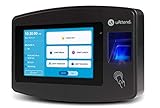
- Advanced Time Tracking: The uAttend JR2000 makes employee time tracking effortless and accurate, powered by a cloud-based system designed for business efficiency.
- Complete Payroll Tasks with Ease: With uAttend, we automate payroll with time and attendance data, handle tax filings, and make switching easy.
- Real-Time Data Access: View, track, and manage employee attendance in real-time from any device, providing flexibility and control no matter where you are.
- Easy Setup & User-Friendly Interface: Enjoy an intuitive interface and straightforward setup process, making it accessible for any team, from first-time users to tech-savvy managers.
- In-Depth Reporting Capabilities: Gain valuable insights into attendance trends, productivity, and labor costs with our comprehensive reporting tools.
Why distributed teams need different attendance workflows
A physical clock or manager’s observation can be a workable record in a single workplace. Remote and hybrid teams may start from different locations, follow flexible or asynchronous schedules, cross time zones, or divide a day between home and an office. A person can be working without appearing at a company site, while an online status indicator does not establish how many hours were worked.
Attendance software can give employees, managers, HR, and payroll a common record instead of requiring them to piece together chat messages, calendars, spreadsheets, and separate timesheets. That record is useful only if the organization defines what counts as a shift, break, work location, and approved change.
How attendance systems streamline daily operations
Clock-ins, clock-outs, and timesheets
Employees may record time through a web portal, desktop or mobile app, browser extension, shared tablet, or integrated tool. Some products also capture computer activity automatically. Manual punches are straightforward but can be forgotten; automatic capture reduces entry effort but can misclassify idle time. Kiosks suit shared physical workplaces better than fully remote teams, while mobile location features require a clear purpose and privacy rules.
For example, Hubstaff describes desktop, mobile, and browser-based tracking, with time associated with projects, tasks, clients, locations, or geofenced work areas. Those are vendor-described capabilities, not a guarantee that every setup will produce accurate records. See Hubstaff’s time-tracking overview.
Free tools Windows power users keep installed
One-click scans. No signup required.
Schedules and attendance exceptions
A system can compare scheduled and recorded time to flag late starts, early departures, missed shifts, absences, breaks, or work outside scheduled hours. ActivTrak describes configurable schedules, break measurement, schedule-adherence tracking, and work-location policy validation in its paid plans; see its pricing and plan details.
An exception is a prompt to check context, not proof of misconduct. A schedule may have changed, a shift may have been swapped, a time zone may be configured incorrectly, or an employee may be making up hours later. A sensible exception workflow lets the employee explain or correct a record, gives the manager a review step, and preserves the approved change.
Alerts and approvals
Alerts can call attention to missing punches, overtime risk, unapproved absences, or timesheets waiting for approval. They are most useful when they start a documented review process rather than triggering an automatic accusation. A system should show what was changed, when it was changed, and who approved it.
Payroll, overtime, and recordkeeping
Attendance records can be converted into timesheets, routed for approval, separated into regular hours, overtime, leave, or project time, and exported to payroll. Before buying, verify which payroll products are supported, whether the connection is native or uses an intermediary, whether data syncs one way or both ways, and whether changes flow back to the time record. Also check how overtime rules vary by location, employee type, pay period, and time zone.
For U.S. employers, the Department of Labor says employers must pay for all hours worked, including work performed at home and work that was not requested but was allowed or known to the employer. Attendance software may help document and review time, but it does not transfer the employer’s responsibility for accurate pay. Read the Department of Labor’s remote-work guidance.
Rank #2

- Free Cloud Service: The TC1 Cloud-Connect time clock, powered by NGTeco Office software and app, allows you to access real-time punch data from anywhere. Benefit from accurate hour calculations and automatic report generation through any web browser.
- Customizable Shifts for Any Workflow: Fully flexible shift configurations (fixed, rotating, split‑shift, open) suit all team structures. Perfect for part‑time staff, multi‑department operations, and 24/7 workplaces, this feature eliminates manual scheduling errors. It also supports custom weekly overtime rules and dual OT1/OT2 pay grades, enabling precise, adaptive overtime payroll calculations that align with diverse company compensation policies.
- Bank-Grade Data Security & Compliance: Powered by AWS US servers with end-to-end encryption, your attendance data is stored securely and fully compliant with global data protection standards, keeping sensitive workforce records protected.
- Multi-Language Support for Global Teams: NGTeco Office software supports 7+ languages (English, Spanish, French, German, Italian, Japanese, Latin American Spanish) for diverse, international workforces.
- Large Storage & Offline Functionality: Supports up to 200 users and 30,000 logs, connects via 2.4GHz WiFi or LAN. Offline punch capture syncs automatically to the cloud once network is restored, no data loss.
The Department of Labor also issued a July 22, 2026 release concerning recording and compensating certain travel when an employee works part of a day at home and part at an office. The result depends on the circumstances; an attendance platform alone cannot resolve the legal treatment of every trip. See the July 22, 2026 release.
Hybrid office planning and work location
Hybrid attendance records can help teams see which office days overlap, how office capacity is used, and whether a stated location policy is being followed. Vendors define location differently. ActivTrak says it classifies locations as Remote, Office, or Office/Remote using network signatures, including IP addresses and device signals. Its documented default primary-location threshold is greater than 80% at one location, and administrators can customize it. Details are in ActivTrak’s attendance-adherence methodology.
Network-based location is not conclusive. VPNs, coworking spaces, mobile hotspots, and shared household networks can affect classification. A location record also does not establish that a full day of productive work took place. Ask whether “office” means a company network, a declared location, a client site, or another category—and test the method against your employees’ actual network setups.
Leave, projects, and a shared operating record
When included, leave workflows can connect absences to schedules and payroll; project codes can distinguish client or job hours from general attendance. A central dashboard can reduce the need to reconcile separate messages, calendars, timesheets, and payroll records, provided everyone uses the same definitions and employees can inspect and correct their own records.
Attendance is not productivity
Attendance concerns scheduled work, recorded start and end times, absences, and time worked. Activity describes signals such as application use, keyboard or mouse activity, meetings, or screen time. Productivity concerns what was accomplished, its quality, and its business value. None of these measures alone substitutes for the others.
High computer activity can accompany low-value work; careful reading, planning, analysis, calls, or design may involve little keyboard activity. A missed punch can coexist with a correctly worked shift. A long meeting record does not establish a useful result. Use attendance data to coordinate work and maintain records, and use goals, deliverables, and manager judgment to discuss performance.
WorkTime distinguishes attendance, active and idle time, login/logout activity, software use, and productivity monitoring. The company also says its product does not capture screenshots, screen recordings, keystroke content, email, or chat messages. These are claims about WorkTime’s product, not a description of attendance software generally; see WorkTime’s product page.
Recommended Free Tools
What to collect—and what to leave out
For many teams, a minimum useful attendance record consists of:
- Employee identity, work date, and applicable time zone
- Scheduled start and end, actual start and end, and breaks
- Total recorded work time and overtime status
- Leave or absence status
- Work-location category when it serves a defined purpose
- Approvals and an auditable record of edits
Project or client codes, department, shift, cost center, GPS or geofence events, app categories, active or idle time, meeting time, and screenshots are additional data—not automatic requirements. Collect granular information only when it is necessary for a stated operational purpose and the organization has set appropriate access, retention, and use rules.
Rank #3

- True Standalone Operation, Zero Setup Hassle: Get started in minutes with no WiFi or complex software. Easily export all attendance data via the included USB drive, with ready-to-use Excel reports for instant payroll integration—fully independent time tracking.
- Built to Scale With Your Business: Onboard memory supports up to 500 user profiles and 50,000 punch records. Reliably handles shifts for growing teams without constant maintenance, ideal for expanding small businesses.
- Paperless & Cost-Effective Tracking: Ditch wasteful paper cards and printer ribbons. Our digital system delivers precise, instant records while cutting supply costs—combining accuracy with eco-friendly efficiency.
- Secure, Reliable Data Protection: An internal backup system preserves every punch during unexpected power loss. Your employee records and timesheets stay fully secure and retrievable, with no reset hassle.
- Durable, Versatile Design for Any Workplace: Built with industrial-grade materials for daily durability. Its compact design installs anywhere—warehouses, retail counters, offices, schools, and healthcare facilities—for consistent performance.
Privacy, trust, and employee acceptance
Before rollout, tell employees what is collected, why, when collection begins and ends, who can view it, how long records are retained, and whether information is used for payroll, scheduling, coaching, security, or discipline. Explain whether monitoring continues outside work hours, whether personal devices are involved, and how a worker can see and correct a record.
For many office-based remote and hybrid teams, a proportionate starting point is employee clock-in and clock-out, schedule and calendar integration, self-service corrections, leave workflows, manager approval, payroll export, and limited work-location categories. GPS, geofencing, screenshots, or app and URL tracking may be relevant in narrower settings such as field-service work, client billing, or a documented security need; they are not a default requirement for remote accountability.
Outdated Drivers Are Slowing You Down
One free scan finds every outdated or missing driver and matches the right update for your exact hardware.Free scan · exact hardware matchPC Slower Than It Used to Be?
A free scan shows the junk files, broken settings and background clutter dragging Windows down - then fixes them in one click.Free scan · Windows 10 & 11Legal requirements vary by country, U.S. state, industry, employee classification, collective-bargaining agreement, and the data involved. GPS, biometrics, screenshots, communications, and personal-device use can raise distinct issues. Unionized workplaces may also have negotiated terms covering notice, access, audit logs, bargaining, and disciplinary use. The UC Berkeley Labor Center’s inventory of workplace-technology provisions describes protections found in negotiated agreements.
Independent reader supportYour contribution helps us test, update, and keep practical guides available for everyone.How to choose and implement the right system
1. Start with the business problem
Identify whether the main issue is payroll accuracy, missed punches, shift coverage, office-day planning, overtime visibility, leave management, billable hours, workforce planning, security, or employee monitoring. A surveillance-heavy product is a poor response to a payroll-export problem.
2. Write down the attendance rules
Document core and flexible hours, required office days, time-zone handling, breaks, overtime approval, travel-time treatment, remote-work eligibility, leave, same-day location changes, schedule swaps, and correction approvals. These rules determine whether the software’s reports will be meaningful.
3. Choose the least intrusive reliable capture method
- Use employee-entered time with an easy correction workflow when straightforward attendance and payroll records are the goal.
- Add schedule or calendar integrations when they reduce duplicate entry without changing what the record means.
- Use desktop or mobile time tracking when project or client hours need to be assigned.
- Consider network-based location classification for hybrid reporting only after testing VPNs and other network arrangements.
- Reserve GPS or geofencing for location-dependent field work.
- Use screenshots or granular app tracking only when a clearly defined need justifies the added intrusion.
4. Test real-world edge cases
Pilot the system with fully remote and hybrid employees, workers crossing time zones, variable-shift and part-time employees, a VPN user, a coworking-space user, someone who forgets to clock out, someone working after hours, a manager approving a correction, and a payroll administrator exporting data. Check for device sleep, lost connectivity, shared computers, multiple devices, incorrect schedules, and idle-time misclassification.
Quick wins for a faster PC:
Scan for outdated or missing drivers - takes under a minuteDriver Scan →Clear out junk files and repair common Windows errorsFree Scan →Fix the driver behind crashes, sound loss and screen glitchesFind Drivers →5. Check record integrity and access
- Can the system show the original value, changed value, editor, timestamp, and approver?
- Can employees see and challenge errors before payroll closes?
- Can payroll reproduce the final calculation?
- Can access to sensitive data be limited by role?
- Can you set retention rules and export or delete records?
- Does the product support your required devices, offline workflow, SSO, MFA, encryption, and data-residency needs?
ManicTime offers cloud and on-premise/self-hosted deployment options, a distinction that may matter to organizations with particular data-control requirements. See ManicTime’s pricing and deployment information.
6. Explain the policy before it takes effect
Tell employees the operational reason for the system, exactly what it collects and does not collect, how the records will and will not be used, how to fix mistakes, and where to ask questions. If a record could be used in a disciplinary decision, state that policy clearly rather than leaving employees to infer it from the software.
Common approaches and their trade-offs
| Method | Useful for | Limitations to consider |
|---|---|---|
| Manual time entry | Simple, low-intrusion attendance records | Forgotten punches and retrospective estimates can require reconciliation. |
| Automatic activity tracking | Reducing manual time entry or analyzing computer-use patterns | Activity is not output; idle classifications can mislead and may feel like surveillance. |
| IP or network-based location | Broad office-versus-remote classification | VPNs, coworking networks, hotspots, and shared networks can make the apparent location inaccurate. |
| GPS or geofencing | Field work or location-dependent shifts | Raises privacy concerns, can use battery, and may misread boundary areas. |
| Screenshots | Specific audit or billing contexts where an image record is justified | May capture sensitive personal or client information and damage trust; Time Doctor describes optional privacy-blurred screenshots for hybrid teams, a product-specific feature (Time Doctor). |
| Keyboard and mouse activity | Identifying computer-active and idle periods | Does not measure thinking, reading, phone calls, offline work, or quality. |
| Self-reported attendance | Flexible, trust-based teams with limited recordkeeping needs | May not meet the organization’s need for payroll, billing, or stronger approval records. |
Which type of system fits your team?
- Basic attendance and payroll: Prioritize reliable punches, schedules, leave, overtime rules, corrections, approvals, and verified payroll integration.
- Project or client billing: Prioritize task assignment, billable-hour reports, and usable export or invoicing workflows.
- Hybrid-office planning: Prioritize clearly defined location categories, schedule adherence, team-level reporting, and privacy controls.
- Workforce analytics: Consider analytics products such as ActivTrak, but do not treat work-pattern dashboards as payroll timekeeping.
- Privacy-conscious automatic tracking: Compare products such as ManicTime or WorkTime by the exact activity they capture and who can see it.
- Field or location-dependent work: Verify mobile support, GPS or geofencing behavior, offline operation, and location-specific rules.
- Security-sensitive oversight: Decide whether screenshots or application-level detail are genuinely necessary before adopting a monitoring suite.
Vendor features and pricing can change. As an example of the difference between categories, Hubstaff describes project, payment, and optional monitoring capabilities in addition to time tracking; those extras may be unnecessary for an employer seeking only attendance. ActivTrak’s product materials emphasize workforce analytics and schedule or location reporting. Compare the feature set with your written requirements rather than treating a vendor’s marketing claims as evidence of improved productivity.
Make the record useful without making it a surveillance system
A well-chosen attendance platform replaces fragmented time records with a consistent workflow for schedules, recorded hours, exceptions, corrections, and approvals. Its value depends on accurate rules, tested integrations, employee access, and careful limits on what data is collected and how it is used. Start with the least intrusive system that can produce reliable records for the problem you need to solve.
What’s actually slowing this PC down?
Pick the symptom - the matching free tool is one click away.
Quick Recap
Product prices and availability are accurate as of the date/time indicated and are subject to change. Any price and availability information displayed on Amazon at the time of purchase will apply.




