Free tools Windows power users keep installed
One-click scans. No signup required.
Rising oil prices do not automatically mean falling stocks or higher interest rates. The effect depends on why oil rose, how long the increase lasts, how exposed businesses and consumers are, and whether central banks can or will raise rates. Oil can lift headline inflation directly, pressure some companies’ profits, support others, and change expectations for economic growth and monetary policy.
How higher oil prices feed into inflation
The first effect is direct: when fuel and other energy prices rise, they push up the energy components of consumer-price measures. That tends to raise headline inflation, which includes food and energy. A sustained increase can also raise businesses’ costs for transport, production, and other energy-intensive inputs. Whether those costs spread into prices and wages determines how much the shock affects core inflation, which excludes direct food and energy components and is used to assess broader price pressure.
| # | Preview | Product | Price | |
|---|---|---|---|---|
| 1 |

|
The Oil & Gas Business: A Complete Guide to Gas and Oil Investing | $17.46 | Buy on Amazon |
| 2 |
|
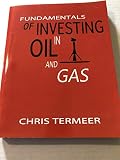
Fundamentals of Investing in Oil and Gas | $24.99 | Buy on Amazon |
| 3 |

|
Investing in Oil and Gas Wells | $12.99 | Buy on Amazon |
| 4 |
|
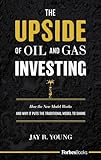
The Upside Of Oil and Gas Investing: How The New Model Works And Why It Puts The Traditional Model... | $9.99 | Buy on Amazon |
| 5 |

|
Oil 101 | $29.95 | Buy on Amazon |
Federal Reserve Chair Ben Bernanke explained the distinction in a 2006 speech: “The overall inflation rate reflects both first-round and second-round effects.” He also said, “By stripping out the first-round inflation effects, core inflation provides a useful indicator of the second-round effects of increases in the price of energy.” In other words, higher gasoline prices can raise headline inflation without necessarily triggering a broad, persistent rise in other prices.
A Federal Reserve study published in 2000 found that, in its data and specifications, oil-price changes passed through to inflation mainly through their direct weight in price indexes after about 1980, with little or no estimated pass-through to core measures. The study found a substantial estimated contribution to core inflation before 1980. That historical result is evidence that pass-through can change across periods, not a guarantee that future oil shocks will have the same effect.
#1 Best Overall
Second-round effects are more likely to matter if companies pass higher costs on to customers, workers seek compensation for lost purchasing power, or inflation expectations rise. A price spike by itself does not establish that such a process is underway.
Why the cause of an oil-price increase matters
A price move alone does not reveal whether oil supply has been disrupted or demand has strengthened. That distinction matters because the two shocks can produce different combinations of inflation, growth, and market expectations.
| Type of oil-price move | What may be driving it | Possible economic implication |
|---|---|---|
| Supply-driven increase | Production or transport is interrupted, reducing available supply. | Energy becomes more expensive even as households and firms face a cost burden that can weaken spending and activity. |
| Demand-driven increase | Stronger global activity raises demand for oil. | Higher oil prices may accompany stronger demand and growth, though the added energy cost can still weigh on consumers and oil-using firms. |
The distinction is not always obvious in real time, and both forces can operate together. An IMF working paper from 2006 describes a two-way relationship between oil prices and interest rates in which the direction depends on the kind of shock.
What higher oil prices can mean for stocks
Oil affects company earnings unevenly. Energy producers may benefit from higher prices if they can sell output at better prices and their costs do not rise as much. Companies that use substantial fuel or energy may face higher operating costs. Those changes can affect expected earnings, but they are only part of how investors value stocks: expected economic growth, inflation, and interest rates also influence share prices.
Rank #3
- Used Book in Good Condition
| Exposure | Potential effect of higher oil prices | What can change the result |
|---|---|---|
| Oil producers | Higher selling prices can support revenue. | Production costs, output, and expectations about how long prices will remain high affect the benefit. |
| Energy-consuming firms | Higher fuel or input costs can squeeze margins. | The company’s energy use, ability to pass costs on, and strength of customer demand matter. |
| Broad stock indexes | Effects on sector earnings, household purchasing power, growth, inflation, and policy expectations can pull in different directions. | The mix of businesses in the index and the market’s expectations about the shock shape the net result. |
That is why an oil rally can coincide with rising or falling stocks. IMF analysis of a long U.S. historical sample found the oil-price relationship with equities was unstable; the relationship with real dividends was more stable in that study. A Federal Reserve FEDS Notes analysis by Deepa D. Datta, Benjamin K. Johannsen, and Robert J. Vigfusson (2021) reported oil-equity correlations of 0.39 since the COVID-19 pandemic began, 0.47 during the earlier zero-lower-bound period, 0.01 before the Global Financial Crisis, and 0.33 between the two zero-lower-bound episodes. These are correlations for specified historical periods, not causal estimates or current market readings.
Do oil prices make interest rates go up?
Not automatically. A central bank may raise its policy rate if it judges that an energy-price increase is likely to spread into persistent inflation or lift inflation expectations. Higher policy rates can then raise borrowing costs and the discount rates used to value future earnings, while also dampening economic activity. If policymakers view the oil move as temporary and broader inflation as contained, they may respond differently.
Rank #4
The historical U.S. experience is a caution against treating past episodes as a rule. In his 2006 speech, Bernanke described larger first- and second-round inflation effects in the 1970s and early 1980s, when efforts to contain inflation coincided with sharply higher rates and slower growth. That history illustrates one possible policy response, not a prediction that every oil shock will produce the same sequence.
There is also a feedback in the other direction: monetary policy can affect commodity prices. An IMF working paper by Jorge Alberto Miranda Pinto, Andrea Pescatori, Ervin Prifti, and Guillermo Verduzco-Bustos (2023) estimated that a 10-basis-point increase in the U.S. policy rate reduced commodity prices by 0.5% to 2.5% after 18 to 24 business days. This is a study estimate for commodity prices as a group, not an oil-only forecast. In the same analysis, the commodity-price channel accounted for an estimated 47% of the total effect of U.S. monetary policy on U.S. headline inflation and 57% of the effect on other countries’ headline inflation. Those estimates depend on the study’s methods and sample.
The Tool Desk
Outbyte Driver Updater FREEScan for outdated or missing drivers - takes under a minuteDriver Scan →Outbyte PC Repair FREEClear out junk files and repair common Windows errorsFree Scan →Best Value
- Used Book in Good Condition
Why the zero-lower-bound case can differ
When nominal policy rates are near their effective lower bound, a central bank may have limited room to cut rates in response to weaker activity. If an oil shock raises inflation while the nominal policy rate cannot rise to match it, the real interest rate—the nominal rate adjusted for inflation—can fall. That can cushion some of the shock to activity, even as households and firms still face higher energy costs. Federal Reserve research on the zero lower bound explains why oil shocks can move inflation and output in opposite directions and why constrained nominal rates may change the transmission.
How to read an oil-price move
To assess what a change in oil prices might mean for markets, work through these questions rather than assuming a fixed stock or rate response:
- What caused the move? Separate a supply interruption from stronger demand where possible; the same price increase can signal different conditions for growth.
- Is it brief or persistent? A short-lived spike may lift headline inflation without producing lasting pass-through. A sustained rise gives firms and workers more reason to adjust prices, wages, and expectations.
- Who is exposed? Compare energy producers with fuel- and energy-intensive businesses, and consider whether firms can pass increased costs on to customers.
- Is inflation broadening? Look beyond direct energy effects to core inflation and expectations to judge whether policymakers may see a persistent problem.
- What policy regime applies? Consider whether central banks have room to adjust nominal rates and whether their priority is containing inflation or supporting activity.
These factors help explain why the same oil-price move can accompany different outcomes for inflation, interest rates, and stock prices across episodes.
Quick Recap
Product prices and availability are accurate as of the date/time indicated and are subject to change. Any price and availability information displayed on Amazon at the time of purchase will apply.
Quick wins for a faster PC:
Fix the driver behind crashes, sound loss and screen glitchesFind Drivers →Repair Windows errors before they cause bigger problemsFix Now →Scan for outdated or missing drivers - takes under a minuteDriver Scan →



