In a market-cap snapshot dated October 2, 2026, Nvidia was valued at $5.6 trillion, compared with $1.6 trillion for Broadcom and $1.0 trillion for AMD. That makes Nvidia much larger by equity value—but market capitalization is not a valuation multiple, and it cannot tell you by itself whether a stock is cheap or expensive.
Market capitalization: Nvidia is the largest of the three
TickerBrief’s market data as of October 2, 2026 put Nvidia’s market capitalization at $5.6 trillion, Broadcom’s at $1.6 trillion, and AMD’s at $1.0 trillion. These are rounded, secondary-source snapshots of each company’s equity value on that date; market caps move with share prices.
| Company | Market capitalization | What the figure does—and does not—show |
|---|---|---|
| Nvidia | $5.6 trillion | Largest equity value in this three-company comparison; not a measure of earnings or sales per share. |
| Broadcom | $1.6 trillion | Equity value includes a company with both semiconductor and infrastructure-software businesses. |
| AMD | $1.0 trillion | Equity value for a company with CPU, GPU, and data-center businesses. |
The snapshot’s revenue, margin, and free-cash-flow comparisons use trailing twelve months through Q3 2026 for Nvidia and Broadcom, but through Q2 2026 for AMD and several other peers. Those windows are not aligned, so they should not be used as if they represented the same reporting period.
Is Nvidia more expensive than AMD or Broadcom?
The market-cap figures alone cannot answer that. Market capitalization is the market value of a company’s equity; it is not a price-to-earnings, price-to-sales, or enterprise-value multiple. A larger company can have a larger market cap without having a higher valuation multiple, and a higher growth rate does not by itself prove that a stock is undervalued.
Do these 3 things before closing this tab:
1Clear out junk files and repair common Windows errors2Scan for outdated or missing drivers - takes under a minute3Repair Windows errors before they cause bigger problems#1 Best Overall

- System Compatibility Note: This 2-slot card measures 271 x 112 x 39 mm and requires a single 12V-2x6-pin power connector. Please verify chassis and PSU compatibility before purchase.
- Dedicated Support: Please contact us directly through Amazon for any product questions or assistance you may require.
- Professional Intel Arc Pro B70 GPU: Built on the Intel Xe2-HPG architecture, it features 32 Xe cores and 256 XMX engines, designed to accelerate AI, rendering, and complex visualization workloads.
- Massive 32GB GDDR6 VRAM: Equipped with 32GB of high-speed GDDR6 memory on a 256-bit bus, running at 19 Gbps, which allows for handling large AI models and complex datasets locally.
- High-Performance Engine Clock: Delivers an engine clock of 2540 MHz, providing the compute power needed for demanding professional applications and AI inference.
A fair “more expensive” comparison needs the same market-data date and a consistent denominator for each company. For earnings multiples, that means specifying whether earnings are trailing or forecast and whether the figures are GAAP or non-GAAP. A useful comparison would also align fiscal periods and estimate dates, then consider revenue growth, margins, free cash flow, and business mix alongside the multiples.
The cited figures do not provide a consistently measured set of trailing or forward P/E, price-to-sales, or enterprise-value multiples for Nvidia, AMD, and Broadcom. They therefore support a comparison of market scale and reported operating context—not a ranking of which stock is cheapest.
Rank #2

- NVIDIA Volta GV100 Architecture — 4,608 CUDA Cores, 640 1st-Gen Tensor Cores delivering 14 TFLOPS FP32 and 112 TFLOPS deep learning performance for AI training, inference, HPC, and scientific computing workloads
- 32GB HBM2 ECC Memory — 900 GB/s Bandwidth — High-bandwidth memory on a 4096-bit bus with ECC error correction provides the memory capacity and throughput required for the largest AI models, simulations, and datasets
- PCIe 3.0 x16 Interface — 250W TDP — Standard PCIe Gen3 connectivity with passive cooling designed for enterprise rack server deployment in HPE ProLiant, Dell PowerEdge, and Supermicro platforms with adequate chassis airflow
- NVLink — Scale to 96GB Unified Memory — Connect two V100 GPUs via NVLink at 300 GB/s bi-directional bandwidth to scale GPU memory from 32GB to 96GB for larger AI training and HPC workloads
- Multi-Precision Computing — Supports FP64 (7 TFLOPS), FP32 (14 TFLOPS), FP16 (112 TFLOPS) and INT8 precision modes for flexible deployment across training, inference, and scientific simulation workloads
What the latest reported results say about each company
The operating figures below come from different reporting periods: Nvidia’s full fiscal year, AMD’s second fiscal quarter, and Broadcom’s third fiscal quarter. They provide context for each business, but they are not a like-for-like revenue or earnings ranking.
| Company and period | Reported results | AI and business context |
|---|---|---|
| Nvidia, fiscal 2026 | Revenue of $215.9 billion; gross margin of 71.1%; operating income of $130.4 billion; diluted EPS of $4.90. Nvidia reported revenue growth of 65% year over year. | Nvidia tied Data Center compute growth to demand for its Blackwell platform. The figures are company-reported historical results for the full fiscal year. |
| AMD, Q2 fiscal 2026, quarter ended June 27, 2026 | Revenue of $11.5 billion; gross margin of 54%; operating income of $2.0 billion; net income of $2.3 billion. | AMD said data-center demand reflected EPYC processors and Instinct MI350 Series GPUs, among other segment drivers. These are figures for one quarter, not a full-year comparison with Nvidia. |
| Broadcom, Q3 fiscal 2026, quarter ended August 2, 2026 | Revenue of $29.591 billion: $20.839 billion from semiconductor solutions and $8.752 billion from infrastructure software. | Broadcom reported AI semiconductor revenue of $16.7 billion in Q3, up 221% year over year, in its September 2, 2026 earnings release. Its total valuation reflects software as well as semiconductors. |
The reported revenue numbers should not be compared directly as a ranking: Nvidia’s is for a full fiscal year, while AMD’s and Broadcom’s are for single quarters. Broadcom’s reported quarterly revenue also spans two substantial business categories, so treating the company as a pure-play chipmaker would miss part of its mix.
Rank #3

- Professional AI & Creator Workstation: AMD Radeon AI PRO R9700 GPU with 32GB GDDR6 is engineered for AI development, professional content creation, and compute-intensive workloads.
- Massive 32GB Memory Capacity: 32GB of GDDR6 memory on a 256-bit bus provides ample bandwidth for large AI models, 8K video editing, and complex 3D rendering.
- Advanced RDNA 4 with AI Accelerators: 64 Compute Units with 3rd Gen Ray Tracing and dedicated 2nd Gen AI Accelerators for groundbreaking AI performance and visual computing.
- Professional Blower Cooling: Efficient single blower design exhausts heat directly out of the chassis, ideal for multi-GPU workstation and server configurations.
- Enterprise-Grade Thermal Solution: Vapor chamber heatsink with industrial Honeywell PTM7950 thermal interface material ensures reliable cooling under sustained professional loads.
How to compare AI chip stocks by valuation
A more useful analysis starts by matching the measurement date and financial periods, then asks what each company’s business mix and results imply for the chosen multiple. A practical checklist is:
- Align the price date. Use the same closing date for market capitalization, enterprise value, and share price.
- Match the earnings basis. Label GAAP or non-GAAP results, trailing or forward earnings, fiscal-year ends, and the date of any estimates.
- Compare operating performance over comparable periods. Include revenue growth, gross and operating margins, and free cash flow, identifying the period for every figure.
- Account for business mix. Nvidia has data-center compute and networking exposure; AMD spans CPUs, GPUs, and data-center products; Broadcom combines semiconductors with infrastructure software.
- Separate results from expectations. Reported performance, management guidance, and market forecasts are different kinds of evidence. Strong growth may support a valuation narrative, but it does not establish that a share price is inexpensive.
Why “other AI chip companies” are not one interchangeable peer group
TickerBrief’s semiconductor peer set also includes Micron Technology, Intel, Qualcomm, and Texas Instruments. They participate in different parts of the semiconductor market, so including them does not make each a direct substitute for an AI accelerator vendor.
Rank #4
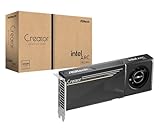
- System Compatibility Note: 2-slot card, 271x112x39mm, single 8-pin power, 200W TDP. Verify chassis clearance and PSU capacity before purchase.
- Dedicated Support: Please contact us directly through Amazon for any product questions or assistance you may require.
- 24GB GDDR6 on 192-Bit Bus: Massive 24GB memory with 456 GB/s bandwidth – ideal for LLMs, AI inference, 3D rendering, and generative design.
- Intel Xe2-HPG Architecture: Built on Intel's next-gen architecture with 20 Xe cores and 160 XMX engines for AI acceleration (197 INT8 TOPS).
- PCIe 5.0 Support: PCI Express 5.0 x16 interface for maximum bandwidth with the latest workstation platforms.
- Nvidia and AMD are the narrowest comparison here for data-center compute products, while their broader portfolios and financial results still differ.
- Broadcom is relevant to AI infrastructure through custom accelerators and networking, but its infrastructure-software business changes the company-wide comparison.
- Micron, Intel, Qualcomm, and Texas Instruments can add context on the wider semiconductor industry, but a meaningful comparison should specify their particular relevance to AI compute or infrastructure rather than label them all equivalent AI-chip companies.
The market snapshot does not provide a matched series of valuation multiples for these additional companies either. Without aligned figures and a clear reason for including each peer, adding more tickers can make a comparison broader without making it more informative.
Quick Recap
Best Value

- PLEASE NOTE: Exporting an NVIDIA RTX Pro 6000 GPU outside the US requires strict adherence to the U.S. Export Administration Regulations (EAR) and issuance of an export license from the Bureau of Industry and Security (BIS). Compliance and Know Your Customer (KYC) screening may be required as a condition of order acceptance. [NVIDIA Blackwell Streaming Multiprocessor] The new SM features increased processing throughput, and new neural shaders that integrate neural networks inside of programmable shaders | DLSS 4: Multi Frame Generation ensures ultra-smooth frame pacing for lifelike simulations.
- [Double-Flow-Through Design] The RTX PRO 6000 Blackwell features a double-flow-through cooling design, optimizing efficiency and airflow to sustain peak performance under 600W power loads. | [5th Gen Tensor Cores] Deliver up to 3X the performance of the previous generation and support for FP4 precision for faster AI model processing times with reduced memory usage, enabling local fine-tuning of LLMs and generative AI | [4th Gen Ray Tracing Cores] Double the ray-triangle intersection rate of the previous generation to create photoreal, physically accurate scenes and immersive 3D designs with RTX Mega Geometry, which enables up to 100X more ray-traced triangles.
- [PCIe Gen 5] Support for PCIe Gen 5 provides double the bandwidth of PCIe Gen 4, improving data-transfer speeds from CPU memory and unlocking faster performance for data-intensive tasks like AI, data science, and 3D modeling. | [GDDR7 Memory] With 96 GB of GPU memory and 1.8 TB ps bandwidth, it can tackle massive 3D and AI projects, fine-tune AI models locally, explore large-scale VR environments, and drive larger multi-app workflows.
- [DisplayPort 2.1] Achieve unparalleled visual clarity and performance, driving high resolution displays at up to 8K at 240 Hz and 16K at 60 Hz. Increased bandwidth enables seamless multi-monitor setups while HDR and higher color depth support ensures superior color accuracy for precision work, such as video editing, 3D design, and live broadcasting.
- [Universal MIG] Divide a single RTX PRO 6000 Blackwell into multiple isolated instances, each with dedicated resources, allowing for concurrent execution of multiple workloads, optimized GPU utilization, and secure isolation of different applications or users. [WARRANTY] 3 YR Manufacturer's Warranty. Bulk OEM Packaging. Retail Packaging is NOT included.
Product prices and availability are accurate as of the date/time indicated and are subject to change. Any price and availability information displayed on Amazon at the time of purchase will apply.
Recommended Free Tools




