PC Slower Than It Used to Be?
A free scan shows the junk files, broken settings and background clutter dragging Windows down - then fixes them in one click.Free scan · Windows 10 & 11Outdated Drivers Are Slowing You Down
One free scan finds every outdated or missing driver and matches the right update for your exact hardware.Free scan · exact hardware matchShort answer: AI electricity use is likely to rise sharply through 2030, but there is no defensible single global number. The International Energy Agency (IEA) says total data-center electricity use could double by 2030, while AI-focused data-center use could triple. Those are different categories: data centers also run storage, networking, conventional cloud services and cooling.
AI is unlikely to consume most of the world’s electricity in the near term. Its bigger immediate effect is local: a single large campus can become a major new load for a utility, requiring substations, transmission, generation and cooling capacity.
Start with the units: power is not energy
Power is the instantaneous rate of electricity use, measured in watts, megawatts (MW) or gigawatts (GW). Energy is electricity consumed over time, measured in kilowatt-hours (kWh) or terawatt-hours (TWh).
A 1-GW data center describes a rate. If it operated continuously at that level for one year, the arithmetic would be about 8.76 TWh, before accounting for changes in load. A facility’s announced gigawatts therefore cannot be compared directly with an annual TWh forecast.
#1 Best Overall

- Ultra-Lightweight: At only 7.5 lbs, the Explorer 300 delivers a robust 292Wh capacity while remaining 17% lighter than the industry average. The sleek, integrated handle makes it effortless to carry on long hikes or pack with your camping gear, providing reliable off-grid power without adding bulk to your load.
- Versatile Power for 6 Devices: Equipped with 2 AC outlets, a 100W USB-C PD port, 2 USB-A ports, and a 120W car port. With a 300W rated output (600W peak surge), it easily handles laptops, drones, and cameras, while also serving as a dependable cpap battery for camping or a robust solar powered generator when paired with panels.
- Built to Last: Upgraded with premium LiFePO4 chemistry, this portable generator delivers over 4,000 charge cycles before reaching 70% capacity. This ensures more than 11 years of reliable service life, making it a sustainable and durable energy partner for a decade of exploration.
- Fast Solar Charging: Perfect for off-grid use, this solar powered generator pairs seamlessly with Jackery panels. Reach 80% capacity in approximately 2.8 hours with a 100W solar panel, or maintain your gear with a portable 40W panel (80% in 7.5 hours), making it an essential part of your hunting essentials.
- WHAT YOU GET: 1* Jackery Explorer 300 Portable Power Station, 1*AC adapter, 1* car charger cable, 1* user guide (𝐒𝐨𝐥𝐚𝐫 𝐏𝐚𝐧𝐞𝐥 𝐍𝐨𝐭 𝐈𝐧𝐜𝐥𝐮𝐝𝐞𝐝.)
- IT load: chips, servers, memory and networking.
- Facility load: IT equipment plus cooling, power conversion, distribution, backup systems and building operations.
- Peak power: the highest instantaneous demand, which determines much of the grid infrastructure needed.
- Annual energy: the cumulative electricity consumed over a year.
What actually uses electricity in an AI operation?
Training
Frontier-model training runs large accelerator clusters continuously for weeks or months. It is highly visible, but it is periodic rather than a constant stream of requests.
Fine-tuning and evaluation
These jobs are smaller than frontier training but can multiply as businesses customize models for industries, languages, internal documents and specialized agents.
Inference
Inference is the electricity used whenever a model generates text, images, video, speech, code or an action. One request may be relatively small; billions of requests can make inference the larger long-run demand.
Rank #2

- 【SLIM & POCKETABLE】This portable power bank is about the size of a smartphone (6.5×3.3×4 inches) and weighs only 2.54 pounds. It features an ergonomic soft handle for easy portability. It easily fits into a backpack for convenient portability. Pro Tip: Fully charge and discharge the battery twice initially for the best experience.(Solar panel and cable not included)
- 【DUAL INPUT/OUTPUT (AC + DC)】The portable power station comes with a 89.6Wh capacity LiFePO4 battery pack(not NCM) and 100W, features 7 output ports, including 2 AC sockets (100W),2 USB-C port (45W/15W), 2 USB-A port (18W/15W), and DC5521 ports (60W). The LED display can clearly show the working status and remaining power.(Please peel off the protective film on the screen after unboxing)
- 【Ultra Fast Charging】With unique fast charging technology,the portable generator can be charged from 0-80% just in 1.5hrs. The solar power bank power station has Four methods to charging: AC wall socket fast charging, USB-C DC two-way PD fast charging(AC and DC can be charged at the same time) ,car charging and solar panel charging.Fast charging solar power bank portable charger suitable for for emergency home backyard outdoor power outages off-grid camping essentials
- 【ULTRA-QUIET & EMERGENCY-READY POWER STATION】Experience silent, fanless operation perfect for sleeping, working, or camping, while the built-in 4-level LED flashlight (with steady/SOS modes) ensures emergency readiness. Its accidental-touch-proof design requires a long-press to activate, ideal for charging devices during outages or outdoor adventures without noise disruption.(Only suitable for powering devices within 100W).
- 【Long-Lasting & Safe LiFePO4 Battery】: 3500+ life cycles (far exceeding standard batteries). Durable LiFePO4 batteries last 3x longer than standard lithium batteries! Advanced BMS provides 12 safety protections, monitoring voltage, current & temperature. Powers your smartphone, laptop, mini-fridge, camera, and drone simultaneously.
Agents and reasoning systems
An ordinary chatbot answer may require one model pass. An agent can make repeated model calls, search, use tools, verify results and retry. The IEA identifies these systems as a potential source of higher demand even when the energy per individual task is falling (IEA executive summary).
Free tools Windows power users keep installed
One-click scans. No signup required.
Everything around the accelerators
A GPU’s power rating is not a data center’s electricity bill. Servers also need CPUs, memory, high-speed networking, storage, fans or liquid cooling, power-conversion equipment, backup systems and the building itself.
From one chip to a data-center campus
| Level | What the figure describes | Why it is not the whole answer |
|---|---|---|
| GPU | NVIDIA’s B100 has been cited at about 700 W TDP. | TDP is a chip-power or thermal-design figure, not facility consumption (IEA 4E review). |
| Server | Several accelerators plus CPU, memory, networking and cooling hardware. | Draw varies with workload and configuration. AWS lists P5 instances with up to eight H100 GPUs (AWS accelerated-computing instances). |
| Rack | Many servers and rack-level power and cooling systems. | Power swings and utilization depend on the jobs running. |
| Facility | IT load multiplied by cooling and infrastructure overhead. | Power usage effectiveness (PUE), climate and cooling design change the result. |
| Campus | Multiple halls, substations, backup systems and planned expansion. | An announced capacity is a pipeline indicator, not proof of an operating peak load. |
What the current evidence says
| Scope | Estimate or forecast | Qualification |
|---|---|---|
| Global data centers | Electricity demand grew 17% in 2025; total use could double by 2030. | IEA estimate and projection for all data centers, not AI alone (IEA, April 2026). |
| AI-focused data centers | Electricity use could triple by 2030. | IEA projection for AI-focused facilities, not all data-center electricity. |
| United States | About 4.4% of national electricity in 2023; approximately 6.7% to 12% by 2028. | Lawrence Berkeley National Laboratory modeled range for all data centers (LBNL). |
| United States, end of decade | 9.5% to 15.3%, with an 11.8% midpoint-style estimate. | DOE 2026 resource; data centers overall, model-dependent (U.S. Department of Energy). |
| AI share today | Roughly 15% to 25% of data-center electricity. | EPRI summary of estimates attributed to IEA and JLL, not a universal measurement (EPRI). |
| Gartner forecast | 132 GW of worldwide data-center power demand and about 565 TWh of electricity in 2026; more than 1,200 TWh by 2030. | Industry forecast with more aggressive assumptions than some IEA scenarios (Gartner). |
The forecasts should not be averaged. They differ in AI adoption, model size, inference volume, agent use, hardware efficiency, construction actually completed, cooling, geography and whether they count IT equipment or the whole facility.
Rank #3
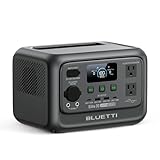
- [288Wh On-the-Go Power] - Only 9.4 lbs lightweight, carry it anywhere during storms! 288Wh capacity meets daily & outdoor needs—camping, road trips, beach visits, or home emergencies. Extend your smart green energy life to every corner of your ideal lifestyle with this compact entry-level power station.
- [600W Continuous & 1500W Surge Power] - Get a full 600W output—twice as much as others. When you need serious power, activate Power Lifting Mode for 1500W power (vs. the typical 600W). It runs everything from essential camping lights, speakers, and car fridges to critical devices like laptops and CPAP machines and even a small kettle or toaster—ideal for stormy days at home or outdoor trips.
- [50% Lower Power Consumption] - Upgraded UltraCell tech & smart cooling system cut power consumption by 50%. Enhances overall energy efficiency, extends device runtime. Excellent durability & environmental adaptability for extreme outdoor climates and long-term operation.(Standby power only 4.5W, DC 5W, AC 8W)
- [8 Charging Modes & 380W Fast Wall Charge] - Supports AC wall charge (380W/200W adjustable), solar, car charging, etc. 0-80% in 45 mins, 0-100% in 70 mins (battery-safe). Match PV60L solar panel for on-the-go recharging. Flexible charging solutions for city, wilderness, daily or emergency scenarios.
- [Reliable UPS] - Never lose data or stop your devices during winter storms/blackouts! 10ms ultra-fast UPS switch protects CPAP, laptops, routers—critical for home emergencies when power cuts suddenly.
Why “energy per prompt” is an incomplete answer
A prompt estimate is meaningful only when it specifies the model, input and output tokens, reasoning or agent steps, hardware generation, batching, utilization, cooling overhead, location and whether the number was measured or modeled. Text, image, video, speech, retrieval and robotics workloads have different profiles.
Efficiency per task is improving through better chips, quantization, batching, model architectures, caching and serving software. But lower cost can stimulate more use: longer answers, reasoning loops, automated agents, video generation and AI embedded in search, office software, coding, cameras, vehicles and robots. The relevant comparison is efficiency improvement versus growth in total workloads, not efficiency alone (IEA analysis).
Recommended Free Tools
Three plausible 2030 paths
Efficiency-led outcome
Smaller models, distillation, quantization, specialized accelerators and better utilization could keep electricity growth relatively contained while demand rises modestly. This would reduce energy per useful task, not necessarily total consumption.
Rank #4

- Powerful yet Compact: Boasting a 1,500W AC output and a 3,000W surge peak, the Solar Generator 1000 V2 can power multiple appliances, including AC units, fridges, and electric pots. With a 1,070Wh capacity and a lightweight build of only 23.8 lbs, along with a foldable handle, it makes an excellent companion for outdoor camping, road trips, or emergencies.
- One Hour Fast Charging: Charge your Explorer 1000 v2 Portable Power Station from 0% to 100% battery level in just one hour with emergency charging activated via the Jackery App. It defaults to 1.7 hours for a full charge to optimize battery health. Engineered with advanced ChargeShield 2.0 technology, this power station charges safer, faster, and smarter.
- 10 Year Lifespan: The Explorer 1000 v2 portable power station is equipped with a durable LFP battery, maintaining over 70% of its original capacity even after 4,000 charge cycles, offering longevity exceeding 10 years.
- Tailored for Versatility: Featuring two USB-C ports, one USB-A port, one DC car port, and three pure sine wave AC ports, along with LED lights, the Solar Generator 1000 V2 is capable of charging multiple devices simultaneously, meeting power needs in various scenarios. PD 100W fast USB-C charging ensures a rapid charging speed, even without power adapters.
- Smart App Control: Effortlessly switch between different charging modes with Jackery’s App—including one hour emergency charging from 0 to 100%, 30 dB quiet overnight charging mode, and energy efficiency mode. Maximize the freedom to adjust the power station to meet your needs.
Central adoption-and-buildout outcome
The IEA’s central signal is that all data-center electricity could double by 2030, with AI growing faster inside that total. Conventional cloud, storage and enterprise workloads continue contributing, so “AI demand” should not be substituted for “all data centers.”
High-demand agentic and multimodal outcome
Reasoning models, autonomous agents, generated video and robotics could increase model calls and output length faster than efficiency improves. Providers may also build capacity ahead of demonstrated demand.
Independent reader supportYour contribution helps us test, update, and keep practical guides available for everyone.Why local grids feel the impact first
A global percentage can look manageable while a regional utility faces a sudden, concentrated load. AI campuses may require new substations and transmission, and their high-reliability requirements compete with housing, manufacturing and building electrification.
Best Value
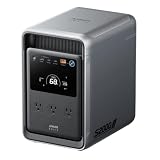
- 𝐔𝐩 𝐭𝐨 𝟑𝟓-𝐇𝐨𝐮𝐫 𝐅𝐫𝐢𝐝𝐠𝐞 𝐁𝐚𝐜𝐤𝐮𝐩: With 6W idle power draw and 10% higher efficiency, this power station runs 20% longer than other 2kWh systems, keeping your fridge powered for 35 hours.
- 𝟏𝟎,𝟎𝟎𝟎-𝐂𝐲𝐜𝐥𝐞 𝐋𝐅𝐏 𝐁𝐚𝐭𝐭𝐞𝐫𝐲: Powered by 314Ah LFP cells, S2000 has a 15-year lifespan, equivalent to 10,000 charge cycles.
- 𝐒𝐦𝐚𝐥𝐥𝐞𝐬𝐭 𝐚𝐧𝐝 𝐋𝐢𝐠𝐡𝐭𝐞𝐬𝐭 𝟐𝐤𝐖𝐡 𝐏𝐨𝐰𝐞𝐫 𝐒𝐭𝐚𝐭𝐢𝐨𝐧: 30% smaller and 25% lighter than the industry average, this power station measures just 8.2 × 11.1 × 12.7 in and weighs only 35.7 lbs.
- 𝐏𝐨𝐰𝐞𝐫𝐬 𝟗𝟗% 𝐨𝐟 𝐇𝐨𝐦𝐞 𝐄𝐬𝐬𝐞𝐧𝐭𝐢𝐚𝐥𝐬: 1,500W continuous output and 3,000W peak output keep nearly every essential appliance running. Actual runtime will vary depending on your refrigerator model, usage habits, and ambient temperature.
- 𝟔 𝐖𝐚𝐲𝐬 𝐭𝐨 𝐑𝐞𝐜𝐡𝐚𝐫𝐠𝐞: Supports up to 400W solar input. Power up via AC + solar, a wall outlet, a generator, solar panels, an alternator charger, or a car outlet—anytime, anywhere.
The IEA notes that AI workloads can produce large, rapid power swings and highlights storage as a reliability tool. Where grid connections are slow, U.S. developers are pursuing on-site natural-gas generation (IEA executive summary). EPRI cautions that nominal megawatts announced in project pipelines are not a near-term peak-load forecast because ramp schedules, non-IT loads, on-site generation and demand flexibility change actual grid demand (EPRI).
How the expansion could be supplied
- Grid expansion: new generation, transmission, substations and transformers.
- Natural gas: including behind-the-meter generation where interconnection is delayed; it can be fast to deploy but adds fuel and emissions exposure.
- Nuclear: existing plants, long-term contracts or new projects where available; construction timelines and cost matter.
- Renewables plus storage: solar and wind paired with batteries or other storage, while recognizing that annual renewable matching is not the same as hourly physical supply.
- Other local resources: hydropower and geothermal where geography permits.
- Flexible computing: shifting jobs, reducing batch size or using a smaller model during grid stress.
DOE identifies on-site generation, storage, demand flexibility, innovative rates, efficiency and grid modernization as possible responses (DOE clean-energy resources).
Can AI workloads be flexible?
More flexible
- Non-urgent training
- Batch inference and evaluation
- Data preprocessing and synthetic-data generation
- Some fine-tuning
- Geographic shifting of jobs
Less flexible
- Interactive consumer responses
- Latency-sensitive enterprise applications
- Industrial control and safety-critical systems
- Real-time robotics
- Services with contractual uptime guarantees
Flexibility does not mean switching off a live service. It can mean slowing training, moving a job to another region, lowering batch size, selecting a less power-hungry model or scheduling work around grid conditions.
What this means for people paying the bills
Data-center growth can influence regional electricity prices, utility investment and cost-allocation debates. The effect depends on who pays for new generation and wires, how much load is actually delivered, and whether facilities provide storage or demand response. A cloud GPU price is not an electricity-price proxy: it also includes hardware, buildings, networking, storage, labor, financing, support, scarcity and provider margin.
The Tool Desk
Outbyte PC Repair FREERepair Windows errors before they cause bigger problemsFix Now →Outbyte Driver Updater FREEFix the driver behind crashes, sound loss and screen glitchesFind Drivers →| Service | Published price signal | Important limitation |
|---|---|---|
| AWS P5.48xlarge | $34.608 per hour, or $4.326 per H100 accelerator-hour, in listed U.S. regions. | Capacity Block pricing; reservation and operating-system conditions apply (AWS pricing). |
| AWS P6-B200.48xlarge | $82.368 per hour, or $10.296 per B200 accelerator-hour, in listed U.S. regions. | Capacity Block pricing, not a universal on-demand rate. |
| CoreWeave HGX H100 | $49.24 per hour on demand; $19.71 spot in displayed North American pricing. | Availability and interruptions can change effective cost (CoreWeave pricing). |
| CoreWeave HGX B200 | $68.80 per hour on demand; $34.11 spot. | Displayed pricing is region- and availability-dependent. |
| Google Cloud A3 High | Eight-H100 VM listed at $88.49 per hour on demand. | Machine, region, storage, networking and commitment terms matter (Google Cloud pricing). |
These August 2026-listed rates are useful for infrastructure budgeting, not for estimating the physical electricity consumed by AI. Most individual developers are better served by a managed model API or a small local model than by an eight-GPU machine.
How to judge new claims
- Is the claim annual energy (TWh), average power or peak power?
- Does “AI” mean accelerators only, AI-focused facilities or all data centers?
- Are cooling, networking, storage and backup systems included?
- Is the number measured operating load, contracted capacity or an announced project?
- Are the assumptions about tokens, agents, video, utilization and hardware stated?
- Does the comparison match the same geography and time period?
- For renewable claims, is the facility matched annually or supplied physically every hour?
What to watch next
- Operating load rather than announced megawatts
- Inference-token and agent activity growth
- GPU shipments, utilization and efficiency
- Interconnection approvals and transformer availability
- Regional electricity prices and rate cases
- PUE, water use and cooling technology
- Storage and demand-response participation
The Bottom Line
AI’s electricity story is an arms race between more efficient computation, more computation demanded by users and the physical speed of building power infrastructure. Expect substantially higher demand through 2030, with the sharpest financial and grid effects concentrated in the regions hosting the largest new facilities.
Quick Recap
Product prices and availability are accurate as of the date/time indicated and are subject to change. Any price and availability information displayed on Amazon at the time of purchase will apply.




