There is no official one-size-fits-all percentage for keeping an emergency fund in savings versus liquid investments. Keep the portion you may need promptly in an account with dependable access and a stable deposit balance; consider investments only for money you can leave exposed to market movement and whose withdrawal terms you have checked.
There is no universal savings-versus-investments percentage
Neither the FDIC nor the CFPB guidance cited here sets a percentage split for emergency funds. The FDIC reports a general recommendation from financial experts to hold at least six months of living expenses in a federally insured product, but that is a suggested overall emergency-fund scale—not a rule that all six months must be in one account, or a formula for dividing the money between deposits and investments.
As an Amazon Associate I earn from qualifying purchases.
The useful question is not “What percentage should everyone invest?” It is “How much might I need before I can comfortably accept a delay, a withdrawal restriction, or a drop in value?” The answer depends on your upcoming obligations, how predictable your income is, and the actual terms of the accounts you are considering. This is a planning framework, not an individualized investment recommendation.
Do these 3 things before closing this tab:
1Scan for outdated or missing drivers - takes under a minute2Clear out junk files and repair common Windows errors3Fix the driver behind crashes, sound loss and screen glitchesThat distinction matters because an emergency fund is meant to serve a job: helping cover an unexpected need. The job is not simply to seek the highest possible return. A balance that is exposed to market movement or takes longer to access may be a poor fit for expenses that cannot wait, even if the investment is described as liquid. Conversely, the existence of a savings account does not make every account equally convenient; minimums, transfer steps, fees, and withdrawal limits can affect how useful it is in practice.
#1 Best Overall

- 【100 Envelopes Money Saving Challenge】100 Envelopes Money Saving Challenge Interesting Motivation to Complete 100 Day Challenge You Can Save $5050
- 【A5 Money Saving Binder】1Pcs PU leather a5 binder 25pcs 6-hole cash envelopes pre-printed with 1-100 1 sheet tracker of $1 to $100.Can help you establish an emergency savings fund
- 【100 Envelope Challenge Binder】100 Envelope Challenge Binder 1 to 100 waterproof tear resistant storage and protection for your money.A5 size can easily fit into backpacks and crossbody bags for easy carrying
- 【Savings Binder】Savings Binder is a practical gift that can help friends and family start their savings goals in a fashionable and convenient way
- 【Our Service】Thank you for your trust in NICOOTH Envelope Savings Challenge Book.
First distinguish the accounts people call “liquid”
“Liquid” can describe money that is relatively easy to access, but it does not tell you whether the balance is insured, stable in value, or immediately available. In particular, a bank money market deposit account and a money market mutual fund are different products.
| Option | What it is | What to establish before relying on it |
|---|---|---|
| Traditional savings account | A deposit account. The FDIC describes a traditional FDIC-insured savings account as allowing easy withdrawals and earning some interest; individual account rules can differ. | Confirm the institution is FDIC-insured, the balance is within applicable coverage, and the account’s transfer, withdrawal, minimum-balance, and fee terms suit your needs. |
| Bank or credit-union money market deposit account | A deposit account, not a mutual fund. CFPB notes that bank money market accounts may have transaction limits or minimums. Credit-union accounts may have analogous protection through the NCUA. | Check the institution’s insurance status, ownership and coverage rules, transaction limits, minimums, fees, and how quickly funds can be moved. |
| Money market mutual fund | An investment, not a savings or checking account—even if the fund permits check writing. | Check how withdrawals are handled, when proceeds become available, and whether you can tolerate investment risk. Do not treat it as an insured deposit. |
| Other investments, such as stocks, bonds, or mutual funds | Investments that can fluctuate in value. “Liquid” does not mean that the value is stable or that funds will be available on your preferred timetable. | Consider whether a forced sale during an emergency could leave you with less than you invested, and verify the relevant access and transaction terms. |
The CFPB’s explanation is explicit: “A money market mutual fund account is considered an investment, and it is not a savings or checking account, even though some money market funds allow you to write checks.” Check-writing alone does not turn an investment into a deposit account.
When comparing products, start by identifying the legal and practical type of account rather than relying on its name. “Money market” can refer to a deposit account at a bank or credit union, or to a mutual fund investment. The former may qualify for deposit insurance if it meets the applicable rules; the latter is an investment and is not FDIC-insured. A checkbook, debit feature, or cash-like label does not settle which one you have.
Compare access, stability, protection, and friction
Before assigning any emergency dollars to an option, compare the features that matter when an unexpected bill actually arrives. Product names are not enough: terms vary by account, institution, and investment.
- Access: Find out how you would get money out—not just whether withdrawals are allowed. Check transfer timing, transaction limits, business-day or other processing conditions, and whether the route works for the kind of urgent expense you might face.
- Value stability: A deposit balance and an investment balance are not the same promise. Investments can rise or fall. A withdrawal during a market decline may require selling at a lower value; long-term return potential does not guarantee the value at the moment you need the money.
- Protection: Determine whether the product is an eligible deposit at an insured institution or an investment holding. Deposit insurance does not insure investment performance or protect an investment from market losses.
- Terms and friction: Review minimum balances, fees, withdrawal rules, transfer steps, and any practical obstacles to accessing funds. An account that is technically withdrawable may still be a poor fit for an expense that cannot wait.
- Purpose and time horizon: Separate money that may be needed soon from money you could leave untouched through market fluctuation. The more uncertain the timing of a withdrawal, the more important it is to understand both access and value risk.
Translate those categories into a specific test: if an urgent expense arrived, what steps would you take to pay it from each account, and how long might each step take? Would you need to initiate a transfer first? Are withdrawals subject to a limit or a minimum balance? Does the account impose a fee or another condition that matters to you? A balance can be “liquid” in a general sense and still not be the right source for an expense that needs prompt payment.
Then ask what happens if the timing is bad for an investment. If its value has fallen when you need to withdraw, you may have to sell at that lower value. That is different from an insured deposit balance, though an insured deposit still has account terms and coverage rules to check. Do not treat the potential for stronger returns over many years as a guarantee of a suitable value or access in an emergency.
Costs and requirements are part of the comparison, too. Review stated fees and minimum-balance requirements for the specific account, as well as transaction limits and transfer mechanics. The sources cited here do not establish a typical fee or rate for any provider, so compare current terms directly rather than assuming that an account with a particular label will be cheaper, faster, or better suited to your needs.
Rank #2

- [STEALTH NESTING DESIGN] This 2-pack comes with a large (9.2"x5.7") and small inner pouch (8"x5"). Slide one inside the other for a double thermal barrier. Ideal fireproof bags for cash and documents, but does NOT fit A4/Letter papers unfolded
- [2200°F NON-ITCHY SHIELD] Cheap fiberglass leaves painful splinters. Our fireproof cash bag features a premium liquid silicone exterior that is totally smooth. Engineered to withstand up to 2200°F, ensuring your fireproof money bag survives heat
- [DISCRETE BUDGETING SYSTEM] The pitch-dark exterior offers maximum concealment inside any safe. Use them nested for extreme protection, or separately as a fireproof envelope. It is the ultimate fire proof money bag for cash stuffing and saving
- [WATER-RESISTANT CLOSURE] Valuables are often ruined by fire hoses. This fireproof pouch features a professional waterproof zipper tightly sealed under a heavy-duty Velcro flap. The dual-closure makes it a reliable fire proof bag against moisture
- [EVERYDAY SECRET STORAGE] Security is not just for heavy metal boxes. Keep the large one hidden in your desk, and use the small fireproof bag for daily carry. Note: For maximum overall protection, always store these inside a fire-resistant safe
Understand what deposit insurance does—and does not—cover
FDIC insurance generally covers eligible deposits at an FDIC-insured bank up to $250,000 per depositor, per insured bank, per ownership category. That is the FDIC’s standard maximum amount, not a per-account limit. Account ownership and coverage-category rules affect how coverage is calculated, so do not assume that opening multiple accounts at the same bank automatically creates additional coverage.
Investments are different. The FDIC states: “The FDIC does not insure money invested in stocks, bonds, mutual funds, life insurance policies, annuities or municipal securities, even if these investments are purchased at an insured bank.” A bank’s insured status therefore does not make a brokerage investment or mutual fund held there an insured deposit. Insurance status also should not be confused with a guarantee against ordinary investment losses.
If you use a credit union, check the applicable NCUA protection and account terms rather than assuming FDIC coverage. The CFPB identifies NCUA protection as analogous for credit-union accounts; the FDIC limit stated above applies to qualifying deposits at FDIC-insured banks.
For the cash portion, this means checking both where the money is held and what kind of holding it is. An eligible deposit at an insured bank is not the same as a mutual fund available through a bank or brokerage. If your balances are near or above applicable coverage limits, ownership categories and how accounts are titled matter; the $250,000 figure is not a separate allowance for every account number. Confirm the current coverage treatment for your particular setup rather than trying to infer it from the number of accounts you have.
Put the six-month benchmark in context
In Saving for the Unexpected and Your Future (2025), the FDIC says financial experts generally recommend having at least six months of living expenses in a federally insured product. Treat this as a broad emergency-savings benchmark reported by the FDIC, not as a guaranteed ideal for every household. It does not specify a savings-versus-investment split, and it does not mean six months must be held in a single savings account.
The same FDIC article offers a savings illustration: setting aside $20 every other week equals $520 plus interest per year. That is an example of regular saving, not a recommended contribution amount or a claim that a particular account will earn a particular rate.
The FDIC describes the role of a traditional savings account this way: “A traditional FDIC-insured savings account is a great place to put money aside for savings goals, as it allows you to withdraw funds easily and earn some interest.” That is a general description; confirm the withdrawal and transfer rules of the specific account you use.
Rank #3

- Features: These money envelopes measure 3.2 x 6.6 inches, making them the ideal small envelope for cash, budgeting, coins, jewelry, medications, resistors, capacitors, seeds, credit cards, SD memory cards, or any other small items. The 8.1 x 16.8 + 2.2 cm sealable envelopes cater to all your home and office needs. Use these cash envelopes to store or organize various small accessories, keeping things tidy and saving time.
- Quality Material: Our Money Envelopes for Cash Budgeting are made of 80g color tape paper, which is recycled and sturdy. Choose from ten vibrant colors, including white, light green, Christmas green, light pink, yellow, light blue, lake blue, red, orange, and deep purple.
- Gummed Flap: These small money envelopes feature a gummed flap with a newly designed peel-and-seal adhesive that prevents the Key Envelopes for Coins from falling out, ensuring your cash remains safe during transit. The adhesive strip can be removed and reapplied for continued secure transportation. Additionally, the money envelope is not see-through, so you won't have to worry about privacy.
- High Capacity: This pack of 120 small envelopes is the perfect solution for your budgeting needs! Designed with ergonomics in mind, they help keep your personal finances organized while saving money. Their 3.2 x 6.6-inch size can easily hold up to 60 bills.
- Eco-Friendly Gift: Our Small Color Envelopes come with sleek, attractive borders and colors that resist fading. Use them for tips or gifts as an eco-friendly alternative to plastic packets, ensuring you don't compromise on the environment.
The six-month figure can help readers think about the overall scale of a reserve, but it does not answer where each dollar belongs. The FDIC’s wording is about a general emergency-fund recommendation and a federally insured product; it is not a mandate to hold a particular percentage in cash, and it is not a forecast of how much a specific household will need. Avoid turning it into a rule such as “keep a certain number of months in savings and invest the rest” unless that choice follows from your own obligations, access needs, and risk tolerance.
The Tool Desk
Outbyte PC Repair FREEClear out junk files and repair common Windows errorsFree Scan →Outbyte Driver Updater FREEScan for outdated or missing drivers - takes under a minuteDriver Scan →Build your split from the money’s job
Instead of starting with an arbitrary percentage, sort your emergency fund by when the money might be needed and what would happen if its value or access changed. The categories below are a decision aid, not a required allocation model.
1. Identify expenses that cannot wait
List the urgent costs you would need to cover if income stopped or an unexpected expense arrived: for example, essential bills or a necessary repair. Estimate what must be reachable promptly, and decide what access method would realistically work under pressure. There is no universal number for this layer; it follows from your obligations and circumstances.
Make the estimate about access as well as amount. A sum that would cover an expense on paper may not help if the withdrawal route is too slow for the bill’s deadline. Consider the types of urgent costs you are preparing for and which account could actually be used to meet them. The goal is to avoid depending on a sale or transfer whose timing or value you have not checked.
2. Check income uncertainty and access alternatives
Consider how predictable your income is, whether other resources would be dependable in an emergency, and how quickly you could use each account. If income is irregular or a household has little room to absorb a delay, prompt and predictable access may matter more. Do not count a possible investment withdrawal as equivalent to cash unless you have verified its timing and accept the possibility of selling after a decline.
Outdated Drivers Are Slowing You Down
One free scan finds every outdated or missing driver and matches the right update for your exact hardware.Free scan · exact hardware matchWindows Errors? Fix Them Before They Spread
Repair common Windows errors and clear accumulated junk for a smoother, more stable PC - no reinstall needed.Free scan · no reinstallUse this step to examine the assumptions behind your plan. If you think another resource could cover an urgent bill, ask whether it would truly be available when needed. If the answer is uncertain, do not treat it as interchangeable with money already in an accessible account. The decision is not simply “savings or investment”; it is also how much delay and uncertainty your household could manage.
3. Keep the near-term portion in a suitable deposit account
For money you may need promptly, compare insured savings and bank money market deposit accounts by their specific terms. Verify insurance eligibility and coverage, transfer mechanics, limits, minimums, and fees. A deposit account may offer a more stable balance than an investment, but its terms still determine how convenient access will be.
Rank #4

- Perfect for Cash Budgeting: Stay organized with this 120-pack of cash budgeting envelopes designed for efficient money management. Ideal for cash-stuffing, saving plans, or sinking funds.
- 12 Rustic Vintage Colors: Includes 12 assorted colors to easily categorize and identify your budgets. Assign a color to each expense category for a visually organized system.
- Convenient Size: Each envelope measures 3.5" x 7", perfectly sized to fit cash, receipts, or checks while remaining compact enough to store in wallets or organizers.
- Durable & Thick Paper: Made from 120 GSM Thick Uncoated sturdy Offset paper, with outstanding durability and it won't easily Tear in Transit. these envelopes are built to handle daily use and repeated handling without tearing or smudging.
- Multi-Purpose Utility: Great for budgeting, gift-giving, organizing receipts, or school projects. A practical tool for personal finance and creative organization.
Read the account’s terms rather than stopping at a product description. Check how withdrawals or transfers work, whether any transaction limits apply, whether you must maintain a minimum balance, and whether fees could apply. CFPB notes that bank money market accounts may have limits or minimums, so the account’s name alone cannot tell you whether it fits your access needs.
4. Consider investments only for a separate, risk-tolerant portion
If some emergency-fund money is not needed for near-term access, you may consider whether a liquid investment fits your risk tolerance and time horizon. That choice means accepting that the value can fluctuate and checking the withdrawal process. It is not a way to make the emergency fund’s value or access guaranteed, and past or potential long-term returns do not settle whether the money will be available at the right value when an emergency happens.
Free tools Windows power users keep installed
One-click scans. No signup required.
Keep the distinction clear: “liquid” does not mean risk-free, insured, or instantly transferable. For a money market mutual fund, for example, check how redemption works and when proceeds become available; do not infer that check-writing makes it a bank deposit. For stocks, bonds, and mutual funds more broadly, consider whether you could tolerate selling during a decline. This is a question of suitability for the job of emergency money, not a promise that an investment will perform a certain way.
5. Recheck the plan when circumstances change
Revisit the division when your essential costs, income predictability, obligations, or account terms change. A split that worked when withdrawals were unlikely may no longer fit if you now need more money accessible quickly. Keep the comparison grounded in current terms, not a label such as “high-yield,” “cash-like,” or “liquid.”
Also revisit the plan after changing institutions or account types. New terms may mean different minimums, transaction limits, transfer timing, or fees. If a balance grows enough to make insurance coverage a question, check ownership-category rules and coverage at the institution rather than assuming the existing setup remains within limits.
Independent reader supportYour contribution helps us test, update, and keep practical guides available for everyone.A practical checklist before you move emergency money
- Can you identify whether each balance is a deposit or an investment?
- Have you checked the institution’s insurance status and how ownership categories affect coverage?
- Do you know the actual withdrawal limits, minimums, fees, and transfer timing?
- Could you tolerate a decline in value if you had to withdraw during a market downturn?
- Have you kept the amount that must be reached promptly out of options whose access or value is uncertain to you?
- Are you treating the six-month figure as a general benchmark rather than a prescribed account split?
Before moving money, make sure you can answer each question for the exact account or investment, not just for the category in general. If you cannot tell whether a “money market” product is a deposit account or a mutual fund, clarify that first. If you cannot explain how quickly you could get funds or what could affect their value, do not assume the product will function like cash in an emergency.
Quick wins for a faster PC:
Scan for outdated or missing drivers - takes under a minuteDriver Scan →Clear out junk files and repair common Windows errorsFree Scan →Frequently Asked Questions
Is there a recommended percentage of an emergency fund to keep in savings?
The FDIC and CFPB guidance cited here do not set a universal savings-versus-investments percentage. Start with how much you may need promptly and compare the actual access, value stability, insurance, and account terms of each option.
Best Value
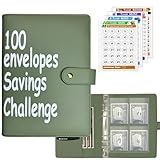
- Reach Your Savings Goals Effortlessly:Transform saving challenge into a rewarding game! This budget binder uses 100 numbered envelopes (1-100) to help you save $5,050, $10,000, $1,000, $500 total by depositing the amount on each envelope
- GAMIFYING MONEY SAVING FOR ALL BUDGETS: The 100 Envelope Money Saving Challenge Binder is designed to be flexible - save money daily, weekly, or monthly. Start small (e.g., save $1 in Envelope #1) and work your way up. 4 trackers cards are included to keep you motivated and on track
- Money Saving Binder Kit: A5 PU Leather Binder, 4 different Challenges trackers, and 100 envelopes pre-numbered with 1-100. DONBAO saving challenge binder is perfect for building an emergency fund, vacation savings, or debt payoff
- DIY Your Own Binder: This envelope challenge binder allows you to DIY your own cover and reuse the challenge plan. An inspiring and fun way to save money
- The perfect gift for financial wellness : Great for birthdays, holidays, or as a self-care tool. Includes 100 envelopes (pre-numbered) and 4 tracking cards for recording goals
Does the FDIC’s six-month recommendation mean I should keep six months of expenses in a savings account?
No. The FDIC’s 2025 article reports that financial experts generally recommend at least six months of living expenses in a federally insured product. It does not prescribe one account or a cash-versus-investment split.
Is a money market account the same as a money market mutual fund?
No. A bank or credit-union money market deposit account is a deposit account. A money market mutual fund is an investment, not a savings or checking account, even if it allows check writing.
Are liquid investments insured by the FDIC?
No. FDIC insurance covers eligible deposits at FDIC-insured banks, subject to coverage rules. It does not insure stocks, bonds, mutual funds, or other investment holdings against losses.
What should I check before relying on a liquid investment for emergencies?
Check how withdrawals or redemptions work, when proceeds become available, and whether you could tolerate a decline in value if you needed to sell during a market downturn. “Liquid” does not mean stable value or instant access.
What does the $250,000 FDIC insurance limit apply to?
The FDIC’s standard maximum is $250,000 per depositor, per insured bank, per ownership category, not per account. Ownership and coverage-category rules affect how the limit applies.
The Bottom Line
There is no official percentage for how much of an emergency fund belongs in savings versus liquid investments. Keep money you may need promptly in an account with dependable access, understand whether each holding is an insured deposit or an investment, and check withdrawal terms, limits, minimums, fees, and transfer timing. Consider investments only for money whose value can fluctuate without undermining your plan. The FDIC’s six-month benchmark is a general emergency-savings recommendation, not an allocation formula.
Quick Recap
Product prices and availability are accurate as of the date/time indicated and are subject to change. Any price and availability information displayed on Amazon at the time of purchase will apply.
Recommended Free Tools




