Microsoft’s case for Models-as-a-Service (MaaS) is straightforward: turn model deployment into an API purchase rather than an infrastructure project. An eligible model in Microsoft Foundry can be exposed as an endpoint while Microsoft operates the serving environment; the customer reviews the model’s license and price, sends requests, and generally pays for input and output tokens. That removes the need to buy GPUs, build serving containers, or keep an inference stack patched.
The promise is meaningful, but narrower than “AI for everyone.” MaaS does not make inference free, unlimited, universally private, or independent of vendor terms. Region, quota, model eligibility, licensing, data governance, latency and total application cost still determine whether it is appropriate.
As an Amazon Associate I earn from qualifying purchases.
What problem was Models-as-a-Service designed to solve?
Choosing a foundation model is only the beginning of running an AI application. A team that self-hosts must select GPU capacity, make frameworks and dependencies compatible, deploy model-serving software, move data, scale for peaks, patch systems, monitor failures and control the cost of idle hardware. Those tasks can require a very different skill set from prompt design or application development.
Free tools Windows power users keep installed
One-click scans. No signup required.
Microsoft described MaaS as an abstraction over that operational work: select an eligible model, obtain an endpoint and consume it through an API. The original May 2024 explanation framed the feature as an alternative to building the model-serving environment yourself (Microsoft’s explanation of MaaS).
#1 Best Overall

- Professional AI & Creator Workstation: AMD Radeon AI PRO R9700 GPU with 32GB GDDR6 is engineered for AI development, professional content creation, and compute-intensive workloads.
- Massive 32GB Memory Capacity: 32GB of GDDR6 memory on a 256-bit bus provides ample bandwidth for large AI models, 8K video editing, and complex 3D rendering.
- Advanced RDNA 4 with AI Accelerators: 64 Compute Units with 3rd Gen Ray Tracing and dedicated 2nd Gen AI Accelerators for groundbreaking AI performance and visual computing.
- Professional Blower Cooling: Efficient single blower design exhausts heat directly out of the chassis, ideal for multi-GPU workstation and server configurations.
- Enterprise-Grade Thermal Solution: Vapor chamber heatsink with industrial Honeywell PTM7950 thermal interface material ensures reliable cooling under sustained professional loads.
That abstraction does not remove model development. Customers still have to design prompts, evaluate quality, build retrieval and application logic, add safety controls and monitor production behavior. MaaS primarily reduces the infrastructure burden.
What Microsoft means by “democratizing access”
Microsoft uses democratization to describe several reductions in friction:
- Lower infrastructure barrier: an API replaces customer-managed GPU-serving infrastructure for eligible serverless deployments.
- Lower initial commitment: usage billing can be preferable to purchasing a dedicated fleet before demand is known.
- More choice: the Foundry catalog brings Microsoft, partner and community models into one discovery and deployment experience.
- Faster experimentation: developers can try a model in Foundry and connect it to an application without first assembling a serving stack.
- Hosted customization: models that support hosted fine-tuning can be adapted without the customer operating the tuning infrastructure.
- Enterprise access: Azure identity, permissions, billing and governance can simplify adoption for organizations already using Azure.
- Distribution for model makers: providers can publish models to Azure customers and potentially license or monetize them through the platform.
Microsoft’s broader AI-access principles present Azure as a channel for proprietary and open models used by companies, governments and nonprofits (Microsoft AI Access Principles). In that sense, MaaS is both a customer convenience and a distribution strategy for model developers.
The Tool Desk
Outbyte PC Repair FREERepair Windows errors before they cause bigger problemsFix Now →Outbyte Driver Updater FREEScan for outdated or missing drivers - takes under a minuteDriver Scan →How a MaaS deployment works
- Open Microsoft Foundry: sign in with an Azure account and select the relevant project or resource.
- Browse the catalog: identify a model that supports the deployment method and capabilities you need.
- Review terms: check the provider’s license, region, pricing, content-safety behavior and any Marketplace subscription requirement.
- Create a deployment: choose a serverless API deployment or another available Foundry deployment type.
- Authenticate: configure the endpoint with the supported Azure identity or key-based method.
- Send requests: use the supported inference interface, including the Azure AI Model Inference API where available.
- Operate the application: monitor token use, errors, latency, quotas and the complete Azure bill.
Microsoft’s current documentation calls the platform Microsoft Foundry and refers to Foundry Models. Older tutorials and the 2024 coverage used “Azure AI Studio” and “Models-as-a-Service”; some operational pages still carry “classic” Azure AI Foundry paths. The naming changed, but the underlying distinction between Microsoft-hosted serverless inference and customer-controlled deployments remains (Microsoft Foundry overview; classic serverless deployment documentation).
Serverless MaaS versus managed compute
The most useful analogy is renting versus taking on more of the property. In serverless MaaS, Microsoft manages the serving environment. In managed compute, the customer places model weights on dedicated managed virtual machines and controls more of the deployment, while Azure still operates the underlying infrastructure. “Owning” in this comparison does not mean owning the physical hardware or the model’s intellectual property; it means accepting more operational responsibility.
| Dimension | MaaS/serverless | Managed compute or self-hosting |
|---|---|---|
| Infrastructure work | Low for the customer; Microsoft hosts eligible models | Higher; the customer manages more of the model, container and deployment |
| Billing | Generally input and output consumption, commonly tokens | VM core hours or other dedicated infrastructure charges |
| Idle-capacity risk | Lower when demand is intermittent | Higher when dedicated machines sit unused |
| Control | Limited to the model and features exposed by the service | Broader control over versions, containers and serving configuration |
| Customization | Only where the selected model and service support it | Usually broader, including custom serving code |
| Best fit | Experiments, uncertain demand and moderate or bursty traffic | Specialized workloads, private configurations and sustained utilization |
Microsoft documents these deployment distinctions and the different billing models in its Foundry Models overview (deployment and billing overview).
Which models are available?
The catalog is not a permanent, universal list. The original May 2024 report cited more than 1,600 open and proprietary models and named Meta Llama, Mistral, Core42 JAIS, Nixtla TimeGen-1, AI21, Bria, Gretel, NTT Data, Stability AI and Cohere. That was a historical snapshot, not a current availability guarantee (May 2024 catalog report).
What’s actually slowing this PC down?
Pick the symptom - the matching free tool is one click away.
Rank #2

- PLEASE NOTE: Exporting an NVIDIA RTX Pro 6000 GPU outside the US requires strict adherence to the U.S. Export Administration Regulations (EAR) and issuance of an export license from the Bureau of Industry and Security (BIS). Compliance and Know Your Customer (KYC) screening may be required as a condition of order acceptance. [NVIDIA Blackwell Streaming Multiprocessor] The new SM features increased processing throughput, and new neural shaders that integrate neural networks inside of programmable shaders | DLSS 4: Multi Frame Generation ensures ultra-smooth frame pacing for lifelike simulations.
- [Double-Flow-Through Design] The RTX PRO 6000 Blackwell features a double-flow-through cooling design, optimizing efficiency and airflow to sustain peak performance under 600W power loads. | [5th Gen Tensor Cores] Deliver up to 3X the performance of the previous generation and support for FP4 precision for faster AI model processing times with reduced memory usage, enabling local fine-tuning of LLMs and generative AI | [4th Gen Ray Tracing Cores] Double the ray-triangle intersection rate of the previous generation to create photoreal, physically accurate scenes and immersive 3D designs with RTX Mega Geometry, which enables up to 100X more ray-traced triangles.
- [PCIe Gen 5] Support for PCIe Gen 5 provides double the bandwidth of PCIe Gen 4, improving data-transfer speeds from CPU memory and unlocking faster performance for data-intensive tasks like AI, data science, and 3D modeling. | [GDDR7 Memory] With 96 GB of GPU memory and 1.8 TB ps bandwidth, it can tackle massive 3D and AI projects, fine-tune AI models locally, explore large-scale VR environments, and drive larger multi-app workflows.
- [DisplayPort 2.1] Achieve unparalleled visual clarity and performance, driving high resolution displays at up to 8K at 240 Hz and 16K at 60 Hz. Increased bandwidth enables seamless multi-monitor setups while HDR and higher color depth support ensures superior color accuracy for precision work, such as video editing, 3D design, and live broadcasting.
- [Universal MIG] Divide a single RTX PRO 6000 Blackwell into multiple isolated instances, each with dedicated resources, allowing for concurrent execution of multiple workloads, optimized GPU utilization, and secure isolation of different applications or users. [WARRANTY] 3 YR Manufacturer's Warranty. Bulk OEM Packaging. Retail Packaging is NOT included.
Current Foundry documentation groups models sold directly by Azure separately from partner and community offerings. Collections can include Microsoft MAI and Phi models, Azure OpenAI models and models associated with Cohere, DeepSeek, Meta, Mistral and xAI. Availability depends on project type, region, deployment method, model status and capabilities (current model concepts; models sold directly by Azure).
A common inference API reduces rewrites during evaluation, but it does not make models interchangeable. Context limits, modalities, tool calling, structured output, streaming, fine-tuning, safety behavior, rate limits, latency and refusal patterns can differ. Test the exact model and features your application requires.
How billing works—and where the “pay as you go” claim stops
Serverless deployments are generally metered on input and output consumption, usually tokens. Microsoft-owned models are billed through Azure meters; partner and community models are generally offered through Azure Marketplace. The model provider can set license terms and price, so the deployment screen and the model’s own terms are authoritative (Foundry Models FAQ).
Before production, verify all of the following:
- Input-token and output-token rates, including any cached or special-token pricing.
- Fine-tuning charges, if available.
- Marketplace subscription terms or fees.
- Regional and deployment-type price differences.
- Minimum commitments or other commercial conditions.
- Networking, storage, logging, monitoring, retrieval and safety-service charges.
Some Foundry arrangements do not add a separate resource charge, but that does not make inference free: model consumption still generates charges. Token billing can avoid paying for idle GPUs, yet dedicated capacity may cost less at high, steady utilization. Compare realistic token volume and concurrency rather than only the advertised unit price.
Quotas, regions and operational limits
The classic serverless documentation lists 200,000 tokens per minute and 1,000 API requests per minute per deployment, generally with one deployment per model per project. These are documented limits, not a promise of unlimited elasticity, and Microsoft can change them; confirm the current values in your account before launch (serverless limits).
A playground test can therefore succeed while a concurrent production workload receives throttling. Load-test the endpoint, request a quota increase if appropriate, and consider caching, routing, another deployment type or another provider. Also confirm that the model is deployable in the required region; appearing in the catalog does not guarantee regional availability.
Independent reader supportYour contribution helps us test, update, and keep practical guides available for everyone.Who manages what?
Microsoft or the service
- Hosting infrastructure for eligible serverless models.
- Endpoint creation and the underlying inference environment.
- Foundry catalog and deployment workflow.
- Azure billing integration and service-level platform operations.
The customer
- Model selection, license acceptance and Marketplace enrollment.
- Prompt, retrieval and application design.
- Input-data handling, evaluation and quality assurance.
- Authentication, authorization, budgets, quota planning and monitoring.
- Responsible-use controls and the decision about whether the data-processing arrangement meets organizational requirements.
For partner and community models, Microsoft says the provider supplies the model and defines its terms, while Microsoft hosts it in Azure infrastructure and acts as the data processor for submitted prompts and outputs (provider and hosting responsibilities).
Rank #3
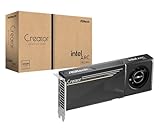
- System Compatibility Note: 2-slot card, 271x112x39mm, single 8-pin power, 200W TDP. Verify chassis clearance and PSU capacity before purchase.
- Dedicated Support: Please contact us directly through Amazon for any product questions or assistance you may require.
- 24GB GDDR6 on 192-Bit Bus: Massive 24GB memory with 456 GB/s bandwidth – ideal for LLMs, AI inference, 3D rendering, and generative design.
- Intel Xe2-HPG Architecture: Built on Intel's next-gen architecture with 20 Xe cores and 160 XMX engines for AI acceleration (197 INT8 TOPS).
- PCIe 5.0 Support: PCI Express 5.0 x16 interface for maximum bandwidth with the latest workstation platforms.
Privacy, security and content safety questions
“Hosted in Azure” is not a complete compliance answer. For the exact model and deployment, ask where inference is processed, whether it is regional or global, what retention and logging settings apply, whether the provider can access prompts or outputs, and which private-networking and identity controls are available.
Microsoft documents default Azure AI Content Safety text filters for serverless language-model APIs, including hate, self-harm, sexual and violent-content categories. Behavior and configuration can vary by model and current Foundry experience, so regulated or high-impact applications need their own safety evaluation and contractual review (content-safety documentation).
Open-weight also does not mean unrestricted. Commercial, geographic, attribution, acceptable-use and other conditions can come from the model provider independently of Azure’s technical terms.
Who benefits most—and who may not
Strong candidates
- Startups and small teams without GPU-serving expertise.
- Proofs of concept and applications with uncertain or bursty demand.
- Azure customers seeking consolidated identity, billing and governance.
- Teams comparing several models through a common interface.
- Organizations that want hosted fine-tuning where a model supports it.
- Model developers seeking cloud distribution and monetization.
Potentially poor fits
- High, steady traffic where dedicated capacity is cheaper.
- Strict latency, private-isolation or residency requirements unavailable for the model.
- Custom serving code, exact version control or unsupported inference features.
- Workloads constrained by the documented quota.
- Applications that cannot accept Marketplace terms or Azure dependence.
- Small models that can run economically on hardware the organization already owns.
How MaaS compares with alternatives
| Option | Why choose it | Typical drawback |
|---|---|---|
| Microsoft Foundry Models | Broad Microsoft, partner and community catalog with Azure integration | Eligibility, region, quota and provider terms vary |
| Azure Machine Learning managed compute | More deployment control with Azure-managed virtual machines | Dedicated capacity and VM-hour charges |
| Azure OpenAI Service | Supported OpenAI models in Microsoft’s enterprise environment | Narrower model-family choice than a multi-provider catalog |
| Amazon Bedrock | Managed multi-provider access for AWS-standardized organizations | AWS-specific identity, networking, governance and pricing |
| Google Vertex AI | Model access integrated with Google Cloud data and ML services | Less attractive when Azure identity and procurement dominate |
See the official alternatives at Amazon Bedrock, Google Vertex AI and Microsoft’s Azure OpenAI pricing page. Cross-cloud comparisons should include networking, observability, support and migration costs, not just token rates.
The practical verdict
Microsoft’s democratization claim is credible in a specific sense: MaaS makes trying and integrating eligible models much easier by shifting GPU provisioning, serving software and much of the operational upkeep to Microsoft. It is especially valuable when demand is uncertain, traffic is moderate or a team lacks model-operations expertise.
Do these 3 things before closing this tab:
1Scan for outdated or missing drivers - takes under a minute2Clear out junk files and repair common Windows errors3Fix the driver behind crashes, sound loss and screen glitchesThe broader claim needs limits. Access is still constrained by price, quotas, regions, model eligibility, provider licenses, safety obligations and data-governance requirements. A production decision should begin with serverless for a measurable experiment, then compare its full cost and operational behavior with managed compute or another provider before committing to a long-lived architecture.
Quick Recap
Product prices and availability are accurate as of the date/time indicated and are subject to change. Any price and availability information displayed on Amazon at the time of purchase will apply.




