Fish farming—also called aquaculture—is the controlled raising of fish for personal use or sale. A typical operation obtains or produces young fish, rears them in a nursery, grows them to the intended size, and harvests them. During each stage, farmers manage stocking, feed, water quality, and fish health. The exact choices depend on the species, site, and production system.
How the fish-farming process works
Fish farming is different from simply catching wild fish: it involves human management, such as stocking, feeding, or protecting the fish. The FAO describes farming as intervention in rearing to enhance production, including regular stocking, feeding, or protection from predators (FAO, Doing aquaculture as a business for small- and medium-scale farmers).
- Choose the species and system. Farmers match the fish to the available site, water supply, production goal, and management capacity. Common systems include ponds, cages, and tanks.
- Obtain young fish. Some farms produce young stock in a hatchery; others buy it from a hatchery. Hatchery-based production, nursery rearing, and grow-out are sequential stages of aquaculture husbandry (FAO, Systems framework for rural aquaculture).
- Rear fish in a nursery. Young fish are raised until they are suitable for transfer to the grow-out system. Feed and water conditions vary with species and life stage.
- Stock the grow-out system. The farmer places fish in the pond, cage, or tank at a density the system can support. That limit is its carrying capacity: the stock it can sustain without unacceptable effects on fish or the environment. It is not a universal number.
- Feed and monitor. Fish may eat naturally available food, supplementary feed, or complete formulated diets. Feeding decisions connect to life stage, temperature, dissolved oxygen, waste, stocking density, and fish health (FAO, On-farm feeding and feed management strategies in tropical aquaculture).
- Manage water and fish health. Operators monitor water supply and quality and maintain conditions appropriate to their species and system. Routine water-quality checks are part of farm management (FAO, Management for freshwater fish culture: hatchery water supply and farm management).
- Harvest and handle the fish. Fish are harvested when they reach the intended use or market size. Timing and handling depend on the species, system, and market.
How ponds, cages, and tanks differ
Each system makes different demands on the site and on day-to-day management. The available guidance does not identify one as best for every farm.
| System | What to consider |
|---|---|
| Pond | Whether the site and water supply suit the pond, how water quality and fish health will be managed, and what the fish can eat naturally or need as feed. |
| Cage | Whether the water body and site can support the operation, how stocking and carrying capacity will be managed, and how feed and fish health will be monitored. |
| Tank | Whether the water supply and management capacity can maintain suitable conditions, and how stocking, feed, water quality, and fish health will be controlled. |
These are comparison considerations, not a design specification. The appropriate setup depends on the species, location, production objective, and operator capacity (FAO, Doing aquaculture as a business for small- and medium-scale farmers).
The Tool Desk
Outbyte Driver Updater FREEScan for outdated or missing drivers - takes under a minuteDriver Scan →Outbyte PC Repair FREERepair Windows errors before they cause bigger problemsFix Now →#1 Best Overall
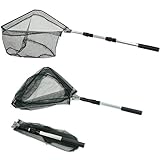
- Fishing landing net is made of sturdy netting and Aluminum handle; ensure long term performance and reliable use. Suitable catch small fish in salt water and fresh water!
- The telescopic handle extends from 18" to 36", total handle with hoop expend to 50 inches, allows for the extra reach needed to get to your catch, great for kids and adults.
- Lightweight soft mesh will not damage fish, making it a perfect tool for both beginner and advanced fishermen to use for catch and release.
- Fishing net with handle is foldable and retractable, easy fit into a storage or rod locker.
- A flip of the handle opens and locks the net into place.
What a farmer must manage throughout the cycle
Stocking and carrying capacity
Stocking density affects the demands on water and management. The system must be able to support the fish without exceeding acceptable effects on their welfare or the surrounding environment. A suitable density therefore has to be determined for the particular fish and system rather than copied as a general figure.
Feed and water conditions
Feed choices change with species and life stage, and feeding cannot be separated from water conditions. Temperature, dissolved oxygen, waste, and density all affect the management decisions needed to keep fish healthy. Routine water-quality monitoring helps an operator assess whether conditions remain suitable.
Rank #2

- 【Efficient Filtration Capabilities】 The PondForse canister filter utilizes multiple layers of filtration media to remove particles and impurities from the aquarium water. This comprehensive approach to water filtration helps maintain crystal-clear water and a healthy ecosystem for your aquatic pets.
- 【Adjustable Flow Rate】 The flow rate control valve offers extensive compatibility, making it suitable for a wide range of aquarium sizes and types. You can easily control the flow rate, ensuring proper flow for optimal effect.
- 【Powerful Output Performance】 The energy-efficient motor operates with excellent stability, providing a continuous and reliable power source for the filtration process, and reducing electricity consumption while delivering powerful filtration performance.
- 【Quiet Operation】 Pondforse canister filter built-in high-performance copper brushless motor ensures a quiet aquarium environment, along with 4 denoising rubber feet to minimize noise. This ensures that it won't disturb your daily activities or disrupt the serenity of your aquatic flora and fauna.
- 【Comprehensive Filter Media Kit】Equipped with all essential accessories for creating a highly efficient filtration system in your aquarium. In addition to the whole filter and accessories, you'll also get 1 extra bulb for backup, balls and sponges.
A water-quality test kit can support those checks, but it should match the water type and the parameters relevant to the chosen species and system. There is no single kit or set of readings appropriate to every farm.
Fish health
Fish health depends on the conditions and husbandry practices used across the production cycle. The appropriate monitoring and response vary by species and system; general guidance cannot establish a disease treatment or intervention for a particular farm.
Rank #3

- Multi-functional: The Net Breeder lets you isolate and breed babies within your own community tank. In addition, it can also be used to isolate injured or aggressive fish.
- Material: Made of soft polyester net and plastic frame. Nylon mesh isolates pregnant females and protects newborn fry while letting aquarium water circulate.
- Easy Operation: Suction cup mounting (included) let you hang this breeder tank at any height in your tank.
- Includes: 2pcs fish breeder, the size is 6.25" x 5.5" x 6.25".
Why there is no one-size-fits-all fish farm
Species, water supply, site conditions, production goals, and available management capacity shape the farm’s design and operating practices. Those factors also affect whether an operation handles hatchery and nursery stages itself or obtains young fish from elsewhere. Stocking rates, feed formulas, water-quality targets, treatments, and local requirements need to be established for the specific species and location; general lifecycle guidance does not determine them.
Independent reader supportYour contribution helps us test, update, and keep practical guides available for everyone.Fish farming’s role in food supply
The FAO says aquaculture provides over half of the world’s aquatic foods for human consumption; the cited guidance does not state a year for that figure (FAO, About: Guidelines for Sustainable Aquaculture).
Quick Recap
Best Value

- Pond Filter bag with Frame: Hecaty filter bag is built frame inside, all-round prevent debris to ensure water pump work high-efficiently.
- Premium Nylon Material: Thickening industrial-grade mesh material, triple-stitched, heavy-duty and anti-earing, 100% protect your pump.
- Super Fine Mesh for Anti-clogging: 1.7mm mesh is sized to effectively prevent damaging debris from entering your pump.
- Asjustable Drawstring: Convenient drawstring for securing pump in the bag.
- Widely used: Easy assembly and effectively filtration for outdoor ponds, koi fish aquarium, waterfall, swimming pool, Fountain.
Rank #4
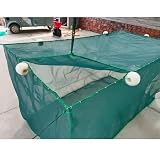
- Durable and reinforced Lawaia Fish Net Cage with Cover for Fish Breeding and Aquaculture.
- Perfect for raising mud loach, yellow eel, crayfish, pond fish and fish fry.
- Made with high-quality materials, featuring a small mesh design (10目3毫米网眼) and reinforced edges for added strength and longevity.
- Soft and flexible wire mesh, plus strengthened net line for improved durability and reliability.
- Sturdy, reliable and long-lasting, it is the first choice for fishkeeping.
Product prices and availability are accurate as of the date/time indicated and are subject to change. Any price and availability information displayed on Amazon at the time of purchase will apply.




