Quick wins for a faster PC:
Repair Windows errors before they cause bigger problemsFix Now →Fix the driver behind crashes, sound loss and screen glitchesFind Drivers →Clear out junk files and repair common Windows errorsFree Scan →German farms make energy from crops and agricultural residues by feeding biomass into oxygen-free digesters. Microorganisms break it down into biogas, which can be burned on site to produce electricity and heat or upgraded into biomethane for the gas grid and other uses. The main distinction is that purpose-grown crops such as silage maize require farmland, while manure and other residues can produce energy from materials already generated by farming.
How anaerobic digestion turns biomass into energy
In an anaerobic digester, microorganisms break down biomass in the absence of oxygen. The resulting raw biogas contains methane and can be used in two main ways, according to Germany’s Environment Agency.

- On-site electricity and heat: A combined heat and power (CHP) plant burns the gas to generate electricity and heat. The electricity can be supplied to the grid; heat may be used locally.
- Biomethane: The raw gas can be cleaned and upgraded to gas quality, then injected into the gas network. Biomethane can be used for heat, transport, combined heat and power, and industrial applications, including the chemical industry.
The route matters: a digester produces gas, not electricity directly. A CHP plant converts that gas into electricity and heat; upgrading instead makes a gas suitable for network injection and uses that include applications where natural gas is used. Germany’s Environment Agency explains these pathways, and the Federal Ministry of Agriculture’s biogas overview describes biomethane uses.
Which crops and materials go into German biogas plants?
Silage maize is the leading energy crop in the ministry’s account. Other crop feedstocks include grass, cereals, legumes, and sugar beet. Farmers can also supply manure and maize silage to plants, and the ministry identifies manure and slurry as underused feedstocks.
#1 Best Overall

- TURN YOUR WASTE INTO ENERGY: treat food waste, kitchen residue, animal manure, pet feces, green waste, lawn grass etc
- FAST INSTALL: no civil work to do, DIY design, install and operate manual guidance
- HIGH BIOGAS PRODUCTION: max 1800 liter gas produced, cooking time up to 3 hours, enough for a family daily cooking
- BENEFIT FOR YOU: get clean free biogas fuel, save your bill, bio-slurry as liquid organic fertilizer to feed your garden plants directly.
- REPLACE COMPOST BIN: compare with traditional composting method, it has energy produced and no bad smell. Eco-friendly, reduce carbon emmissions, reduce firewood burning
The Federal Ministry of Agriculture reported that about 1.57 million hectares were used in 2021 to grow renewable raw materials for biogas production; silage maize represented around 56% of the feedstocks described on its page, published August 19, 2024. These are figures for the stated year and source, not a new 2026 measurement. The ministry’s biogas page also reports about 9,600 German biogas plants and more than 5,600 MW of electrical capacity.
An earlier ministry overview gives a separate snapshot: in 2020 Germany had more than 9,500 biogas plants with installed capacity above 5,600 MW. It notes that farmers operate many plants or provide substrates such as manure and maize silage. Because the two sources refer to different reporting periods, their figures should not be treated as one same-year count. The ministry’s bioenergy overview provides the 2020 figures.
Rank #2
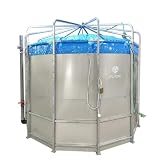
- Waste Utilization: Biogas systems can effeciently decompose the large volumes of livestock manure generated in farms through anaerobic digestion. This process utilize the solid organic waste, save waste storage spaces and no pollution.
- Renewable Energy Production: The anaerobic digestion of livestock manure yields biogas, which is mainly composed of methane (50-70%) and carbon dioxide. The biogas can be directly used as a clean fuel for farm operations, such as heating, lighting, cooking, or generating electricity via biogas generators to meet daily needs.
- High Quality Organic Fertilizer Generation: The digestate is a nutrient organic fertilizer, containing essential elements for crops growth. It is odorless, can be applied to farmland or sold to market, creating additional revenue for farmers.
- Environment Protection: The closed anaerobic digestion process effectively improve the living environment of farm staff and the surrouding residents.
- Scope of application: Livestock farms, slaughterhouses, food processing plants, restaurants, supermarkets, hotels, and resorts in tropical and temperate regions. In cold regions, it should be installed indoors with heating.
Energy crops and residues are different choices
Purpose-grown crops
Growing maize or another crop specifically for energy gives a plant a planned feedstock supply. But the crop uses land that could serve other purposes, and growing, processing, or changing land use can cause greenhouse-gas emissions. Germany’s environment ministry says cultivated-biomass bioenergy is not greenhouse-gas neutral and warns that energy-crop cultivation can add pressure on biodiversity and land, including through conversion of valuable grassland.
In its page marked June 28, 2023, the ministry estimated that renewable raw materials for energy occupied 2.34 million hectares in 2021—about 20% of Germany’s arable land. Of that area, it attributed 1.57 million hectares to biogas energy crops and 758,000 hectares to biofuel crops, mostly rapeseed. These categories and estimates refer to 2021. The environment ministry outlines the land-use and environmental concerns.
What’s actually slowing this PC down?
Pick the symptom - the matching free tool is one click away.
Manure and other residues
Manure and slurry can be digested without growing a dedicated energy crop for that material. The Environment Agency notes that digesting manure can yield energy and a more soil-compatible fertilizer. Using residues can therefore connect energy production with waste management and nutrient handling, but it does not make every project automatically beneficial: outcomes depend on the material, how it is collected and processed, and what happens to the resulting fertilizer. Residue supplies are also finite, so they cannot be assumed to replace all crop feedstocks.
Alternative crops and landscape effects
The agriculture ministry names Silphie, flowering mixtures, and wild plants as alternatives to conventional energy crops. It describes ecological benefits associated with some alternatives, including flowers for pollinators and year-round soil cover. Those benefits do not establish one universally best crop; the result depends on the site, cultivation, feedstock yield, and energy pathway.
Rank #4

- Composition: Composed of a 19L food waste crusher, a 304 stainless steel digester reactor tank, a 1m3 gas storage bag , a 1L desulfurizer, a dehydrator, a gas pump, a single burner biogas stove. Medium constant temperature fast anaerobic reaction
- Used for the resourceful and harmless treatment of kitchen waste food residue, to replace compost bins and compost bags.
- Suitable for use in cold areas: with heating and heat insulation functions, the anaerobic reactor can be placed indoors.
- Biodigestion Technology: Utilizes biodigestion to break down food residues and organic waste into nutrient-rich fertilizer and get clean energy biogas.
- Can produce high-grade sanitary (non-human feces conversion, no infectious bacteria and parasites) organic fertilizer, used to grow safe organic vegetables
What biogas contributes—and what its climate balance depends on
Biogas can provide dispatchable electricity and heat: the gas can be stored or used when required, rather than relying only on the moment sunlight or wind is available. Biomethane broadens the possible uses by entering the gas network. These features make farm biogas useful in energy systems, but they do not by themselves determine its environmental value.
For a fair comparison, consider four factors together:
Best Value

- Used Book in Good Condition
- Feedstock and land: Is the gas made from manure or residues, or from a crop grown expressly for energy? What land is required, and what land use is displaced?
- Timing and output: Can gas be managed to supply electricity or heat when needed, and what end use receives it?
- Conversion route: Is raw gas used in a local CHP plant, or upgraded and injected into the grid?
- Environmental effects: What greenhouse-gas emissions arise from production, land-use change, and processing? How does the system affect biodiversity and nutrient management?
The Environment Agency’s overview, updated June 19, 2026, gives an approximate current figure of around 9,000 German biogas plants; that rounded estimate differs from the agriculture ministry’s page figures and should not be mistaken for an exact census. The agency emphasizes that biomass sources and outcomes vary. Its bioenergy overview discusses the pathways and context.
Quick Recap
Product prices and availability are accurate as of the date/time indicated and are subject to change. Any price and availability information displayed on Amazon at the time of purchase will apply.




