In 2011, EMC argued that cloud adoption would not be won by infrastructure alone. Its plan targeted the concerns that made enterprises hesitant: trust in public providers, potential job losses inside IT, a shortage of cloud and data-science skills, unclear cost allocation, and difficulty connecting private environments with external services. The strategy combined education, certifications, provider partnerships, internal IT reform and workload-specific demonstrations.
The account comes from a Network World article published December 16, 2011. It records EMC’s position at that time, not the company’s current portfolio or proof that its predictions were fulfilled.

The adoption problem EMC said it was addressing
EMC’s chief marketing officer, Jeremy Burton, described cloud acceptance as an organizational and economic challenge as much as a technical one. Enterprises were weighing whether public clouds could be trusted with important workloads. Internal IT teams worried that hosted services would displace infrastructure and operations roles. Employers also lacked enough people who could administer cloud platforms, design architectures and analyze large datasets.
There was an economic problem as well. Companies needed to compare the cost and business value of running an application internally with buying an external service. They also needed compatible environments if they wanted to keep some workloads private while using public capacity for others.
Do these 3 things before closing this tab:
1Scan for outdated or missing drivers - takes under a minute2Clear out junk files and repair common Windows errors3Fix the driver behind crashes, sound loss and screen glitches#1 Best Overall
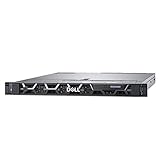
- This Certified Refurbished product is tested and certified to look and work like new. The refurbishing process includes functionality testing, basic cleaning, inspection, and repackaging. The product ships with all relevant accessories, a minimum 90-day warranty, and may arrive in a generic box. Only select sellers who maintain a high performance bar may offer Certified Refurbished products on Amazon.com
- 2x Intel Xeon Gold 6148 2.4GHz 20 Core Processors
- 64GB DDR4 RAM
- Dell PERC H740P RAID Controller w/ 8GB NV Cache
- Dell Broadcom 5720 Quad-Port 1Gb 1000BASE-T PCI-e R Series Daughtercard NIC
These were EMC’s diagnoses, conveyed through its 2011 statements, rather than independently measured market findings.
1. Build a workforce that could support cloud
College curricula and data science
EMC said it planned to promote cloud-related teaching in colleges and proposed data science as a formal degree major. The initiative reflected an early recognition that cloud projects depended on skills beyond server virtualization: organizations needed people who could operate shared services and turn large datasets into useful analysis.
Professional credentials
The company was also promoting certifications for cloud administrators and cloud architects. Burton said EMC had 1,200 certified cloud architects at the time. That is a historical, EMC-attributed figure from 2011; it should not be read as a current certification count.
Turning employees into advocates
EMC’s argument was that workers who understood cloud technology and saw a career path in it would be more likely to support internal projects than oppose them. Certification could improve competence, but it could not by itself settle questions about budgets, accountability, job redesign or who controlled a service.
Recommended Free Tools
Rank #2

- High Capacity: This hard drive bundle contains 2TB of storage space for a large amount of data.
- Fast Performance: With 12GB/s read and write speeds, this hard drive bundle provides quick access to files and programs.
- Reliable Data Protection: The SAS interface ensures secure data transfer and storage with its redundant capabilities.
- Easy Installation: This hard drive bundle includes a drive tray for simple installation into your desktop computer.
- Compact Size: The 2.5-inch form factor allows for a slim profile that fits well in most desktop computers.
2. Make hybrid cloud plausible through compatible infrastructure
EMC and VMware were working with service providers to build cloud infrastructure aligned with the private-cloud environments enterprises were developing internally. The intended benefit was a hybrid model: a business could retain control of selected systems while using an external provider for other workloads or additional capacity.
In EMC’s proposed architecture, similar foundations would make it easier to move applications between private and public settings. “Compatible,” however, did not mean that any application could be transferred without changes. Portability could still be limited by application design, licensing, data-transfer time and cost, security controls, network performance and operational procedures.
The historical strategy therefore offered a direction for reducing friction, not a guarantee of seamless migration.
3. Build a provider ecosystem around that model
The 2011 report said EMC and VMware were working with approximately 30 to 40 service providers. It named AT&T, Rackspace, SingTel and Verizon as examples.
Outdated Drivers Are Slowing You Down
One free scan finds every outdated or missing driver and matches the right update for your exact hardware.Free scan · exact hardware matchWindows Errors? Fix Them Before They Spread
Repair common Windows errors and clear accumulated junk for a smoother, more stable PC - no reinstall needed.Free scan · no reinstall| Historical detail | What the report established |
|---|---|
| Organizations involved | EMC and VMware |
| Scale cited | About 30 to 40 providers, according to Burton |
| Named examples | AT&T, Rackspace, SingTel and Verizon |
| Purpose | Develop provider services on architectures aligned with enterprise private clouds |
This was a snapshot of a developing ecosystem, not a roster of current partners or evidence that every provider delivered identical features, resilience or service-level guarantees.
4. Recast internal IT as a service provider
EMC proposed that an enterprise IT department operate more like an external provider. It would maintain a catalog of services used by business applications, show the cost of each service more clearly and potentially charge business units for what they consumed.
That model would let executives compare an internal service price with an outside provider’s price. In EMC’s framing, cloud would become an economic decision: a workload could remain in-house or move out depending on cost, business value, trust and required service levels, rather than on an argument over which department owned the infrastructure.
Chargeback is not automatically neutral. The result depends on how shared facilities, staff and security costs are allocated. A pricing model can encourage sensible consumption or make an otherwise useful service appear artificially expensive.
Rank #4

- Drive Capacity: 3.84TB Solid State Drive Bundle
- SAS Interface: 12Gb/s SAS Read Intensive Drive
- Compatible Devices: Desktop Computers
- Drive Form Factor: 2.5-Inch SATA Drive
- Drive Brand: Dell and Samsung
5. Expand public-cloud use by classifying workloads
EMC did not present immediate migration of every application as the objective. Its proposed process was to examine an application portfolio and decide which workloads belonged in private environments and which could use public services. As organizations gained experience and confidence, Burton predicted that the boundary of acceptable public-cloud use would expand.
The implied criteria included:
- cost and expected business value;
- trust in the provider and the required service level;
- technical compatibility and available internal expertise;
- data sensitivity, application behavior and performance needs; and
- whether capacity could be shared or repurposed efficiently.
A technically movable workload might still be uneconomic to move. Large datasets can create transfer delays and retrieval charges; regulated information may require particular controls or jurisdictions; and a provider’s compatible platform does not establish equivalent security, resilience or compliance arrangements.
Independent reader supportYour contribution helps us test, update, and keep practical guides available for everyone.6. Use analytics to demonstrate a concrete cloud workload
EMC connected its cloud message to the emerging “Big Data” market by discussing analytics delivered as a service. The idea was that providers could offer specialized analysis capabilities rather than simply rent generic compute and storage.
The New York Stock Exchange example
The report described a high-performance financial-services cloud developed by EMC and VMware for the New York Stock Exchange. It supported low-latency trading applications, nighttime backup and analysis of trading data that could be used in preparation for the next trading day.
Free tools Windows power users keep installed
One-click scans. No signup required.
Best Value
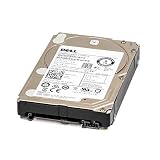
- This Certified Refurbished product is tested and certified to look and work like new. The refurbishing process includes functionality testing, basic cleaning, inspection, and repackaging. The product ships with all relevant accessories, a minimum 90-day warranty, and may arrive in a generic box. Only select sellers who maintain a high performance bar may offer Certified Refurbished products on Amazon.com
- Storage Capacity: 2TB
- Interface: 12GB/s SAS
- Form Factor: 2.5in
- Drive Tray: Dell 13th Generation 2.5in Drive Tray
This example illustrated how one infrastructure investment could support different workloads at different times. It did not demonstrate that public cloud was cheaper or appropriate for all financial applications, nor did it establish a general conclusion about regulated workloads.
What EMC’s 2011 thesis got right
- Cloud adoption required skills, incentives and operating-model changes, not just virtual machines.
- A hybrid arrangement could ease the transition between internal control and external capacity.
- Internal service catalogs and transparent costing could make infrastructure decisions more comparable.
- Workload-by-workload decisions were more realistic than a blanket public-versus-private rule.
- Providers and ecosystem partners were necessary to make an enterprise cloud market useful.
What the strategy left unresolved
The report did not quantify adoption or show that EMC’s programs changed enterprise behavior. It also did not provide independent customer evidence, technical specifications for the provider architectures, implementation failures or evidence that the named providers offered interchangeable services.
Several practical constraints remained important:
- Portability: similar infrastructure does not remove application refactoring, licensing changes or operational redesign.
- Data movement: transferring large datasets can be slow and expensive, especially when data must be retrieved frequently.
- Security and compliance: trust depends on identity, isolation, logging, governance and legal jurisdiction, not on a single platform label.
- Hybrid complexity: multiple platforms add tools, skills, dependencies and failure domains.
- Provider dependence: a compatible vendor ecosystem can reduce short-term friction while increasing long-term lock-in.
- Workforce limits: certification can improve skills without resolving ownership, incentives or accountability disputes.
Why this 2011 account still matters
EMC was trying to make cloud appear governable, measurable and professionally credible. Its proposals addressed the people who would operate cloud, the providers expected to supply it, the managers who would pay for it and the application owners who would decide where workloads belonged.
The article is best read as an early snapshot of enterprise-cloud normalization. EMC’s central prediction was that, as trust and experience increased, cloud placement would become an economic and service-level choice. The report documents that strategic thesis; it does not prove that seamless portability, lower costs or universal public-cloud acceptance followed.
Quick Recap
Product prices and availability are accurate as of the date/time indicated and are subject to change. Any price and availability information displayed on Amazon at the time of purchase will apply.




