Elon Musk did not buy Tesla or take it over in a single transaction. He became influential in stages: he invested about $6.5 million in Tesla’s 2004 Series A financing, joined its board as chairman, helped attract further capital, became its dominant public representative, and took over as CEO in 2008.
That distinction matters. Tesla was founded by Martin Eberhard and Marc Tarpenning, and its ownership remained spread among investors. Musk’s rise was less a purchase than a combination of capital, boardroom influence, operational involvement, financial risk-taking, and an unusually powerful public profile.

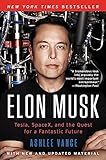

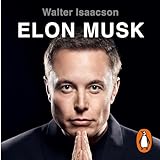

Musk’s first move was investing, not buying Tesla
Musk entered Tesla in April 2004, when the company was still a young electric-car startup. He led Tesla’s first major outside financing round and invested approximately $6.5 million. Contemporary accounts sometimes put the figure at about $6.35 million, but “about $6.5 million” is the safer summary.
That money did not purchase the company. It bought Musk a substantial early stake and helped him become Tesla’s board chairman. Other investors also participated, and Tesla continued to have multiple shareholders.
Free tools Windows power users keep installed
One-click scans. No signup required.
#1 Best Overall
The original company was created by Martin Eberhard and Marc Tarpenning. Tesla later recognized a group of five people—Eberhard, Tarpenning, Ian Wright, Musk, and JB Straubel—as co-founders after a 2009 legal dispute. The defensible description is that Musk was an early major investor and chairman who later became one of Tesla’s recognized co-founders, not that he founded or bought Tesla alone.
How money translated into influence
Musk’s investment mattered for more than the number of shares it represented. Early-stage companies often depend on a small group of investors who can provide follow-on funding, recruit executives, introduce other investors, and reassure the market when the business is still unproven.
Tesla’s 2010 IPO prospectus credited Musk with helping recruit executives and engineers, contributing to the Roadster’s engineering and design, raising capital, bringing investors to the company, and increasing public awareness. Those were Tesla’s own disclosures, so they should not be read as proof that Musk personally performed every part of the work. They do show why his role extended beyond that of a passive shareholder.
His leverage increased because Tesla was financially fragile. During 2008 and 2009, the company raised equity financing and entered a Department of Energy loan facility, obtaining more than $500 million in combined financing according to its IPO prospectus. Musk also worked for a reported $33,280 annual base salary to preserve Tesla’s cash.
PC Slower Than It Used to Be?
A free scan shows the junk files, broken settings and background clutter dragging Windows down - then fixes them in one click.Free scan · Windows 10 & 11Crashes, No Sound, or Screen Glitches?
Random freezes, missing sound and display glitches usually trace back to one bad driver. Find and replace yours safely.Free scan · under a minuteThat willingness to keep supplying money and helping raise capital gave him credibility inside the company. A founder or executive who can help keep payroll funded has more practical influence than an ordinary shareholder with the same formal voting percentage.
The CEO transition gave Musk operational control
Musk was chairman before he was CEO. That period allowed him to build influence while Tesla’s formal operating leadership changed.
Rank #2
| Date | What happened | Why it mattered |
|---|---|---|
| 2004 | Musk invested about $6.5 million and joined Tesla’s board as chairman. | He gained a major financial stake and a formal leadership position. |
| 2007 | Martin Eberhard transitioned away from the CEO role. | Tesla’s original operating leadership began to change. |
| December 3, 2007 | Ze’ev Drori became CEO. | The company installed new day-to-day leadership while Musk remained chairman. |
| October 2008 | Musk became Tesla’s CEO. | He moved from board-level influence to direct operational control. |
| 2010 | Tesla completed its initial public offering. | The company gained access to public-market capital and a much larger investor base. |
Calling this a “takeover” can therefore be misleading. Musk did not remove an entrenched owner by purchasing a controlling block. He accumulated influence as the company needed financing, leadership, product direction, and public attention, then became CEO after the company’s first CEO had departed and another had served briefly.
Where the “strong-arm tactics” claim comes from
The strongest documented evidence concerns Musk’s boardroom influence and conflicts of interest—not a proven personal coup in which he illegally seized Tesla.
What’s actually slowing this PC down?
Pick the symptom - the matching free tool is one click away.
The clearest example is Tesla’s 2016 acquisition of SolarCity, a company chaired by Musk and founded by his cousins. Musk was also SolarCity’s largest shareholder. In litigation over the deal, the Delaware Court of Chancery described Musk as actively promoting the acquisition, participating in Tesla discussions, and holding private discussions with SolarCity and Tesla’s financial adviser without the full Tesla board’s knowledge.
The court called the process “far from perfect,” but it ultimately found the transaction entirely fair and rejected the damages claim against Musk. It is inaccurate to say that the court ruled Musk illegally forced Tesla to buy SolarCity.
The case does illustrate a more subtle form of leverage: a powerful executive can shape the agenda, influence advisers, control the timing of negotiations, and make it difficult for directors to oppose a proposal without confronting the person most associated with the company.
His compensation fight showed similar influence
Musk’s 2018 compensation package became another major Delaware case. The Court of Chancery found that Musk exercised transaction-specific control over the negotiations even though he did not have mathematical voting control of Tesla.
The court pointed to several factors:
- his high-status role and managerial authority;
- his ability to influence the timing of the negotiations;
- the board’s dependence on him as Tesla’s central executive and public figure; and
- the lack of meaningful adversarial bargaining over the size of the award.
The legal outcome needs an update. The Court of Chancery ordered the 2018 compensation award rescinded, but the Delaware Supreme Court later reversed that remedy and reinstated the compensation plan while awarding the plaintiff nominal damages. Saying that “the court voided Musk’s pay package” describes an intermediate ruling, not the final appellate result.
Popularity became a business asset—and a governance risk
Musk’s public profile helped Tesla attract attention that a conventional automaker might have spent billions trying to buy. Tesla’s 2010 IPO filing credited him with increasing public awareness and helping build a worldwide brand.
For a company selling an unfamiliar product, that visibility can have financial value. It can help attract customers, employees, investors, and media coverage. Musk’s presence also made Tesla’s story easier to understand: the company was not merely selling electric cars; it was associated with a highly visible technology entrepreneur promising an entirely different future for transportation.
But popularity is not the same as legal control. It can influence shareholders and directors without giving an executive majority ownership. Tesla’s own board had encouraged investors to review Musk’s Twitter account for company information. In 2018, the SEC said Tesla lacked adequate procedures to ensure that his tweets were accurate and complete.
Quick wins for a faster PC:
Fix the driver behind crashes, sound loss and screen glitchesFind Drivers →Clear out junk files and repair common Windows errorsFree Scan →Scan for outdated or missing drivers - takes under a minuteDriver Scan →On August 7, 2018, Musk tweeted that he was considering taking Tesla private at $420 per share and that “funding” was secured. The SEC alleged that the transaction remained uncertain, that Musk had not agreed to specific terms with financing partners, and that the tweet pushed Tesla’s stock price up by more than 6% that day.
Musk and Tesla settled the SEC enforcement action without admitting or denying wrongdoing. The settlement required Musk to step down as Tesla’s chairman for three years, added two independent directors, imposed additional oversight of his investor communications, and required financial penalties. He remained CEO.
Rank #4
This episode shows both sides of celebrity influence. Musk’s audience could move markets, but that same reach created regulatory and governance exposure for Tesla and its shareholders.
The government loan was important, but it was not Musk’s money
One frequently repeated version of Tesla’s history treats every major financing source as evidence of Musk’s personal funding. That is wrong.
In 2009, Tesla received approval for approximately $465 million in low-interest Department of Energy loans. The money helped Tesla develop the Model S and manufacturing capacity. It was a federal loan facility, not a personal investment by Musk.
The distinction is important for anyone evaluating a company’s financial history. Musk’s personal capital helped Tesla survive and helped attract other funding, but Tesla also relied on outside investors, public-market financing, and government-backed credit. The company’s survival was not financed by Musk alone.
Independent reader supportYour contribution helps us test, update, and keep practical guides available for everyone.Did Musk eventually gain majority control?
No. Tesla’s 2025 ownership filing reported that Musk beneficially owned 717,112,739 shares, or approximately 20.3% of Tesla’s common stock as of December 31, 2025. That calculation included the 2018 compensation award but excluded the 2025 performance award from voting-control calculations because those unearned shares were subject to a voting agreement and irrevocable proxy to Tesla’s secretary.
Tesla’s 2025 annual filing also reported that the board granted Musk approximately 423.7 million performance-based restricted shares in September 2025. Shareholders approved the award in November 2025. The award is divided into 12 tranches tied to market capitalization and operational milestones.
A roughly 20% stake is substantial, especially when combined with the founder-CEO role, public visibility, and influence over strategy. It is not the same as owning 51% of the company. Musk’s practical control has come from a mix of ownership, leadership, reputation, board relationships, and the difficulty of replacing the person investors associate most closely with Tesla.
What personal investors should learn from Tesla’s story
- Separate ownership from influence. A person can dominate a company’s public narrative and strategic decisions without owning a majority of its shares.
- Read the financing sources. Founder money, outside equity, debt, government loans, and employee compensation each affect a company differently.
- Watch key-person risk. If one executive is central to the brand, product vision, fundraising, and investor communication, losing that person can affect the stock even if the business fundamentals remain unchanged.
- Distinguish allegations from final rulings. The SolarCity court criticized the process but found the transaction entirely fair. The compensation award was rescinded by one court and later reinstated on appeal.
- Treat executive communication as a governance issue. A CEO’s social-media post can move a stock, but market-moving statements still need to be accurate, complete, and properly supervised.
FAQ
Did Elon Musk buy Tesla?
No. Musk invested about $6.5 million in Tesla’s 2004 Series A financing, became board chairman, helped raise additional capital, and became CEO in 2008. Tesla remained owned by multiple investors.
Was Elon Musk Tesla’s only founder?
No. Martin Eberhard and Marc Tarpenning were Tesla’s early founders. After a 2009 legal dispute, five people—Eberhard, Tarpenning, Ian Wright, Musk, and JB Straubel—were permitted to use the co-founder title.
Did Musk personally provide Tesla’s $465 million Department of Energy financing?
No. Tesla received approximately $465 million in low-interest Department of Energy loans in 2009. That was government-backed financing, not Musk’s personal money.
Does Elon Musk own a majority of Tesla?
No. Tesla’s 2025 ownership filing reported that Musk beneficially owned approximately 20.3% of Tesla’s common stock as of December 31, 2025. His influence is larger than that percentage because he is also the company’s central executive and public figure.
The Bottom Line
Musk’s rise at Tesla was a gradual accumulation of leverage, not a simple purchase. His early investment gave him a seat at the table; his willingness to help finance and promote the company increased his importance; becoming CEO gave him operational authority; and his public profile amplified his influence with customers, employees, investors, and directors.
That influence sometimes produced serious governance conflicts, including the SolarCity process and the 2018 funding-secured tweet. But the legal record does not support the simplest version of the story: Musk did not buy Tesla, did not found it alone, and was not found to have illegally forced the SolarCity deal. He became dominant because capital, leadership, reputation, and timing all worked in his favor.
Quick Recap
Product prices and availability are accurate as of the date/time indicated and are subject to change. Any price and availability information displayed on Amazon at the time of purchase will apply.
Do these 3 things before closing this tab:
1Scan for outdated or missing drivers - takes under a minute2Repair Windows errors before they cause bigger problems3Fix the driver behind crashes, sound loss and screen glitches



