Starlink earns money mainly from recurring broadband subscriptions, plus upfront terminal purchases and connectivity contracts for enterprise and government customers. Its costs include satellite and launch depreciation, network operations, customer support and installation, terminal production, research and development, and expansion into new markets. SpaceX’s latest reported figures, for the second quarter of 2026, show that its Connectivity segment generated $4.291 billion in revenue and $1.656 billion in operating income—but those segment results are not standalone Starlink financial statements.
How Starlink earns revenue
SpaceX groups Starlink’s results in its Connectivity segment. That segment combines consumer, enterprise, and government connectivity, so its reported totals do not disclose every Starlink product’s individual revenue or profitability.
Consumer broadband subscriptions and terminals
Consumers pay recurring monthly service fees. SpaceX says fees vary by geographic market and download speed, and that subscribers typically also pay a one-time upfront terminal cost. The terminal is the hardware customers use to connect to the satellite network; it adds an upfront hardware component alongside the monthly service relationship. In Q2 2026, consumer revenue was $2.485 billion. SpaceX’s Q2 2026 filing and its June 2026 prospectus describe these revenue sources.
Enterprise and government connectivity
Starlink serves aviation, maritime, construction, agriculture, telecommunications, hospitality, land mobility, remote worksites, and backup-connectivity needs. Enterprise arrangements may be priced by subscription, data use, capacity, or another customer-specific model. Q2 2026 enterprise and government revenue combined was $1.806 billion; SpaceX did not break out the two categories separately for that quarter.
Free tools Windows power users keep installed
One-click scans. No signup required.
#1 Best Overall
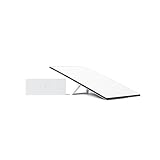
- Starlink provides reliable high-speed, low-latency, internet wherever you live
- Service plan required, activate STARLINK by selecting a service plan that is customized to meet your personal needs
- Select from plans suited for households or travel
- Get online in minutes, set up STARLINK with just 2-steps, plug it in and point at the sky
- STARLINK comes with everything needed to get online including a kickstand, gen 3-router, cables and power supply
Government connectivity includes public-service, disaster-response, and remote-location use cases. SpaceX also describes Starshield as a secure satellite network for U.S. government and national-security applications. The company said it had been awarded more than $6 billion in multi-year U.S. government Starshield contracts. Awards indicate contracted opportunity over time, not revenue recognized in Q2. SpaceX’s prospectus and Q2 2026 results provide the company’s descriptions and figures.
Launch revenue is a separate business
SpaceX also earns revenue from launch services and launch-and-development work for external customers. That is SpaceX revenue, but it is not Starlink customer revenue. The filing says launches of Starlink satellites are not recorded as inter-segment revenue; launch costs are capitalized with the satellite assets instead. The Q2 2026 filing explains this accounting distinction.
What the latest reported figures show
SpaceX reported 12.0 million Starlink subscribers at the end of Q2 2026 and monthly average revenue per user (ARPU) of $66. Its Connectivity segment recorded $4.291 billion in revenue, $1.656 billion in operating income, and $1.367 billion in capital expenditure during the quarter. For the six months ended June 30, 2026, the segment reported $7.548 billion in revenue, $3.711 billion in cost of revenue, $499 million in research and development, $494 million in selling, general and administrative expenses, $2.844 billion in operating income, and $2.699 billion in capex. These are company-reported Connectivity segment figures, not standalone Starlink accounts or a free-cash-flow measure. SpaceX’s Q2 2026 filing and earnings release report them.
Revenue, operating costs, and capital expenditure describe different things. Cost of revenue and operating expenses are recognized in the income statement; capex is investment in assets. Satellite and launch investment can be capitalized first and affect later periods through depreciation, so adding capex directly to operating costs would mix accounting categories.
Recommended Free Tools
What drives Starlink’s costs
Satellite and launch depreciation
For the six months ended June 30, 2026, Connectivity cost of revenue increased by $1.096 billion year over year. SpaceX attributed $503 million of that increase to higher depreciation, primarily from capitalized launch and satellite costs. Building and replenishing a satellite network therefore affects costs both when assets are deployed and as their cost is depreciated over time. The Q2 2026 filing provides the company’s explanation.
Running and supporting the service
In the same six-month comparison, operating expenses were $295 million higher. SpaceX attributed the increase mainly to customer support and installation ($89 million), ground operations ($88 million), payment processor fees ($35 million), and engineering costs ($30 million). These are reported drivers of the year-over-year increase, not the segment’s total spending in each category.
Rank #2

- Gen 3 Satellite Dish: Third-generation antenna delivers a stronger, more stable signal and faster performance.
- Wi-Fi 6 Router: Modern router technology supports faster speeds, increased device capacity, and better efficiency.
- Extra 150FT Cable Included: Extended reach for more flexible installation in large spaces or hard-to-access locations.
- High-Speed, Low-Latency Internet: Stream HD content, video conference, or work remotely with confidence.
- Ideal for Rural and Remote Areas: Perfect for homes, cabins, RVs, boats, and off-grid setups where wired internet isn’t available.
Producing terminals and developing equipment
Starlink Kit production spend rose $219 million year over year in the first half of 2026 as the Connectivity business grew. SpaceX also reported higher research and development spending for next-generation satellites, ground equipment, and Starlink Kits. Customer terminals are thus both part of the upfront hardware revenue model and a production cost for the business. The filing reports these cost changes.
Marketing and international expansion
For the first half of 2026, Connectivity selling, general and administrative costs rose $269 million year over year. SpaceX attributed the increase mainly to marketing ($191 million), international expansion ($27 million), and sales and property taxes ($21 million). Because plans and pricing vary across geographic markets, a rising subscriber count need not translate into an equal proportional rise in ARPU or revenue per customer.
Quick wins for a faster PC:
Repair Windows errors before they cause bigger problemsFix Now →Scan for outdated or missing drivers - takes under a minuteDriver Scan →Clear out junk files and repair common Windows errorsFree Scan →Capacity investment
Connectivity capex was $2.699 billion for the six months ended June 30, 2026. SpaceX says it expects V3 satellites to deliver substantial capacity and data-density gains; that is a forward-looking expectation, not evidence of a realized cost saving. The company’s prospectus also said it had approximately 9,600 Starlink broadband and mobile satellites in low Earth orbit as of March 31, 2026, a figure that predates its Q2 subscriber results. The Q2 filing and June 2026 prospectus discuss investment and capacity.
Independent reader supportYour contribution helps us test, update, and keep practical guides available for everyone.How to interpret the economics
The figures show a large recurring consumer business alongside substantial enterprise and government connectivity revenue, but they do not establish the profit margin of a consumer plan, an enterprise contract, or Starlink as a standalone company. To assess the business, keep several measures distinct:
- Revenue channel: consumer, enterprise, and government revenue have different customers and contract structures.
- Customer count and ARPU: subscriber growth and average monthly revenue per user can move differently as geographic and plan mix changes.
- Cost of revenue and operating expenses: these capture recognized costs, including depreciation and the work of operating and supporting the service.
- Capex: this measures investment in assets, not an additional operating expense to simply add to reported costs.
- Geography, capacity, and terminal costs: market-specific pricing, data or capacity terms, and upfront hardware arrangements affect comparisons.
SpaceX’s launch integration and planned V3 capacity could affect future economics, but company expectations about future capacity or cost reductions should not be treated as achieved results.
Quick Recap
Product prices and availability are accurate as of the date/time indicated and are subject to change. Any price and availability information displayed on Amazon at the time of purchase will apply.
Do these 3 things before closing this tab:
1Repair Windows errors before they cause bigger problems2Scan for outdated or missing drivers - takes under a minute3Clear out junk files and repair common Windows errors



