Arm can gain enterprise acceptance by demonstrating measurable value for specific workloads and making adoption low-risk: verify compatibility, run representative pilots, provide migration and support guidance, and publish production results that include performance, cost, energy use where measured, and engineering effort. Arm-based cloud and data-center infrastructure is already available from major providers, but that does not mean every enterprise application or desktop fleet is ready to move.
What enterprise acceptance means for Arm
For infrastructure buyers, acceptance means more than being able to run code on an Arm processor. Organizations need to be able to deploy applications, operate them reliably, obtain support across the software and hardware stack, and show that the platform meets business requirements. The strongest available adoption evidence concerns cloud and data-center compute, rather than enterprise attitudes across all technology or corporate laptop fleets.



Arm says its migration program supports commercial and open-source application deployments on Arm Neoverse-powered platforms, including AWS Graviton, Google Axion, Microsoft Azure Cobalt, and Oracle Cloud Infrastructure Ampere. It offers expert guidance, best practices, and technical resources; organizations should confirm current eligibility, availability, and terms directly with the program. Arm migration program.
In April 2025, Arm executive Mohamed Awad forecast that close to 50 percent of compute shipped to top hyperscalers in 2025 would be Arm-based. That is Arm’s forecast, not an independently verified final figure or a measure of Arm’s share of all enterprise computing. Arm’s April 2025 post.
Quick wins for a faster PC:
Scan for outdated or missing drivers - takes under a minuteDriver Scan →Repair Windows errors before they cause bigger problemsFix Now →Fix the driver behind crashes, sound loss and screen glitchesFind Drivers →#1 Best Overall
Why an enterprise might choose Arm
The case should be made workload by workload, not with a blanket claim that Arm is always faster or cheaper. A platform may be worth evaluating if it offers a useful price-performance or energy-efficiency profile, adds supply or platform choice, or fits an organization’s cloud-native software and operating model. Arm publishes performance and efficiency claims for different workloads, but results depend on the specific platform and application; buyers need their own comparable measurements.
Published customer examples show that some migrations are feasible. AWS reports that TradingView moved 70 percent of its workloads to Graviton within one year, using multi-architecture builds and a staged, team-by-team approach; the case study says the migration caused no service disruption. These are AWS’s reported results for TradingView, not a forecast for another organization. AWS’s TradingView case study.
Rank #2
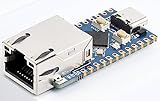
- 【RP2040-ETH Module】 Based On RP2040, Onboard Ethernet Port,Dual-core Arm Cortex M0+ processor, flexible clock running up to 133 MHz 264KB of SRAM, and 4MB of onboard Flash memory.
- Onboard CH9120 with integrated TCP/IP protocol stack. 14 × multi-function GPIO pins, compatible with some Pico HATs.
- Castellated module allows soldering direct to carrier boards. Drag-and-drop programming using mass storage over USB. 8 × Programmable I/O (PIO) state machines for custom peripheral support. Controllable via network.
- Support multiple communication modes: Supports TCP Server / TCP Client / UDP Server / UDP
- Support C/C++, MicroPython, Arduino: Comprehensive SDK, Dev Resources, Tutorials To Help You Easily Get Started
AWS also reports that Techcom Securities moved containerized workloads—including internal APIs, public applications, and trading-support systems—to Graviton instances in Amazon EKS. The company used multi-architecture CI/CD and validated workloads as it progressed. AWS’s Techcom Securities case study.
In a 2026 case study, Arm describes Atlassian’s migration of more than 3,000 EC2 instances supporting Jira and Confluence. The operational lesson is that passing a compatibility check is only a starting point: production workloads still need performance measurement and optimization. The case study was co-authored by Arm, Atlassian, and AWS personnel. Arm’s Atlassian case study.
The Tool Desk
Outbyte PC Repair FREEClear out junk files and repair common Windows errorsFree Scan →Outbyte Driver Updater FREEScan for outdated or missing drivers - takes under a minuteDriver Scan →How to make an Arm pilot useful and reversible
1. Map the full dependency chain
Check the application itself, third-party libraries, operating system, database, build and deployment pipeline, and any architecture-specific binaries. Source-code portability alone does not establish that every dependency is available, supported, or ready to run on Arm. Capgemini recommends compatibility assessment and migration planning that includes rollback and contingency measures. Capgemini’s migration guidance.
2. Test against representative work
Run functional tests and measure performance with realistic traffic or batch jobs. Check throughput, latency, capacity at peak demand, and the cost of meeting the same service target on each candidate platform. A successful port does not itself prove a performance or cost improvement; the Atlassian case highlights the need to measure and tune after migration.
3. Limit exposure and retain a rollback path
Use multi-architecture builds where practical, start with a bounded pilot, shift traffic gradually, and monitor the same service indicators used in production. Define in advance what conditions trigger a pause or rollback, who makes that decision, and how the previous environment can be restored. TradingView’s reported team-by-team migration illustrates a staged approach, while Capgemini’s guidance calls for contingency planning.
4. Assign support ownership before launch
Arm’s migration resources and cloud-provider support may help reduce investigation work, but an enterprise should establish who handles issues spanning the application, operating system, runtime, and hardware. The cited sources do not establish uniform support obligations across vendors or regions, so clarify escalation paths and coverage for the exact services being considered.
5. Compare the whole operating case
Record engineering and migration effort alongside infrastructure costs. Include energy use only where it is measured, and check regional availability, dependency support, and the operational complexity of maintaining more than one architecture. A pilot should compare equivalent workloads and service targets; the available case studies are not an independent cross-provider benchmark.
Independent reader supportYour contribution helps us test, update, and keep practical guides available for everyone.What the published adoption figures do—and do not—show
| Published figure | Source and qualification | What it supports |
|---|---|---|
| Close to 50% of compute shipped to top hyperscalers in 2025 | Arm forecast published in April 2025; not a confirmed final 2025 measurement. Arm | Arm expected substantial adoption among top hyperscalers; it does not establish Arm’s share of all enterprise compute. |
| 70% of TradingView workloads migrated to Graviton within one year | AWS customer case study; publication date is not stated on the retrieved page. AWS | A named customer’s reported migration experience, not a typical outcome or guarantee. |
| More than 3,000 EC2 instances for Jira and Confluence | Arm’s 2026 Atlassian case study, co-authored by Arm, Atlassian, and AWS personnel. Arm | The scale of the described migration; it does not show that another workload will perform or cost the same. |
Where acceptance remains uncertain
The documented examples support Arm as a real option for cloud and data-center infrastructure, but they do not establish readiness for every enterprise workload. In particular, the available evidence does not assess broad corporate desktop-fleet acceptance, Windows on Arm application coverage, or device suitability. An organization considering employee laptops should evaluate that question separately rather than infer readiness from server migrations.
Quick Recap
Product prices and availability are accurate as of the date/time indicated and are subject to change. Any price and availability information displayed on Amazon at the time of purchase will apply.




