The Tool Desk
Outbyte Driver Updater FREEScan for outdated or missing drivers - takes under a minuteDriver Scan →Outbyte PC Repair FREERepair Windows errors before they cause bigger problemsFix Now →Green technology in real estate is moving beyond isolated upgrades such as efficient lighting or rooftop solar. The biggest gains now come from integrating electrification, smart controls, flexible loads, onsite generation, storage, low-carbon materials and data systems into one building strategy.
The opportunity is large: the U.S. Department of Energy says buildings account for approximately 75% of U.S. electricity use and 40% of total energy use (DOE FY 2026 Building Technologies justification). The right investment still depends on climate, utility tariffs, building type, existing equipment, electrical capacity, incentives and whether the priority is lower bills, emissions, resilience or compliance.
How these 10 innovations were selected
This list weighs carbon impact, total-cost-of-ownership potential, commercial readiness, retrofit compatibility, scalability, grid value, resilience, measurability and implementation complexity. “Deploy now” means established products and installers exist; “deploy selectively” means site conditions determine the business case; “pilot or watch” means broader proof or cost competitiveness is still developing.
| Innovation | Readiness | Primary value |
|---|---|---|
| AI building controls | Deploy now | Lower operating energy and maintenance costs |
| Heat pumps | Deploy now | Electrification and efficient heating/cooling |
| Smart panels and load flexibility | Deploy now | Peak reduction and grid coordination |
| Solar PV and BIPV | Deploy now/selectively | Onsite generation |
| Battery and thermal storage | Deploy now/selectively | Peak shaving and resilience |
| High-performance envelopes | Deploy now/selectively | Lower heating and cooling demand |
| Low-embodied-carbon materials | Deploy selectively | Lower construction emissions |
| Digital twins and modeling | Deploy now | Planning, verification and commissioning |
| Managed EV charging | Deploy now/selectively | Transport electrification without new peaks |
| Geothermal and water systems | Deploy selectively | Site-specific energy and water resilience |
1. AI-assisted building controls and HVAC optimization
These systems combine building-management data, occupancy, weather, utility prices, equipment status and sometimes grid-carbon signals to adjust HVAC, ventilation and lighting. Products range from fault detection and predictive maintenance to model-predictive and autonomous control.
What’s actually slowing this PC down?
Pick the symptom - the matching free tool is one click away.
#1 Best Overall
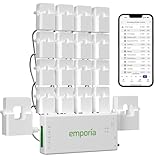
- SAFETY YOU CAN TRUST WITH UL CERTIFICATION: With Emporia Energy, your home energy monitoring is safe, reliable, and certified. The Emporia Vue is UL Listed, meaning it has met rigorous safety standards for electrical products in the U.S. and Canada. This certification ensures that every component has been thoroughly tested to prevent hazards, such as overheating, short-circuiting, or fire, offering you peace of mind as you manage your home’s energy consumption.
- INSTALLS IN CIRCUIT PANEL of most homes with clamp-on sensors. Supports Single phase, Single-split phase, and 2-wire systems. 3-wire systems; 3-phase, 4-wire Wye systems with earthed (TN or TT) neutral (no-Delta) are supported with an additional 200A sensor (sold separately).
- 24/7 ENERGY MANAGEMENT AND MONITORING: Automate, manage and control your home's real power anywhere, anytime to prevent costly repairs, conserve energy, and save costs. Monitor solar / net metering. PROTECTED BY A 1-YEAR WARRANTY.
- LOWER YOUR ELECTRIC BILL: Configure settings in the Emporia Energy App to automate energy management for time of use, peak demand, excess solar, and rewards programs. You can even see live reporting and invaluable savings opportunities instantly. Gauge real-time spending and get actionable notifications and automated energy management to help you reduce costs.
- REAL-TIME ENERGY DATA: REQUIRES 2.4 GHz WIFI WITH AN INTERNET CONNECTION to monitor energy use with iPhone / Android / Web app. Vue sensors collect energy data and are accurate from ±2%. The Vue is UL and CE Listed for your safety. 1 second data is only available in the app (when actively open) and retained 3 hours. Minute and hour data are retained in the cloud. 1 minute data is retained 7 days, 1 hour data is retained indefinitely. Export cloud data whenever you want in the app.
Why it matters
HVAC is often the largest controllable load. Software can improve an existing building before an owner replaces major equipment. Schneider Electric’s EcoStruxure Building Advisor describes fault detection, equipment-health monitoring, dynamic set points and portfolio reporting. BrainBox AI advertises reductions of up to 25% in HVAC energy costs and up to 40% in building carbon emissions; those are vendor claims, not universal guarantees (optimization claims; sustainability claims).
Best fit and risks
- Best for offices, hotels, retail portfolios, campuses and buildings with an accessible BMS.
- Prerequisites include reliable sensors, functioning actuators, interoperable protocols and staff who act on alerts.
- AI cannot correct an undersized system, poor envelope or bad data. Cybersecurity, tenant comfort and persistence of savings require explicit controls.
2. Heat pumps and heat-pump water heaters
Heat pumps move heat instead of creating it through combustion. Air-source, variable-refrigerant-flow, water-source, ground-source, rooftop and cold-climate systems can provide heating and cooling; heat-pump water heaters replace gas or electric-resistance water heating.
When they work
They are strongest in new all-electric construction, moderate climates and projects replacing end-of-life boilers or rooftop units. DOE priorities include cold-climate performance, low-global-warming-potential refrigerants, controls and electrical integration (DOE FY 2025 Building Technologies budget; DOE Emerging Technologies).
Trade-offs
- Allow for electrical-service, transformer and panel upgrades, outdoor-unit space and noise.
- Extreme-temperature performance, refrigerant leakage and electricity-to-gas price ratios affect results.
- The IEA identifies high upfront cost and limited outdoor-unit space in some multifamily buildings as continuing barriers (IEA Buildings Innovation Gaps).
Electric equipment is not automatically zero-carbon: evaluate source electricity, refrigerants, embodied emissions and the displaced fossil system.
3. Smart electrical systems and flexible loads
Grid-interactive buildings coordinate HVAC, water heating, batteries, EV chargers, refrigeration, solar and thermal storage. Smart panels and demand-response controls shift consumption away from expensive or constrained hours rather than merely reducing total use.
Rank #2

- ⚡ EASY INSTALLATION: Installs in circuit panel of most homes with clamp-on sensors. Supports single-phase up to 240VAC line-neutral; single, split-phase 120/240VAC; and three-phase up to 415Y/240VAC (no Delta). The branch lines can automatically match different phases and have no restrictions in terms of quantity and voltage.Panels with access only to busbars will need flexible sensors available from SEM-Meter.
- ⚡ ENERGY MONITORING ANYTIME, ANYWHERE: Monitor your home's real power anywhere, anytime to prevent costly repairs, conserve energy, and save costs. Monitor solar / net metering. Light commercial 3 phase option available as a separate bundle. Protected by a 1-year warranty.
- ⚡ VARIOUS ELECTRICAL APPLIANCE MONITORING: Comes with 16 50A sensors to accurately monitor your air conditioner, furnace, water heater, washer, dryer, range, etc.
- ⚡ LOWER YOUR ELECTRIC BILL: SEM-Meter measures real-time spending and gets actionable notifications to understand where savings can be made, both to lower your electric bill and to conserve energy and protect the planet’s resources. Be an environmentalist.
- ⚡ REAL-TIME ENERGY DATA: Connect SEM-Meter device via 2.4GHz WiFi to monitor energy usage, with an accuracy range of 1%. View usage in real time through Android/Apple software. Statistics of power usage in now/day/week/month/year format: the validity period of hourly exported data is 90 days, and the exported data of day/month/year data is permanent, available at any time Export from application.
Best opportunities
- Properties with demand charges, time-of-use rates, solar, EV fleets or utility flexibility programs.
- Campuses can aggregate loads and reduce the need for new electrical capacity.
- Benefits include peak-charge reduction, better solar use and potential grid-services revenue.
Require a tariff analysis first. Revenue assumptions can fail when utility programs change, equipment responds too slowly or controls sacrifice comfort.
4. Solar PV, building-integrated photovoltaics and solar thermal
Rooftop and carport PV are mature; facade-integrated PV, solar glass and solar thermal are more design-dependent. Roof area, shading, structural capacity, interconnection, historic restrictions, tenant metering and load shape determine value.
DOE has documented commercialized envelope systems that combine daylighting, generation and heat reuse (commercialized building innovations). Conventional rooftop PV is often cheaper and easier to maintain than BIPV.
Free tools Windows power users keep installed
One-click scans. No signup required.
Do not confuse generation with efficiency
Solar reduces purchased electricity but does not fix excessive demand. Annual net-zero claims may still involve heavy grid use during high-carbon hours; distinguish annual accounting from hourly carbon matching.
5. Batteries, thermal storage and microgrids
Lithium-ion and emerging batteries, ice and chilled-water storage, phase-change materials, building thermal mass and microgrids shift energy through time. NREL reports that, in one modeled 80%-renewable-grid scenario, building thermal storage could provide more than 70% of grid-storage needs; this is a model result, not a universal forecast (NREL circular-economy research).
Rank #3

- EM16P MODEL & LOCAL CONTROL & DATA PRIVACY: Access your home energy monitor data locally via Built-in Web UI, Open API, and MQTT without relying on cloud services. Unlike cloud-dependent monitors, Refoss ensures your data stays within your home network. Direct local access protects your privacy while giving you 100% full control of your home energy system.
- NATIVE HOME ASSISTANT & OPENCLAW AI: Experience seamless Native Home Assistant integration right out of the box—no firmware flashing or complex coding required. Featuring ✨NEW✨ OpenClaw Support, it enables AI-driven automation for smarter, real-time energy management and seamless smart home control.
- MAXIMIZE SOLAR & ZERO FEED-IN AUTOMATION: Designed for solar homes, the power monitor works with the Refoss app and Home Assistant to automatically use surplus solar power. Appliances like EV chargers, washing machines, and water heaters are powered during midday peaks, maximizing solar self-consumption and reducing low-value electricity feed-in to the grid. Optimizes usage and reduces bills.
- REAL-TIME MONITORING & ±1% ACCURACY: Monitor voltage, current, active power, and power factor of major appliances. Provides ±1% accuracy (200A: 2–200A; 60A: 1–60A) and ±2% at low current. Daily data stored up to 5 years and exportable. With no subscriptions or hidden fees, you get deep historical insights to help you identify every energy-saving opportunity and save 10–20% on monthly bills.
- SMART ALERTS & CIRCUIT-LEVEL CONTROL: Set usage targets for each individual circuit and receive instant alerts when appliances exceed normal consumption. Refoss app supports automation and peak management to optimize schedules, reduce peaks, and improve efficiency. Real-time electricity usage monitor for circuit-level insights.
Where they earn their keep
- Data centers, hospitals, campuses and buildings with high demand charges or outage requirements.
- Value comes from peak shaving, solar self-consumption, backup power and grid-emergency response.
- Evaluate fire codes, degradation, warranties, controls, islanding and critical-load duration.
A battery is not automatically low-carbon; charging behavior, manufacturing, replacement and grid mix matter.
6. High-performance envelopes and dynamic glazing
Continuous insulation, airtightness, high-performance windows, exterior shading, cool roofs, vacuum insulation, aerogels, electrochromic glazing and automated blinds reduce loads for the building’s entire life.
The IEA identifies dynamic glazing and advanced retrofit materials as innovation priorities, with a cited dynamic-glazing solar heat-gain-coefficient target range of approximately 0.08 to 0.65 (IEA Buildings Innovation Gaps).
Practical decision
Coordinate envelope work with facade replacement, roof renewal or HVAC electrification. Basic air sealing, insulation and exterior shading can beat expensive smart glass on cost per tonne reduced. Airtightness work must address moisture and indoor-air quality.
7. Low-embodied-carbon materials and circular construction
Whole-building life-cycle analysis covers extraction, manufacturing, transport, construction, maintenance, replacement and disposal. Options include lower-carbon concrete, reduced-carbon steel, mass timber, reused components, material passports, design for disassembly and adaptive reuse.
Rank #4
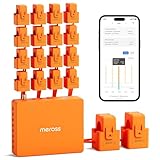
- SAFE & RELIABLE: Meross smart energy consumption monitor is ETL‑certified and compliant with the UL 61010 testing standard, ensuring safe and reliable home energy monitoring. Works with most US homes: single-phase 2-wire systems, single-split phase 3-wire systems, and 3-phase 4-wire Wye systems with earthed (TN or TT) neutral (no Delta). Easy clamp‑on design installs in minutes. Invert CT readings in the app—no physical flipping. PROTECTED BY 2-YEAR WARRANTY for worry-free use.
- TRACK ENERGY & CUT BILLS: Track power, voltage, current, and power factor within ±1% accuracy. Clear power usage and cost charts by minute/hour/day/month/year help you easily understand your energy use. Store up to 5 years of data and export hourly reports for deep analysis. Most users save 10–20% on energy costs by spotting energy hogs and getting accurate insights to cut their bills.
- 24/7 ENERGY MONITORING + SMART ALERTS: Real-time home energy monitoring from anywhere. Set custom alerts for unusual usage spikes and threshold breaches for total peace of mind. Catch issues early with no subscriptions, no cloud lock‑in, and no hidden fees — all built-in. Supports 2 main circuits (200A) + 16 branch circuits (60A), making it perfect for precise, circuit-level energy monitoring.
- MAXIMIZE YOUR SOLAR SAVINGS (HOME ASSISTANT): This solar energy monitor integrates with Home Assistant to detect solar surplus and automatically power EV chargers, water heaters, and other high‑use appliances. Stop wasting solar energy—use it yourself and cut your electricity bill faster. The perfect home energy monitor for solar homes.
- LOCAL DATA, FULL PRIVACY, NO SUBSCRIPTIONS: Connect seamlessly with Home Assistant for advanced energy automation. All energy data stays local—no cloud, no delays, no privacy concerns. Take full control of your home energy, reduce waste, and protect your privacy. Supports Open API and Web Control.
DOE analysis found that about 70% of embodied emissions in a typical new home can come from concrete, insulation and cladding. In its 2013–2018 U.S. office dataset, material emissions were approximately 37% steel and 29% concrete; these are building- and dataset-specific findings (DOE Technology Innovation Opportunities). NREL highlights concrete, steel, reuse and recycling (NREL Circular Economy).
How to compare materials
- Use consistent functional units, service lives, transport assumptions and end-of-life scenarios.
- Mass timber results depend on forest sourcing, adhesives, fire protection, moisture, substitution and disposal.
- Environmental product declarations are useful only when scopes and methods are comparable.
8. Digital twins, energy modeling and continuous commissioning
Digital tools connect models, sensors, utility data, weather, occupancy, maintenance and equipment records. They can test retrofit scenarios, identify faults, calibrate savings and hand operational knowledge from design teams to facility staff.
EnergyPlus is an open-source whole-building simulation program covering HVAC, lighting, plug loads and water use (DOE Better Buildings). DOE also lists modeling and controls among its core technology areas (DOE Emerging Technologies).
Ask whether a “digital twin” changes control decisions or merely displays data. Models must be calibrated to actual utility bills, and modeled savings must not be presented as measured savings.
Independent reader supportYour contribution helps us test, update, and keep practical guides available for everyone.9. EV charging integrated with buildings
Load-managed charging, fleet scheduling, vehicle-to-building, vehicle-to-grid, solar charging and battery-buffered fast charging turn parking into an energy-system decision. DOE field validation has examined telematics, utility signals, demand charges, vehicle-use patterns and grid-carbon content (DOE field validation).
Quick wins for a faster PC:
Scan for outdated or missing drivers - takes under a minuteDriver Scan →Repair Windows errors before they cause bigger problemsFix Now →Fix the driver behind crashes, sound loss and screen glitchesFind Drivers →Best Value
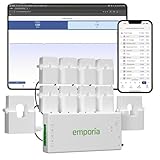
- SAFETY YOU CAN TRUST WITH UL CERTIFICATION: With Emporia Energy, your home energy monitoring is safe, reliable, and certified. The Emporia Vue is UL Listed, meaning it has met rigorous safety standards for electrical products in the U.S. and Canada. This certification ensures that every component has been thoroughly tested to prevent hazards, such as overheating, short-circuiting, or fire, offering you peace of mind as you manage your home’s energy consumption.
- INSTALLS IN CIRCUIT PANEL of most homes with clamp-on sensors. Supports Single phase, Single-split phase, and 2-wire systems. 3-wire systems; 3-phase, 4-wire Wye systems with earthed (TN or TT) neutral (no-Delta) are supported with an additional 200A sensor (sold separately).
- 24/7 ENERGY MANAGEMENT AND MONITORING: Automate, manage and control your home's real power anywhere, anytime to prevent costly repairs, conserve energy, and save costs. Monitor solar / net metering. PROTECTED BY A 1-YEAR WARRANTY.
- LOWER YOUR ELECTRIC BILL: Configure settings in the Emporia Energy App to automate energy management for time of use, peak demand, excess solar, and rewards programs. You can even see live reporting and invaluable savings opportunities instantly. Gauge real-time spending and get actionable notifications and automated energy management to help you reduce costs.
- REAL-TIME ENERGY DATA: REQUIRES 2.4 GHz WIFI WITH AN INTERNET CONNECTION to monitor energy use with iPhone / Android / Web app. Vue sensors collect energy data and are accurate from ±2%. The Vue is UL and CE Listed for your safety. 1 second data is only available in the app (when actively open) and retained 3 hours. Minute and hour data are retained in the cloud. 1 minute data is retained 7 days, 1 hour data is retained indefinitely. Export cloud data whenever you want in the app.
Who benefits
Multifamily properties, offices, logistics fleets, retail centers and parking garages can avoid charger-driven peaks through scheduling and load limits. Schneider Electric describes coordinated EV and microgrid management (energy-management software).
Budget for service upgrades, billing, access control, networking, cybersecurity and uncertain utilization. Charger count alone is not a decarbonization strategy.
10. Geothermal, water reuse and site-specific infrastructure
Ground-source heat pumps, shared geothermal loops and reservoir thermal storage can provide efficient, stable heating and cooling, especially for campuses. NREL highlights geothermal building applications and reservoir thermal storage (NREL Buildings research).
Water systems
Greywater, rainwater, condensate recovery, leak detection, efficient fixtures and cooling-tower optimization are valuable in water-stressed regions, hotels, hospitals, data centers and large campuses. A full treatment plant is not always the best first step; leak detection and cooling controls may deliver simpler savings.
Geothermal economics depend on geology, drilling, land and permits. Reuse systems add treatment, monitoring, plumbing and health-code obligations.
Quick Recap
Which technologies work best together?
Lower-cost retrofit
- Submetering and fault detection
- HVAC scheduling and lighting controls
- Envelope maintenance and recommissioning
- Continuous measurement and verification
Electrification package
- Envelope improvements
- Heat pumps and heat-pump water heating
- Smart panels and load management
- Thermal storage
Resilient campus package
- Solar, batteries and islandable microgrid controls
- Managed EV charging
- Critical-load planning and appropriate backup generation
Low-carbon new construction
- Adaptive-reuse analysis and whole-building LCA
- Lower-carbon concrete and steel or appropriately sourced mass timber
- High-performance envelope, heat pumps, solar and storage
- Digital-model handover and continuous commissioning
A practical procurement checklist
- List supported BMS platforms, protocols and equipment.
- Confirm who owns raw operational data and whether it can be exported.
- Review cybersecurity, offline operation and manual override procedures.
- Define how savings will be measured, including baseline, weather and occupancy adjustments.
- Separate modeled, measured, case-study and “up to” results.
- Price installation, integration, subscriptions, maintenance, electrical work and replacements.
- Request references for comparable buildings and climates.
- Model tariffs, incentives, demand charges, resilience value and emissions per dollar.
How owners should sequence investment
- Benchmark energy, water, demand and carbon performance.
- Fix schedules, sensors, controls and maintenance waste.
- Improve the envelope where practical.
- Electrify efficiently at equipment replacement or renovation.
- Add flexible controls, storage and managed charging.
- Install renewables where roof, tariff and interconnection conditions support them.
- Address embodied carbon, reuse and water systems.
- Verify performance continuously and correct drift.
Product prices and availability are accurate as of the date/time indicated and are subject to change. Any price and availability information displayed on Amazon at the time of purchase will apply.




