Quick wins for a faster PC:
Fix the driver behind crashes, sound loss and screen glitchesFind Drivers →Clear out junk files and repair common Windows errorsFree Scan →Scan for outdated or missing drivers - takes under a minuteDriver Scan →Green marketing works best when it describes a specific environmental attribute and shows what supports the claim. For a business, that can mean stating the recycled content in a package, naming a renewable material, or explaining how a product uses less material than its predecessor. Broad labels such as “green” and “eco-friendly” are harder to substantiate and can mislead when their meaning is unclear.
What green marketing means
Green marketing communicates specific environmental attributes of a product or business. In the United States, the Federal Trade Commission’s Green Guides explain how marketers can avoid deceptive environmental claims, including how consumers may interpret claims and when they need evidence or qualifications. The FTC identifies 2012 as the Guides’ latest revision; they are U.S. guidance, not a universal standard. See the FTC Green Guides.
| # | Preview | Product | Price | |
|---|---|---|---|---|
| 1 |

|
Principles of Marketing | $36.87 | Buy on Amazon |
| 2 |

|
Global Marketing Global Edition | $66.95 | Buy on Amazon |
| 3 |

|
Global Marketing | $7.96 | Buy on Amazon |
| 4 |
|
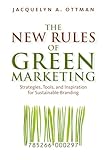
The New Rules of Green Marketing: Strategies, Tools, and Inspiration for Sustainable Branding | $20.07 | Buy on Amazon |
| 5 |

|
Marketing (Mindtap Course List) | $99.00 | Buy on Amazon |
The practical starting point is to say exactly what is claimed, what the claim covers, and what evidence supports it. The FTC advises: “Marketers should not make broad, unqualified general environmental benefit claims like ‘green’ or ‘eco-friendly.’” (Federal Trade Commission, Environmental Claims: Summary of the Green Guides, 2012.) See the FTC summary.
Six green marketing examples to try
1. State the recycled-content percentage
Say whether recycled content refers to the product, its packaging, or both. If the item is not entirely made from recycled material, state the percentage rather than implying it is. For example: “Bottle made with 60% recycled plastic.” Use that wording only if the figure is accurate and you can support it.
#1 Best Overall
2. Name the renewable material
Identify the material and explain what makes it renewable. “Made with renewable bamboo” is more informative than “made with renewable materials,” but it still needs to be accurate and appropriately qualified. The FTC’s guidance says an unqualified renewable-material claim is generally appropriate only when the item is made entirely from renewable materials, apart from minor and incidental components. See the FTC’s consumer guidance on green marketing claims.
3. Explain the basis for a carbon-offset claim
Do not use “carbon neutral” as a bare promise. Identify what emissions the claim covers and explain how offsets support it. The FTC summary says marketers should have competent and reliable scientific evidence for carbon-offset claims. A claim that leaves out important limits can give customers a broader impression than the evidence supports.
Rank #2
4. Quantify a source reduction
Give the amount reduced and the comparison behind it. For example: “This refill pouch uses 30% less plastic by weight than our 500 ml bottle.” The percentage and comparison must match the products and measurement method; without a clear basis, “reduced packaging” leaves readers guessing what changed. The FTC summary discusses qualifying source-reduction claims.
5. Lead with one concrete environmental benefit
Replace a general “eco-friendly” headline with a specific, meaningful attribute, such as less packaging or a stated recycled-content share. Make the qualification easy to notice and understand. Consider trade-offs too: emphasizing one benefit should not imply that the product has an overall environmental advantage if other impacts undermine that impression.
Rank #3
6. Explain what a certification seal covers
If you display a certification seal, identify the standard and the environmental benefit it assesses. A seal is more useful when customers can understand what was evaluated and by whom. If your relationship with the certifier could affect how readers interpret the seal, disclose it. FTC consumer guidance discusses certification seals and the need for clear information.
A quick check before publishing a claim
Use these questions to review a product page, label, advertisement, or company announcement:
Rank #4
- Specificity: What exact environmental attribute are you claiming?
- Scope: Does the claim apply to the product, packaging, or the whole business?
- Evidence: What records, testing, or other support substantiate it?
- Comparison: For a reduction claim, what is the baseline and how was the difference measured?
- Prominence: Can customers see and understand the qualification where they encounter the claim?
- Trade-offs: Could the highlighted benefit create or obscure other environmental costs?
Terms the Green Guides do not settle
The FTC’s 2012 announcement said the Green Guides did not address “sustainable,” “natural,” or “organic” as general environmental marketing terms. The announcement cited a lack of sufficient basis for meaningful guidance or a desire to avoid duplicating or contradicting other agencies’ rules. That does not make those terms automatically safe to use: product-specific or other applicable rules may govern. The Green Guides should not be presented as having established a general meaning for them. See the FTC’s 2012 announcement.
These six examples are claim approaches, not endorsements of particular companies or evidence that a campaign achieved environmental results. Requirements can also vary by jurisdiction, so businesses marketing outside the United States should check the rules that apply in each market.
PC Slower Than It Used to Be?
A free scan shows the junk files, broken settings and background clutter dragging Windows down - then fixes them in one click.Free scan · Windows 10 & 11Outdated Drivers Are Slowing You Down
One free scan finds every outdated or missing driver and matches the right update for your exact hardware.Free scan · exact hardware matchQuick Recap
Best Value
Product prices and availability are accurate as of the date/time indicated and are subject to change. Any price and availability information displayed on Amazon at the time of purchase will apply.




