The eBay listing reported on March 19–20, 2020, was for Google-associated “Sooner,” an unreleased HTC-built Android development prototype, not the first Android phone sold to consumers. Multiple units—reported variously as five or nine—were listed by seller “drumsticks” at about $195 each plus shipping and reportedly sold quickly. The first commercially released Android handset was the HTC Dream, sold by T-Mobile as the G1, in October 2008.
What the Sooner prototype was
“Sooner” was an early Android handset developed with Google and built by HTC. Contemporaneous reports also identified the hardware as the HTC Exca 300, a name attributed to the listing and secondary coverage rather than to a publicly released Google or HTC product catalogue. Wirefly described it as an unreleased phone from Android’s early development.
As an Amazon Associate I earn from qualifying purchases.
Its design belonged to the pre-iPhone smartphone era: a BlackBerry-like candybar body, a small non-touch display, a physical QWERTY keyboard, a D-pad and dedicated hardware keys. The reported eBay units were white; a black version was also known to exist. The software was an early Android build that 9to5Google said matched the version seen on the first-generation G1/Dream family, despite the prototype’s lack of touch input. 9to5Google’s report includes photographs and its hands-on observations.
Crashes, No Sound, or Screen Glitches?
Random freezes, missing sound and display glitches usually trace back to one bad driver. Find and replace yours safely.Free scan · under a minuteWindows Errors? Fix Them Before They Spread
Repair common Windows errors and clear accumulated junk for a smoother, more stable PC - no reinstall needed.Free scan · no reinstallWhy it was not the first Android phone in stores
The phrase “first Android phone” is ambiguous. Sooner can reasonably be described as one of the earliest Android prototypes, but it was never a consumer launch product. Google’s historical Android roadmap identifies the G1/Dream as the first Android-powered device available at retail, with availability beginning on October 22, 2008. The phone was announced alongside the Android 1.0 release on September 23. Google’s archived roadmap provides the 2007–2008 release timeline.
#1 Best Overall

- Google Pixel 10a is a durable, everyday phone with more[1]; snap brilliant photography on a simple, powerful camera, get 30+ hours out of a full charge[2], and do more with helpful AI like Gemini[3]
- Unlocked Android phone gives you the flexibility to change carriers and choose your own data plan; it works with Google Fi, Verizon, T-Mobile, AT&T, and other major carriers
- Pixel 10a is sleek and durable, with a super smooth finish, scratch-resistant Corning Gorilla Glass 7i display, and IP68 water and dust protection[4]
- The Actua display with 3,000-nit peak brightness shows up clear as day, even in direct sunlight[5]
- Plan, create, and get more done with help from Gemini, your built-in AI assistant[3]; have it screen spam calls while you focus[6]; chat with Gemini to brainstorm your meal plan[7], or bring your ideas to life with Nano Banana[8]
That distinction matters because early Android development involved several prototypes and demonstration platforms. Historical accounts connect the Sooner-style QWERTY design with Android’s initial direction, while the later G1 adopted a touchscreen-oriented interface as the smartphone market changed. Ars Technica’s long-form history treats this as a shift in Android’s design path rather than proof of a single, publicly documented cause-and-effect decision. Read the historical account at Ars Technica.
What appeared on eBay in March 2020
The listing was a short-lived historical event, not an ongoing offer. Reports dated March 19 and March 20, 2020, described multiple white Sooner prototypes from the seller “drumsticks.” Accounts differ on the number available—some said five, others nine—so the defensible description is “multiple units.” The reported asking price was $195 per phone plus shipping; some coverage rounded that to $200. This was a 2020 listing price, not a verified auction result or a current collector valuation. 9to5Google reported the $195 price and seller. Wirefly also covered the listing.
Rank #2

- Camera Description: Rear
Follow-up reports said the stock sold quickly. The original inventory should therefore be treated as historical; no current, verified 2026 listing is established here. A search on eBay could produce a later resale, but any such item would require independent verification of identity, condition and provenance.
Reported hardware specifications
These figures came from contemporaneous reporting and listing details, not a published Google or HTC datasheet.
Rank #3
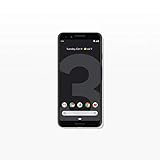
- Capture the perfect shot every time, get things done with the Google Assistant, 1 enjoy an all-day battery, and more.
- Get everyone in the picture with Group Selfies—no selfie stick required. Snap portraits like a pro with Portrait Mode. Capture smiles, not blinks, for a great photo every time.
- Pixel 3 comes with a battery that charges fast and wirelessly, and lasts all day. It's even smart enough to limit battery usage for the apps you don't use often to keep you going longer.
- Get help from the Google Assistant: reserve a table at your favorite restaurant, buy tickets, get commute times, weather info, and more—all with a simple squeeze, or just by using your voice.
- Screen spam, scams, and other nuisance calls. Get real-time transcription and block unwanted callers so you’ll never hear from them again.
| Component | Reported detail |
|---|---|
| Processor/chipset | TI OMAP 850 |
| RAM | 64 MB |
| Display | 320 × 240 pixels |
| Camera | 1.3 megapixels |
| Battery | 960 mAh |
| Cellular radio | 2G |
| Wi-Fi | Not supported |
| Input | Physical QWERTY keyboard, D-pad and hardware buttons |
| Touchscreen | No |
| Storage | Not stated consistently in the available reports |
One recurring error calls the memory “64 GB.” The consistently reported figure is 64 MB of RAM. Storage should not be assigned a definitive capacity without a reliable photograph or original listing record. See the detailed specification reporting from 9to5Google.
What buyers reportedly received
Descriptions varied slightly on accessory terminology, but reports generally listed a phone, battery, charger or AC adapter, and an earpiece or mini-USB headset. No meaningful user manual or normal retail documentation was reported. Wirefly’s account describes the package and condition concerns.
Rank #4
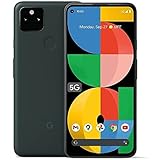
- 6.34", OLED, HDR, 1080 x 2400 pixels, 20:9 ratio, Android 11, upgradable to Android 12, 4680mAh battery
- 128GB ROM, 6GB RAM, Qualcomm SM7250 Snapdragon 765G 5G (7nm), Octa-core, Adreno 620
- Rear Camera: 12.2 MP, f/1.7 + 16 MP, f/2.2, Front Camera: 8 MP, f/2.0, Bluetooth 5.0
What the prototype software could do
In a hands-on examination, 9to5Google observed a boot animation with a red dot moving horizontally, an old-style lock screen with an analog clock and early Google branding, and status indicators for time, battery and cellular signal. Navigation used the physical keys rather than touch gestures.
What’s actually slowing this PC down?
Pick the symptom - the matching free tool is one click away.
The basic launcher exposed early applications including Address Book, Camera, Browser, Gmail, Google Talk, Maps, Notes and Text Messages. These observations describe the unit examined by 9to5Google; they are not a complete official software specification for every prototype. Read the hands-on software account.
Best Value

- ❗❗❗IMPORTANT FIRST-USE STEP: Open the back cover and remove the yellow insulating tab from the battery before powering on. The phone will not turn on until the tab is removed.
- [5.0-Inch Compact Unlocked Android Phone] Ulefone Note 22 combines a compact 5.0-inch display with a lightweight, pocket-friendly body. This affordable small smartphone is easy to hold and carry, making it a practical choice for calls, texts, maps, music and light internet browsing. Ideal for buyers who want a simple everyday or backup phone instead of a large, expensive smartphone.
- [Android 16 Go|3GB RAM + Up to 17GB Virtual RAM] Powered by Android 16 Go for a straightforward basic smartphone experience. Note 22 includes 3GB physical RAM, supports up to 17GB virtual RAM expansion and provides 32GB internal storage. Add a microSD card up to 2TB for photos, music, apps and files. Designed for essential daily tasks rather than heavy gaming or demanding applications.
- [Dual SIM 4G Phone with Triple Card Slot] Use two Nano SIM cards and one microSD card at the same time with the dedicated triple card slot. Supports 4G LTE, 2.4GHz WiFi, Bluetooth 4.2 and multi-system GPS for calling, messaging, navigation and light browsing. IMPORTANT: This unlocked phone is NOT compatible with AT&T or Cricket. Please confirm network compatibility with your carrier before purchasing.
- [Removable 3000mAh Battery & USB-C Charging] The removable 3000mAh battery supports daily calls, messages and up to 208 hours of standby time, while the USB-C port makes routine charging simple and convenient. IMPORTANT FIRST-USE STEP: Open the back cover and remove the yellow insulating tab from the battery before powering on. The phone will not turn on until the tab is removed.
Could anyone use one as a phone today?
It was primarily a collector purchase, not a practical backup handset.
- Battery: Units had reportedly been stored for roughly a decade. A battery could be dead, degraded or unsafe, and a working phone was not guaranteed.
- Network: The radio was 2G-only. Compatibility is geographically limited, and many operators have retired or are retiring 2G networks.
- Software: Prototype firmware was never sold as a supported consumer release and may not behave like a retail Android installation.
- Repairs: Replacement parts, documentation and activation support are uncertain.
- Everyday use: Even a unit that boots would lack the modern network and application support expected of a current phone.
Why collectors cared
The appeal was historical rather than performance-based. Sooner preserves an Android design path built around a physical keyboard, D-pad and non-touch interface—the opposite of the touchscreen identity most people associate with Android. A genuine, working example could also document the transition from internal development hardware to the G1 that brought Android to retail customers.
Collector interest depends on more than the name printed in a listing. Provenance, matching hardware, cosmetic condition, original accessories and whether the unit powers on all affect significance. 9to5Google said its staff had previously handled the same type of device and considered the listed hardware legitimate; that is useful contemporaneous evidence, but it is not a public Google or HTC authentication of every eBay unit. 9to5Google’s report explains that qualification.
What the 2020 sale means now
The Sooner listing was a rare public appearance of an early Android artifact. It should not be read as evidence that Sooner was the first Android product sold to consumers, nor should the $195 figure be used as a 2026 market price. The historically precise conclusion is narrower: an unreleased Google-associated HTC prototype that preceded the G1 briefly became available on eBay in March 2020, and the reported stock sold out.
Quick Recap
Product prices and availability are accurate as of the date/time indicated and are subject to change. Any price and availability information displayed on Amazon at the time of purchase will apply.




