Outdated Drivers Are Slowing You Down
One free scan finds every outdated or missing driver and matches the right update for your exact hardware.Free scan · exact hardware matchWindows Errors? Fix Them Before They Spread
Repair common Windows errors and clear accumulated junk for a smoother, more stable PC - no reinstall needed.Free scan · no reinstallIn November 2020, investors valued Relativity Space at a reported $2.3 billion after backing a $500 million funding round. The figure was a private-market valuation at that moment—not the company’s current value—and it followed an unlikely origin story: aerospace engineers Tim Ellis and Jordan Noone cold-emailed Mark Cuban about building rockets with large-scale 3D printing. The email helped open a door. Years of engineering, fundraising, customer agreements, and risk-taking built the company behind it.
Who founded Relativity Space—and when?
Tim Ellis, an aerospace engineer who had worked at Blue Origin, and Jordan Noone, an aerospace engineer who had worked at SpaceX, founded Relativity Space. Their previous jobs gave them firsthand exposure to rocket development and manufacturing, but the startup’s premise was more specific than a combination of résumés: use additive manufacturing and software-driven production to change how rockets are made.
Accounts differ on the founding year. A University of California, Berkeley case study dates the company to 2015, while Relativity’s current company materials use 2016. The difference may reflect formation, incorporation, or public launch; the sources do not establish one date as the sole correct answer. Berkeley’s case study describes the founders leaving their jobs in December 2015 to focus on the venture.
What did the cold email to Mark Cuban accomplish?
Ellis and Noone needed capital and access to make a technically ambitious idea credible. They contacted investor and entrepreneur Mark Cuban directly. Forbes reported that they tried nearly two dozen possible email addresses before reaching him, and that Cuban invested in the company’s first seed round. The email was a financing catalyst, not a complete financing plan: the founders still had to recruit, build hardware, demonstrate progress, and attract later institutional investors. No exact amount for Cuban’s initial investment is established by the cited account. Forbes’s account of the founders and the financing recounts the outreach and early investment.
#1 Best Overall

- BEGINNER MODEL-ROCKET LAUNCH SET: The Tandem-X rocket-model launch set offers adults and kids ages 10+ hours of fun during the holidays as they complete and launch our Amazon and Crossfire ISX rocket models. This set includes the easy-to-assemble Amazon model parts, the Crossfire ISX model parts, parachutes, and the launch pad system. It requires rocket engines, Starters, Recovery Wadding, and 4 high-quality 1.5-volt AA alkaline batteries for launch use (sold separately).
- 2 SOARING ALTITUDE HEIGHTS: Our Tandem X set offers a high-performing power duo with our giant 30-inch Amazon model (600-foot projected altitude with a C6-5 rocket engine) and our streamlined 15.6-inch Crossfire ISX model (1,150-foot projected altitude with a C6-7 rocket engine). Other compatible Estes model-rocket engines for Amazon model: B4-2, B4-4, B6-2, B6-4, C5-3, and C6-3. Other compatible engines for Crossfire ISX: A8-3, B4-4, B6-4, and C6-5. All engines sold separately.
- READY TO ASSEMBLE: Our beginner model-rocket launch set comes with 2 build options. The precolored Amazon model features plastic fins and self-stick graphics and can be built in an hour. The Crossfire ISX model comes with laser-cut wood fins, self-stick decals, and aerodynamic parts. Pair the rockets with the included Porta Pad II Launch Pad and Electron Beam Launch Controller for a hands-on educational activity or a unique Christmas gift for a budding scientist or a space aficionado.
- SAFETY FIRST, FUN ALWAYS: Our rockets and rocket launch accessories are designed to be used with the NAR (National Association of Rocketry) model-rocket safety code. Always ensure you have an appropriate launch site, stand back at least 15 ft., insert the safety key, issue a countdown, and then you can let your rocket fly!
- WE IGNITE IMAGINATIONS: Since 1958, Estes has created educational rocket kits and displays designed for an unforgettable aerospace experience. As a family-owned company, we have grown to offer exciting STEM products that engage aspiring rocketeers and the future minds of aerospace.
Why 3D-print rockets?
Traditional aerospace manufacturing can involve specialized tooling, fixtures, suppliers, and many assembly steps. Relativity’s thesis was that large-format metal additive manufacturing could reduce tooling demands and part counts, while software-driven processes could make design changes faster. By bringing design, production, testing, and launch-vehicle development under one company, Relativity also aimed to rely less on a sprawling supplier network.
The distinction between a manufacturing thesis and a proven business advantage matters. Printing components does not remove the challenges of propulsion, avionics, guidance, flight software, quality control, qualification, or launch operations. Nor does it by itself prove lower launch costs, faster flight cadence, or profitability. Relativity describes its approach as combining additive manufacturing, AI, robotics, and vertically integrated production; those are intended capabilities, not evidence that every commercial benefit has already been achieved. Relativity’s announcement of its Intelsat agreement describes the manufacturing approach.
How did an idea become a fundable rocket company?
The founders pursued a launch vehicle rather than limiting the business to selling printers or manufacturing services. They entered Y Combinator and set out to build a very large metal 3D printer, later known as Stargate, along with the people and facilities required to turn printed components into a rocket. The Berkeley case study describes that early objective and the founders’ decision to leave their former jobs.
That choice made the company’s ambition—and its capital needs—much larger. Relativity was asking investors to back a vertically integrated launch provider before it had demonstrated an orbital mission. The pitch combined a manufacturing innovation, a planned rocket program, and the prospect of serving a growing launch market.
How did Relativity reach a reported $2.3 billion valuation?
On November 17, 2020, TechCrunch reported that Relativity raised $500 million in a Series D round at a $2.3 billion post-money valuation. The report relied on information from CNBC and people familiar with the transaction. A post-money valuation is the estimated value of a private company after a financing round; it is not cash the company received, a public share price, or a measure of realized revenue. TechCrunch’s coverage of the round noted that Relativity had not yet delivered a payload to orbit.
Rank #2

- BEGINNER MODEL ROCKET LAUNCH SET: The Estes Alpha III launch set lets kids ages 10+ and hobbyists easily build and launch this iconic model rocket. The model rocket kit includes rocket parts, engine mount, decals, a parachute, a launch pad system, and instructions. For blastoff, you’ll need Estes rocket engines, Starters, Recovery Wadding, and 4 high-quality 1.5-volt AA alkaline batteries (not included).
- SOARS UP TO 1,150 FT.: Our Alpha III model rocket is designed for first-time STEM kit builders and climbs up to a projected altitude of 1,150 ft. (351 m). It’s compatible with 1/2A6-2, A8-3, A8-5, B4-4, B6-4, B6-6, C6-5, or C6-7 Estes rocket engines (sold separately).
- READY TO ASSEMBLE: Rocket building sparks creativity and a love for science and outer space! This beginner Alpha III model kit is easily put together with 1 hour of preparation and includes decals. It comes with a Porta-Pad II Launch Pad and Electron Beam Launch Controller for an unforgettable blastoff for first-time rocketeers.
- SAFETY FIRST, FUN ALWAYS: Our rockets are designed to be used with the NAR (National Association of Rocketry) model-rocket safety code. Always ensure you have an appropriate launch site, stand back at least 15 ft., insert the safety key, issue a countdown, and then you can let your rocket fly!
- ESTES EDUCATION: Since 1958, Estes has created educational rocket kits designed for an unforgettable launch experience. As a family-owned, US-based company, we offer exciting and engaging STEM products for all interests, skills, and power levels.
Investors were pricing expectations: that Terran 1 would demonstrate the production approach, that a larger rocket could reach a broader market, and that manufacturing advantages and customer commitments could translate into a viable launch business. The valuation was therefore a bet on future execution, not proof that the company had already solved rocket economics.
Why did the reported valuation rise to $4.2 billion?
In June 2021, Relativity announced a $650 million Series E that TechCrunch reported valued the company at $4.2 billion post-money. The publication reported total funding above $1.2 billion at that point. The capital was intended to accelerate Terran R and related infrastructure. TechCrunch’s Series E report documents the financing and reported valuation.
The later round shows that the $2.3 billion figure was not Relativity’s reported peak in private financing. Both values were estimates attached to specific private rounds, reflecting investors’ expectations at those dates. Neither guarantees a successful launch, profitability, or a future sale, and neither establishes the company’s current valuation.
What did Terran 1 prove—and what did it fail to do?
Terran 1 was Relativity’s first orbital rocket and a test of its manufacturing and propulsion approach. TechCrunch described the vehicle as about 85% 3D-printed by mass, including its engines. That does not mean the rocket was printed in one uninterrupted operation: a launch vehicle still requires joining, machining, avionics, fluid systems, testing, and integration.
On its March 2023 flight, Terran 1 reached space but failed to reach orbit. The flight demonstrated that a largely 3D-printed rocket could leave the pad and operate in flight, but it did not deliver an orbital payload or validate a recurring commercial service. The distinction is important: it was neither an unqualified launch success nor a demonstration with no technical value. TechCrunch’s account of the launch covers the vehicle and its flight.
Rank #3
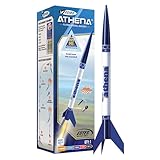
- BEGINNER MODEL ROCKET SET: The Estes Athena model rocket gives kids ages 10+ and beginners an easy way to experience real rocket launches with no building required! This ready-to-fly model rocket kit includes a fully prepared rocket with a parachute. This rocket requires Estes rocket engines, a launch pad system, Starters, Recovery Wadding, and 4 high-quality 1.5-volt AA alkaline batteries (sold separately) for launch use.
- SOARS UP TO 1,125 FT.: Our high-flying Athena rocket features a bright 12-inch parachute for safe recovery and soars up to a projected altitude of 1,125 ft. (343 m) with a C6-7 engine (sold separately). It is also compatible with the A8-3, B4-4, B6-4, and C6-5 rocket engines.
- READY TO FLY: Rocket-building kits are creative, educational gift ideas for Christmas or special-occasion surprises! This beginner-friendly Athena rocket comes fully assembled and just takes 15 minutes of preparation time. This model pairs with the Porta Pad II Launch Pad and Electron Beam Launch Controller (sold separately) for blastoff.SAFETY FIRST, FUN ALWAYS: Our rockets are designed to be used with the NAR (National Association of Rocketry) model-rocket safety code. Always ensure you have an appropriate launch site, stand back at least 15 ft., insert the safety key, issue a countdown, and then you can let your rocket fly!
- SAFETY FIRST, FUN ALWAYS: Our rockets are designed to be used with the NAR (National Association of Rocketry) model-rocket safety code. Always ensure you have an appropriate launch site, stand back at least 15 ft., insert the safety key, issue a countdown, and then you can let your rocket fly!
- ESTES EDUCATION: Since 1958, Estes has created educational rocket kits designed for an unforgettable launch experience. As a family-owned, US-based company, we offer exciting and engaging STEM products for all interests, skills, and power levels.
Why did Relativity discontinue Terran 1?
Relativity shifted resources to Terran R, a larger vehicle with a more attractive potential market. Terran 1 faced a crowded small-launch segment, while continued development of two rockets would have divided engineering, manufacturing, testing, and capital. The company also had customer interest for Terran R.
The pivot was a strategic trade-off, not simply a response to a failed flight. Relativity gave up the chance to continue refining a smaller rocket and moved toward a more technically demanding, reusable vehicle without first establishing orbital reliability with Terran 1. A technology demonstrator can provide useful evidence while its associated product is still abandoned as a commercial strategy.
Quick wins for a faster PC:
Fix the driver behind crashes, sound loss and screen glitchesFind Drivers →Repair Windows errors before they cause bigger problemsFix Now →What is Terran R, and what are its specifications?
Relativity describes Terran R as a two-stage, reusable rocket intended to launch from Launch Complex 16 at Cape Canaveral Space Force Station. The following are company-published design specifications, not independently verified flight performance. Relativity’s Terran R page lists the figures.
| Specification | Company-published figure |
|---|---|
| Height | 284 feet (86.6 meters) |
| Total liftoff thrust | 3,497,000 pounds-force |
| First-stage engines | 13 Aeon R engines |
| Upper-stage engine | One Aeon V vacuum engine |
| Propellants | Liquid oxygen and methane |
| Payload to low Earth orbit with downrange landing | 23,500 kilograms |
| Payload to low Earth orbit, expendable configuration | 33,500 kilograms |
| First-launch target | Late 2026, as planned by Relativity |
Payload capacity is not the same as demonstrated capacity. Until Terran R flies, these numbers describe the company’s design target rather than proven operational performance.
Independent reader supportYour contribution helps us test, update, and keep practical guides available for everyone.How meaningful are Relativity’s launch contracts?
In October 2023, Relativity said nine Terran R customers represented more than $1.8 billion in backlog. Its current company overview describes more than a dozen customers and more than $3 billion in pre-sold launch contracts. These are company-reported commitments, not cash already collected or revenue already earned. The 2023 Intelsat announcement gives the earlier backlog figure; Relativity’s company overview gives its current description.
Rank #4

- BUILD IT. COUNT DOWN. LAUNCH IT 10 FEET: Kids build their own realistic rocket and durable launcher from precision-cut wooden parts — then press the red launch button and watch it blast up to 10 feet into the air. No batteries, no electricity — pure mechanical action. Winner of the 2025 Parents Choice Award. Designed for kids ages 6 to 12.
- REAL ROCKET SCIENCE — SERIOUSLY: Every launch teaches Newton's Third Law of Motion — action and reaction — in the most tangible way possible. Kids also discover how rocket propulsion works, what forces keep a rocket on course, and why aerodynamic design matters. These are the same principles behind actual space missions, learned through building and launching.
- SAFE FOR INDOOR LAUNCHING: The rocket's soft foam tip makes it safe to launch indoors — no need for a backyard or outdoor space. Kids can blast off in the living room, bedroom, or classroom without any risk to people or furniture. The launcher is stable, the rocket is lightweight, and the thrill is completely real.
- STEM SKILLS BUILT INTO EVERY STEP: Assembling the rocket and launcher teaches structural engineering, spatial reasoning, and mechanical thinking before a single launch takes place. Kids follow illustrated step-by-step instructions to complete the build independently — developing patience, precision, and confidence in their own ability to make things work.
- RELAUNCHABLE, REPLAYABLE, ENDLESSLY FUN: This isn't a one-shot toy. Kids reload, relaunch, and experiment — adjusting angle, force, and technique to see how high and how far the rocket goes each time. Every launch is a new experiment. Every tweak teaches something new about physics, force, and flight.
Contracts and backlog can indicate customer interest, but their value depends on conditions such as vehicle readiness, schedule, and the terms of each agreement. Agreements can be delayed, renegotiated, or canceled. They are not equivalent to launches completed, revenue recognized, or profit. Relativity’s announced arrangements with large customers help establish commercial interest; they do not by themselves prove customers will fly on schedule or that the business will be profitable.
The Tool Desk
Outbyte PC Repair FREEClear out junk files and repair common Windows errorsFree Scan →Outbyte Driver Updater FREEScan for outdated or missing drivers - takes under a minuteDriver Scan →Who leads Relativity now?
Eric Schmidt became Relativity’s CEO in March 2025, succeeding co-founder Tim Ellis. Ellis remained involved as a board director. TechCrunch reported that Schmidt made a significant investment and took a controlling stake, citing The New York Times; the ownership percentage was not reported in the cited account. TechCrunch’s report on the leadership change describes the transition.
The change marked a move from a founder-led engineering startup toward a company approaching the operational and financial demands of a major rocket program. It does not alter the central test: whether the company can complete Terran R, fly it, and turn customer agreements into a dependable service.
Where does Relativity stand in 2026?
Relativity currently targets a late-2026 first Terran R launch, but a target date is not a guarantee. In its May 2026 update, the company said integrated second-stage hardware was leaving Long Beach for NASA’s Stennis Space Center. First-stage integration, engine acceptance testing, stage qualification testing, and construction at Launch Complex 16 remained part of the work underway. The cited company information does not establish an orbital Terran R flight. Relativity’s May 2026 update describes hardware and testing progress.
Relativity’s company overview also describes about 2,000 employees. The company does not publicly disclose a current valuation in the cited materials, so the 2020 and 2021 private-round figures should not be treated as current. The company’s prospects now depend more on completing Terran R testing and launch infrastructure than on the story of how its founders first reached an investor.
Free tools Windows power users keep installed
One-click scans. No signup required.
Does the original hype hold up?
Relativity has clearly demonstrated fundraising strength, built substantial manufacturing capability, and flown a largely 3D-printed rocket into space. Terran 1’s failure to reach orbit left orbital launch execution unproven, and its discontinuation means that the company’s original small-launch product is no longer the focus.
The commercial case remains incomplete. Additive manufacturing may help with tooling, iteration, and integration, but those potential benefits have not yet established that Relativity can launch reliably, reuse hardware, sustain a competitive cadence, or convert its backlog into recurring revenue. Terran R is the pivotal test: it is a larger and more demanding program, with meaningful customer interest and company-published specifications, but its stated performance and schedule remain to be validated in flight.
Quick Recap
Product prices and availability are accurate as of the date/time indicated and are subject to change. Any price and availability information displayed on Amazon at the time of purchase will apply.




