A workable college financial plan begins with a clear view of what money is coming in, what school and daily life cost, and when bills are due. Build a budget around your actual school-year cash flow, review aid before borrowing, keep a small reserve if you can, and check official sources for decisions that depend on your loan, tax year, or family circumstances.
How do I make a budget in college?
Choose a time frame that matches how you manage money: monthly, by semester, or for the academic year. List dependable income and expected expenses for that same period, then compare the totals. Federal Student Aid (FSA) recommends tracking income and spending and revisiting the budget as circumstances change; trial and error is normal when finding a method you will keep using (FSA budgeting guidance; FSA first-year guide).
1. List money coming in
Record work income and financial aid, separating reliable funds from one-time or uncertain amounts. Aid may include grants, scholarships, work-study, and loans, but these sources do not have the same obligations. Do not count a loan as free money: it must be repaid under its terms.
2. List costs for the same period
Include tuition and fees, housing, food, books and supplies, equipment, transportation, and personal expenses. Separate predictable bills from costs that arrive unevenly, such as books, travel, or replacement equipment. Include expenses billed by the school and those you pay yourself.
3. Compare the totals and adjust
Subtract planned expenses from expected income. If the result is a shortfall, first check discretionary spending, possible changes to work hours, aid eligibility, and lower-cost alternatives. Additional borrowing is not the automatic first fix. If your budget shows a surplus, decide how much to reserve for upcoming irregular costs before treating it as available spending money.
A spreadsheet, budgeting app, bank-provided tool, or paper planner can all work. Choose based on cost, privacy, device access, and how easy it is to record transactions consistently. FSA’s guidance emphasizes using and revisiting a tool rather than prescribing a particular format (FSA budgeting guidance).
How should I review financial aid and decide how much to borrow?
Complete the FAFSA for the correct academic year, review the school’s aid offer, and ask the financial aid office about missing paperwork or a gap you do not understand. FAFSA forms and deadlines are year-specific, so use the current information at StudentAid.gov and your school’s current dates rather than relying on an older calendar. FSA advises students seeking aid to renew the FAFSA each year (FSA first-year guide; FSA next steps after FAFSA).
Rank #2
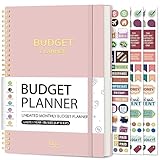
- Effective Budget Planning - Take control of your finances with the budget account book. This comprehensive planner allows you to plan and track your income, expenses, savings, and financial goals in one convenient place. With its intuitive layout and easy-to-use sections, you can stay organized and make informed decisions to achieve financial success.
- User-Friendly Layout - The budget planner features a user-friendly layout designed for easy navigation and organization. Each month, you'll find dedicated budget pages where you can set financial goals, track your income, and plan your expenses. Additional sections include debt trackers, savings goals, bill payment trackers, and more, making it simple to stay on top of your finances.
- Undated Monthly Calendar & Bonus Stickers - Featuring undated calendar each month, you'll have ample space to mark paydays, bills due, appointments, and important dates. Say goodbye to difficult writing spaces. Plus, we've included 3 cute sticker sheets that allow you to personalize your financial organizer and make budgeting more fun. Dates are not pre-printed and are completed by the user.
- Reliable and Convenient Design - Our monthly budget planner is designed for your convenience and built to last. The elastic band keeps everything securely in place, and the dual-sided pocket provides extra storage. Experience a budget planner that combines practicality and durability.
- Master Budgeting with Ease - Our financial planner includes a complete guidebook that provides valuable insights and instructions for optimal usage. From setting financial goals to tracking expenses, this guidebook offers step-by-step guidance and practical tips. Whether you're new to budgeting or an experienced user, this resource will help you make the most of your budget planner, empowering you to achieve financial success.
Review each part of the offer separately. Grants and scholarships generally do not require repayment, work-study involves work, and loans create a repayment obligation. Compare the aid available with your remaining education and living costs, then accept no more loan money than you need. Before borrowing, understand the amount, interest rate, terms, and the repayment you may face.
PC Slower Than It Used to Be?
A free scan shows the junk files, broken settings and background clutter dragging Windows down - then fixes them in one click.Free scan · Windows 10 & 11Crashes, No Sound, or Screen Glitches?
Random freezes, missing sound and display glitches usually trace back to one bad driver. Find and replace yours safely.Free scan · under a minuteIf you still have a gap after reviewing the offer, ask the aid office whether there are unresolved requirements or other options for your circumstances. You can also use the CFPB’s Paying for College resources to explore college-cost planning and whether estimated borrowing appears manageable. The right amount depends on your costs, available aid, loan terms, and ability to repay; there is no universal borrowing amount that fits every student.
If family finances changed after you filed FAFSA
Submit the FAFSA, then contact your school’s financial aid office and explain the change. FSA says an aid administrator may decide to adjust FAFSA information; an adjustment or a particular award is not guaranteed (FSA next steps after FAFSA).
Rank #3

- Budget Planner: Stay on top of your finances and achieve your financial goals with our A5 Budget Planner. This beautifully designed budget book combines functionality and style, empowering you to effectively manage your budget month after month.
- Classic Design: The elegant pink cover with the striking "Budget Planner" in gold adds a touch of sophistication to your financial planner. Carry it with pride and make a statement as you take charge of your financial.
- Comprehensive Layout: Our monthly budget planner features a well-thought-out layout that simplifies your budgeting process. With a dedicated monthly budget page, four expense tracking pages, a monthly summary, and a notes section, you have all the tools you need for effective financial planning.
- 14-Month Duration: Unlike many other planners on the market, ours covers a total of 14 months, giving you an extended period of financial organization. Now you can make income and expense records at any time, ensuring every financial decision aligns with your long-term goals.
- Premium Quality and Convenience: Crafted with attention to detail, this budget planner boasts superior quality. The sturdy pink and gold coil binding allows for effortless flipping, while the A5 size makes it the perfect companion for your daily adventures, fitting into your bag or backpack without taking up too much space.
How can I track loans and prepare for repayment?
Keep federal and private loans in separate records. For each loan, note the current balance, interest rate, servicer or lender, and expected repayment timing. Use your official federal student aid account for federal loan details, and contact the relevant servicer or lender when you need information about your own account. FSA’s money checklist and the CFPB’s college-payment resources provide additional planning guidance (FSA financial awareness checklist; CFPB Paying for College).
Loan options and rules can depend on loan type, eligibility, income, and current federal requirements. Do not assume that deferment or forbearance stops interest from accruing, or that one repayment plan is best for everyone. Verify current choices with your servicer, StudentAid.gov, and CFPB before making a decision.
Quick wins for a faster PC:
Repair Windows errors before they cause bigger problemsFix Now →Fix the driver behind crashes, sound loss and screen glitchesFind Drivers →Clear out junk files and repair common Windows errorsFree Scan →Do I need a bank account as a college student?
A bank or credit union account can make it easier to pay bills and manage direct deposits, but it is not the only way to receive student loan funds. Compare accounts by their actual terms rather than assuming an account labeled “student” is free. The CFPB recommends considering fees, account requirements, ATM access, branch availability, digital access, and direct-deposit arrangements (CFPB student banking guide).
Rank #4

- Effective Budget Planning - Take control of your finances with the budget account book. This comprehensive planner allows you to plan and track your income, expenses, savings, and financial goals in one convenient place. With its intuitive layout and easy-to-use sections, you can stay organized and make informed decisions to achieve financial success.
- User-Friendly Layout - The budget planner features a user-friendly layout designed for easy navigation and organization. Each month, you'll find dedicated budget pages where you can set financial goals, track your income, and plan your expenses. Additional sections include debt trackers, savings goals, bill payment trackers, and more, making it simple to stay on top of your finances.
- Undated Monthly Calendar & Bonus Stickers - Featuring undated calendar each month, you'll have ample space to mark paydays, bills due, appointments, and important dates. Say goodbye to difficult writing spaces. Plus, we've included 3 cute sticker sheets that allow you to personalize your financial organizer and make budgeting more fun. Dates are not pre-printed and are completed by the user.
- Reliable and Convenient Design - Our monthly budget planner is designed for your convenience and built to last. The elastic band keeps everything securely in place, and the dual-sided pocket provides extra storage. Experience a budget planner that combines practicality and durability.
- Master Budgeting with Ease - Our financial planner includes a complete guidebook that provides valuable insights and instructions for optimal usage. From setting financial goals to tracking expenses, this guidebook offers step-by-step guidance and practical tips. Whether you're new to budgeting or an experienced user, this resource will help you make the most of your budget planner, empowering you to achieve financial success.
- Check monthly fees, overdraft fees, and any minimum-balance requirement.
- Confirm whether nearby ATMs or campus branches are available and whether using another network costs extra.
- Review digital access and how direct deposits are handled.
- Read the account terms, including whether student-related fee waivers have eligibility rules or time limits.
Some student accounts waive certain fees, while virtual accounts may rely on other banks’ ATM networks. The details vary by institution, so compare the specific account disclosures before opening one.
Independent reader supportYour contribution helps us test, update, and keep practical guides available for everyone.How much should I save for emergencies?
If your budget allows, set aside money in a savings account for costs that are necessary but hard to predict, such as a broken phone, urgent travel, or an unexpected medical expense. FSA recommends considering an emergency fund but does not set a universal target. Choose an amount that fits your income and essential expenses rather than borrowing a target designed for someone else (FSA first-year guide; FSA budgeting guidance).
Should I get a credit card in college?
No student needs a credit card simply because they are in college. If you choose to use one, know its interest rate, fees, payment due date, and whether you can pay the statement. Include card payments in your budget and avoid charging expenses you cannot repay. FSA cautions that credit cards can be useful but can also create financial trouble; spending within your means and paying obligations on time can help prevent or reduce debt (FSA financial awareness checklist; FSA budgeting guidance).
The Tool Desk
Outbyte Driver Updater FREEScan for outdated or missing drivers - takes under a minuteDriver Scan →Outbyte PC Repair FREERepair Windows errors before they cause bigger problemsFix Now →Best Value

- Effective Budget Planning - Take control of your finances with the budget account book. This comprehensive planner allows you to plan and track your income, expenses, savings, and financial goals in one convenient place. With its intuitive layout and easy-to-use sections, you can stay organized and make informed decisions to achieve financial success.
- User-Friendly Layout - The budget planner features a user-friendly layout designed for easy navigation and organization. Each month, you'll find dedicated budget pages where you can set financial goals, track your income, and plan your expenses. Additional sections include debt trackers, savings goals, bill payment trackers, and more, making it simple to stay on top of your finances.
- Undated Monthly Calendar & Bonus Stickers - Featuring undated calendar each month, you'll have ample space to mark paydays, bills due, appointments, and important dates. Say goodbye to difficult writing spaces. Plus, we've included 3 cute sticker sheets that allow you to personalize your financial organizer and make budgeting more fun. Dates are not pre-printed and are completed by the user.
- Reliable and Convenient Design - Our monthly budget planner is designed for your convenience and built to last. The elastic band keeps everything securely in place, and the dual-sided pocket provides extra storage. Experience a budget planner that combines practicality and durability.
- Master Budgeting with Ease - Our financial planner includes a complete guidebook that provides valuable insights and instructions for optimal usage. From setting financial goals to tracking expenses, this guidebook offers step-by-step guidance and practical tips. Whether you're new to budgeting or an experienced user, this resource will help you make the most of your budget planner, empowering you to achieve financial success.
Can college students get a tax credit for tuition?
Some students or taxpayers who pay qualified education expenses may qualify for federal education tax benefits, but eligibility depends on the person, expenses, and tax year. IRS Publication 970 explains federal education tax benefits for its stated tax year, and the IRS says eligible expenses may be paid with cash, check, credit or debit card, or borrowed funds (IRS Publication 970 (2025); IRS qualified education expenses).
Who may claim a credit, how scholarships affect expenses, eligibility limits, and how benefits interact can be fact-specific. Check the IRS publication for the relevant filing year or consult a qualified tax professional; do not assume that paying tuition alone establishes eligibility.
Quick Recap
Product prices and availability are accurate as of the date/time indicated and are subject to change. Any price and availability information displayed on Amazon at the time of purchase will apply.




