Free tools Windows power users keep installed
One-click scans. No signup required.
Verizon’s acquisition of Frontier is complete, but the key dates are easy to confuse. The FCC approved transfers of Frontier’s communications licenses and authorizations on May 16, 2025. California approved its state-level transfer on January 15, 2026, and Verizon closed the acquisition on January 20, 2026. Frontier is now a wholly owned Verizon subsidiary.
Verizon announced the all-cash transaction at a $20 billion value. In its subsequent filing, Verizon reported approximately $22.3 billion in aggregate consideration, including about $12.9 billion of Frontier debt assumed.
| # | Preview | Product | Price | |
|---|---|---|---|---|
| 1 |
|
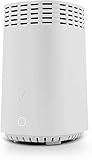
VerizonW Fios G3100 Router (Renewed) | $62.88 | Buy on Amazon |
| 2 |
|
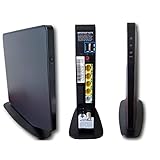
VerizonW Verizon Fios G1100 | Updated 2019 Version | AC1750 WiFi G-1100 Quantum Gateway Router for... | $74.29 | Buy on Amazon |
| 3 |

|
FIOS CR1000 Wireless Gateway | $189.99 | Buy on Amazon |
| 4 |

|
VerizonW 2021 G3100 Home Router (Renewed) | $75.95 | Buy on Amazon |
| 5 |

|
TP-Link AX1800 WiFi 6 Router (Archer AX21 V5) | $69.99 | Buy on Amazon |
What the FCC actually approved
The FCC did not approve a generic corporate merger under a single federal “merger license.” Its Wireline Competition Bureau approved applications transferring control of specified Frontier subsidiaries’ communications authorizations to Verizon. The FCC order covers domestic and international Section 214 authorizations, wireless licenses held by Frontier subsidiaries, and other licenses listed in the order’s appendix.
The agency applied the Communications Act’s public-interest standard. It concluded that the transfers would not create material transaction-related public-interest harms and that likely benefits included upgrading and expanding Frontier’s fiber network. That finding addresses the FCC’s license-transfer review; it does not establish that every local broadband market became more competitive or that every customer will pay less.
#1 Best Overall
- NAT support, NAPT support, IGMP snooping, DiffServ support, Wi-Fi Multimedia (WMM) support, Access Control List (ACL) support, Quality of Service (QoS), virtual server support, Wi-Fi Protected Setup (WPS), DNS proxy, reset button, Type of Service (ToS), Self Organizing Network (SON) technology, band steering, virtual DMZ, seamless roaming
- The latest Wi-Fi generation, Wi-Fi 6 (802.11 ax) with speeds averaging 60% faster on 2.4 GHz and 38% faster on 5 GHz than previous Verizon Wi-Fi routers
- Tri-band 4x4 antennas, increasing Wi-Fi coverage by an average of 63%
- Self-Organizing Network technology for automatic band steering and single Wi-Fi Network name
- Multiple queue processing for different packet types: DNS proxy, NAT/NAPT, Virtual Server and DMZ, Firewall function with Access Control List (ACL), Firewall function with Hacker pattern detection DOS
The FCC’s accompanying May 16, 2025 release highlighted network expansion in 25 states, continued movement from copper to higher-capacity infrastructure, and Verizon’s expectation of deploying fiber to at least 1 million American homes annually after the transaction. Those are agency-described benefits and company commitments or expectations, not proof that the projected construction has already occurred.
Approval, state authorization and closing were separate events
| Date | What happened |
|---|---|
| September 4–5, 2024 | Verizon and Frontier entered into and announced the acquisition agreement, described as an all-cash transaction valued at $20 billion. Frontier’s announcement |
| May 16, 2025 | The FCC approved the relevant transfers of licenses and Section 214 authorizations. FCC release |
| January 15, 2026 | The California Public Utilities Commission approved transfer of Frontier’s California operations with conditions and continuing oversight. CPUC announcement |
| January 20, 2026 | Verizon completed the acquisition. Frontier became a wholly owned Verizon subsidiary. Verizon 2025 Form 10-K |
Descriptions saying the FCC approved the deal in February 2026 are inconsistent with the FCC’s dated order and release. February was not the federal approval date.
Why Verizon wanted Frontier
Verizon and Frontier presented the acquisition primarily as a broadband-scale transaction. At announcement, Frontier reported approximately 7.2 million fiber locations. The companies projected a combined reach of about 25 million premises across 31 states and Washington, D.C., and cited at least $500 million in annual run-rate cost synergies.
The strategic logic was to give Verizon more fixed-broadband scale, pair home internet with wireless service, and provide additional capital and operating resources for fiber construction. These figures and synergy estimates came from the transaction announcement; they should not be treated as realized post-closing results unless Verizon later reports them as such.
The Tool Desk
Outbyte PC Repair FREEClear out junk files and repair common Windows errorsFree Scan →Outbyte Driver Updater FREEScan for outdated or missing drivers - takes under a minuteDriver Scan →Rank #2
- Item Package Dimension -9.3299999904834L x 9.249999990565W x 3.699999996226H inches
- Item Package Weight - 2.48901893798 Pounds
- Item Package Quantity - 1
- Product Type - NETWORKING ROUTER
How much did the acquisition cost?
The two commonly quoted values measure different things:
| Figure | Meaning | Source and qualification |
|---|---|---|
| $20 billion | Headline value announced in 2024 | All-cash transaction value described by Verizon and Frontier in the original announcement. |
| $38.50 per share | Merger consideration for Frontier common stock | Verizon’s closing disclosures; shares were converted under the merger agreement’s terms. Closing filing |
| Approximately $22.3 billion | Total aggregate consideration reported after closing | About $9.4 billion in cash paid, net of cash acquired, plus approximately $12.9 billion of Frontier debt assumed. Verizon Form 10-K |
The $22.3 billion figure is not a correction of the announcement so much as a closing-accounting measure that includes assumed liabilities, especially debt.
Commitments and conditions: federal versus California
Items described in the FCC record
The FCC release described commitments and representations concerning fiber deployment and investment, retirement of copper where fiber becomes available, nondiscrimination, workforce practices, and tower-contractor safety and cost issues. The documents do not make every item a universal, separately enforceable FCC condition. Readers should distinguish formal obligations in the order from voluntary commitments or representations incorporated into the record.
California’s additional requirements
California’s approval contains state-specific protections and oversight that do not automatically apply nationwide. The California Public Utilities Commission described requirements involving:
Rank #3
- IPv4 / IPv6 Dual Stac
- IP sharing for LAN with up to 253 users
- Firewall function with Access Control List (ACL)
- Dynamic and Static IP
- Guest Wi-Fi (2.4 GHz)
- Affordable voice and broadband options, including protections for low-income customers and California LifeLine participants.
- Broadband investment, network reliability, resilience, reporting and performance standards.
- Rural customers, customers remaining on copper, and tribal engagement.
- Workforce and supplier-diversity commitments.
- A $10 million partnership with the California State University system.
- $500 million in spending with California small businesses through settlement agreements.
Those terms illustrate how state utility approval can supplement a federal license-transfer decision. They should not be presented as obligations imposed in every Frontier state.
What Frontier customers should expect
Frontier’s customer-facing integration FAQ says customers remain on Frontier-branded service for now. It also says Frontier and Verizon billing systems and online accounts were not immediately combined, and that customers should receive advance notice of material changes or planned outages. Because this is a company information page, it describes Verizon and Frontier’s stated process rather than guaranteeing an identical experience for every account.
Will your bill or account change immediately?
Not necessarily. Existing Frontier customers were told that Frontier and Verizon bills and online accounts would remain separate initially. Keep using the payment method and account portal identified on your current bill unless the company gives you different instructions.
Can you bundle Verizon Wireless?
Eligible customers may qualify for a Verizon Mobile + Home discount when they have qualifying Verizon Wireless service. Eligibility, discount size and plan requirements can change, so check the current offer before switching or adding a mobile line. A discount is not automatically a lower total household cost if it requires a mobile plan you would not otherwise buy.
Quick wins for a faster PC:
Clear out junk files and repair common Windows errorsFree Scan →Fix the driver behind crashes, sound loss and screen glitchesFind Drivers →Rank #4
- The latest Wi-Fi generation, Wi-Fi 6 (802.11 ax) with speeds averaging 60% faster on 2.4 GHz and 38% faster on 5 GHz than previous Verizon Wi-Fi routers*
- Tri-band 4x4 antennas, increasing Wi-Fi coverage by an average of 63%*
- 4 Gigabit LAN + 1 Gigabit WAN, MoCA2.5 + LAN MoCA1.1 WAN
- Automatic Band switching between 2.4GH and 5.8GH Band and 150% more Wi-Fi range than G1100
- Self-Organizing Network technology for automatic band steering and single Wi-Fi Network name
Will every Frontier customer receive Verizon Fios?
No. Ownership does not make Frontier’s and Verizon’s networks identical. Availability depends on the address and the local last-mile technology—fiber, copper, cable, fixed wireless or 5G. Frontier’s FAQ indicates that existing plans may remain in place initially, with possible future standardization. Do not assume an automatic fiber upgrade, a Verizon Fios label, or a new router at every address.
What should copper customers do?
Ask for the technology and plan available specifically at your address. Copper retirement may occur where fiber is built, but neither the acquisition nor the FCC approval promises a universal timetable. If reliability or affordability is a concern, document outages and charges and ask which federal or state complaint channel applies to your location.
What Verizon customers should expect
The acquisition does not automatically change an existing Verizon Wireless or Fios account. Its practical significance is that Verizon now owns Frontier’s assets and may offer service, bundles or network upgrades in former Frontier territory. Address-level availability still controls: Verizon Wireless coverage is not the same thing as Verizon Fios or Frontier Fiber availability.
Independent reader supportYour contribution helps us test, update, and keep practical guides available for everyone.Competition, workers and communities
The transaction could bring advantages: a larger fiber-building budget, more operational scale, broader wireless-home-internet bundles and faster migration from copper in places Verizon chooses to invest.
PC Slower Than It Used to Be?
A free scan shows the junk files, broken settings and background clutter dragging Windows down - then fixes them in one click.Free scan · Windows 10 & 11Crashes, No Sound, or Screen Glitches?
Random freezes, missing sound and display glitches usually trace back to one bad driver. Find and replace yours safely.Free scan · under a minuteBest Value
- DUAL-BAND WIFI 6 ROUTER: Wi-Fi 6(802.11ax) technology achieves faster speeds, greater capacity and reduced network congestion compared to the previous gen. All WiFi routers require a separate modem. Dual-Band WiFi routers do not support the 6 GHz band.
- AX1800: Enjoy smoother and more stable streaming, gaming, downloading with 1.8 Gbps total bandwidth (up to 1200 Mbps on 5 GHz and up to 574 Mbps on 2.4 GHz). Performance varies by conditions, distance to devices, and obstacles such as walls.
- CONNECT MORE DEVICES: Wi-Fi 6 technology communicates more data to more devices simultaneously using revolutionary OFDMA technology
- EXTENSIVE COVERAGE: Achieve the strong, reliable WiFi coverage with Archer AX1800 as it focuses signal strength to your devices far away using Beamforming technology, 4 high-gain antennas and an advanced front-end module (FEM) chipset
- OUR CYBERSECURITY COMMITMENT: TP-Link is a signatory of the U.S. Cybersecurity and Infrastructure Security Agency’s (CISA) Secure-by-Design pledge. This device is designed, built, and maintained, with advanced security as a core requirement.
It also removes a major independent broadband provider from the market. Some communities may have fewer independent fixed-broadband competitors, and bundles can make it harder to compare a standalone internet price with a mobile-plus-home package. Construction and service quality may vary by geography, density and customer economics. Workforce and contractor commitments likewise need to be evaluated against actual employment, safety and deployment results rather than announcement language.
The FCC’s conclusion that it found no material transaction-related public-interest harms is therefore not a promise of lower prices, uniform upgrades or improved competition in every town.
How to evaluate your options after the merger
- Check your exact address. Confirm whether the available product is fiber, copper, cable, fixed wireless or 5G; nearby streets can have different networks.
- Calculate the post-promotion price. Compare the regular monthly rate, not only an introductory offer.
- Compare upload speed as well as download speed. Upload capacity matters for remote work, cloud backups, livestreaming and large file transfers.
- Review data policies. Check caps, overage rules, traffic management and any equipment limits.
- Add every fee. Include router rental, activation, installation, self-install and equipment-return charges.
- Test the bundle math. A Mobile + Home discount may require a qualifying wireless plan and may cost more overall than standalone broadband.
- Check contract terms. Verify commitments, cancellation charges and what happens if you move.
- Keep records during integration. Save bills, outage dates, chat transcripts and notices in case billing or service disputes arise.
What remains to be watched
- Actual fiber construction compared with the projected 1 million-or-more homes per year.
- Whether Frontier and Verizon brands, billing systems and support channels eventually converge.
- Regular prices after promotions and the treatment of legacy copper plans.
- Outage, reliability and customer-support performance in former Frontier markets.
- Local competitive effects, including whether customers gain another viable high-speed option or lose an independent provider.
- Compliance with California’s reporting, affordability, reliability, rural, workforce and supplier commitments.
Bottom line for customers and investors
This is no longer a pending merger. The FCC approved the federal license transfers on May 16, 2025, California approved its state transaction on January 15, 2026, and Verizon closed the acquisition on January 20, 2026. Frontier now sits inside Verizon, but customer-facing changes are gradual and location-specific. The sensible response is to compare the service, total price and protections available at your address—not to assume that ownership alone means an automatic switch to Verizon Fios or an immediate bill reduction.
Quick Recap
Product prices and availability are accurate as of the date/time indicated and are subject to change. Any price and availability information displayed on Amazon at the time of purchase will apply.




