Do these 3 things before closing this tab:
1Scan for outdated or missing drivers - takes under a minute2Clear out junk files and repair common Windows errors3Fix the driver behind crashes, sound loss and screen glitchesFacebook confirmed in 2018 that it was forming a silicon team and building a chip, but the executive describing the effort said it was not the company’s primary focus at the time. That early announcement is distinct from Meta’s later, much larger custom-silicon program: Meta now reports deploying MTIA accelerators for internal AI workloads while continuing to work with outside silicon partners.
What Facebook announced in 2018
At an @Scale event, Facebook vice president of infrastructure Jason Taylor said the company was bringing up a silicon team, working with silicon providers and building a chip. He also said chip development was “not our primary focus” at the time. The statement described an early, bounded effort—not a claim that chip design had become Facebook’s central business. EE Times reported the comments in 2018.
The report connected the effort with Facebook’s announcement that five chip companies would support Glow, its open-source deep-learning compiler. The context points to both internal chip work and relationships with external silicon providers.
How the effort grew into custom silicon at Meta
In a 2023 account, Meta engineering lead Olivia Wu recalled seeing a 2018 post from Meta chief AI scientist Yann LeCun seeking someone to help build AI silicon in-house. Wu described a cross-functional organization developing Meta’s machine-learning accelerator, with work spanning co-design, architecture, verification, implementation, emulation, validation, systems, firmware and software. Engineering at Meta published her account on October 18, 2023.
#1 Best Overall

- ✅Powered by 26 Tera-Operations Per Second (TOPS) Hailo-8 AI Processor. 2.5W typical power consumption
- ✅Scalable, enabling simultaneous processing of multi-streams & multi-models
- ✅Enabling real-time, low latency and high-efficiency AI inferencing on the edge devices
- ✅Supports TensorFlow, TensorFlow Lite, ONNX, Keras, Pytorch frameworks
- ✅Supports Linux and Windows. Supports the temperature range of -40°C to 85°C
That work sits within a broader history of workload-specific hardware. Meta described custom ASIC designs for AI inference and video transcoding in 2019. In 2023, it discussed its first custom AI chip and the in-house-developed MSVP ASIC for video workloads. These examples establish multiple uses for custom silicon over time; they do not establish that the chip mentioned in 2018 was MTIA, MSVP or any particular later design.
What Meta says MTIA does now
Meta describes MTIA as a family of custom-built chips for its own AI workloads. In a March 11, 2026 update, the company said it had developed and deployed hundreds of thousands of MTIA chips for inference across organic content and advertising on its apps. That is Meta’s reported figure, not an independently audited count. The company also said MTIA 300, designed for ranking and recommendation training, was already in production. Meta’s March 2026 update described four new generations in development and deployment within the next two years, for ranking, recommendations and generative AI; that is a company roadmap and may change.
Rank #2
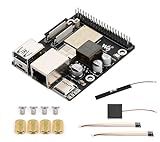
- High-Performance Dual-Core with Ample Memory--- Equipped with a 360MHz dual-core RISC-V processor, 32MB of onboard PSRAM, and 32MB of Flash memory, providing powerful processing capabilities and ample runtime for complex multimedia applications and edge computing.
- Powerful Multimedia Processing Center--- Integrated with a dedicated image processor (ISP), H.264 video encoder, and JPEG codec, perfectly supporting camera input and video processing, making it an ideal choice for developing smart displays, video surveillance, and other projects.
- Hardware-Level Security Protection--- Built-in digital signature, encryption accelerator, and key management unit, providing a one-stop hardware-level security solution from secure boot and data encryption to access control management, ensuring the security of your products and data.
- Full Connectivity Coverage: Wi-Fi 6, Bluetooth, PoE Power Supply--- Onboard with an ESP32-C6 chip, supporting the latest Wi-Fi 6 and Bluetooth 5.0; it also integrates an Ethernet port with PoE functionality, providing high-speed, flexible, and stable network connectivity, and can be powered directly via Ethernet cable, simplifying deployment.
- Rich interfaces and strong expandability--- It provides a MIPI camera/display interface, high-speed USB, SD card slot, microphone/speaker interface and a large number of programmable GPIOs, which greatly facilitates the expansion of external devices and meets the needs of various human-computer interaction and Internet of Things applications. Supports AI Speech Interaction: Allows access to online large model platforms such as ChatGPT, DeepSeek, Doubao, etc.
Meta characterizes MTIA as part of a custom, full-stack solution tailored to its workloads, and says it can provide greater compute efficiency and lower cost for those intended uses than general-purpose chips. Those are Meta’s claims about its designs, not published independent performance or cost benchmarks.
Independent reader supportYour contribution helps us test, update, and keep practical guides available for everyone.Why custom chips do not mean Meta has stopped using outside silicon
Meta describes a portfolio approach: custom accelerators for selected workloads alongside silicon sourced from industry suppliers. On April 14, 2026, it announced an expanded partnership with Broadcom to co-develop multiple generations of MTIA chips. The announcement supports a picture of custom design and outside collaboration working together; it does not show that Meta has stopped buying other companies’ chips. Meta’s Broadcom announcement gives the company’s account of the partnership.
The Tool Desk
Outbyte Driver Updater FREEFix the driver behind crashes, sound loss and screen glitchesFind Drivers →Outbyte PC Repair FREERepair Windows errors before they cause bigger problemsFix Now →Quick Recap
Rank #4

- High-Performance AI Processing: The MX3 is designed to handle the most demanding AI computer vision workloads, delivering exceptional performance and efficiency.
- Flexible Integration: The MX3 can be easily integrated into your existing systems via its M.2 M-key form factor and support for Linux operating systems.
- Energy Efficient: The MX3 is designed to provide high performance while minimizing power consumption.
- Comprehensive Software Development Kit (SDK): The MX3 is supported by a comprehensive SDK that simplifies development and deployment.
- Hardware compatability: The MX3 is compatible with the PCI-SIG M.2 M-key 2280 Specification. It can be used with the Raspberry Pi 5 with a M-key 2280 HAT.
Rank #3

- Powered by 26 Tera-Operations Per Second (TOPS) Hailo-8 AI Processor.
- 2.5W typical power consumption
- Enabling real-time low latency and high-efficiency AI inferencing on the edge devices
- Supports TensorFlow TensorFlow Lite, ONNX, Keras, Pytorch frameworks
- Supports Linux and Windows.
What the chip announcement means for readers
- It was an infrastructure effort, not a consumer launch. The cited accounts describe chips for Meta’s internal workloads, not a product offered for retail sale.
- The 2018 chip’s identity is not established. The available accounts show continuity in custom-silicon work but do not identify that early chip as MTIA or MSVP.
- The scale and maturity changed over time. The 2018 comments concerned forming a team and building a chip; later Meta updates describe deployed accelerators, a production chip and a multi-generation roadmap.
Product prices and availability are accurate as of the date/time indicated and are subject to change. Any price and availability information displayed on Amazon at the time of purchase will apply.




