To get hired as a chief information officer, you need to show that you can connect technology decisions to business results—not just that you understand technology. CIO hiring committees look for evidence of enterprise-scale leadership across strategy, operations, people, budgets, risk, and change. The title also varies widely by employer, so assess the authority and scope of each role rather than treating every CIO opening as the same job.
Understand what the CIO role includes
A CIO typically directs an organization’s internal information systems and technology operations. Depending on the employer, the remit may include IT strategy and architecture, infrastructure, applications, service delivery, cybersecurity coordination, data governance, cloud, vendors, budgets, business continuity, talent, and digital transformation. ISACA describes the CIO as accountable for internal IT operations and for directing, planning, organizing, and controlling enterprise information systems (ISACA’s CIO career resource).
The U.S. Bureau of Labor Statistics (BLS) describes the broader computer and information systems manager occupation as planning and directing computer-related activities, assessing IT needs, recommending upgrades, managing security threats, evaluating project costs and benefits, directing staff, and monitoring vendors. BLS includes CIOs among related titles, but its labor-market figures cover a much wider occupational group, not CIOs alone (BLS occupational profile).
Titles do not define authority
In some organizations, the CIO owns internal systems and business enablement, while a CTO leads product technology or engineering and a CISO leads cybersecurity. In others, one executive covers more than one of those areas. Ask what the role owns, who it reports to, whether it has board access, and how much authority it has over budgets, teams, and enterprise priorities. A CIO reporting to the CFO with a narrow infrastructure remit may have a very different job from one reporting to the CEO and leading enterprise transformation.
Quick wins for a faster PC:
Scan for outdated or missing drivers - takes under a minuteDriver Scan →Clear out junk files and repair common Windows errorsFree Scan →Fix the driver behind crashes, sound loss and screen glitchesFind Drivers →#1 Best Overall

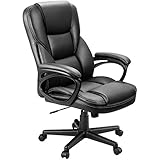
- Ergonomic Office Chair: Do you often experience back pain and soreness due to uncomfortable chairs? HeroSet comfy ergonomic chairs can help you get rid of your troubles, with 7 support points (head/neck/shoulder/back/waist/hips/hands) for optimal sitting posture and improved comfort to boost efficiency during work and study sessions.
- Flip-up Armrests& Adjustable Functions: Flexible adjustable height from 43 to 47 inches and 90-120° tilt adjustment function, making the desk chair suitable for your various sitting positions and activities such as working, reading, and relaxing. The space-saving 90° flip-up armrests can relieve hand pressure while you work/rest.
- Executive Leather Chair: Why is the HeroSet office chair more comfortable to sit in? Breathable and easy-to-clean PU leather upholstery provides consistent comfort by ensuring ventilation and maintaining coolness The five-layer cushion structure prevents collapses, where PP cotton and high-density sponge padding provide immersive enjoyment, and the silent spring seat (20 spring packs) guarantees that the cushion is appropriately elastic and not easily deformed.
- RELIABLE MOVEMENT AND DURABILITY:The Heroset home office desk chair features quiet PU casters to protect floors. Sturdy air bars and reinforced explosion-proof base allow this leather office chair with wheels and armrests to withstand up to 400lbs; Tips to improve product safety, stability and durability: Tighten the screws every three months.
- Satisfied After-Sales Service: The big and tall computer chair assembly process takes just 20 minutes with detailed instructions and tools provided. HeroSet high back office chairs offer a 5-year service, and any issues can be promptly resolved through our after-sales service team.
Build the experience employers screen for
There is no universal number of years that makes someone ready to be a CIO. BLS lists five or more years of related experience as typical for the broader computer and information systems manager occupation; individual CIO searches can require substantially broader experience depending on the organization’s size, complexity, and needs. The more useful readiness test is whether you can demonstrate sufficient scope and outcomes.
Show scale and business exposure
- Scope: Be able to describe the budget you owned or influenced, the size and seniority of your team, the business units and regions supported, and the complexity of the technology environment.
- Business partnership: Show experience working with functions such as finance, operations, sales, HR, and legal, and participating in enterprise planning rather than only IT planning.
- Executive exposure: Demonstrate that you can present decisions, risks, and trade-offs to the CEO, CFO, other senior leaders, or the board where applicable.
- Organizational leadership: Give examples of developing leaders, redesigning teams, resolving executive conflict, setting accountability, and managing resistance to change.
- Industry understanding: Explain how you understand the target employer’s customers, operating model, and regulatory environment.
Prove you can operate and transform
Employers need a leader who can keep critical services reliable while changing how the organization works. Build examples that show both operating discipline and transformation: improving service levels, modernizing applications, integrating systems after an acquisition, strengthening resilience, or reducing risk while meeting business goals.
Translate accomplishments into outcomes. For example, instead of writing “managed IT operations,” a candidate might describe consolidating five regional infrastructure teams into a shared-services model and reducing annual run-rate costs by 14% while improving incident response. That is an illustrative résumé-writing model, not a claim about a particular employer. Use only results you can substantiate.
Develop the capabilities that distinguish a CIO
Technical fluency matters, but a CIO is hired to make enterprise choices: what to fund, what to stop, which risks to accept, and whether to build capabilities internally or buy them. Relevant knowledge includes enterprise architecture, cloud operating models, cybersecurity and identity, data and analytics, application portfolios, integration, service management, recovery, vendors, AI governance, privacy, and technology financial management. O*NET’s profile for computer and information systems managers also highlights technology planning, resource allocation, leadership, workflow direction, and assessment of organizational needs (O*NET occupational profile).
Do these 3 things before closing this tab:
1Repair Windows errors before they cause bigger problems2Fix the driver behind crashes, sound loss and screen glitches3Clear out junk files and repair common Windows errorsBusiness and financial judgment
Be ready to build and defend an IT budget, explain operating versus capital expenses, assess total cost of ownership, negotiate vendor agreements, and track whether expected benefits materialized. Connect each major initiative to a business objective: objective → capability gap → technology initiative → measurable result. A market expansion, for example, might require consolidating fragmented systems and integrating data so teams can enter markets faster and improve forecasting.
Risk, governance, and resilience
Demonstrate executive-level judgment on cybersecurity, privacy, third-party risk, audit remediation, continuity, data ownership, and AI use. The CIO may oversee security directly, partner with an independent CISO, or have a more limited security remit; clarify the arrangement rather than assuming it is standard. ISACA’s CIO resource identifies business strategy, KPIs, risk management, data analysis, financial strategy, auditing, and internal controls as relevant skill signals.
Rank #2

- Executive high-back office desk chair in Brown/Gold; ideal for an office or conference room
- Air-pressurized adjustable seat height and tilt-tension control, plus 360 degree swivel
- Supports up to 275 pounds
- Bonded leather (faux leather) upholstery; contoured padded seat, backrest, and armrests for comfort; durable caster wheels for smooth rolling mobility
- Easy to assembly with included instructions
Operational discipline and change leadership
Show how you use service-level agreements, incident and problem management, change control, capacity planning, architecture governance, and portfolio prioritization to maintain dependable services. Then explain how you lead adoption: how you secured business sponsorship, addressed resistance, developed leaders, and measured whether new systems or processes were actually used.
Executive communication
Communication is part of the job, not an optional “soft skill.” You may need to discuss a technical issue differently with engineers, a CFO, a board, employees, auditors, or a vendor. Practice concise explanations that preserve technical accuracy while making the business consequence clear. For major decisions or incidents, organize the message around what happened, why it matters, the risk, the options, your recommendation, and the decision or investment needed.
Recommended Free Tools
BLS lists analytical, communication, computer, decision-making, leadership, and problem-solving skills as important to the broader occupation. That supports the need for a range of capabilities, but it does not make any single skill a guarantee of CIO employment.
Turn your career history into CIO evidence
Before applying, assemble a small portfolio of leadership stories that can support your résumé and interviews. For each major initiative, record the business problem, your decision, the people and functions involved, the result, and what you learned. Include difficult programs or setbacks when you can explain your accountability and response constructively.
Use evidence, not technology buzzwords
- Quantify the budget, program value, team, or user base involved where you can.
- State the outcome: cost avoided, revenue enabled, service improvement, risk reduced, recovery improved, or time saved.
- Identify your own role and decisions rather than implying you personally delivered a team’s entire result.
- Explain business adoption and benefits realization, not just launch dates or systems deployed.
- Use claims that references and records can support.
A long inventory of tools, unsupported descriptions such as “visionary,” or a claim of “digital transformation” without a business result will not establish executive readiness on its own.
Decide whether an MBA or certification is worth it
MBA: useful in some gaps, not a prerequisite
An MBA may help build finance, strategy, accounting, operations, organizational-behavior knowledge, or an executive network. It is more compelling if target employers require or prefer graduate education and the program offers relationships or learning you cannot get as effectively another way. BLS says some employers require or prefer a graduate degree in computer science, IT, or business administration, while a bachelor’s degree is the typical education listed for the broader occupation. That is not a universal CIO requirement.
Rank #3
- Ergonomic Office Chair: Engineered for all-day comfort and rock-solid support, our executive office chair features a reinforced frame and a heavy-duty, 4-level gas lift. Independently tested to withstand 1.5 times the BIFMA standard, it delivers unwavering, shake-free stability with zero gradual sink—so you can tilt, recline, and power through your work with total confidence
- Smooth 360° Swivel & Adjustable Tilt: Work, relax, or refocus—all without leaving your seat. This ergonomic office chair is built with a 360-degree swivel base and a smooth rocking function. Pull the lock lever for a gentle, secure tilt, or use the adjustable tension knob to customize your rocking resistance exactly how you like it
- Premium PU Leather: Wrapped in smooth, high-quality PU leather, this desk chair is soft, breathable, and super easy to clean—just wipe it down in seconds. The mid-century modern style instantly elevates the look of your home office, study, or meeting room
- Ergonomic Lumbar Support: The contoured backrest provides steady lower back support to promote healthy posture and reduce strain, even during long hours of sitting
- Quick & Easy Adjustments: Use the one-touch pneumatic lever to smoothly adjust the seat height to match your desk or preference in just seconds
Before committing, ask whether target job descriptions call for the degree, whether the network is valuable to your goals, and whether tuition and time away from work compare favorably with a stretch assignment, targeted business education, or executive coaching. A degree does not make up for a weak leadership or delivery record.
Choose credentials to close a specific gap
BLS describes certification as generally optional for the broader occupation, though some employers may prefer it, especially for specialized areas such as IT security. A credential can support a candidacy when it directly matches the role; it rarely substitutes for enterprise leadership and measurable results.
- CISM: Consider it for a target role with substantial security governance, risk, or controls responsibilities.
- CISSP: Consider it when security credibility is material to the role and you meet the certification’s experience and other requirements. Passing the exam alone is not the same as earning the certification.
- PMP: It may signal structured project and program leadership if that is a real gap; it is less useful when your main gaps are strategy, finance, or executive leadership.
- Cloud credentials or training: They may help when cloud architecture, migration, economics, or governance is central to the target job. Avoid relying on one vendor’s terminology as a substitute for broader platform and operating-model judgment.
- Industry-specific credentials: They may be relevant in regulated sectors such as healthcare, financial services, or government.
Use a simple test before paying for a credential: Does it address an actual requirement, support a target industry, strengthen credibility in a defined gap, or provide a valuable network? If not, a bigger operating assignment may be better evidence.
Create a CIO-level résumé and LinkedIn profile
Use an executive résumé length suited to your experience and local market norms—often two to three pages for an experienced candidate. Align it with the kind of CIO role you want, then make the scope and outcomes easy to find.
What to include
- An executive summary tied to target roles and the business problems you solve.
- A scope statement covering budget, team, geography, business units, and technology environment.
- Six to eight selected career highlights with defensible measures.
- Operating, transformation, risk, and talent achievements, including executive or board exposure where relevant.
- Industry and regulatory experience, relevant credentials, and technology domains expressed at a strategic level.
Use measures that fit your work: spending managed, costs reduced or avoided, revenue enabled, users supported, uptime or service improvement, project size and duration, systems consolidated, audit findings closed, recovery time, security outcomes, or process-cycle changes. Keep detailed tool lists subordinate to the business results.
Make your LinkedIn profile consistent with the résumé and give recruiters a clear sense of your target scope. Seek recommendations from people who can describe your decisions and impact, not just your technical ability.
Rank #4

- ERGONOMIC LUMBAR SUPPORT: This ergonomic home office chair eases back pain from long work or gaming sessions. Built-in lumbar support and a winged mid-back fit your spine’s natural curve, reducing pressure and promoting healthy posture effortlessly.
- THICKENED SPRING CUSHION: This ergonomic desk chair comes with a multi-pair spring set and high-density foam. It contours to hip and thigh curves to evenly disperse pressure, cutting down on fatigue from extended sitting.
- HEAVY-DUTY BUILD: This sturdy office chair is built for daily use with a solid metal base, smooth casters, and gas lift. It delivers stable support for users.
- 90° FLIP-UP ARMRESTS: This desk chair features padded armrests for steady support when you need it, and they flip 90° up when you don’t. Slide it fully flush under your desk to free up valuable space for compact home offices.
- REATHABLE PU LEATHER: This scratch-resistant computer chair uses premium PU leather that’s far less stuffy than traditional PU leather. Its diamond-stitched panel boosts airflow, keeping you cool and sweat-free even in summer.
Build relationships before a vacancy opens
Executive networking works best as relationship-building, not as a cold request for a job. Build credible connections with CEOs, CFOs, CHROs, board advisers, executive recruiters, peers, industry leaders, former colleagues, and business partners. Participate in relevant professional associations and technology-leadership communities, and share concise perspectives on business value, risk, talent, data, or transformation.
Request informational conversations about the target industry and the challenges its technology leaders face. Keep track of people who can speak accurately about your leadership and outcomes. Prepare a clear answer to “Why me, why this role, why now?” before a search begins.
Free tools Windows power users keep installed
One-click scans. No signup required.
Prepare for the executive search and interview
CIO hiring may involve a confidential search, an executive recruiter, interviews with the CEO, CFO, CHRO, board members, or business-unit leaders, and reference checks focused on behavior and results. Research the employer’s strategy, financial performance, major technology commitments, M&A activity, regulatory or security events, customer and employee experience, and current operating model. Find out why the job is open and whether the organization wants an operator, transformation leader, architect, or turnaround specialist.
Prepare examples across the job
- Strategy: How would you set priorities in the first 90 days? How do you build a multi-year roadmap or decide what not to fund?
- Operations: How do you measure reliability? How do you manage technical debt, balance stability with innovation, or respond to a major outage?
- Cybersecurity and risk: How do you explain cyber risk to a board, prioritize remediation, assess third parties, and divide accountability with a CISO?
- Finance: How do you manage a budget under cost pressure, evaluate cloud spending, prove benefits, or negotiate with strategic vendors?
- Leadership: How have you developed senior leaders, addressed underperformance, reorganized after an acquisition, or created accountability without suppressing innovation?
- Change: Describe a transformation that met resistance, what failed, and how you changed course to earn adoption.
Answer with a concise sequence: situation, decision, actions, measurable result, and lesson. Be precise about your contribution and candid about trade-offs.
Bring a diagnostic first-90-days approach
Show that you would listen before promising a sweeping transformation. A credible starting plan includes meeting executive and business leaders, reviewing strategy and commitments, assessing service health and major risks, examining cyber and recovery posture, mapping applications and data, evaluating team capability and succession, and identifying a small number of visible priorities.
Ask about the job’s real scope
Clarify reporting line, budget authority, board access, team size, technology ownership, relationship with the CISO and CTO, and the expected balance between operations and transformation. Also ask why the position is vacant and what success should look like in the first year. These answers help distinguish a genuine enterprise leadership role from a constrained position carrying an impressive title.
What’s actually slowing this PC down?
Pick the symptom - the matching free tool is one click away.
Best Value

- PATENTED AIR LUMBAR SUPPORT TECHNOLOGY: Dynamic lumbar system pivots and moves with your body - Provides continuous lower back support - Helps maintain healthy posture in any seated position - Ideal for long work days and home office setups
- FULL-BODY ERGONOMIC SUPPORT: Contoured backrest with layered memory foam body pillows - Pocket Coils within the seat cushion provide added seating support. Adjustable seat height and tilt tension control - Well-padded headrest and molded armrests for all-day comfort - Heavy-duty base with 360° swivel and smooth-rolling dual-wheel casters - Supports up to 275 lbs
- BREATHABLE BONDED LEATHER UPHOLSTERY: Perforated leather backrest with mesh surrounds - Promotes airflow to keep you cool during extended use - Perfect for home office or executive workspace - Reduces heat buildup for maximum comfort
- PREMIUM SERTA COMFORT QUALITY: Layers of high-density non-toxic foam for long-lasting support - Smooth bonded leather finish for professional appearance - Available in 3 colors to match your office decor - Black - Cream - Gray
- QUICK AND EASY ASSEMBLY: Clear step-by-step instructions included - Most customers complete setup in under 30 minutes - Two-person assembly recommended - Dedicated USA-based customer support team ready to help
Assess your readiness and choose a next step
Use this checklist to identify evidence you already have and gaps to close before targeting a role:
- Have I led managers, not just specialists?
- Have I owned or materially influenced a significant budget?
- Have I presented decisions to senior executives?
- Have I delivered a complex transformation and operated critical systems reliably?
- Have I managed cybersecurity and technology risk at an executive level?
- Have I negotiated with major vendors and worked across business functions?
- Have I developed successors or redesigned an organization?
- Can I quantify outcomes, and can business leaders validate my impact?
- Do I understand the target industry and the role’s actual authority?
If a gap is clear, pursue the experience that addresses it instead of applying indiscriminately. A technically strong candidate with limited business exposure can seek budget ownership, business cases, and cross-functional planning. A project leader with little operational responsibility can take on service delivery, incidents, and resilience. A strong operator without a transformation record can lead a modernization or integration effort with measurable benefits. A leader with little people-management experience needs responsibility for managers, organizational decisions, and succession—not another tool credential.
Depending on the missing scope, an IT director, VP of IT, CTO, CISO, chief digital officer, enterprise-architecture leader, technology-operations executive, transformation role, or interim CIO assignment may be a useful next move. These roles are not interchangeable: CTO work may center on product or engineering, CISO work on security, and transformation roles on change delivery. Choose the one that gives you the experience your target CIO roles require.
Use labor-market figures as context, not a CIO forecast
BLS reports a median annual pay of $171,200 in May 2024 and projects 15% employment growth from 2024 to 2034 for computer and information systems managers. It also projects about 55,600 openings per year for that broader occupation. These numbers include roles beyond CIOs, so they are not a CIO-only salary, hiring forecast, or guarantee of an individual outcome. Executive compensation varies with employer size, industry, geography, equity, bonus, and role scope. BLS’s profile also lists a bachelor’s degree as typical entry-level education and notes that some employers prefer or require graduate education.
Do not use the title or a broad occupational median as your compensation benchmark. In an offer discussion, assess the full package and the role’s authority, reporting structure, expectations, and severance terms alongside base pay and incentives.
Quick Recap
Product prices and availability are accurate as of the date/time indicated and are subject to change. Any price and availability information displayed on Amazon at the time of purchase will apply.




