Quick wins for a faster PC:
Scan for outdated or missing drivers - takes under a minuteDriver Scan →Repair Windows errors before they cause bigger problemsFix Now →Fix the driver behind crashes, sound loss and screen glitchesFind Drivers →An escrow account and a trust account are not automatically the same thing. Escrow usually describes holding or administering money for a defined payment or until a condition is met. A trust is a fiduciary relationship in which a trustee administers property for beneficiaries. The terminology can overlap: under federal mortgage-servicing rules, certain accounts called “trust accounts” count as escrow accounts. To understand a particular account, look beyond its name to its purpose, who controls the funds, the payment conditions, and the governing agreement and law.
What is the difference between an escrow account and a trust account?
In U.S. personal finance, the distinction is mainly about the arrangement, not the bank account label. Escrow generally describes holding or administering funds for a defined purpose or until an agreed condition is met. Trust describes a fiduciary relationship concerning property: a trustee holds or administers it for beneficiaries under the trust terms and applicable law.

For mortgage servicing covered by Regulation X, the definition is specific: an escrow account is one a servicer establishes or controls for a borrower to pay property taxes, insurance premiums, or other charges associated with a federally related mortgage loan. The rule says this can include an account called a “trust account,” “reserve account,” or “impound account.” That mortgage-specific definition does not make every escrow arrangement a trust or define every trust account. CFPB, Regulation X § 1024.17.
| Question | Escrow arrangement | Trust arrangement |
|---|---|---|
| Purpose | Hold or administer funds for defined payments or until a transaction condition is met; mortgage escrow pays covered property costs. | Hold or administer property for beneficiaries under a fiduciary relationship. |
| Who acts? | Often a servicer, escrow agent, or another holder named by the arrangement. | A trustee or other fiduciary under the trust instrument and applicable law. |
| What governs it? | The applicable agreement and, for covered mortgage servicing, Regulation X. | The trust instrument and applicable trust law; specialized rules may also apply. |
| Does the label decide? | No. Regulation X includes some accounts locally called “trust” accounts in its mortgage escrow definition. | No. The relationship, property, duties, and context matter. |
These are useful comparison questions, not a universal test that determines an account’s legal status. Rights and duties depend on the particular account, transaction, governing documents, and jurisdiction.
#1 Best Overall
What is a mortgage escrow or impound account?
A mortgage escrow account is generally a way for a borrower to pay certain property costs in installments through the mortgage servicer. The servicer collects money as part of the monthly mortgage payment and uses it to pay covered bills, commonly property taxes and homeowners insurance. The CFPB also calls this an “escrow or impound account.” Its consumer guidance explains that paying monthly can help avoid having to pay a large bill all at once. CFPB, “What is an escrow or impound account?”
The amount collected can change when property taxes, insurance premiums, or required escrow payments change. That can affect the total monthly mortgage payment. For the account’s actual coverage and payment terms, check the loan and escrow documents.
Rank #2
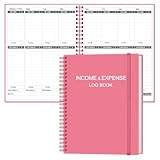
- EASY TO MANAGE - Use this income & expense log book to record your income and expenses each day.Keep your budget in balance, and develop good bookkeeping habits to meet your financial goals
- ACCOUNTING FOR THE WHOLE YEAR - This account ledger notebook is undated and is used to lasts a whole year.The keeping log has 1 page Year Overview, 53 weekly spreads, 2 pages annual summary, 10 notes pages, to track weekly and yearly income & expenses
- HIGH QUALITY - The accounting bookkeeping tracking ledger log book is used to high quality 100gsm pure white paper, teal elastic band and a back pocket for extra space. Make sure you have enough space for all financial activities
- UNIQUE DESIGN & A4 SIZE - Income and expense log book cover is lovely, golden spiral bound design, size of 8" x 10.5". Just the perfectly size to fit in your backpack, purse or laptop case. Without taking up your space and always helping you keep track of your small business
- THE PERFECT GIFT - Income & expense notebook as gift for woman & man. Use it to track your week-to-week progress, make efficient adjustments whenever needed
How is a trust different from a bank account?
A trust is not simply a special kind of bank account. It is a legal relationship involving property and fiduciary duties. In general terms, a trustee holds legal title to trust property and administers it for beneficiaries, who have the beneficial enjoyment described by the trust. A bank account may hold trust assets, but the account itself is only one possible way of holding property within the larger arrangement. The terms and formalities for creating a valid trust vary with applicable law. Cornell Law School Legal Information Institute, Wex: “Trust”.
How do lawyer trust accounts fit in?
Lawyer trust accounts are a specialized case, not a general definition of every trust account. They hold client or third-party property entrusted to a lawyer in the course of legal work. The ABA Model Rules on Client Trust Account Records describe the professional-fiduciary care required by Rule 1.15 or its equivalent, including safeguarding and segregating entrusted property, keeping complete records, and accounting for receipts and distributions. Model rules are guidance; the rules adopted in the relevant state govern local practice. American Bar Association, “ABA Model Rules on Client Trust Account Records – Preface”.
Rank #3

- EFFICIENT ACCOUNTING MADE SIMPLE: Clever Fox Horizontal Accounting Ledger Book is an effective and easy-to-use tool for tracking payments, deposits, and balances in each of your accounts.
- PERFECT FOR SMALL BUSINESS OR PERSONAL USE: This accounting book ledger is perfect for keeping books on your small business or tracking personal finances. With a clear record of transactions, you can easily spot fraudulent charges or other errors.
- TAKE CONTROL OF YOUR FINANCES & SUCCEED: Using this accounting log book, you will have everything you need to analyze your financial operations, assess your income and spending, and prepare accurate financial statements.
- PREMIUM MATERIALS FOR EXTRA DURABILITY: This columnar book has an eco-leather hardcover, thick 120gsm paper, pen loop, elastic band, lay-flat binding, bookmark, and pocket for loose notes. The personal & business ledger measures 10 by 7 inches.
- 60-DAY MONEY-BACK GUARANTEE: We will exchange or refund your business bookkeeping ledger if you aren’t satisfied with your book keeping log for small business for any reason. Reach out to us via message to refund your accounting journal book.
Lawyers may use a pooled interest-on-lawyers’-trust-accounts (IOLTA) account for eligible client funds or a separate account for a particular client, depending on the circumstances and state rules. The IRS’s 2022 Publication 5602 discusses both general and segregated accounts, but it is not a current state-by-state practice guide. IRS Publication 5602.
How to assess an account when the label is unclear
Start with the account agreement and the transaction documents, then identify the arrangement’s practical and legal features. No one feature alone settles the answer.
Rank #4

- A phrase capturing the essence of accounting with a focus on act, count, and think. Perfect for accountants and finance professionals who love humor.
- Hardcover journal with 240 line-ruled pages (120 sheets)
- Built-in elastic closure and ribbon bookmark
- Includes an expandable inner storage pocket and a pen holder
- Identify the purpose. Is the account meant to pay property bills, hold funds until a sale or other condition, or administer property for beneficiaries?
- Find out who controls the money. Identify who can authorize withdrawals or payments and whether another party holds the funds on someone else’s behalf.
- Determine who benefits. Establish whether the funds are for a borrower’s bills, a transaction party, a client or third party, or trust beneficiaries.
- Check when disbursement is permitted. Look for the conditions, instructions, or fiduciary duties that govern payments.
- Locate the governing documents and rules. Review the loan, escrow, or trust documents and the law or professional rules that apply in the relevant jurisdiction.
Terminology can depend on context even in government materials. For example, the IRS’s 2025 Form 990 instructions define escrow or custodial accounts for that reporting context by reference to an organization’s signature authority and funds held for others; that definition applies whether the account is labeled escrow, custodial, or trust. It is an illustration of why names can be secondary, not a general definition of trust law. IRS, Instructions for Form 990 (2025).
Independent reader supportYour contribution helps us test, update, and keep practical guides available for everyone.What the account name alone does not establish
The word “escrow” or “trust” by itself does not establish who legally owns the funds, whether they earn interest, what creditor protections apply, whether deposits are insured, or what remedies are available. Those outcomes can depend on the account structure, agreement, legal context, and jurisdiction. Do not infer them from a label; consult the account documents and a qualified local professional or relevant regulator for a case-specific answer.
Do these 3 things before closing this tab:
1Repair Windows errors before they cause bigger problems2Fix the driver behind crashes, sound loss and screen glitches3Clear out junk files and repair common Windows errorsBest Value

- A phrase capturing the essence of accounting with a focus on act, count, and think. Perfect for accountants and finance professionals who love humor.
- Hardcover journal with 240 line-ruled pages (120 sheets)
- Built-in elastic closure and ribbon bookmark
- Includes an expandable inner storage pocket and a pen holder
What to do if mortgage escrow is not working
If a servicer has not paid property taxes from an escrow account, or you face imminent foreclosure or legal papers, act promptly. Keep relevant bills, payment records, and servicer communications together, contact the servicer about the specific missed payment, and consider speaking with an attorney or housing counselor. The CFPB offers guidance on escrow-account problems and recommends seeking professional help when a tax-payment issue or urgent legal risk is involved. CFPB, “What should I do if I’m having problems with my escrow or impound account?”
Quick Recap
Product prices and availability are accurate as of the date/time indicated and are subject to change. Any price and availability information displayed on Amazon at the time of purchase will apply.




